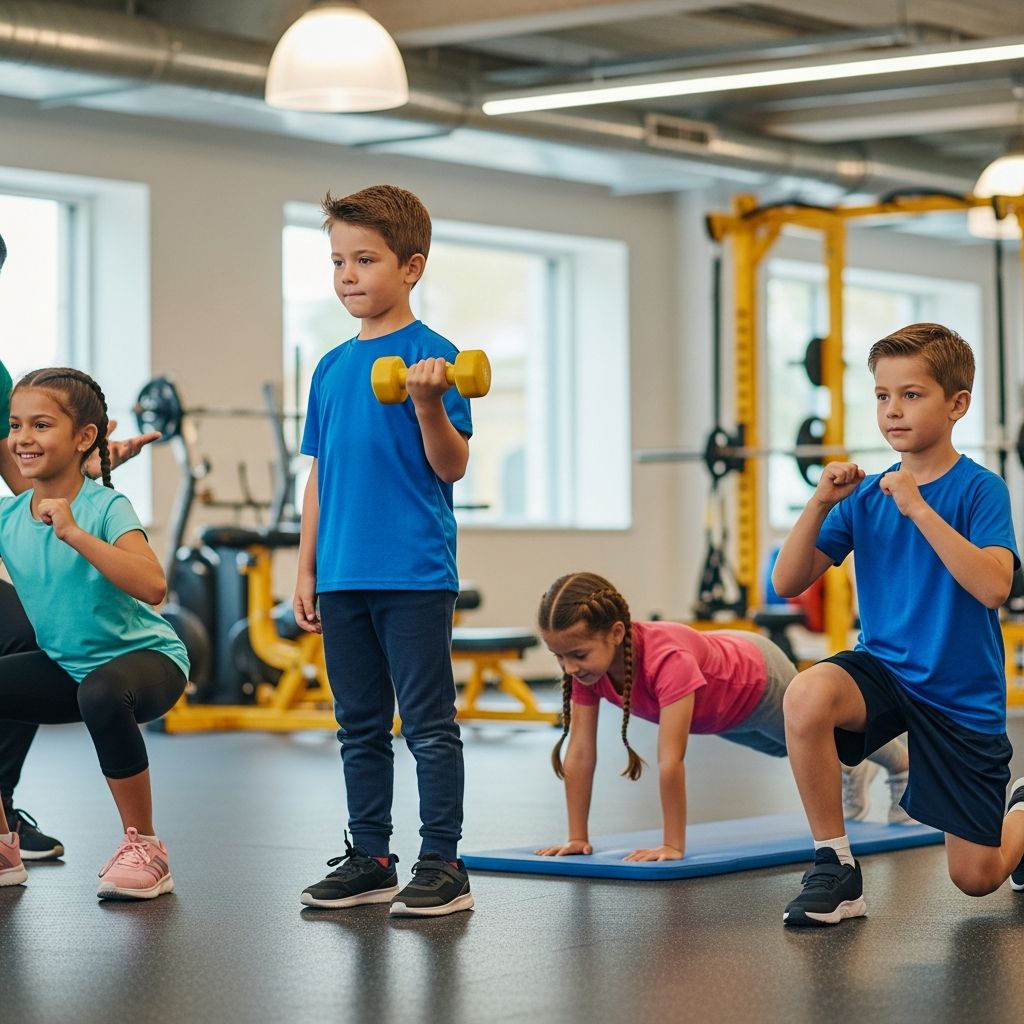
Strength training offers children numerous physical and mental benefits, including improved muscle tone, bone density, coordination, and self-confidence, when introduced appropriately. Pediatric experts agree that kids as young as 7 or 8 can participate safely under supervision, focusing on technique rather than heavy loads.
Understanding Developmental Readiness in Young Athletes
Children’s bodies differ significantly from adults due to ongoing growth in bones, muscles, and joints. Growth plates—soft cartilage areas at the ends of long bones—remain vulnerable until puberty ends, typically around ages 14-16 for girls and 16-18 for boys. Heavy lifting risks damaging these plates, potentially causing premature closure and limb length discrepancies.
Coordination and body awareness also develop gradually. Younger children under 7 often struggle with complex movements, increasing injury odds from poor form. However, starting with simple bodyweight exercises builds foundational skills without equipment risks.
Recommended Starting Ages for Strength Activities
Guidelines vary by organization but emphasize maturity over strict age cutoffs:
- Under 7 years: Focus exclusively on play-based activities like climbing, pushing, and pulling to naturally develop strength. Avoid structured weights.
- 7-12 years: Introduce supervised bodyweight circuits (squats, push-ups, planks) and light resistance tools like bands or child-sized dumbbells (1-5 lbs). Aim for 8-15 reps per set with perfect form.
- 13+ years (post-puberty onset): Progress to moderate free weights or machines if technique is mastered. Competitive lifting possible with coaching.
A child’s readiness hinges on following instructions, maintaining focus, and demonstrating balance—not chronological age. Consult a pediatrician for clearance, especially with conditions like asthma or hypertension.
Proven Benefits of Early Strength Development
When done correctly, youth strength training enhances performance in sports, reduces injury risk in activities like soccer or gymnastics, and supports lifelong fitness habits. Studies show improved bone mineral density, countering osteoporosis risks later in life.
| Benefit | Evidence | Age Group |
|---|---|---|
| Increased muscle strength and endurance | Prospective studies report 20-40% gains with 8-week programs | 8-15 years |
| Better sports performance | Reduced ACL injury risk by 50% in supervised groups | 10-18 years |
| Enhanced mental health | Boosted self-esteem and discipline via goal achievement | 7+ years |
| Improved bone health | Higher density via impact loading | Pre-pubertal |
Muscle strains, the most common issue, occur mainly from unsupervised play or max lifts—not controlled sessions. Proper programs show injury rates lower than contact sports.
Core Principles for Injury-Free Training Sessions
Safety protocols mirror those from the National Strength and Conditioning Association (NSCA):
- Prioritize Technique: Practice unloaded movements first. Film sessions for form checks.
- Supervise Closely: Maintain 1:10 instructor ratio with certified youth trainers. Never solo lifting.
- Progress Gradually: Add resistance only after 8-15 perfect reps. 1-2 sets, 2-3x/week max.
- Incorporate Warm-Ups/Cool-Downs: 5-10 min dynamic moves + stretching prevents strains.
- Emphasize Fun: Use games, circuits, or family challenges to sustain engagement.
Avoid powerlifting (1RM maxes) or Olympic lifts until maturity; these stress joints excessively.
Age-Appropriate Exercise Progressions
Tailor routines to developmental stages for optimal results:
Beginner Level (7-9 Years)
- Bodyweight squats: 3×10
- Wall push-ups: 3×8
- Superman holds: 3×20 sec
- Medicine ball throws (2-4 lbs): 2×10
Intermediate (10-12 Years)
- Goblet squats (5-10 lb dumbbell): 2×12
- Knee push-ups or bands: 3×10
- Resistance band rows: 3×12
- Plank variations: 3×30 sec
Advanced (13+ Years)
- Barbell deadlifts (technique focus): 3×8
- Bench press (light): 3×10
- Pull-ups assisted: 3×6
- Overhead press: 3×10
Rest 48 hours between sessions targeting the same muscles. Track progress via reps, not pounds lifted.
Debunking Persistent Myths About Youth Lifting
Myth 1: Weights stunt growth. Fact: No evidence; stunting links to nutrition deficits or severe injuries, rare in supervised settings.
Myth 2: Kids lack sufficient hormones for gains. Fact: Neural adaptations drive early improvements, not hypertrophy.
Myth 3: It’s only for elite athletes. Fact: Recreational programs suit all kids, preventing obesity and building resilience.
Equipment Choices: From Bodyweight to Kid-Safe Tools
Steer clear of adult barbells; opt for:
- Adjustable child dumbbells (1-15 lbs)
- Resistance bands or TRX straps
- Medicine balls (2-6 lbs)
- Bodyweight stations or playgrounds
These mimic lifts safely, promoting coordination without overload. Home setups should include mirrors for self-correction and padded floors.
Role of Parents and Coaches in Success
Parents model enthusiasm, not competition. Joint sessions strengthen bonds while ensuring oversight. Seek coaches with CSCS or youth-specific certifications. Programs like those from CHOC or ISSA prioritize fun metrics over PRs.
Frequently Asked Questions
How young is too young for any resistance?
Children under 7 should stick to unstructured play. Structured strength starts at 7-8 with bodyweight only.
Can girls benefit equally?
Yes, programs enhance bone health and athletics for all genders, with similar guidelines.
What if my child wants to compete young?
Wait until Tanner Stage 3+ (mid-puberty). Focus on technique meets first.
How often should sessions occur?
2-3 non-consecutive days/week, 20-30 min each, integrated with cardio/play.
Signs to stop or see a doctor?
Pain (beyond mild soreness), asymmetry, or fatigue. Rest and reassess.
Implementing these strategies empowers kids to thrive physically while minimizing risks. Strength is a lifelong skill—start smart.
References
- Should Children Lift Weights? Understanding the Safety Concerns… — Little Lifters. 2023. https://www.littlelifters.co.uk/blogs/little-lifters-blog/should-children-lift-weights-understanding-the-safety-concerns-and-the-role-of-child-friendly-fitness-toys
- Resistance Training for Children: Safety, Benefits, and Myths — The Bridge Hub. 2024. https://thebridgehub.com/resistance-training-for-children-safety-benefits-and-myths/
- Is strength training safe for kids and teens? — CHOC Health. 2023-10-01. https://health.choc.org/is-strength-training-safe-for-kids-and-teens/
- Kids In the Weight Room? Yes, With These Guidelines — ISSA. 2023. https://www.issaonline.com/blog/post/kids-in-the-weight-room
- Weightlifting for Children and Adolescents: A Narrative Review — PMC/NCBI. 2021-12-01. https://pmc.ncbi.nlm.nih.gov/articles/PMC8669931/