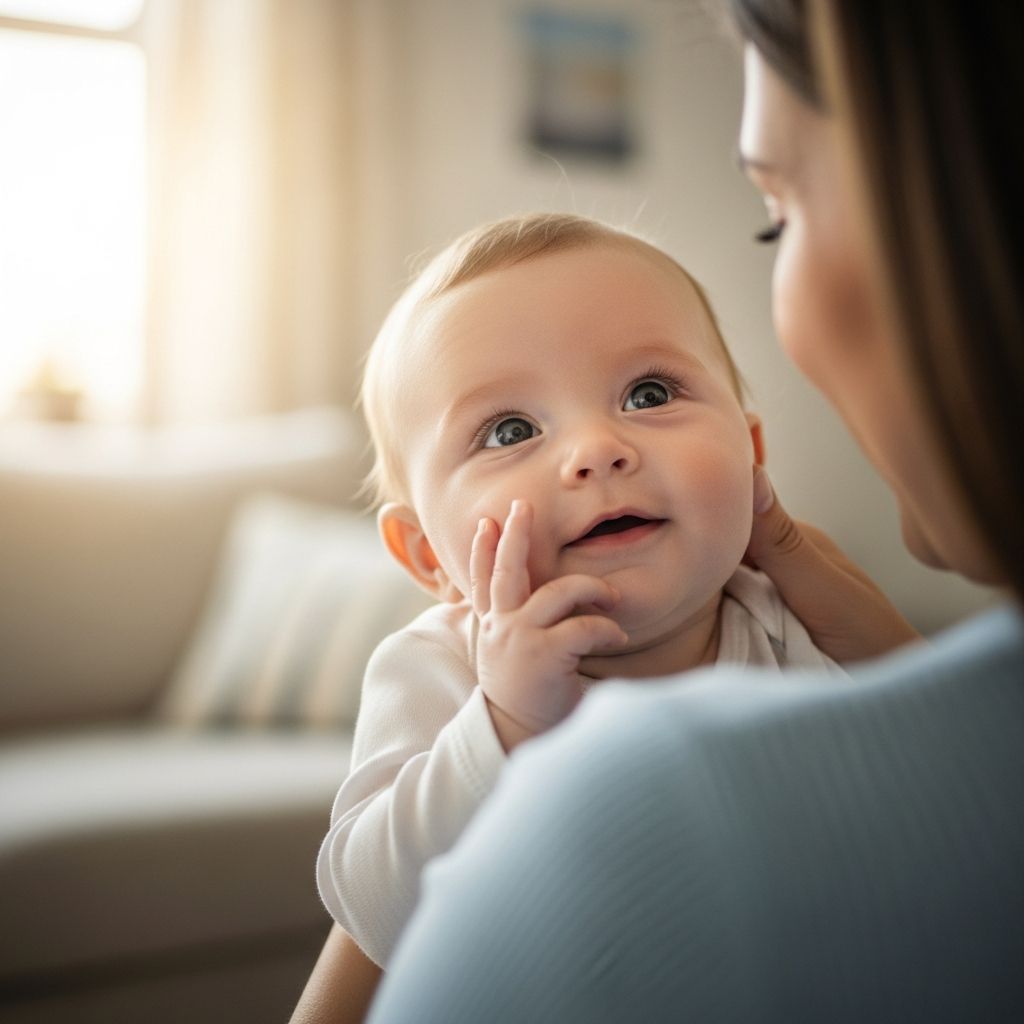
Infants develop the ability to recognize their parents through a series of sensory and cognitive stages, starting from birth and evolving over the first two years of life. This process strengthens emotional bonds and supports overall development.
Foundational Sensory Connections at Birth
Newborns enter the world equipped with innate abilities to connect with their primary caregivers, particularly through non-visual senses. Research indicates that babies can distinguish their mother’s voice from birth, as it has been audible in the womb since the third trimester. This early familiarity activates the brain’s speech-processing centers, promoting comfort and security.
Similarly, scent plays a pivotal role immediately after birth. Infants show a preference for their mother’s unique odor, which provides reassurance during the initial days. Touch and skin-to-skin contact further reinforce these bonds, helping babies associate parental presence with safety. While vision is limited at birth—focusing only 8-12 inches away—these sensory cues lay the groundwork for later visual recognition.
Emerging Visual Awareness in the First Month
During the first four weeks, babies’ eyes begin coordinating better, allowing them to track faces more effectively. They start differentiating their mother’s face from strangers, though recognition remains rudimentary. Frequent close-range interactions, such as during feeding, accelerate this process. Studies show that by this stage, infants respond more to familiar voices and scents, calming quicker in their parents’ arms.
- Key sensory developments: Improved eye focus on high-contrast patterns like faces.
- Parental tips: Hold baby at eye level during talks to encourage gaze locking.
- Signs of progress: Brief smiles or coos directed at familiar caregivers.
Visual Identification Takes Shape: 1-3 Months
By one to three months, facial recognition advances significantly. Babies not only prefer their mother’s face but begin showing interest in their father’s and other frequent caregivers with consistent exposure. A study from the Stanford Vision and NeuroDevelopment Lab reveals that by four months, infants process faces nearly as adeptly as adults.
At around two months, many babies visually identify primary caregivers, making eye contact and responding to expressions. This period marks the start of social smiling, where grins are reserved for recognized faces, signaling emotional connection.
| Age Range | Milestone | Supporting Behaviors |
|---|---|---|
| 1-2 Months | Initial face preference | Staring, social smiling |
| 2-3 Months | Distinguishes mom from others | Eye contact, cooing |
Deepening Bonds: 3-6 Months
Between three and six months, recognition becomes more reliable. Infants track parents across rooms as vision sharpens, recognizing faces from farther distances. Emotional responses intensify; babies mirror parental smiles and show excitement upon seeing mom or dad.
Primary caregivers are identified first due to frequent proximity, but siblings or regular family members enter the recognition repertoire with repeated interactions. This stage fosters attachment, with babies seeking parental comfort during distress.
Clear Preferences and Attachment: 6-9 Months
At six months, most babies clearly recognize their parents’ faces, voices, and scents. They exhibit strong preferences, often reaching out or crying for familiar arms over strangers. Separation anxiety emerges around this time, a positive indicator of secure bonding.
By nine months, social engagement expands to favorite toys and extended family, but parents remain central. Babies react distinctly to parental voices, turning heads or lighting up with joy.
Social and Self-Awareness Growth: 9-12 Months
From nine to twelve months, recognition evolves into deeper social understanding. Infants grasp their relationship with parents in context, showing complex interactions like pointing or sharing toys. Stranger wariness peaks, underscoring parental familiarity.
Cognitive leaps allow memory of faces even after brief separations, enhancing emotional resilience.
Toddlerhood Advancements: 12-24 Months
In the second year, toddlers refine recognition with sophisticated memory. They recall parental behaviors and voices instantly, even from recordings. Self-recognition in mirrors appears around 15-18 months, building on parental face knowledge—a milestone boosting independence.
Social cues like parental emotions are now interpreted, aiding empathy development.
How Parental Involvement Shapes Recognition
Consistent, positive engagements are crucial. Talking, singing, reading, and playing expose babies to voices and faces repetitively. Skin-to-skin time, responsive feeding, and eye-level interactions hasten milestones. Fathers benefit from dedicated bonding to match maternal recognition speed.
- Daily activities: Tummy time with faces, mirror play, naming family photos.
- Voice exercises: Narrate routines in a sing-song tone.
- Scent familiarity: Use unwashed parental clothing as comfort items.
Observing Recognition Indicators
Parents can track progress through behavioral cues:
- Directed smiles and laughter at parents.
- Reaching arms or crawling toward recognized voices.
- Calming cries upon parental pickup.
- Excited babbling or mimicking expressions.
- Avoiding strangers while clinging to family.
Variations exist; premature babies or those with limited exposure may lag, but consistent care bridges gaps.
Potential Developmental Concerns
While most babies meet milestones, delays warrant monitoring. Lack of eye contact by three months or no social smiling by two months may signal issues like vision problems or autism spectrum traits. Consult pediatricians early; interventions like those from Yale Baby School emphasize responsive parenting.
| Red Flag | Typical Age | Action |
|---|---|---|
| No face interest | 2 months | Pediatric check |
| Persistent stranger distress | 9 months+ | Observe patterns |
| No self-recognition | 18 months | Developmental screen |
Frequently Asked Questions
Do all babies recognize mom first?
Yes, typically mothers are recognized earliest due to pregnancy exposure and postpartum proximity, but fathers catch up with regular interaction.
Can babies recognize dad at birth?
Not visually, but through voice and scent if involved prenatally and postnatally. Visual recognition solidifies by 2-4 months.
What if my baby doesn’t smile at me yet?
Social smiling emerges around 6-8 weeks; ensure ample face time. Consult a doctor if absent by 3 months.
Does screen time affect recognition?
Limited evidence, but prioritize live interactions over screens for optimal face processing.
How to encourage faster recognition?
Daily skin contact, talking, and responsive play build neural pathways quickly.
References
- When Do Babies Recognise Their Parents? — FirstCry Parenting. 2025-04-15. https://www.youtube.com/watch?v=AIyeFZsPhd8
- When Does An Infant Recognize Their Mother? — Innovative Interventions NJ. N/A. https://www.innovativeinterventionsnj.com/post/when-does-an-infant-recognize-their-mother
- When Does Baby Recognize Faces? — Pathways.org. N/A. https://pathways.org/when-does-baby-recognize-faces
- When Will Baby Recognize People? — Ovia Health. N/A. https://www.oviahealth.com/guide/10924/when-will-baby-recognize-people/
- Your Newborn Knows You by Scent and Sound — Lovevery Blog. N/A. https://blog.lovevery.com/child-development/your-newborn-knows-you-by-scent-and-sound/
- Does My Baby Recognize Me? — Yale Baby School. N/A. https://babyschool.yale.edu/does-my-baby-recognize-me/