Your menstrual cycle serves as a vital indicator of reproductive health, directly influencing the likelihood of conception. Understanding its phases and variations can empower individuals planning pregnancy to optimize their timing and identify potential issues early.
Understanding the Menstrual Cycle Basics
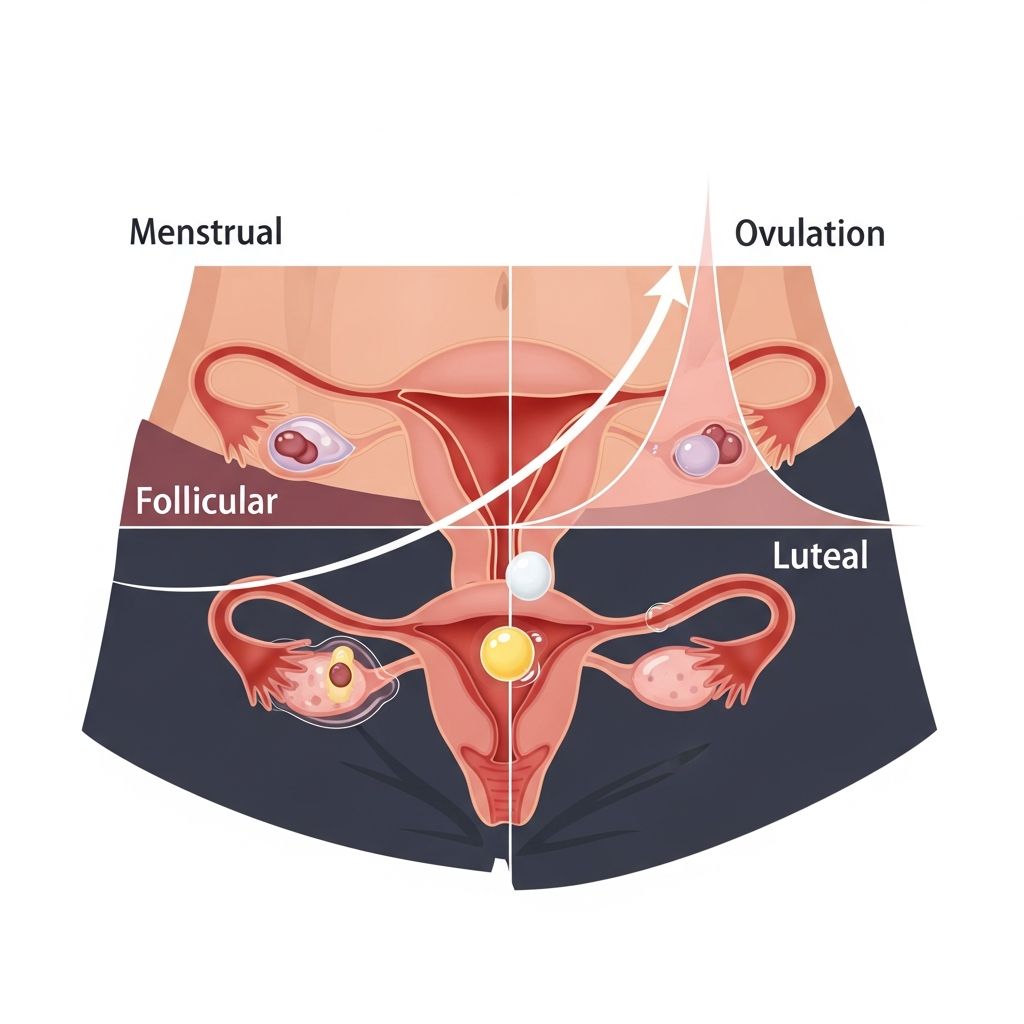
The menstrual cycle typically spans 21 to 35 days, averaging 28 days, marked from the first day of one period to the next. It involves hormonal orchestration across four main phases: menstrual, follicular, ovulation, and luteal. During the menstrual phase, the uterine lining sheds if no pregnancy occurs. The follicular phase follows, where follicle-stimulating hormone (FSH) prompts egg maturation in the ovaries while estrogen thickens the uterine lining.
Ovulation releases a mature egg around day 14 in a standard cycle, viable for fertilization for about 24 hours. The luteal phase then sees the ruptured follicle form the corpus luteum, producing progesterone to prepare the uterus for implantation. If fertilization fails, hormone levels drop, restarting the cycle.
How Cycle Length Influences Conception Odds
Cycle length provides key clues about ovulation regularity and hormonal balance, both critical for fertility. Cycles between 27-29 days often correlate with optimal fecundability, the per-cycle probability of conception.
- Short cycles (<25 days): These may signal accelerated follicular phases due to declining ovarian reserve or early ovulation, reducing the fertile window and egg quality, leading to lower fecundability (FR=0.64 compared to 27-29 days).
- Normal cycles (27-29 days): Indicate balanced hormones and reliable ovulation, supporting higher conception rates.
- Long cycles (>35 days): Frequently result from anovulation or delayed ovulation, as unopposed estrogen causes prolonged uterine buildup and irregular bleeding, impairing fertility.
Research from a North American preconception cohort confirms shorter cycles associate with reduced fertility potential, potentially due to ovarian aging or narrower fertile windows.
Regularity and Its Role in Reproductive Success
Consistent cycles reflect a well-regulated hypothalamic-pituitary-ovarian axis, essential for predictable ovulation. Irregularities, varying by more than a few days monthly, suggest disruptions like polycystic ovary syndrome (PCOS), thyroid issues, or stress, all hindering conception.
| Cycle Trait | Fertility Implication | Potential Causes |
|---|---|---|
| Regular (21-35 days, consistent) | High fecundability, regular ovulation | Balanced hormones |
| Irregular or absent | Reduced conception chance, possible anovulation | PCOS, thyroid disorders, stress |
| Short (<21 days) | Lower egg quality, early ovulation | Ovarian aging, low reserve |
| Long (>35 days) | Anovulation risk, implantation issues | Hormonal imbalances |
Women whose cycles never regularize post-menarche show slightly diminished fecundability (FR=0.93). Tracking over months aids in spotting patterns for healthcare discussions.
Bleeding Patterns as Fertility Markers
Menstrual flow duration and volume can hint at endometrial health. Shorter or lighter bleeds may follow anovulatory cycles with inadequate progesterone, while heavy flows could indicate fibroids or endometriosis, both fertility barriers.
Studies note minimal association between bleed characteristics and fecundability in ovulatory women, but extremes warrant evaluation. A luteal phase under 10 days impairs implantation, signaling progesterone deficiency.
Age at Menarche and Long-Term Fertility
Early menarche (<12 years) links to reduced fecundability (FR=0.87), possibly from prolonged estrogen exposure accelerating ovarian aging. Cycles regularizing within two years of menarche predict better outcomes than those taking longer.
Optimizing Your Fertile Window
The fertile window spans five days before ovulation through the day of, as sperm survive up to five days while eggs last 24 hours. For a 28-day cycle, target days 10-15 for intercourse. Ovulation predictors like basal body temperature, cervical mucus, or kits enhance accuracy.
- Track cycles via apps for personalized predictions.
- Time intercourse every 1-2 days in the fertile period.
- Monitor for ovulation signs: mid-cycle pain, temperature rise, slippery mucus.
Lifestyle Factors Modulating Cycle and Fertility
Beyond biology, habits profoundly affect cycles. Stress elevates cortisol, disrupting ovulation; balanced diet with folic acid, omega-3s supports hormonal health. Moderate exercise regulates cycles, but extremes like overtraining shorten luteal phases.
Maintain BMI 18.5-24.9, limit caffeine/alcohol, quit smoking to boost fecundability. Age remains paramount: fertility peaks in 20s, declines post-35 as egg quantity/quality drop.
When to Seek Professional Advice
Consult if cycles <21 or >35 days, irregular, absent for 90+ days, or after 12 months trying (6 months if over 35). Tests may include hormone panels, ultrasounds for PCOS/fibroids, or semen analysis.
Frequently Asked Questions (FAQs)
Can irregular periods prevent pregnancy?
Yes, they often indicate anovulation, reducing conception chances, though some ovulate irregularly. Tracking and medical evaluation help.
Does heavy bleeding affect fertility?
Heavy flows may signal fibroids, endometriosis, or imbalances impacting implantation; evaluation recommended.
How does cycle length change with age?
Cycles shorten with ovarian aging due to quicker FSH response, leading to earlier ovulation and potential fertility decline.
Is a short luteal phase fixable?
Often through lifestyle, supplements like vitamin B6, or progesterone therapy if deficient.
Can stress alter my cycle enough to delay pregnancy?
Yes, chronic stress disrupts hormones; management techniques like yoga improve regularity and fertility.
Advanced Insights from Research
Prospective studies like the NIH-funded preconception cohort highlight cycle length as a fecundability proxy, with short cycles (<25 days) showing 36% lower rates. IVF data reinforce optimal lengths (27-35 days) yield better oocyte quality.
Endometrial factors via bleed analysis show lighter flows post-anovulation, but clinical correlation varies. Early menarche consistently predicts modest fertility reductions across cohorts.
For personalized planning, combine cycle tracking with ovulation tests. While cycles offer fertility windows, underlying issues require specialist input for tailored interventions.
References
- Menstrual cycle characteristics and fecundability in a North American preconception cohort — Wise LA et al. NIH/PMC. 2016-07-29. https://pmc.ncbi.nlm.nih.gov/articles/PMC4964792/
- What Does Your Menstrual Cycle Say About Your Fertility? — Prego Online. Accessed 2026. https://pregonline.com/blog/what-does-your-menstrual-cycle-say-about-your-fertility/
- Menstrual Cycle FAQ — Shady Grove Fertility. Accessed 2026. https://www.shadygrovefertility.com/article/menstrual-cycle-faq/
- Factors Affecting Fertility — Fertility Network UK. Accessed 2026. https://fertilitynetworkuk.org/learn-about-fertility/factors-affecting-fertility/
- Female fertility and your period — Fertility Centers of Illinois. Accessed 2026. https://www.fcionline.com/article/female-fertility-and-your-period/
- Understanding Fertility: The Basics — HHS Office of Population Affairs. Accessed 2026. https://opa.hhs.gov/reproductive-health/understanding-fertility-basics