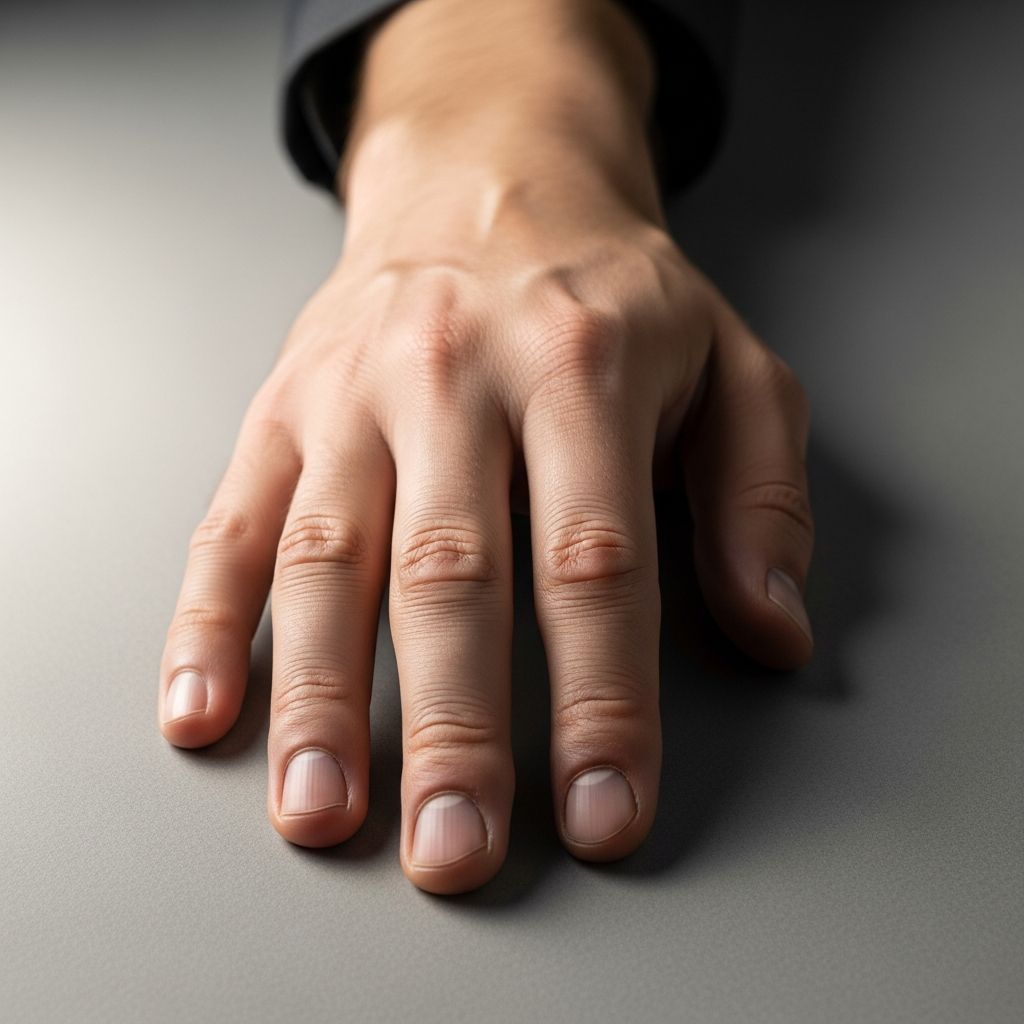
The dimensions of a man’s hands, particularly the comparative lengths of his index and ring fingers, serve as a subtle window into his prenatal development. Known scientifically as the **2D:4D digit ratio**, this measurement—where 2D is the index finger and 4D the ring finger—reflects exposure to sex hormones like testosterone in the womb. A lower ratio (longer ring finger relative to index) typically indicates higher prenatal testosterone, influencing a range of physical, behavioral, and health outcomes in adulthood.
Understanding the 2D:4D Digit Ratio
The 2D:4D ratio is calculated by dividing the length of the index finger by the ring finger, measured from the basal crease to the tip on the palmar side. Men generally exhibit lower ratios (around 0.984 on average for the right hand) compared to women (0.994), due to greater fetal testosterone exposure that promotes ring finger growth.
This ratio forms early in gestation, around weeks 8-14, when hormones shape digit development alongside brain and reproductive systems. Studies confirm its stability from age 2 onward, unaffected by postnatal growth. While hand size overall scales with body proportions, the ratio remains a reliable prenatal marker independent of total hand dimensions, countering claims it’s merely a size artifact.
- Measurement tips: Use a digital caliper for precision (0.01 mm accuracy); right hand often shows stronger correlations.
- Sex differences: Overlap exists, but population averages differ reliably across ethnic groups.
- Limitations: Ratios vary by hand and ancestry; not diagnostic alone.
Reproductive Traits and Physical Markers
Prenatal testosterone linked to lower 2D:4D ratios correlates with enhanced male reproductive features. A 2011 study of 144 men undergoing urological surgery found shorter index-to-ring ratios predicted longer stretched penile length, a proxy for erect size, attributing this to fetal androgen effects on genital growth.
Similarly, overall hand size may hint at secondary sexual characteristics, though evidence is correlational. Men with larger palms and fingers often show higher testosterone signatures, potentially influencing perceived masculinity and mate attraction.
| 2D:4D Ratio | Associated Reproductive Trait | Effect Size |
|---|---|---|
| Lower (<0.98) | Longer penis length | Moderate (r= -0.20) |
| Higher (>1.00) | Shorter relative length | Small |
These links underscore how early hormones program lifelong physical traits, though lifestyle factors dominate adult outcomes.
Cancer Risks Tied to Finger Proportions
A lower 2D:4D ratio, signaling high prenatal testosterone, elevates prostate cancer risk. In a 15-year British study of 1,500 patients and 3,000 controls, men with index fingers equal or longer than ring fingers were 33% less likely to develop prostate cancer. This modest effect (odds ratio ~1.33 for low-ratio men) suggests androgen sensitivity persists, promoting prostate cell proliferation.
Conversely, higher ratios may confer protection, possibly via balanced estrogen-testosterone dynamics. Researchers advise low-ratio men monitor PSA levels proactively, though the risk increment is small population-wide.
Hair Loss Patterns and Androgen Sensitivity
Androgenetic alopecia (male pattern baldness) associates with low 2D:4D ratios, especially right-hand measurements. A study of 189 affected men versus 171 controls found significantly lower right-hand ratios in alopecia patients (Cohen’s d=0.42, moderate effect), supporting prenatal androgen exposure as a predisposing factor.
Average ratios were also lower across both hands, though left-hand differences were nonsignificant. No direct severity correlation emerged (Hamilton-Norwood scale), implying the ratio predicts susceptibility rather than progression. This aligns with genetics where fetal androgens sensitize follicles to adult DHT.
- AGA patients: Right 2D:4D mean 0.965
- Controls: 0.983
- P-value: <0.05
Athletic Performance and Physical Prowess
Lower digit ratios predict advantages in power sports requiring strength and speed. High-testosterone profiles enhance muscle mass, aggression, and anaerobic capacity. Meta-analyses link low 2D:4D to elite sprinting, rugby, and weightlifting success, with right-hand ratios most predictive.
For endurance, higher ratios may favor oxygen efficiency, as seen in runners. Hand grip strength, measurable via dynamometer, often scales with palm size and low ratios, reflecting robust musculoskeletal development.
Behavioral and Cognitive Insights
Finger ratios hint at personality and cognition shaped by prenatal hormones. Men with low 2D:4D are typically more assertive, competitive, and spatially adept—traits aiding STEM fields and leadership—but potentially higher in risk-taking or aggression.
Studies show low-ratio men smile less, compromise less in conflicts, yet excel in spatial tasks like navigation. Cognitively, ring-dominant fingers correlate with superior visuospatial abilities, vital for engineering or piloting. Verbal fluency may favor higher ratios, mirroring estrogen influences.
| Low 2D:4D Traits | High 2D:4D Traits |
|---|---|
| Aggressive, athletic, spatial skills | Empathetic, verbal, endurance |
| Higher autism spectrum likelihood | Balanced cooperation |
Health Implications Beyond Hands
Broader risks emerge: low ratios link to elevated heart disease, osteoarthritis, and autism spectrum traits, while higher ones associate with depression or osteoarthritis protection. Hand size itself flags cardiovascular health—larger hands correlate with better heart function via grip strength proxies.
Emerging research explores predictive uses, like tailoring hormone therapies for cancer based on ratios. Always consult physicians; ratios inform, not determine, risks.
Myths, Controversies, and Scientific Scrutiny
Not all claims hold. A 2017 analysis argued sex differences stem from hand size scaling, not hormones—larger male hands elongate ring fingers disproportionately. Yet proponents counter with pediatric data showing ratios predate size variance.
Over 1,400 studies exist, but replication varies; small effects amplify in meta-analyses. Ethnic variations necessitate diverse sampling. Penis size folklore persists, but evidence is limited to one surgical cohort.
Frequently Asked Questions
How do I accurately measure my 2D:4D ratio?
Flatten your hand on a surface, measure from metacarpophalangeal crease to fingertip using calipers or ruler. Divide index by ring length; repeat for both hands.
Does left vs. right hand matter?
Yes—right hand often shows stronger links to testosterone effects and health outcomes like alopecia.
Can training change my ratio?
No, it’s fixed prenatally; unaffected by exercise or age.
Is a low ratio always bad for health?
No—advantages in athletics offset risks like cancer; balance depends on lifestyle.
What if my ratio is atypical for my sex?
Common due to overlap; consult doctor for personalized health screening.
This exploration demystifies hand proportions, blending intriguing science with practical insights. While not fortune-telling, your fingers offer a glimpse into biological blueprints.
References
- 5 Things a Man’s Finger Length Says About Him — Live Science. 2015-11-11. https://www.livescience.com/49883-finger-length-in-men.html
- Are 2D:4D finger-length ratios an indicator of androgenetic alopecia… — PMC (NCBI). 2016-04-29. https://pmc.ncbi.nlm.nih.gov/articles/PMC4861561/
- Talk to the hand. Scientists try to debunk idea that finger length can… — Science Magazine. 2018-06-20. https://www.science.org/content/article/talk-hand-scientists-try-debunk-idea-finger-length-can-reveal-personality-and-health