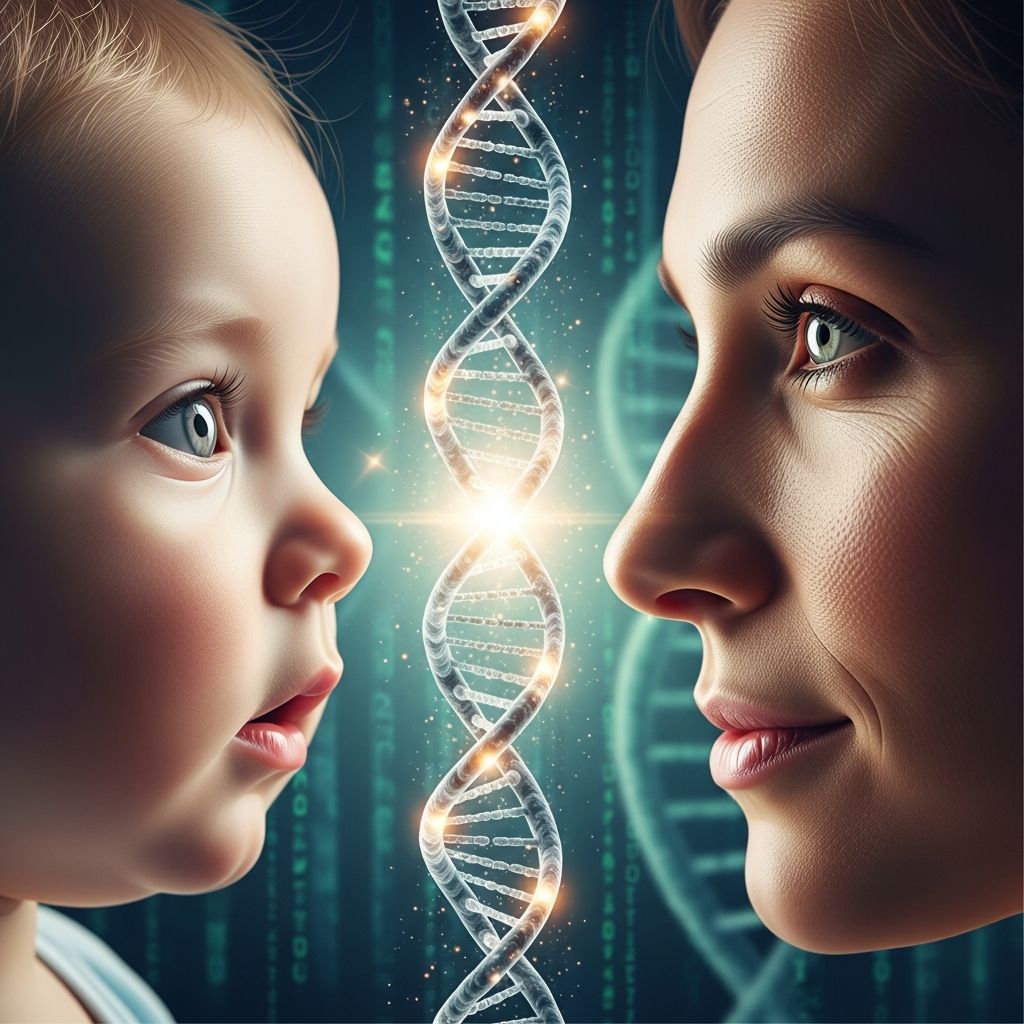
Expecting parents often wonder about their unborn child’s physical features. Genetic inheritance plays the primary role in determining traits like eye color, hair texture, skin tone, and facial structure. Each parent contributes 23 chromosomes, creating over 70 trillion possible combinations, making every child genetically unique.
Fundamentals of Genetic Inheritance in Offspring
Genes are segments of DNA that code for specific traits. Humans have about 30,000 genes on 46 chromosomes. Dominant genes express their traits over recessive ones. For instance, a dominant brown eye gene overrides a recessive blue eye gene. Polygenic traits, like skin color and height, involve multiple genes interacting, influenced also by environment such as nutrition and sun exposure.
Recessive traits skip generations if hidden by dominant ones. Two dark-haired parents can have a blonde child if both carry the recessive gene. Family trees provide clues: examine grandparents’ photos for hidden traits.
How Eye Color Emerges from Parental Genes
Eye color depends on melanin levels in the iris, controlled mainly by OCA2 and HERC2 genes on chromosome 15. These produce proteins for melanosomes, melanin-producing structures. More melanin means darker eyes (brown, dominant); less yields lighter shades (blue, green, recessive).
Predictions:
- Both parents brown-eyed: High chance of brown eyes, but 25% blue if both carry recessive.
- One brown, one blue: About 50% brown, 50% blue.
- Both blue-eyed: Nearly 100% blue-eyed offspring.
Eye color can shift post-birth as melanin production ramps up, typically darkening from blue to hazel or brown by age 3, but not vice versa.
Hair Characteristics: Color, Texture, and Patterns
Hair color hinges on melanin types: eumelanin (dark) and pheomelanin (red/light). The MC1R gene regulates this. Functional copies produce brown/black hair (dominant, 90%+ population). Deactivated copies lead to red (one deactivated) or blonde (both).
| Parental Hair | Possible Baby Hair | Probability Insight |
|---|---|---|
| Both dark | Dark, possible red/blonde | Recessive if carried |
| One dark, one light | Mix, leaning dominant | 50/50 variants |
| Both red | Red or light | High recessive |
Texture is polygenic: curly dominant over straight. Environmental factors like humidity affect appearance.
Skin Tone and Complexion Variations
Skin color is polygenic, blending melanin from ancestors. Equatorial origins favor darker tones for UV protection; northern for vitamin D absorption. Babies often born lighter, darkening over months.
- Mixed ancestry: Intermediate tones, siblings varying widely.
- Freckles: Dominant, darken in sun.
- Conditions like PKU or albinism alter melanin, causing pale features.
Examine extended family: Dark-skinned grandparents mean possible recessive dark genes.
Facial Features and Body Structure Predictions
Nose size, lip shape, chin, dimples involve multiple genes. Dimples are dominant. Height combines genetics (tall parents likely tall kids) with nutrition. Body shape follows similar patterns, though lifestyle impacts post-birth.
Unexpected traits arise from recombination: blue-eyed from two brown-eyed parents via recessives.
Modern Tools: Genetic Testing for Trait Insights
Non-invasive prenatal testing (NIPT) screens DNA in maternal blood for traits, ancestry, health risks from week 10. Consumer kits predict eye/hair color via parental swabs. Accuracy varies; consult providers.
Benefits: Ancestry mapping, carrier screening. Limitations: Not 100% predictive due to polygenic complexity.
Environmental Influences on Genetic Expression
Genes interact with environment. Sun triggers melanin for tanning; diet affects height. In utero nutrition shapes early development. Post-birth, these amplify genetic potential.
Frequently Asked Questions
Can two blue-eyed parents have a brown-eyed baby?
Rare, but possible if both carry hidden brown recessive genes (about 1% chance).
Will my baby’s hair color change after birth?
Yes, often darkens as melanin increases; newborns may have lighter hair.
How accurate are baby trait predictor apps?
Entertaining but simplified; real genetics more complex, better use family history.
Does skin color change significantly after birth?
Babies start pale, melanin builds over 6-12 months, especially with exposure.
Can genetic tests predict personality traits?
Limited; appearance yes, but personality multifactorial with environment.
Embracing the Genetic Lottery
Your baby’s look is a unique blend of heritage and chance. While predictions inform, the joy lies in surprises. Focus on health via prenatal care.
References
- Genetic Inheritance: What Will Your Baby Look Like? — Flo Health. 2023. https://flo.health/getting-pregnant/preparing-to-conceive/preconception-planning/genetic-inheritance
- What Will My Baby Look Like? — The Bump. 2024. https://www.thebump.com/a/what-will-my-baby-look-like
- Babies and skin color: Changes and genes — Medical News Today. 2023-05-12. https://www.medicalnewstoday.com/articles/are-black-babies-born-white
- What Will My Baby Look Like? — Healthline. 2024. https://www.healthline.com/health/pregnancy/what-will-my-baby-look-like
- Where does your baby’s personality come from? — Naître et grandir. 2023. https://naitreetgrandir.com/en/feature/where-does-your-baby-s-personality-come-from/
- Decoding the Genetic Code: What Will My Baby Look Like? — Naître. 2024. https://naitre.com/blogs/pregnancy-articles/decoding-the-genetic-code-what-will-my-baby-look-like