Your interview clothes speak before you ever say hello. The right outfit will not magically win you the job, but the wrong one can distract from your skills, confidence, and experience. This guide walks you through how to choose interview outfits that look polished, feel comfortable, and still feel like you.
Start With One Question: What Does This Workplace Look Like?
Before you think about colors, shoes, or accessories, start by imagining (or researching) the hiring company’s everyday dress code. Your goal is to appear one small step more polished than what people typically wear there. That way, you look prepared and respectful without feeling like you’re in a costume.
- Corporate & conservative: Law firms, finance, some government roles. Expect suits, dress shirts, and structured pieces.
- Standard office: Marketing, HR, education, nonprofits, mid-size companies. Expect business casual: dress pants, blouses, simple dresses, shirts with or without ties.
- Creative & startup: Tech, design studios, media, small agencies. Expect polished casual: dark jeans or chinos, neat tops, blazers, clean sneakers or flats.
- Hands-on & field work: Warehouses, retail, trades, on-site roles. Expect practical clothes: neat pants, polos, or button-downs, closed-toe shoes.
If you can, look at employee photos on the company website or social media. Use these as a baseline and then dress slightly more formal than what you see.
Four Levels Of Interview Dress Code
Instead of getting lost in endless outfit options, think in terms of levels. Once you know how formal the company is, choose the level that fits and build your outfit from there.
| Level | Where It Fits | Key Pieces |
|---|---|---|
| Business Formal | Law, banking, senior leadership roles | Matching suit, dress shirt or blouse, closed-toe dress shoes |
| Business Professional | Standard corporate offices, consulting, many in-person roles | Tailored blazer, dress pants or skirt, button-down or blouse |
| Business Casual | Marketing, education, nonprofits, many tech offices | Chinos or dress pants, knit or woven top, optional blazer |
| Polished Casual | Startups, creative roles, informal on-site interviews | Dark jeans or chinos, neat shirt or knit, smart shoes |
Business Formal: When A Full Suit Is Non-Negotiable
Business formal means you are aiming for a classic, structured look from head to toe. This level is common for law, finance, and high-level corporate interviews. If you are unsure and the company appears conservative, it is safer to lean toward this category.
- Core pieces: A matching two-piece suit in navy, charcoal, or black; a light dress shirt or blouse; closed-toe dress shoes; belt and socks or hose that blend with the outfit.
- Fit details: Jacket seams follow your shoulders, sleeves end around the wrist bone, pants skim the top of your shoes without pooling, skirts hit near the knee.
A full suit does not mean you have to look stiff. Subtle textures, a slightly softer fabric, or a modern cut can keep things current while staying formal.
Business Professional: Suited, But With Flexibility
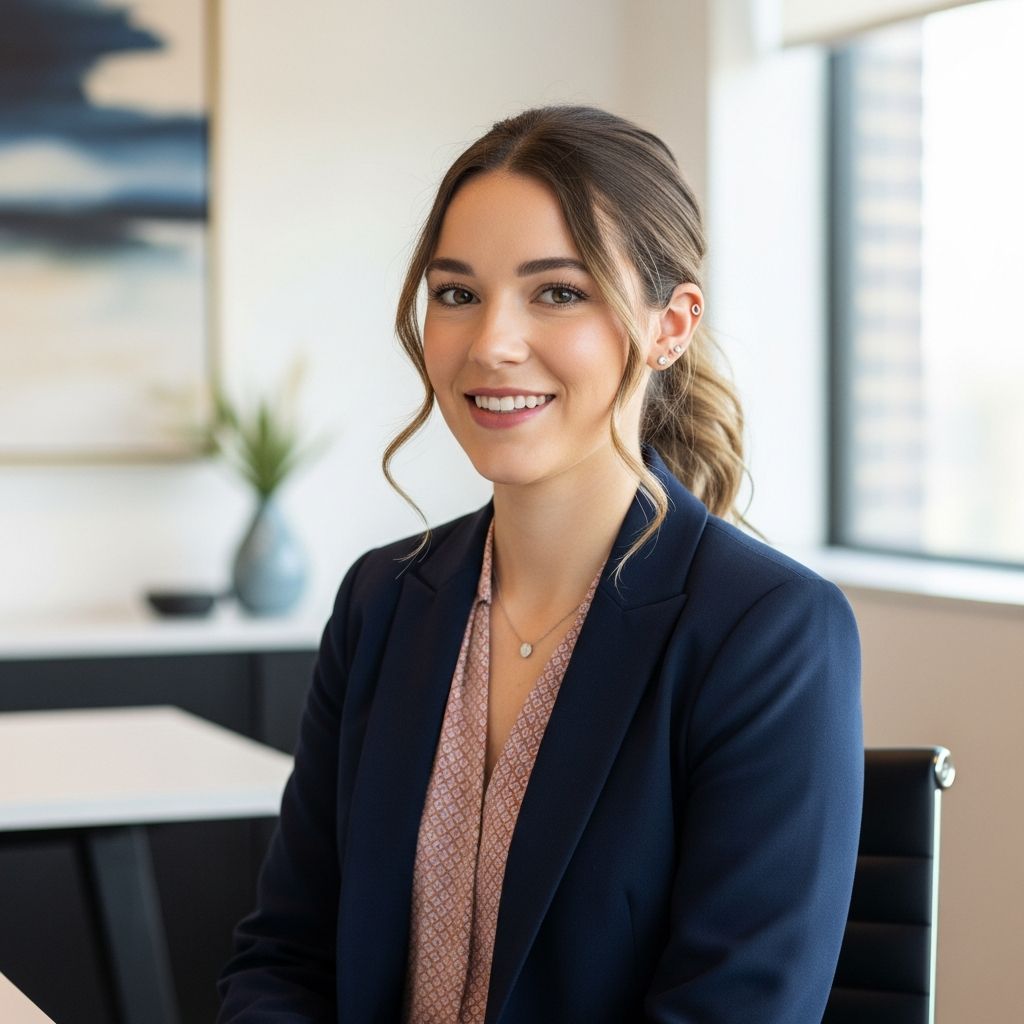
Business professional still looks sharp, but it gives you a bit more room for comfort and personality. You might mix and match pieces instead of wearing a perfectly matching suit, and you can relax slightly on color and pattern.
- Typical combinations: Blazer plus coordinating trousers, a simple dress with a structured jacket, a button-down with slacks and optional tie.
- Colors and patterns: Neutrals like navy, gray, camel, and black with small prints (pinstripes, fine checks) and muted tones (dusty blue, soft burgundy).
This level works well for most office-based roles where people still dress up for client meetings or presentations but are not expected to wear suits every day.
Business Casual: Polished Without The Suit
Business casual is probably the most confusing category, but it helps to think of it as: no jeans, no shorts, no graphic T-shirts, but no requirement for a suit jacket either. The aim is neat, comfortable, and intentional.
- Bottoms: Chinos, dress pants, or a simple skirt in a solid or subtle pattern.
- Tops: Blouses, knit tops, button-down shirts, fine-gauge sweaters, or polo shirts that hold their shape.
- Layers: Optional cardigan or unstructured blazer to add polish without formality.
- Shoes: Closed-toe flats, loafers, low heels, or very clean, minimalist sneakers if appropriate for the industry.
Business casual is ideal for many interviews in education, marketing, nonprofits, and modern offices, especially when you want to appear approachable and relaxed but still serious.
Polished Casual: For Startups And Creative Teams
In some environments, walking in wearing a suit would feel out of place. Startups, creative agencies, and some tech companies often value a more laid-back aesthetic. You can lean casual, but you still want to show that you took the interview seriously.
- Smart denim: Dark, non-distressed jeans with no rips, fraying, or heavy fading.
- Relaxed tops: A clean T-shirt under a blazer, a tucked-in knit, or a casual button-down.
- Footwear: Polished loafers, Chelsea boots, low-profile sneakers, or dressy flats.
- Personality: A bit more room for color, pattern, and accessories, as long as nothing is distracting or offensive.
Even at very casual companies, err on the side of looking slightly more refined than the people who already work there. You can always relax your wardrobe after you are hired.
Interview Outfit Formulas For All Genders
Many people get stuck trying to match outfits to gender labels. A better approach is to think in terms of structure (how tailored or relaxed a piece is) and coverage (how much skin it shows). Below are mix-and-match outfit formulas that work across a wide range of gender expressions.
Formal & Professional Outfit Ideas
- Structured blazer + matching or coordinating pants + smooth woven shirt or blouse + closed-toe dress shoes.
- Knee-length or mid-calf dress with sleeves + tailored jacket + neutral tights (optional) + simple heels or flats.
- Button-down shirt + dark trousers + tie (optional) + classic lace-up shoes or loafers.
Business Casual & Polished Casual Outfit Ideas
- Chinos or tailored pants + lightweight sweater or knit top + low-profile leather sneakers or loafers.
- Dark jeans + crisp T-shirt or top + unstructured blazer + ankle boots.
- Midi skirt or relaxed dress + cardigan or soft blazer + flats or low block heels.
In every case, focus on three things: clothes that fit well, fabrics that do not wrinkle easily, and shoes that allow you to walk confidently.
Fit, Fabric, And Comfort: The Hidden Power Trio
The most expensive outfit will look wrong if it does not fit. On the other hand, a modest outfit in the right size and fabric can look surprisingly polished. For interviews, small adjustments often make a big difference in how you appear and how you feel.
- Fit: Avoid pieces that pull, gape, or ride up when you sit and stand. Try on your full outfit and practice sitting, walking, and reaching forward.
- Fabric: Prefer mid-weight fabrics that drape well and resist wrinkles. Very thin or clingy fabrics can show every line; very stiff fabrics can feel restrictive.
- Comfort: You should be able to walk confidently, sit without tugging at anything, and take a deep breath without feeling squeezed.
When in doubt, size slightly up and use tailoring or belts to create shape. Being able to move naturally is more important than having each piece glued to your body.
Colors, Prints, And What They Communicate
Color can support the impression you want to make, but it should not be the star of the show. Neutrals create a calm, professional backdrop. Small pops of color, used sparingly, can show energy and personality without overwhelming the room.
- Reliable neutrals: Navy, charcoal, black, gray, beige, taupe, and cream.
- Accent tones: Burgundy, forest green, dusty blue, soft plum, or muted jewel tones in a tie, scarf, top, or accessory.
- Prints: Subtle stripes, checks, or small-scale patterns. Avoid large logos or graphics.
If you are interviewing in a creative field, you can take more risks with color and pattern. Just keep the overall look cohesive and make sure the colors flatter your skin tone and do not clash.
Accessories, Bags, And Jewelry: Less But Better
Accessories should complement your outfit and not distract from what you are saying. A few well-chosen pieces look more intentional than a lot of competing items.
- Jewelry: One or two pieces near your face (earrings, a necklace, or a watch) are usually enough. Avoid anything noisy or distracting.
- Belts: If visible, match the color of your shoes where possible. A simple, clean buckle looks most professional.
- Bags: A tote, briefcase, or structured backpack that can hold your resume and notebook. Neutrals or dark colors are easiest.
- Tech items: Keep phone cases simple, and silent your devices before you walk in.
As a rule of thumb, once you are dressed, remove one accessory if you feel overdone. You want your words, not your jewelry, to do the talking.
Grooming And Personal Care Details
Clothes are only half of the first impression. Grooming signals reliability and attention to detail. You do not need salon-level styling; you just need to look clean, intentional, and put together.
- Hair: Neatly styled in a way that does not require constant adjustment. Keep it off your face if you tend to play with it when nervous.
- Facial hair: If you have it, make sure it is trimmed and shaped. If you shave, check for missed spots.
- Nails: Clean and trimmed. If using nail polish, aim for no chips and colors that do not compete with your outfit.
- Fragrance: Skip heavy perfume or cologne. If you use scent, keep it very light.
These details may seem small, but together they help you appear polished and ready without drawing much attention to themselves.
Common Interview Outfit Mistakes To Avoid
Knowing what not to wear can be as useful as knowing what works. Many missteps are not about style at all, but about comfort, distraction, or practicality.
- Clothes that are significantly too tight or too loose.
- Wrinkled, stained, or obviously worn-out pieces.
- Open-toe shoes in conservative fields, or flip-flops anywhere.
- Distracting patterns, slogans, political or controversial statements.
- Overly casual pieces like gym wear, short shorts, or tank tops.
- Too many layers of bold accessories competing for attention.
If you are unsure about an item, ask this: “Will this make the interviewer think about my clothes instead of my answers?” If the answer is yes, choose something else.
Day-Of Checklist: Final Outfit Run-Through
To keep stress low on the day of your interview, decide on your full outfit 24 hours in advance. Lay everything out and do a quick test run so there are no surprises.
- Try on every piece together, including shoes, belt, and outerwear.
- Sit in a chair and mirror your interview posture to check for comfort and coverage.
- Check for wrinkles, stains, missing buttons, and loose threads.
- Make sure your bag contains copies of your resume, a pen, and any required materials.
- Choose undergarments that do not show lines or straps through your clothing.
Doing this the night before frees your mental energy to focus on the conversation, not on your clothes.
Frequently Asked Questions About Interview Outfits
Do I always need to wear a suit?
No. A full suit is most expected in very formal industries and senior roles. For many interviews, particularly in business casual or creative settings, tailored separates or a neat dress are perfectly appropriate.
Can I wear jeans to a job interview?
Sometimes. Dark, non-distressed jeans can work for startups or very casual workplaces, especially when paired with a blazer and clean shoes. If the company leans traditional or you are unsure, choose dress pants or chinos instead.
Is it okay to show tattoos or piercings?
This depends on the role and culture. In more conservative industries, consider covering tattoos and minimizing visible piercings until you understand the environment. In creative or very casual workplaces, visible body art is often more accepted.
How much does brand matter?
Far less than fit and cleanliness. Interviewers rarely notice labels but immediately register when clothes are wrinkled, stained, or poorly fitted. Focus on well-maintained pieces that flatter your body, regardless of where they came from.
What if I have to go straight from work to the interview?
Plan a base outfit that is appropriate for both, then adjust with a few portable upgrades. Swapping shoes, adding a blazer, changing into a crisp shirt, or switching out a casual top for a more formal one can quickly elevate your look without a full change.
Bringing It All Together
The best interview outfit is the one that lets your qualifications take center stage. Aim to look like a slightly more polished version of the employees who already work there, choose clothes that fit well and feel comfortable, and use color and accessories with intention. When your outfit quietly supports your confidence instead of competing with it, you are free to focus on what truly counts: the conversation.