When the last diaper is changed and your child finally graduates to underwear, a new question appears: what should you do with that stack of soft, sturdy cloth diapers you invested in for years? Instead of leaving them to gather dust in a closet or sending them to the trash, you can give those hardworking fabrics a useful and meaningful second life.
This guide explores practical, creative, and eco-conscious ways to reuse, repurpose, and upcycle cloth diapers, inserts, and covers. Whether you prefer simple no-sew swaps or love getting crafty with a sewing machine, there are options for every skill level and every kind of stash.
Why Reusing Cloth Diapers Matters
Reusing cloth diapers after potty training continues many of the same benefits that led families to choose them in the first place. By extending the life of the fabric, you reduce waste, lower your household spending, and keep sentimental items in active use rather than hidden in a box.
Think of your diaper stash as a collection of small, absorbent, durable textiles. Once you stop seeing them only as “diapers,” a world of possibilities opens up—from cleaning helpers to thoughtful keepsakes.
Preparing Old Diapers for a New Purpose
Before repurposing, it is important to give your diapers a thorough refresh so they are clean, neutral smelling, and ready for their new role. This step is especially important if you plan to use them on skin again, such as for washcloths or burp cloths for another baby.
Deep Cleaning and Refreshing
- Run several hot washes with a strong, cloth-safe detergent to remove built-up residues.
- Use an extra rinse cycle to ensure no detergent remains, especially for items that will touch skin.
- Sun-dry outdoors when possible; sunlight helps naturally freshen fabrics and can lighten stains.
- Inspect elastics, snaps, and hook-and-loop closures for wear before deciding how to reuse each piece.
Sorting Your Stash by Condition
Not every diaper will be in the same shape, and that is actually helpful. Sort them into categories based on how you plan to use them.
- Like new or gently used: Best for resale, donation, or reusing on another baby.
- Functional but worn: Ideal for household rags, pet care, craft projects, or car use.
- Very worn or damaged: Great candidates for cutting into smaller pieces, using as stuffing, or turning into patchwork items.
Practical Everyday Reuses Around the Home
Many cloth diaper components can slide seamlessly into daily life as reusable alternatives to disposable products. These low-effort ideas require little or no modification and can start right away.
Cleaning Cloths and Household Helpers
- All-purpose cleaning rags: Use flats, prefolds, or inserts for wiping counters, dusting, or cleaning mirrors and windows.
- Floor and mop pads: Wrap a flat or prefold around a flat mop head and secure with clips or elastic hair ties.
- Spill savers: Keep a stack in the kitchen for wiping up juice, water, or cooking messes.
- Garage and project rags: Use the most worn pieces for paint drips, car work, or craft cleanup.
Bathroom and Personal Care Uses
Soft, absorbent diaper fabrics are gentle on the skin and work well for reusable bathroom and personal care items. Wash thoroughly between uses and keep a dedicated laundry routine for these items if needed.
- Cut inserts or flats into smaller squares as reusable facial cloths and makeup removers.
- Use soft cotton or bamboo pieces as bath washcloths for kids and adults.
- Fold thin flats into small hand towels for the bathroom or kitchen sink.
Kitchen and Mealtime Uses
- Reusable napkins: Trim and hem prefolds or flats into napkin-sized squares.
- Dish-drying cloths: Use inserts or prefolds to dry dishes or line drying racks.
- Produce wraps: Wrap leafy greens or herbs in clean, damp flats to keep them fresh in the fridge.
Creative Projects for Crafters
For parents who enjoy sewing, crafting, or simply experimenting with fabric, cloth diapers are an excellent material source. Many are made from natural fibers like cotton, bamboo, or hemp that become softer and more absorbent with time.
Simple No-Sew Ideas
- Emergency changing pads: Lay a flat or large prefold on any surface when you need a quick protective layer.
- Drawer and shelf liners: Fold and place inside drawers to cushion delicate items or organize small accessories.
- Pet crate or carrier liners: Use inserts or flats folded in half to add softness and absorbency.
- Travel hand towels: Keep one in the car or diaper bag for unplanned spills or messy hands.
Sewing Projects Using Flats and Prefolds
With a basic sewing machine and simple stitches, you can turn flats and prefolds into long-lasting household items. Pre-worn fabrics are usually less prone to shrinking or warping after sewing, which makes them beginner-friendly.
- Reusable paper towels: Cut prefolds or flats into rectangles, hem the edges, and store them on the counter in a basket.
- Small baby bibs: Use the most absorbent section of a prefold as the bib front and add a soft backing and closure.
- Snack or sandwich bags: Sew a small pouch from a diaper inner and add a food-safe lining and zipper or snaps.
- Reusable makeup pads: Cut soft inserts into circles or squares and zigzag around the edges.
Turning Diapers into Keepsakes
For many parents, cloth diapers carry emotional value: they were there for first smiles, late-night snuggles, and countless milestones. Instead of keeping the entire stash, consider transforming a few special pieces into something you can see and use.
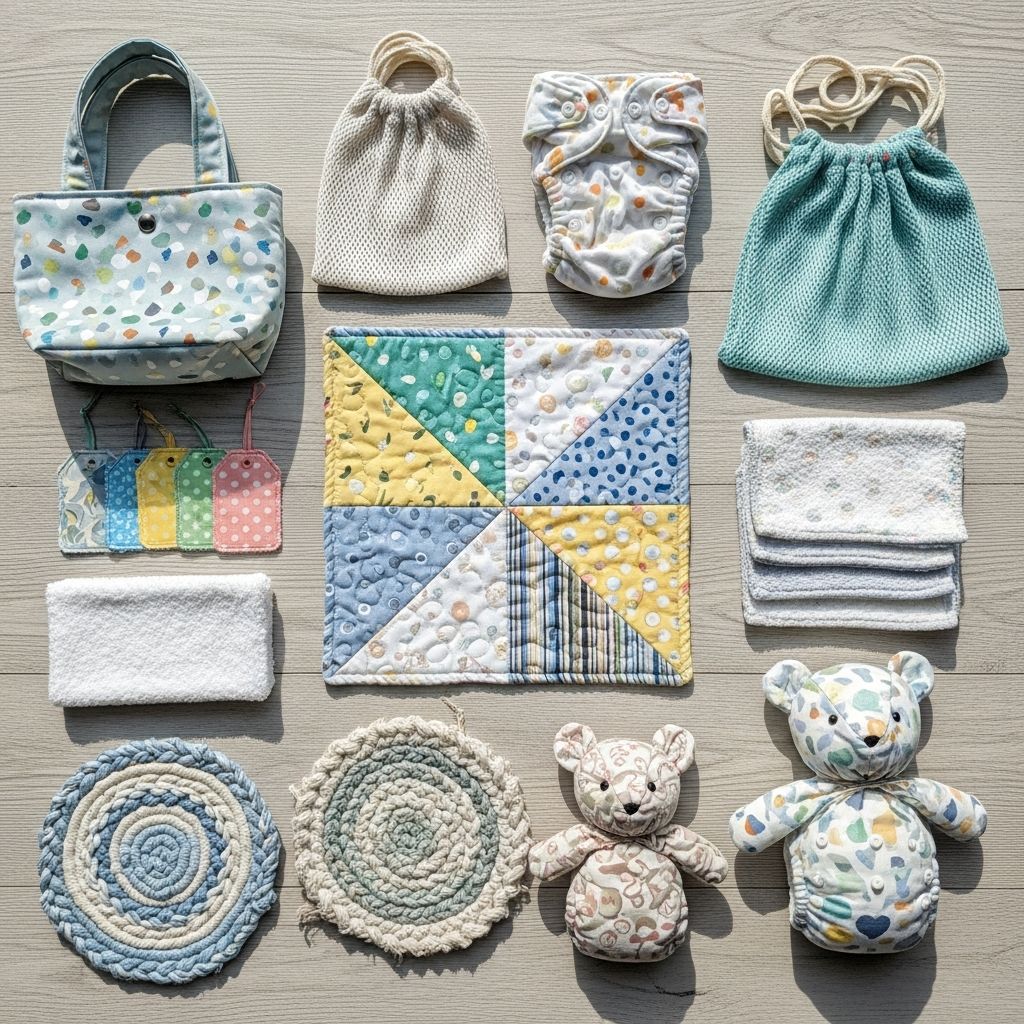
- Memory quilt or blanket: Use the outer prints or solid colors from diaper covers as quilt squares or patchwork blocks.
- Throw pillows: Turn favorite prints into pillow covers for a nursery chair or playroom.
- Stuffed animal or soft toy: Cut out simple shapes and stuff them with worn inserts or scraps.
- Framed fabric art: Stretch a beloved print over a small embroidery hoop or frame as wall décor.
Ideas for Diaper Covers, Pockets, and Shells
Diaper covers and shells often have a waterproof outer layer and cute prints that are too nice to ignore once diaper days are over. With a few adjustments, they can remain in use for years.
Waterproof and On-the-Go Uses
- Mini wet bags: Retire damaged inserts, then use the empty shell to hold damp washcloths, reusable wipes, or small wet items.
- Swim bag for small items: Use covers to carry wet swim diapers or bathing suits for toddlers.
- Travel organizers: Store small toiletries, chargers, or first-aid items inside clean, dry shells.
Repurposing Into Clothing and Accessories
Some covers, especially those with attractive prints, make fun accents for handmade clothing or accessories. Check that the fabric is still strong before sewing it into a new project.
- Use the outer fabric from a cover as pockets or appliqués on children’s shirts and pants.
- Turn the fabric into small zip pouches for crayons, hair accessories, or small toys.
- Reuse snaps or hook-and-loop closures from worn shells in other sewing projects.
Reusing Cloth Diapers for Future Babies or Friends
One of the most straightforward second lives for cloth diapers is simply to keep using them on another child. Many high-quality diapers last through multiple children with proper care, making them a wise long-term investment.
Storing for Your Next Child
- Wash and dry thoroughly before packing away to prevent mildew or lingering odors.
- Store in breathable containers, such as cloth bags or plastic bins with ventilation holes.
- Avoid very hot or humid storage areas, like attics, to protect elastics and waterproof layers.
Sharing, Donating, or Selling
If your family is complete, your stash can still help others. Many parents appreciate the cost savings of secondhand cloth diapers, especially when starting out.
- Pass them along to friends or relatives: Offer sets to expecting parents who are curious about cloth but hesitant about the upfront cost.
- Donate to local groups: Some community organizations or parenting groups accept gently used diapers.
- Sell online: List well-maintained items on secondhand marketplaces or cloth diaper resale groups.
Upcycling Cloth Diapers for Pets and Outdoor Life
Pets and outdoor activities are another helpful outlet for old diapers and inserts. The same absorbent qualities that kept your baby dry can serve your home and animals in new ways.
- Pet bedding: Layer flats or prefolds inside pet beds for extra cushioning and easy washing.
- Training pads: Use highly absorbent inserts under reusable pet pads for extra protection during house-training.
- Outdoor towels: Keep a stack by the door to wipe muddy paws or dry off pets after rain or baths.
- Camping and travel cloths: Take a few as multipurpose rags, dishcloths, and mini towels on trips.
Project Ideas by Diaper Type
The table below summarizes the most common types of cloth diapers and suggests easy second-life uses for each. Use it as a quick reference when sorting your stash and planning projects.
| Diaper Type | Main Qualities | Best Second-Life Uses |
|---|---|---|
| Flats | Large, single-layer fabric; very versatile | Cleaning cloths, kitchen towels, changing pads, produce wraps, quilting or craft fabric |
| Prefolds | Multiple layers with thicker center panel | All-purpose rags, burp cloths, small towels, reusable “paper” towels, pet bedding |
| Fitteds | Contoured shape, fully absorbent | Pet diapers, cleaning cloths, cut into smaller pads or rags, stuffing for cushions |
| Pocket diapers | Outer shell plus removable insert | Shells as organizers or mini wet bags; inserts as rags, towels, or padding |
| Covers/shells | Water-resistant outer layer | Wet bags for small items, travel organizers, fabric for pouches and appliqués |
| Inserts/boosters | Absorbent rectangular pads | Cleanup cloths, makeup removers, bathroom rags, pet crate liners, dish-drying cloths |
Tips for Getting the Most Out of Every Piece
Maximizing the life of your cloth diapers is not only about saving money; it is also a way to respect the resources, labor, and memories tied up in those fabrics. A few simple habits can help you extend their usefulness.
- Trim frayed edges and loose threads to prevent further unraveling.
- Combine worn pieces into patchwork projects rather than discarding them individually.
- Keep a designated basket for “project fabrics” so you can grab them for new ideas.
- Share ideas with other parents—what feels obvious to one person might be new to another.
SEO-Friendly FAQs About Reusing Cloth Diapers
Can old cloth diapers be reused for another baby?
Yes, many cloth diapers can be reused for several children if the elastics, fabric, and closures are still functional. Inspect each item, replace worn elastics if needed, and ensure they are thoroughly washed and dried before use on a new baby.
What can I do with worn-out cloth diaper inserts?
Worn inserts are excellent for cleaning rags, pet bedding, car emergency cloths, and small household towels. If they are too damaged for full pieces, cut them into smaller squares for dusting or use them as stuffing for cushions and soft toys.
Are there no-sew ways to repurpose cloth diapers?
Absolutely. Many second-life uses require no sewing at all, such as turning prefolds into cleaning cloths, using flats as changing pads, or placing inserts under pet beds. You can also use covers as small organizers or mini wet bags without any modification.
Can I donate my used cloth diapers?
Gently used cloth diapers can often be donated to friends, local parenting groups, or community organizations that support families. Check that elastics and waterproof layers are still in good condition, and wash everything thoroughly before giving them away.
Is it safe to use old cloth diapers as cleaning rags?
Yes, once diapers are sanitized and fully dry, they are well suited for cleaning tasks. Assign a color or specific stash for household cleaning to keep them clearly separate from textiles used for personal care or future baby use.
Embracing a Mindset of Reuse
Giving cloth diapers a second life is about more than saving a few dollars or finding new uses for old fabric. It reflects a broader mindset of conscious consumption, where items are chosen carefully, used fully, and thoughtfully repurposed whenever possible.
As your child grows and needs change, your cloth diapers can evolve alongside your family—from adorable baby gear to everyday household helpers and meaningful keepsakes. With a bit of creativity and care, not a single piece has to go to waste.