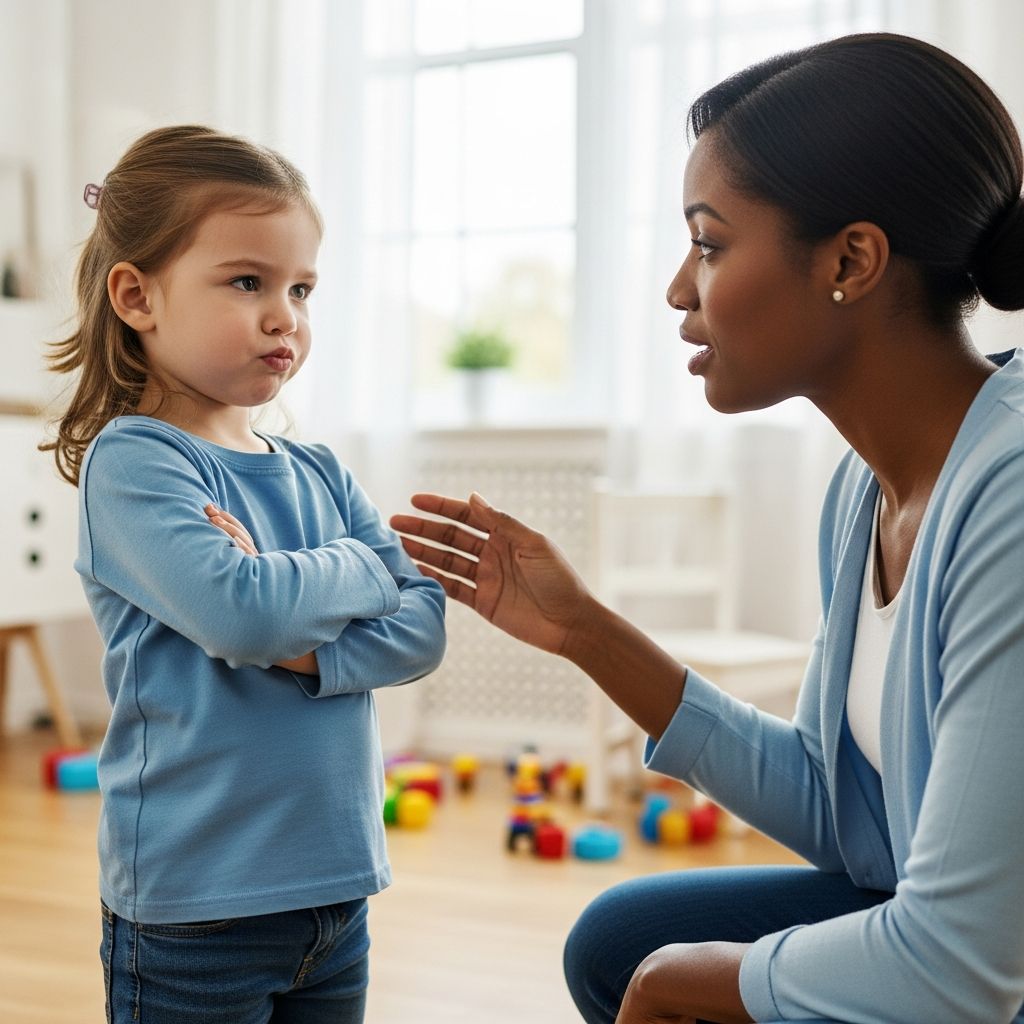
Hearing a four-year-old angrily declare, “You’re not my friend!” or “I hate you!” can be jarring, especially if you’ve worked hard to raise a kind, empathetic child. These words often feel bigger and harsher than the child’s true feelings. Yet for many preschoolers, this kind of language is a normal part of learning how friendships, conflict, and emotions work.
This article explains what is usually going on beneath these angry phrases and offers practical, respectful ways to respond. You will learn how to stay calm, protect everyone’s feelings as much as possible, and use these moments to teach empathy, self-regulation, and problem-solving skills.
Why “You’re Not My Friend” Is So Common at Four
Preschool-age children are in a powerful stage of social and emotional development. They are experimenting with independence, testing the impact of their words, and figuring out how relationships work. Developmental research shows that by about age four, most children begin to form more stable peer relationships, but they still struggle to manage strong feelings and to see a situation from another person’s point of view.
When a four-year-old lashes out with “You’re not my friend,” they are usually saying:
- “I feel overwhelmed and don’t know what else to say.”
- “I’m afraid of losing you or this game.”
- “I feel hurt, left out, or powerless.”
In other words, the phrase is less about a true wish to end the friendship and more about a clumsy attempt to communicate big emotions.
What Your Child Is Learning in These Moments
Each conflict is also a learning opportunity. Through thousands of small social struggles, children gradually develop:
- Emotion regulation – calming down enough to think and choose words instead of just reacting.
- Perspective-taking – beginning to understand that others have separate feelings and thoughts.
- Social problem-solving – figuring out compromises and ways to repair hurt feelings.
Adult coaching during these conflicts helps children build the skills they need to navigate increasingly complex friendships over time.
Separating the Words from the Feelings
Before you can respond helpfully, it is important to separate the surface message (“You’re not my friend”) from the emotional message underneath (“I feel angry,” “I feel hurt,” or “I feel scared I’ll lose you”).
| What Your Child Says | What They Might Be Feeling | What They Might Need |
|---|---|---|
| “You’re not my friend!” | Anger, jealousy, fear of exclusion | Reassurance, boundaries, help calming down |
| “I hate you!” | Intense frustration or hurt | Validation, language for feelings, space to cool off |
| “You can’t play with us!” | Need for control, insecurity about belonging | Coaching in inclusion, choices that don’t hurt others |
Staying Calm When the Words Feel Harsh
Young children rely on adults to help them co-regulate, meaning they borrow your calm to find their own. When you stay grounded, you communicate safety to both children and make it easier for everyone to move from “fight mode” back to connection.
When you hear hurtful words:
- Pause before responding. Take one or two slow breaths. This brief pause helps you respond thoughtfully instead of reacting from your own emotions.
- Use a warm, steady tone. Aim for firm but kind: you are on everyone’s side.
- Keep your body language open. Crouch down to the children’s level, relax your shoulders, and use soft eye contact.
Your presence alone often begins to de-escalate the situation. Children sense that an adult who cares is there to help them work things out.
Responding in the Moment: A Simple Step-by-Step Approach
Here is a practical, repeatable way to respond when your child says “I won’t be your friend” to another child or to you.
1. Acknowledge the Emotion, Not the Words
Start by naming what you suspect your child is feeling. Research on emotion coaching suggests that helping children label their feelings supports both brain development and later emotional resilience.
You might say:
- “You sound really mad right now.”
- “It looks like you’re frustrated about the game.”
- “I hear how upset you are that she took the toy.”
When a child feels understood, their nervous system begins to settle, making it easier for them to hear guidance.
2. Set a Clear, Kind Boundary Around Hurtful Language
Children need to know that all feelings are welcome, but not all behaviors are. You can respect the feeling while limiting the words that hurt others.
Try phrases like:
- “It’s okay to feel angry. It’s not okay to say things that hurt people.”
- “We talk to friends in our family with kind words, even when we’re mad.”
This approach aligns with guidelines that emphasize clear rules against ridicule, name-calling, and cruelty while allowing room for normal disagreement.
3. Support Both Children’s Feelings
If another child is involved, notice their experience as well. This models empathy and shows that everyone’s feelings matter.
You might say:
- To your child: “Those words can really hurt. I think your friend feels sad.”
- To the friend: “It hurts when someone says they don’t want to be your friend. I’m sorry that happened.”
By briefly speaking to each child, you validate both perspectives and lower the sense that anyone is “the bad kid.”
4. Invite Each Child to Share What Happened
Once everyone is a bit calmer, invite them to tell you their side. Listening carefully teaches them that their voice matters and models respectful communication.
You can ask:
- “Can you tell me what happened, one at a time?”
- “What were you hoping would happen in the game?”
Reflecting back what you hear (“So you wanted to play the game your way, and you felt upset when it changed”) helps each child feel heard and begins to build perspective-taking.
5. Coach Them to Find a Win–Win Solution
Rather than solving it for them, guide them to brainstorm ideas. Social skills programs often emphasize problem-solving that leads to solutions both children can accept.
Try prompts like:
- “We need an idea that works for both of you. What could you try?”
- “Is there a way to play so you both get something you want?”
If they get stuck, you can gently offer choices (“You could take turns choosing the rules, or you could pick a different game”). The goal is for them to experience themselves as capable problem-solvers, not just rule-followers.
Teaching Kinder Words for Big Feelings
Children often use “You’re not my friend” because they lack more precise language. You can help by giving them alternative phrases that express the real feeling without attacking the person.
Helpful Phrases to Practice Together
- For anger: “I’m mad right now. I need a break.”
- For hurt: “That hurt my feelings.”
- For needing space: “I want to play by myself for a while.”
- For frustration with rules: “Can we try it a different way?”
- For exclusion temptations: “I want to play with just you now. We can play with others later.”
Practicing these when everyone is calm makes it more likely your child can remember them in the heat of the moment.
Using Play and Role-Play
Role-playing is a powerful tool. You can use dolls, action figures, or simple pretend conversations to act out common friendship situations. Studies and clinical experience suggest role-play helps children rehearse assertive but respectful responses in a low-stakes way.
Some ideas:
- Act out a scene where one toy says, “You can’t play!” and practice kind but firm responses.
- Switch roles so your child gets to be both the hurt child and the one learning better words.
- End with a repair, like a hug or handshake, to show that conflicts can be resolved.
Building Everyday Empathy and Social Skills
Children are less likely to use cutting phrases when they’ve had plenty of practice understanding others’ feelings and working through disagreements peacefully.
Daily Ways to Strengthen Empathy
- Talk about feelings you see. “She looks disappointed that the swing is taken.” This kind of commentary gently draws your child’s attention to other people’s experiences.
- Share your own feelings simply. “I feel cranky because I’m hungry. I’m going to eat and then I’ll be calmer.” This models healthy self-awareness.
- Read and discuss stories. Ask, “How do you think that character feels?” or “What could the friend say to help?” Books are safe practice grounds for empathy.
Encouraging Cooperative Play
Friendship skills grow through repeated practice with cooperation, turn-taking, and shared problem-solving. Research-based early childhood programs often teach these skills through guided play and structured group activities.
You can support this by:
- Offering games that require working together (building blocks, puzzles, pretend play).
- Praising specific behaviors: “You waited for your turn,” “You asked nicely,” or “You had a great idea that worked for both of you.”
- Keeping playdates small and manageable so children don’t become overwhelmed.
When and How to Step In During Play
Careful adult involvement makes a big difference. Guidance from parenting and education experts suggests that adults should monitor quietly and allow children to work out small disagreements, but step in when there is clear cruelty, emotional overwhelm, or risk of harm.
Times to Observe Without Intervening
It is usually fine to stay in the background when:
- The conflict is minor and both children still seem mostly calm.
- They are experimenting with sharing, taking turns, or choosing games.
- They are using somewhat clumsy but not cruel language and are still engaged in play.
In these cases, your quiet presence nearby is often enough, and solving the problem themselves helps build confidence.
Times to Step In Promptly
Move closer and intervene when:
- Words become clearly hurtful (“Nobody likes you,” “You can never play with us”).
- One child is consistently left helpless, frozen, or in tears.
- The situation is escalating toward hitting, pushing, or other unsafe behavior.
Intervening calmly sends a message that unkindness and harm are taken seriously and that adults are available to support everyone involved.
Supporting Your Child After the Conflict
Some of the most meaningful learning happens later, when feelings have cooled. This is a good time to talk gently about what happened, without shaming or lecturing.
Reflect Together
You might say:
- “Earlier you told your friend, ‘You’re not my friend.’ What was going on for you then?”
- “How did you feel when you were that mad? And how do you think your friend felt?”
These conversations build emotional awareness and empathy over time. They also help your child notice patterns in their own behavior and consider different choices next time.
Rehearse a Better Next Step
Keep it brief and practical:
- “Next time you want to play alone, you can say, ‘I want to play by myself right now.’”
- “When you feel that angry, you can come find me or take a few big breaths.”
Then offer reassurance: “You’re still learning. Everyone makes mistakes when they’re mad. We’ll keep practicing together.”
Handling Your Own Worries and Embarrassment
It is common for parents to worry that a child who says “I hate you” or “You’re not my friend” is mean-spirited or will struggle with friendships later. Current understanding of early childhood development suggests that most preschoolers go through phases of experimenting with strong language and social power as they learn boundaries and empathy.
If another adult hears your child say something unkind and seems concerned, you can briefly explain that you are working on:
- Teaching your child to express strong feelings with respectful words.
- Coaching them in problem-solving instead of punishing them for having big emotions.
- Intervening when words become hurtful and helping both children feel safe and heard.
These reassurances can help other caregivers understand that you take the behavior seriously and are addressing it thoughtfully.
Frequently Asked Questions (FAQs)
Q: Is it normal for a four-year-old to say “I hate you” or “You’re not my friend”?
A: Yes. Many preschoolers experiment with strong phrases when they are overwhelmed or frustrated. Developmentally, they are just learning to manage big feelings and have limited language and self-control. With calm guidance, most children outgrow these phases as their empathy and regulation skills grow.
Q: Should I punish my child for saying hurtful things?
A: Consequences that focus only on punishment often miss the underlying skill gap. Experts recommend a combination of clear limits (explaining that hurtful words are not okay), emotion coaching (naming feelings), and teaching alternative phrases and problem-solving skills. This approach addresses both the behavior and the emotions driving it.
Q: What if my child is the one getting told “You’re not my friend”?
A: Offer comfort first, then help your child name feelings and practice assertive but kind responses. You can role-play what to say next time, such as, “That hurts my feelings,” or “I still want to be your friend.” Supporting your child’s ability to speak up respectfully and seek help when needed builds resilience.
Q: How can I tell if this is more than a normal phase?
A: Talk with a pediatrician, teacher, or child development professional if your child frequently uses cruel language, seems unable to enjoy play with peers, or if conflicts are constant and intense across many settings. They can help you determine whether additional evaluation or support would be helpful, drawing on established developmental guidelines.
Q: What’s the most important thing I can do in these moments?
A: Your calm, connected presence is the foundation. When you stay steady, acknowledge feelings, protect everyone’s dignity, and gently coach better choices, you turn painful moments into powerful lessons about kindness, boundaries, and repair—skills your child will use in friendships for years to come.
References
- Preschoolers making friends — Raising Children Network. 2023-03-10. https://raisingchildren.net.au/preschoolers/behaviour/friends-siblings/preschoolers-making-friends
- Tools: Friends for your 4-year-old — Tools for Your Child’s Success (University of Wisconsin–Madison, Division of Extension). 2021-05-01. https://toolsforyourchildssuccess.org/tools/4-years-old/friends/
- 3 Ways to Help Children Navigate Friendship Challenges — Big Life Journal. 2022-04-18. https://biglifejournal.com/blogs/blog/help-children-navigate-friendship-challenges
- 12 Ways to Help When Your Child Struggles to Make Friends — Dr. Friendtastic (Eileen Kennedy-Moore, PhD). 2023-02-06. https://drfriendtastic.substack.com/p/12-ways-to-help-when-your-child-struggles
- Kids’ Toughest Friendship Issues Solved! — Scholastic Parents. 2016-08-15. https://www.scholastic.com/parents/family-life/parent-child/kids-toughest-friendship-issues-solved.html