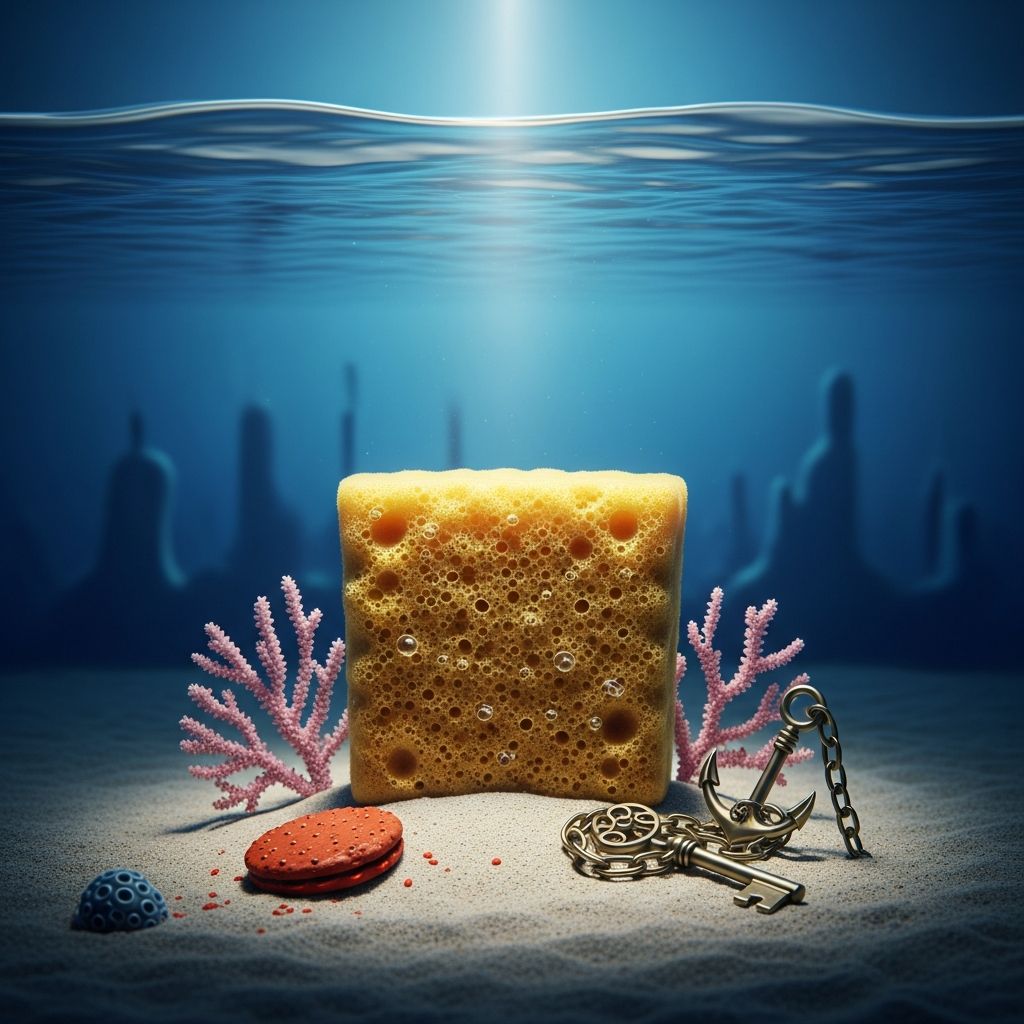
At first glance, SpongeBob SquarePants is a noisy, neon cartoon about a hyperactive sea sponge flipping burgers under the sea. Look closer, and it becomes a surprisingly rich portrait of childhood joy, tedious adult work, and the strange ways those worlds collide in one underwater town called Bikini Bottom.
This article explores what the show is really about: its characters, worldview, recurring jokes, and why it speaks so strongly to both kids and adults.
The World of Bikini Bottom: A Tiny Ocean-Sized Stage
Bikini Bottom is a compact, chaotic city resting on the floor of the Pacific Ocean. It has suburbs, highways, restaurants, schools, and a distinctly human sense of bureaucracy and boredom, all populated by talking sea creatures. It works as a miniature stand-in for the modern world.
- Location: A fictional town under the Pacific Ocean, home to fish, crabs, squids, sponges, and more.
- Scale: A small community where everyone knows (and annoys) everyone else.
- Everyday places: A fast-food joint (the Krusty Krab), a rival diner (the Chum Bucket), a boating school, jellyfish fields, and quiet suburban streets.
The world’s charm lies in its inconsistency. Physics work until they suddenly do not, fires burn underwater, and gravity is more of a suggestion. This instability makes Bikini Bottom feel like a child’s imagination: confident, vivid, and unconcerned with realism.
Key Characters and What They Represent
Each main character embodies a recognizable attitude toward life, work, and responsibility. Together, they form a rough psychological map of modern adulthood—seen through a childlike, absurd lens.
| Character | Role in Bikini Bottom | Symbolic Meaning |
|---|---|---|
| SpongeBob SquarePants | Fry cook at the Krusty Krab, eternal optimist | Childlike wonder, enthusiasm for work, naive faith in others |
| Patrick Star | SpongeBob’s best friend, jobless starfish | Simple pleasure, laziness, unfiltered emotional honesty |
| Squidward Tentacles | Cashier at the Krusty Krab, aspiring artist | Burnout, cynicism, frustrated ambition |
| Mr. Krabs | Owner of the Krusty Krab | Greed, small-business hustle, occasional conscience |
| Plankton | Owner of the failing Chum Bucket | Obsessive envy, villainy softened by loneliness |
| Sandy Cheeks | Scientist squirrel living underwater in a dome | Curiosity, outsider identity, Texas pride and toughness |
| Gary the Snail | SpongeBob’s pet | Quiet, surprisingly sharp observer; the straight man to SpongeBob’s chaos |
| Mrs. Puff | Boating school instructor | Teacher burnout, anxiety, and being trapped in a hopeless job |
SpongeBob: A Child in an Adult’s Job
At the heart of the series is SpongeBob himself: a sea sponge who lives in a pineapple and adores his minimum-wage job cooking burgers at the Krusty Krab. While many shows depict kids longing to be adults, SpongeBob reverses the formula—he is technically an adult with a job and bills, but he behaves with relentless, almost innocent joy.
- He treats work like play, turning burger flipping into an art and a personal mission.
- He clings to routines (like his morning song or jellyfishing trips with Patrick) as if they’re sacred rituals.
- He often misunderstands the seriousness of adult problems, but his optimism still pushes plots forward.
This combination—adult responsibilities with the mind of an excitable kid—makes SpongeBob a stand-in for how many adults wish they felt about their work and relationships. He does not balance work and life; he simply loves both too much.
Squidward: The Other Side of Growing Up
If SpongeBob is the fantasy of loving your job, Squidward is the reality of hating it. He works the front counter at the same restaurant and dislikes every second of it.
Key traits of Squidward’s worldview:
- Resentment: He feels stuck in a job beneath his artistic aspirations.
- Isolation: He longs for a more cultured life but is trapped between SpongeBob and Patrick’s houses.
- Self-sabotage: His arrogance often ruins his own chances at happiness.
Together, SpongeBob and Squidward show two emotional extremes toward adulthood: enthusiastic immersion versus bitter rejection. Many episodes simply ask: what happens when these two are forced to interact for eight hours a day?
Work, Money, and the Krusty Krab
Much of the series takes place at the Krusty Krab, a ramshackle fast-food restaurant selling the famous Krabby Patty. On paper, it is an ordinary burger joint. In the show, it becomes a symbol of both economic survival and the absurdity of work.
Mr. Krabs represents small-business greed taken to cartoon extremes. He is obsessed with profit, terrified of losing customers, and constantly cutting corners. Yet he is not purely evil; he cares for his daughter, Pearl, and grudgingly recognizes SpongeBob’s talent.
Plankton, his rival across the street, is a one-man operation desperate to steal the Krabby Patty formula. His villainy is fueled less by ideology and more by humiliation. In many stories, he functions like a parody of corporate espionage: elaborate spy gadgets and grand speeches that all fail in the face of SpongeBob’s obliviousness.
The workplace stories let kids see how strange adult priorities can seem. While adults may recognize satire of corporate competition and labor exploitation, children mostly see slapstick chaos and funny food.
Absurd Comedy as the Show’s Engine
SpongeBob’s humor relies on absurdity more than realism. The creators embrace visual gags, sudden tone shifts, and logic that bends in service of a punchline. According to interviews with Nickelodeon executives, the series was originally greenlit in part because of its distinctive, surreal humor and bright, fluid animation style.
Common comedic tools include:
- Exaggerated reactions: Emotions are pushed to their limits—melodramatic sobbing, manic joy, operatic fear.
- Visual whiplash: Rapid cuts from mundane scenes to grotesquely detailed close-ups.
- Repetition: Catchphrases, running jokes, and callbacks across seasons that reward long-time viewers.
- Underwater impossibilities: Campfires, snow, and land behavior played straight as if nothing is strange.
This style connects to a long tradition of American slapstick and cartoon exaggeration, echoing earlier series like Looney Tunes. Studies on children’s media suggest that such extreme physical comedy helps keep young viewers engaged and can aid memory for story events, even if they do not fully grasp the satire underneath.
Friendship and Emotional Honesty
Beneath the sarcasm, the show is surprisingly sincere about friendship. SpongeBob’s relationships with Patrick, Sandy, and even Squidward are marked by intensity and persistence.
- SpongeBob & Patrick: Their friendship is built on shared play, low stakes, and mutual loyalty. Conflicts are short-lived and almost always resolved through apology or distraction.
- SpongeBob & Sandy: Sandy challenges SpongeBob, pushing him into dangerous experiments or competitions. Their bond centers on curiosity and shared adventures.
- SpongeBob & Squidward: SpongeBob insists they are friends, while Squidward publicly rejects him. Yet in crucial moments, Squidward often reveals that he does care.
Research on children’s media notes that cartoons with stable friendships can help kids understand cooperation, conflict resolution, and forgiveness over time. In SpongeBob’s case, the show stresses that being open-hearted often means you will be misunderstood—but that does not make kindness any less worthwhile.
Childhood vs. Adulthood: Two Timelines in One Body
SpongeBob is legally an adult (he holds a job, pays rent, and takes a boating test similar to a driver’s exam), yet he acts emotionally like a child. This duality is central to the show’s appeal:
- For kids: He is a peer—someone who loves jellyfishing, blowing bubbles, and silly jokes.
- For adults: He is a fantasy: the worker who is never cynical, never exhausted, and deeply proud of his work.
Episodes often highlight his struggle to be taken seriously by authority figures (like Mrs. Puff or Mr. Krabs) while still clinging to playtime. Media scholars have pointed out that such characters let shows simultaneously comment on adult institutions (like work and school) and keep the emotional tone safely childlike.
The Show’s Cultural Impact
Since its debut in 1999, SpongeBob SquarePants has become one of Nickelodeon’s longest-running and most recognizable series. It has generated films, spin-offs, a Broadway musical, toys, video games, and a massive presence in internet culture.
- Memes and online culture: Reaction images and short clips from the show have become a universal language on social media, used to express feelings from exhaustion to triumph.
- Intergenerational fandom: Adults who watched the show as kids now introduce it to their own children, reinterpreting its jokes through the lens of their own work lives.
- Critical recognition: The show has been praised for its inventive animation and enduring characters, even as later seasons spark debate among fans about changes in tone.
Because of its longevity and reach, SpongeBob has become part of the broader conversation about what children’s television can be: loud and weird, but also emotionally sharp and thematically layered.
Why Kids and Adults See Different Shows
One of the keys to SpongeBob’s success is that children and adults can watch the same episode and walk away with different experiences.
Children tend to notice:
- Bright colors and energetic movement.
- Simple story goals (catch the jellyfish, get the job, win the contest).
- Clear emotional cues (SpongeBob is happy, Squidward is mad).
Adults are more likely to notice:
- Satire of customer service and corporate greed at the Krusty Krab.
- Jokes about burnout, anxiety, and midlife disappointment (often centered on Squidward or Mrs. Puff).
- Parodies of pop culture, film genres, and social expectations.
Research on family co-viewing shows that programs layered in this way can foster shared conversations and repeat viewing, because different age groups keep finding new layers in the same material.
Frequently Asked Questions (FAQs)
Is SpongeBob SquarePants really meant for adults too?
The series is officially a children’s show aired on a kids’ network, but its satire of work, money, and frustration clearly targets older viewers as well. Many jokes operate on two levels, letting kids enjoy slapstick while adults catch the social commentary.
What age is SpongeBob supposed to be?
The show does not give a definitive chronological age, but SpongeBob is treated as an adult: he has a full-time job as a fry cook, lives independently, and attends boating school in a way that mirrors driver’s education.
Is Bikini Bottom based on a real place?
Bikini Bottom is fictional, but it is placed on the floor of the Pacific Ocean near Bikini Atoll, a real-world atoll in the Marshall Islands. That location choice has led to fan theories, but the show itself treats it mainly as a playful setting reference.
Why does SpongeBob love his job so much?
SpongeBob sees cooking Krabby Patties as a calling, not just employment. He treats each task with pride and joy, reflecting a childlike ideal that work can be pure fun. This contrasts with Squidward’s boredom and Mr. Krabs’s obsession with profit.
Is there a deeper lesson parents should know about?
The show foregrounds themes of optimism, resilience, and friendship while quietly highlighting adult issues like burnout, greed, and anxiety. For parents, it can be a springboard to talk with kids about kindness, persistence, and how different people experience work and responsibility in different ways.
References
- SpongeBob SquarePants (TV Series 1999– ) – Plot Summary — IMDb. 2024-01-01 (accessed). https://www.imdb.com/title/tt0206512/plotsummary/
- Huston, A. C., & Wright, J. C. — Children’s Processing of Television: The Informative Functions of Formal Features — In: Bryant, J., Zillmann, D. (eds.) Media Effects, Lawrence Erlbaum Associates. 2002. https://doi.org/10.4324/9781410602428
- Calvert, S. L. — Children’s Journeys Through the Information Age — McGraw-Hill. 1999. https://psycnet.apa.org/record/1999-02788-000
- SpongeBob SquarePants (series) — Nickelodeon / Official franchise overview via Fandom summary. 2024-01-01 (accessed). https://spongebob.fandom.com/wiki/SpongeBob_SquarePants_(series)
- SpongeBob SquarePants — Nickelodeon Wiki. 2024-01-01 (accessed). https://nickelodeon.fandom.com/wiki/SpongeBob_SquarePants
- SpongeBob SquarePants — Rotten Tomatoes TV Series Overview. 2024-01-01 (accessed). https://www.rottentomatoes.com/tv/spongebob_squarepants
- SpongeBob SquarePants (TV Series 1999– ) — IMDb Series Overview. 2024-01-01 (accessed). https://www.imdb.com/title/tt0206512/