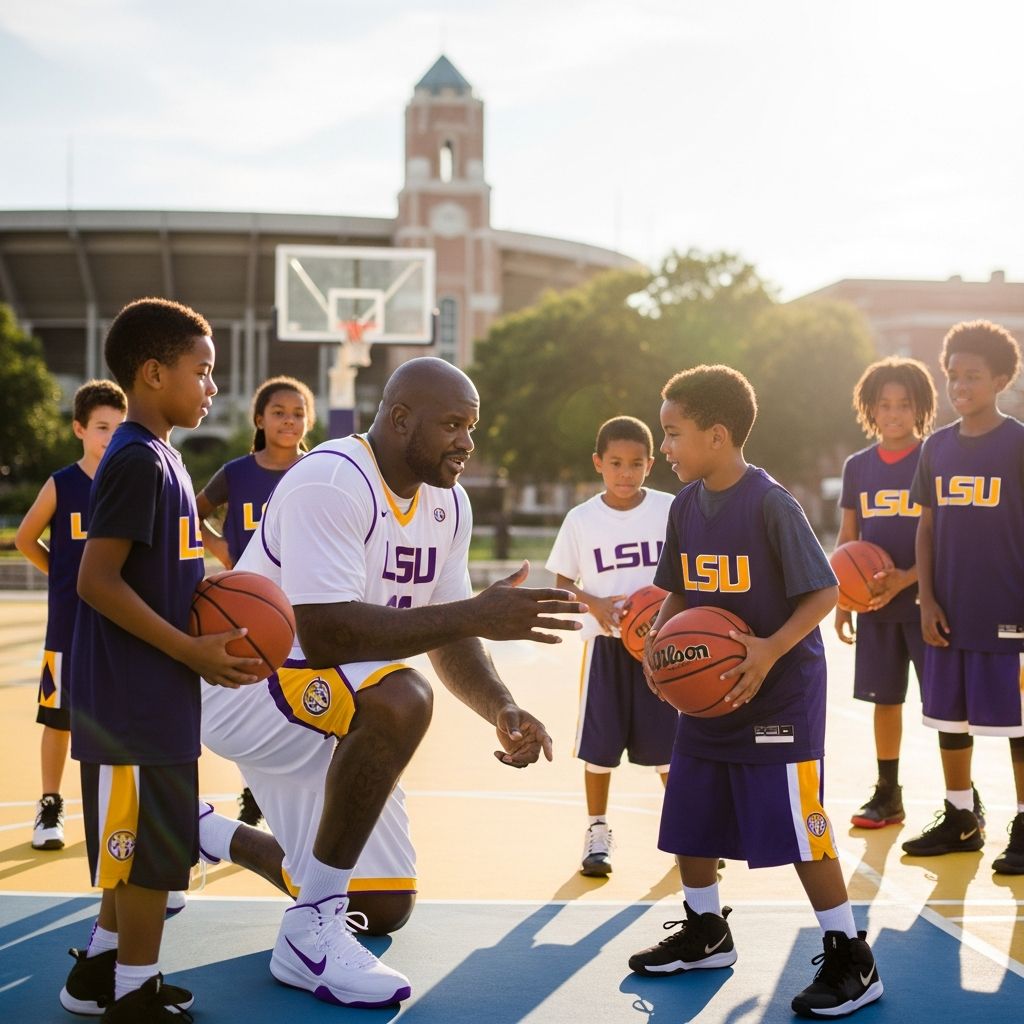
Shaquille O’Neal’s towering presence is more than a collection of NBA trophies and highlight reels. His years at LSU, his views on the modern game, and the way he talks about his children and young players together form a powerful roadmap for how kids can grow through basketball today. This article uses his journey as a springboard to explore what really matters in youth hoops: character, development, joy, and balance.
From Baton Rouge to Basketball Icon: Why Shaq’s College Story Still Matters
Before Shaq became a global superstar, he was a raw, dominant big man at Louisiana State University, learning how to translate talent into impact. College basketball is still an important step for many players because it combines physical development, coaching, and education in a high-pressure environment.
Shaq’s time at LSU highlights several themes that parents and kids can apply today:
- Growth takes time: Even dominant athletes must learn systems, conditioning, and teamwork.
- Coaching relationships matter: Good coaches help players understand the game, not just run plays.
- Education and exposure: College brings media attention, academic demands, and social pressures that force players to mature.
For young hoopers, the takeaway is simple: focus less on where you want to be at 18, and more on the habits and mindset you build at 8, 10, or 12.
How the Game Has Changed Since Shaq’s LSU Days
Basketball has evolved dramatically since Shaq’s college years. Pace, spacing, analytics, and training methods look very different now. For kids growing up today, understanding these changes can turn watching the game into a learning lab.
Old-School Power vs. Modern Skill Everywhere
| Then (Shaq’s LSU Era) | Now (Modern Youth & Pro Game) |
|---|---|
| Emphasis on post play and physical dominance inside | Emphasis on spacing, 3-point shooting, and versatility at all positions |
| Bigs rarely handled the ball on the perimeter | Centers and forwards often dribble, pass, and shoot like guards |
| Conditioning focused on strength and basic endurance | Conditioning includes agility, load management, and sport science-informed training[10] |
| Limited off-season specialized youth training | Year-round skills academies, camps, and travel teams for kids |
Shaq has often commented that today’s players are more skilled on the perimeter, even at his position. The message for kids is not to copy his exact style, but to adopt his intensity and work ethic while developing a modern skill set.
Youth Basketball Today: Opportunity and Pressure
Youth basketball in the United States has exploded, with structured development pathways, competitive leagues, and camps available for kids as young as elementary school. This provides opportunity but can also create pressure.
Where Kids Learn and Compete
- Community and school programs: Often focus on inclusion and basic skills.
- Club and travel teams: Emphasize competition, exposure, and advanced concepts.
- Camps and academies: Offer focused instruction on skills, athleticism, and mental performance.
Elite training environments highlight the same themes Shaq often stresses—work ethic, fundamentals, and discipline. For example, reputable youth programs and academies emphasize long-term skill development over short-term wins.
Balancing Fun, Development, and Ambition
Parents can support their kids by keeping three priorities in view:
- Love of the game: If a child enjoys playing, practice and improvement become self-driven.
- Healthy challenge: Kids should be pushed, but not overwhelmed, by competition.
- Perspective: Very few youth players reach the pros; basketball can still build lifelong skills and friendships.
Shaq as a Dad: Values Behind the Highlight Reels
Shaquille O’Neal is open about how he parents his children: success is not handed to them just because their dad is famous. He has talked in interviews about making his kids earn their own way and prioritize education, echoing lessons he learned long before the NBA.
Applied to youth basketball, his approach suggests several core values:
- Nothing is guaranteed: Talent plus famous last name is no substitute for daily work.
- School comes first: NCAA and national development models stress academics alongside sport.
- Character over clout: Being coachable, respectful, and resilient matters more than social media attention.
Parents who admire Shaq’s on-court dominance can do even more for their kids by modeling his off-court emphasis on discipline and humility.
Fundamentals First: What Young Players Should Really Work On
Research and national coaching curricula consistently emphasize progressive, age-appropriate development in youth basketball rather than rushing into complex plays and nonstop tournaments. These recommendations line up with how great bigs like Shaq actually built their game—on basics repeated thousands of times.
Core Skill Pillars for Kids
- Ball handling: Dribbling with both hands, protecting the ball, changing speed and direction.
- Shooting form: Balanced stance, consistent release, and learning good shot selection.
- Passing: Chest, bounce, and overhead passes, plus reading where teammates are moving.
- Footwork: Jump stops, pivots, defensive slides, and basic post or perimeter moves.
- Decision-making: When to pass, drive, or shoot; understanding spacing and timing.
Well-designed youth programs and camps build these skills step by step, often grouping players by development level rather than only by age.
Practice Ideas Inspired by Elite Development Programs
Parents and coaches do not need NBA resources to help kids grow. Drawing on national and academy-style approaches, a simple weekly plan might include:
- Warm-up (10 minutes): Light jogging, dynamic stretches, and basic ball-handling moves.
- Skill blocks (30–40 minutes): Short, focused drills for dribbling, shooting, and passing.
- Small-sided games (15–20 minutes): 2-on-2 or 3-on-3 to increase touches and decisions.
- Cool-down & reflection (5–10 minutes): Stretching plus one question: “What did you learn today?”
This mirrors how structured academies use group training, position-specific work, and game-like scenarios to help players transfer skills into real play.
Mindset Like Shaq: Confidence Without Entitlement
Shaq’s public persona combines humor, confidence, and a clear standard for effort. The right mindset can help kids navigate both wins and losses, whether they dream of the NBA or just enjoy Saturday leagues.
Key Mental Skills for Young Hoopers
- Growth mindset: Believing you can get better through practice and feedback.
- Resilience: Bouncing back from missed shots, mistakes, or tough games.
- Coachability: Listening, trying new adjustments, and accepting constructive criticism.
- Team-first attitude: Celebrating teammates and making unselfish plays.
High-level development environments now integrate mental performance training—teaching focus, confidence, and emotional control alongside physical skills.[10] Parents can echo this at home by praising effort, attitude, and learning, not just points or wins.
The Role of Parents: Support Crew, Not Head Coach of Everything
Shaq often credits his family background for his toughness and drive. For today’s kids, supportive parents can be the difference between burnout and a lifelong love of the game.
Helpful Ways Parents Can Show Up
- Set realistic expectations: Encourage personal bests rather than demanding stardom.
- Control the car ride home: Ask how your child felt, not just what the scoreboard said.
- Back the coach: Address concerns respectfully and privately; avoid sideline coaching that confuses kids.
- Protect rest and recovery: Build in off-days and varied activities to prevent overuse injuries and mental fatigue.[10]
Red Flags in Youth Basketball Culture
Parents should stay alert for environments that focus on short-term results at the expense of a child’s well-being:
- Year-round tournaments with little practice or teaching.
- Coaches who link a child’s value to scoring alone.
- Programs that neglect academic commitments or rest.
- Adults who create fear of mistakes instead of room to learn.
Healthy programs, including those recommended by national federations, emphasize development, inclusion, and age-appropriate competition over constant high-stakes play.
What Shaq Might Tell a Young Player Today
Shaq has given variations of the same advice in many interviews: respect the game, outwork people, and stay grounded. Translating that into concrete guidance for kids might sound like this:
- Master something simple every year: One new move, one defensive skill, one habit.
- Take care of your body: Sleep well, eat reasonably, and listen to pain signals.[10]
- Do your homework: Watch games, study players at your position, and understand why plays work.
- Be a good teammate: Shaq’s most memorable moments often came in partnership with great guards and wings; no one wins alone.
Frequently Asked Questions (FAQs)
At what age should my child start playing organized basketball?
Many experts recommend introducing basic movement and ball skills in early childhood, but formal, competitive play can wait until roughly 7–9 years old, with an emphasis on fun, small-sided games, and simple rules.
How many teams or leagues should my child join at once?
National and academy guidelines encourage avoiding over-scheduling. One main team plus occasional camps or clinics is usually enough for most kids, especially if it allows time for rest, schoolwork, and other interests.
Does my kid need a private trainer to improve?A: Private or small-group training can help, but it is not required. Quality coaching, consistent practice, and game experiences in well-structured programs often provide everything young players need, especially at beginner and intermediate levels.
Q: How can I tell if a youth program is focused on development, not just winning?
Look for signs like equal practice attention for all players, reasonable playing time policies, age-appropriate rules, and coaches who teach fundamentals instead of only drawing up complex plays. Long-term development–oriented clubs and federations describe these traits as markers of quality.
What should my child learn from watching stars like Shaq?
Kids can enjoy the highlights, but the deeper lesson is how much work, resilience, and humility sit behind the show. Players like Shaq spent years mastering basics, responding to coaching, and taking care of their bodies long before the cameras arrived.
References
- USA Basketball Player Development Curriculum — USA Basketball. 2020-06-01. https://www.usab.com/play/the-usa-basketball-coaching-guide-for-all-levels/usa-basketball-player-development-curriculum-introduction
- Basketball Camps: Training & Development for Youth & Teens — IMG Academy. 2024-01-10. https://www.imgacademy.com/sport-camps/basketball-camp
- Youth Basketball Skill Development — YouthBasketballDevelopment.com. 2023-09-15. https://www.youthbasketballdevelopment.com
- Year-Round Training Programs — Larry Hughes Basketball Academy. 2023-04-05. https://www.lhbastl.com
- MOKAN Basketball Youth Program — MOKAN Basketball Club. 2024-08-20. https://mokanbasketball.com/youth/
- Pro Skills Basketball: Youth Basketball Teams, Camps & Clinics — Pro Skills Basketball. 2024-03-12. https://proskillsbasketball.com
- Impact Basketball: Player & Life Development — Impact Basketball. 2023-11-01. https://www.impactbball.com