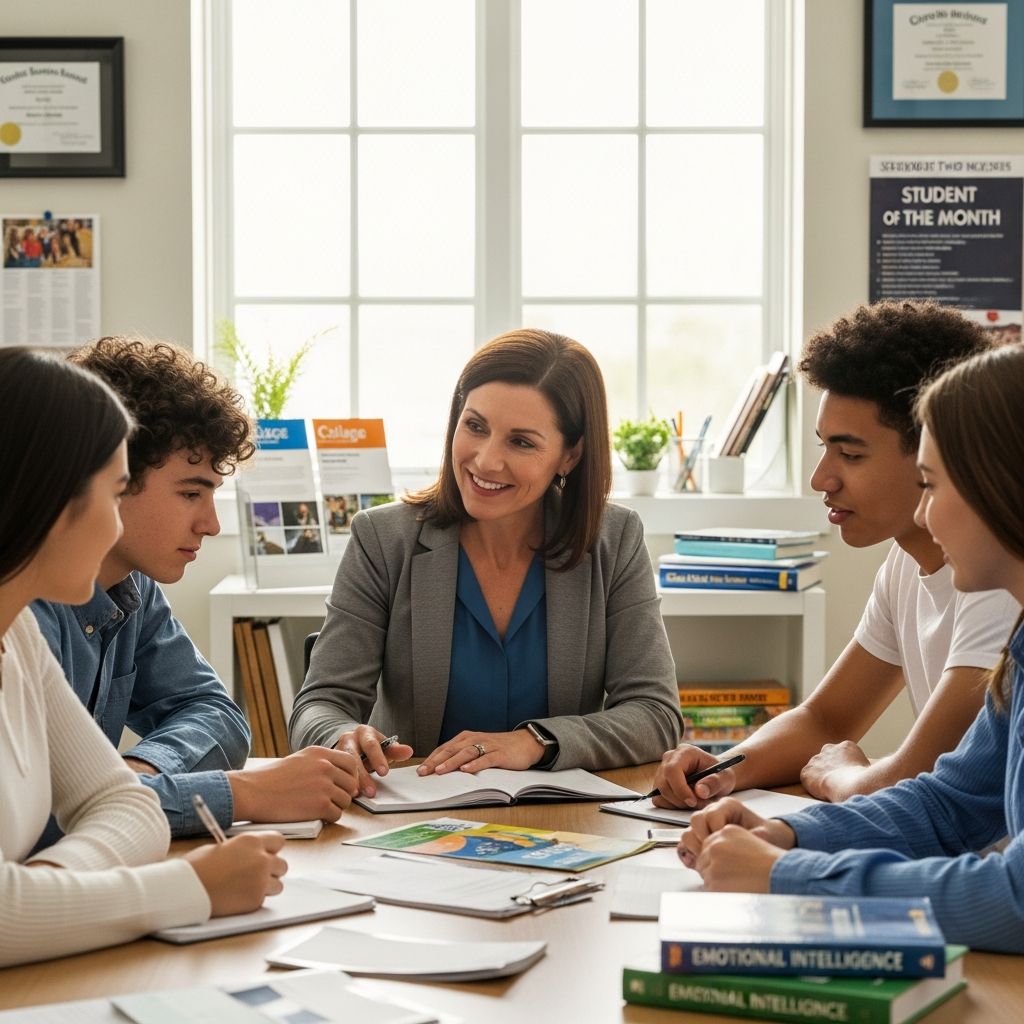
School counselors serve as key allies for teenagers, offering support across academic, personal, and future-oriented needs. They help students overcome obstacles, set goals, and thrive in school environments.
Understanding the Core Responsibilities of School Counselors
At their heart, school counselors focus on maximizing student potential by addressing barriers to learning and growth. They design programs aligned with school missions to promote equity and access, delivering services that cover direct student interactions and indirect collaborations.
Daily tasks include listening to concerns, mediating disputes, and facilitating goal-setting. Counselors evaluate abilities through assessments, helping teens match interests with realistic paths.
- Conduct one-on-one sessions to process emotional or academic issues.
- Organize group activities for skill-building, like peer support networks.
- Collaborate with teachers and parents to improve relationships and outcomes.
- Refer students to specialized mental health services when needed.
This multifaceted approach ensures comprehensive support, reducing absenteeism and behavioral problems while fostering academic skills.
How School Counselors Support Academic Achievement
Counselors play a pivotal role in academic success by identifying performance issues early and intervening effectively. They bridge gaps between students, educators, and families to create tailored learning strategies.
For instance, they help develop study habits, time management techniques, and academic integrity practices. In high-pressure teen years, this guidance prevents failures and builds confidence.
| Academic Challenge | Counselor Intervention | Expected Outcome |
|---|---|---|
| Low grades or failing classes | Individual planning sessions and teacher consultations | Improved performance and customized study plans |
| Absenteeism | Root cause analysis and family involvement | Higher attendance and engagement |
| Lack of motivation | Goal-setting workshops and aptitude tests | Increased self-efficacy and direction |
By embedding counseling into the school framework, counselors enhance overall learning conditions and prepare teens for rigorous coursework.
Emotional and Social Support for Teenagers
Teen years bring intense emotional and social pressures, from peer conflicts to mental health struggles. School counselors provide a safe, confidential space to address bullying, low self-esteem, relationship issues, and even suicidal thoughts.
They deliver classroom lessons on topics like stress management, resilience, and healthy relationships. For deeper needs, counselors connect students with psychologists or community resources without providing long-term therapy themselves.
- Mediate student-teacher or peer conflicts impartially.
- Facilitate anti-bullying and substance prevention programs.
- Support students with disabilities or family challenges.
This emotional scaffolding is crucial, as unresolved issues often derail academic progress. Counselors advocate as students’ voices, ensuring needs are met holistically.
Career and Post-Secondary Planning Essentials
As teens approach graduation, counselors shift focus to life after school. They guide college applications, scholarship searches, job placements, and alternative paths like apprenticeships.
Aptitude assessments reveal strengths, while resume workshops and interview practice build practical skills. High school counselors often serve as the primary resource for these preparations.
In one-on-one planning, they help align personal interests with viable careers, considering market trends and educational requirements. This proactive approach reduces post-graduation uncertainty.
“High school counselors are educators trained in adolescent development, equipping students with self-management and social skills for future success.”
Differences in Counseling Across School Levels
While roles overlap, counselor duties adapt to developmental stages. Elementary focus builds foundational habits; middle school eases transitions; high school emphasizes futures.
| School Level | Primary Focus | Key Activities |
|---|---|---|
| Elementary | Habit formation and basic skills | Time management lessons, parent-teacher meetings |
| Middle | Transition support and peer dynamics | Social-emotional groups, barrier removal |
| High | Career and college readiness | Application assistance, mental health referrals |
Regardless of level, the goal remains: holistic student development tied to school improvement plans.
Building Stronger School Communities Through Counseling
Counselors extend beyond individuals by leading initiatives like peer counseling and awareness campaigns on drugs or inclusivity. They join academic boards to refine policies, promoting equitable environments.
By consulting with staff and families, they strengthen support networks. This collaborative model amplifies impact, creating schools where every teen can succeed.
Challenges Faced by School Counselors
High caseloads, diverse needs, and administrative duties like scheduling strain counselors. Yet, they prioritize student-centered programs per ASCA standards.
Optimal ratios allow meaningful engagement; overburdened staff limits effectiveness. Advocacy for better resources ensures sustained quality support.
Frequently Asked Questions (FAQs)
What can I expect from a meeting with my school counselor?
A confidential discussion where you share concerns, receive guidance, and create action plans for academics, emotions, or careers.
Do school counselors help with college applications?
Yes, they assist with selections, essays, deadlines, scholarships, and alternatives like jobs or training.
Can counselors keep things private?
Most sessions are confidential, except for safety risks like self-harm, where they must involve parents or authorities.
How do I schedule a counselor appointment?
Drop in during office hours, email, or ask a teacher—many offer walk-ins or scheduled slots.
Are school counselors trained for mental health crises?
They identify issues and refer to specialists but provide short-term support and prevention education.
Empowering Teens: Steps to Engage Your Counselor
- Identify your goal: academic help, stress relief, or career advice.
- Prepare notes on your situation for efficient talks.
- Attend group sessions for shared learning.
- Follow through on plans and check in regularly.
- Encourage friends to seek support too.
Proactive engagement unlocks counseling’s full benefits, paving the way for personal triumphs.
References
- What Does a School Counselor Do? (Job Description) — All Psychology Schools. 2023. https://www.allpsychologyschools.com/school-counseling/job-description/
- What Does a School Counselor Do? — UMass Global. 2024-01-15. https://www.umassglobal.edu/blog-news/what-does-a-school-counselor-do
- Role of the School Counselor — Lone Star State School Counselor Association. 2025. https://www.lonestarstateschoolcounselor.org/role
- School Counselor Roles & Ratios — American School Counselor Association. 2024. https://www.schoolcounselor.org/about-school-counseling/school-counselor-roles-ratios
- What Do High School Counselors Do to Make a Difference? — Wake Forest University Online. 2023-06-10. https://counseling.online.wfu.edu/blog/what-do-high-school-counselors-do-to-make-a-difference
- The Essential Role of High School Counselors — American School Counselor Association. 2022. https://www.schoolcounselor.org/getmedia/2a38ea99-5595-4e6d-b9af-2ac3a00fa8c3/Why-High-School.pdf
- The Role of a High School Counselor — IvyWise. 2024-09-20. https://www.ivywise.com/blog/the-role-of-a-high-school-counselor/