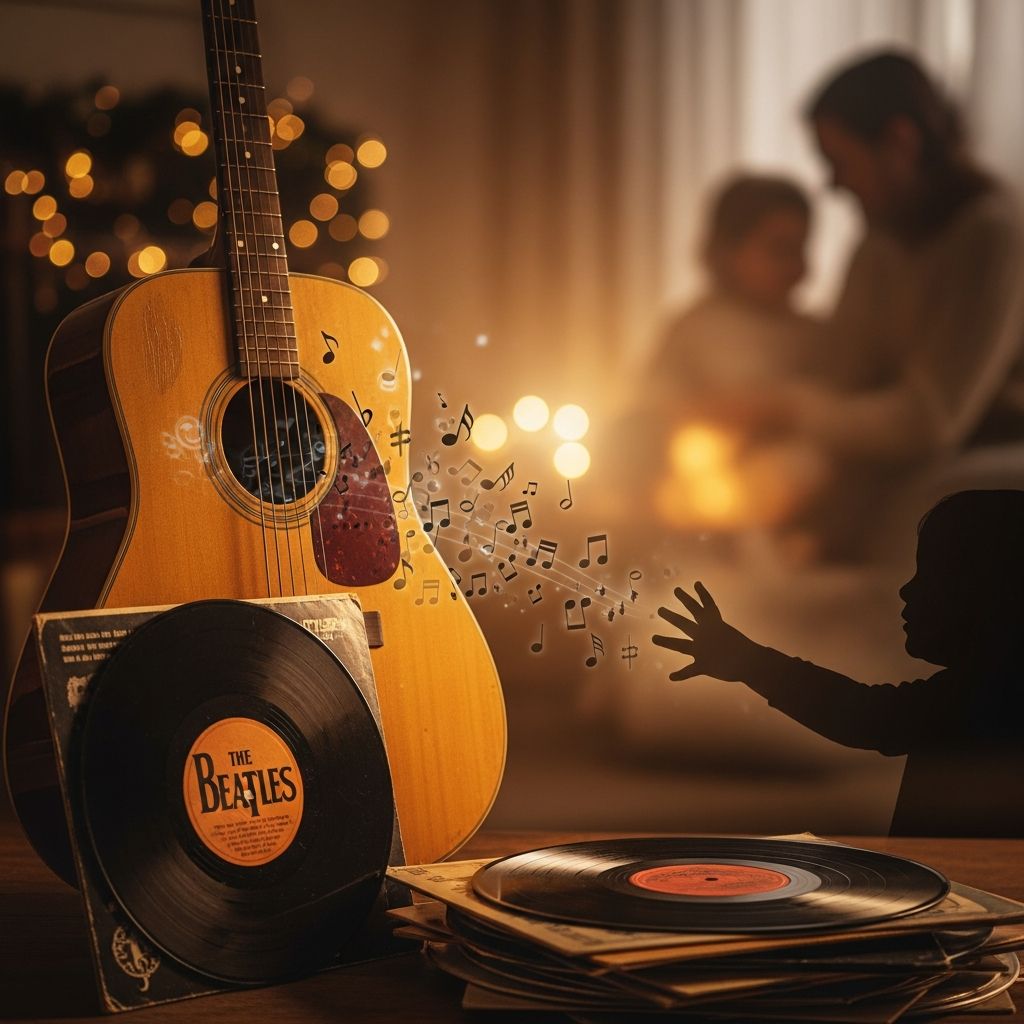
Parents and kids rarely get to see creativity in real time. We usually meet finished products: the polished song, the final painting, the edited movie. But a close look at Paul McCartney’s work around The Beatles’ Get Back sessions and his famously debated holiday song offers something different — a front-row seat to the messy, surprisingly ordinary process of making something new.
The Wonder of Seeing Ideas Being Born
In most music documentaries, the audience sees highlights: concert footage, quick studio clips, and interviews that skip straight to the hits. What makes the Get Back era so unusual is that it lingers on the in-between moments — the fidgeting, the false starts, and the drowsy noodling that eventually snaps into a song the whole world will recognize. Instead of magic appearing from nowhere, viewers witness a musician pacing, humming nonsense, chasing a rhythm, and almost accidentally stumbling into greatness.
For parents, this view is priceless. It shows that even legendary artists do not wake up with fully formed masterpieces. They appear more like kids at a kitchen table with crayons, muttering to themselves, erasing, and trying again. The difference is not that they are exempt from frustration or failure, but that they quietly trust the process enough to keep going when nothing seems to work yet.
Why McCartney’s Process Matters to Parents
Paul McCartney’s studio behavior in that period reveals three traits that any family can borrow: persistence, playfulness, and comfort with imperfection. He throws out lines that do not land, sings half-words, and lets bandmates tease him while he keeps searching for the right melody. Instead of treating mistakes as evidence that he lacks inspiration, he treats them as fuel.
Children constantly experience similar trial-and-error. The difference is that adults often rush in to tidy the mess, correct the wrong note, or “fix” the drawing before the child has time to explore. Watching a master songwriter embrace the awkward middle stage is a reminder that the creative process is not supposed to look impressive at close range. It is supposed to look human.
“Wonderful Christmastime”: A Simple Song With a Complicated Reputation
Outside of The Beatles’ canon, McCartney’s solo catalog includes a holiday track that parents hear every year at the grocery store, in minivans, and at school winter parties. The song divides listeners: some find it charming and cozy, while others insist it is repetitive, slight, or even annoying. Despite its simplicity, it returns like clockwork each December, humming along in the background of family rituals.
Its staying power raises an uncomfortable question about taste and seriousness. Many listeners expect anything from a former Beatle to be dense, poetic, and musically complex. Instead, this seasonal tune sounds almost like something children might come up with on a basic keyboard: sugary synths, uncomplicated chords, a few lines about holiday cheer. It feels light on purpose, and that can be strangely disarming.
What a “Silly” Christmas Song Reveals About Creative Courage
For all the mockery that song attracts, its existence is quietly radical. McCartney had already helped write some of the most revered songs of the twentieth century. Releasing a simple, almost childlike holiday track after that body of work is the artistic equivalent of a kid who has already won the science fair still choosing glitter glue and construction paper for fun.
There is an important parenting lesson here: genuine creativity does not always try to impress. Sometimes it chases joy, even if that means risking eye-rolls. Kids understand this instinctively when they make silly comics, off-key songs, or wild cardboard inventions. Adults often talk them out of those experiments in the name of “doing it properly,” forgetting that play is where courage is born.
Table: Big Genius vs Everyday Creativity
Families tend to separate legendary art from children’s scribbles, but the underlying patterns are surprisingly similar. This table contrasts how people usually imagine genius with what McCartney’s work suggests creativity really looks like.
| Myth About Creativity | Reality Suggested by McCartney’s Work |
|---|---|
| Great ideas appear fully formed and fast. | Ideas often begin as clumsy fragments, rhythms, or nonsense words, then slowly sharpen with repetition. |
| Serious artists avoid goofy or simple material. | Even legendary songwriters release playful, lightweight songs when that fits the mood or purpose. |
| Perfection must be obvious in the first draft. | Drafts are usually raw; editing, layering, and rethinking transform them into something memorable. |
| Criticism proves a work failed. | Divisive songs can still become cultural fixtures and emotional touchstones over time. |
| Kids’ creative output is “practice,” not real art. | Children’s loose, experimental approach looks remarkably similar to how professionals hunt for ideas. |
Helping Kids Love the Messy Middle
When parents only show children polished masterpieces, kids assume that talent means never struggling. Then, when they hit friction, they conclude they are not “artistic” or “musical” at all. Sharing stories about how even adored musicians wrestle with half-finished ideas helps normalize frustration as part of the work rather than a sign of failure.
One powerful family practice is simply narrating the process instead of only celebrating results. When a child quits in the middle of a drawing because it “doesn’t look right,” a parent can gently explain that every song, story, or design spends time in an awkward phase. Naming that phase makes it less scary. It becomes a shared joke instead of a private embarrassment.
Turning Holiday Earworms Into Teachable Moments
That polarizing Christmas track can become a surprising conversation starter at home. Rather than just groaning when it comes on, parents can ask kids what they notice. Is it catchy? Too simple? Fun to sing? Do they think the songwriter knew people might criticize it? These questions shift the song from background noise into a doorway for media literacy.
By framing it as a deliberate creative choice — to make something bright, repetitive, and almost childlike — adults invite kids to see that not all art aims for the same mood or goal. Some works try to be profound, others try to be silly and social. Both have value. The real skill is matching the style to the moment, whether that moment is a packed stadium or a living room full of cousins playing with wrapping paper.
Practical Ways to Nurture Beatles-Level Confidence in Kids
Parents do not need studio access or vintage instruments to help kids build the kind of quiet confidence that sustains creative work. What matters more is the atmosphere around attempts, experiments, and half-baked ideas. A household that treats those things as normal begins to resemble a rehearsal space.
The following strategies can help everyday families borrow some of that studio energy.
- Create low-stakes “sessions.” Set aside small blocks of time when kids can write stories, doodle, or make noise on instruments with no expectation of a finished product.
- Praise curiosity, not just output. Highlight moments when children ask unusual questions or combine ideas in new ways, even if the result is messy.
- Let repetition be okay. If a child wants to play the same simple melody or game repeatedly, treat it as practice in disguise rather than a lack of imagination.
- Model public imperfection. Let your kids see you struggle with a new skill — from cooking to learning a song — and talk out loud about the mistakes without shame.
- Use criticism as data, not a verdict. When kids receive negative feedback at school or online, frame it as information they can use, not a final judgment on their talent.
Reframing “Annoying” Songs as Emotional Anchors
Every family has a short list of songs adults claim to hate but secretly associate with powerful memories. Maybe it is a track that played during a first date, a childhood road trip, or a chaotic holiday morning when everyone burned breakfast but laughed anyway. Over time, repetition turns even simple tunes into emotional bookmarks for specific seasons of life.
That is part of the hidden function of yearly Christmas pop songs. They create a sonic backdrop so consistent that kids can use it to measure time. Last year, they were shorter, smaller, less sure. By the time the same song appears the next winter, they are taller, braver, and more themselves. Parents may roll their eyes when it starts, but children may be quietly marking how far they have come.
Connecting Generations Through Shared Soundtracks
McCartney’s unusual position — writing songs adored by grandparents, parents, and kids alike — makes his catalog a natural bridge between generations. A grandparent might remember where they were when a classic Beatles single first hit the radio, while a child knows the same musician mostly through a bouncy holiday track piped into stores.
Families can use this overlap to build small rituals: listening to one older Beatles song and one solo-era track during car rides, trading stories about what each song meant at different ages, or letting kids remix or reinterpret a simple chorus with their own lyrics. In that way, the music becomes less of a museum piece and more of a living toy that everyone is allowed to touch.
Frequently Asked Questions
Is it okay if my child loves “corny” or ultra-simple songs?
Yes. Simple songs are often easier for kids to memorize, sing along with, and use in their own play. That accessibility helps children build a sense of ownership over music, which matters more for long-term creativity than early sophistication.
How do I stop my child from getting discouraged when their art “isn’t as good” as their heroes’?
Share age-appropriate stories about how long it took well-known artists to finish their work and how many drafts they created. Emphasize that what kids see on streaming platforms or album covers is the final version, not the clumsy attempts that came before.
Should I correct my child’s creative work or just let them experiment?
A healthy balance works best. During early brainstorming, give them space to roam without interruption. Later, when they ask for help improving, offer gentle, specific suggestions and highlight what is already working so they do not equate feedback with failure.
Can repetitive holiday music actually benefit kids?
Within reason, yes. Familiar seasonal songs can create a sense of stability and tradition, especially in busy or stressful months. When children recognize the same melodies year after year, it helps them feel rooted in a story that stretches across multiple holidays.
How can I use music documentaries or behind-the-scenes clips with younger kids?
Pick short segments that show musicians rehearsing, joking, or trying out half-ideas rather than full concerts. Watch together, then ask your child what they noticed about the process, encouraging them to see artists as regular people who keep practicing.
From Studio Legends to Living Rooms
Paul McCartney’s career, especially the contrast between intense studio sessions and lighthearted seasonal hits, offers more than musical nostalgia. It provides a blueprint for how families can think about talent, risk, and joy. The same person who painstakingly shapes iconic songs is also willing to release something cheerfully simple and let the world argue about it.
When parents invite kids into that tension — between ambition and play, between complexity and fun — they grant them permission to try things that might not work, to aim for delight instead of prestige, and to trust that even the most awkward drafts can be stepping stones toward something unexpectedly beautiful.