Every so often, a short video of children doing something simple captures millions of hearts online. One such clip shows twin toddlers sitting together when a parent places a single cupcake in front of them and walks away. What happens next is not just adorable; it is a powerful window into how young children learn patience, sharing, and empathy.
The Viral “One Cupcake” Twin Moment
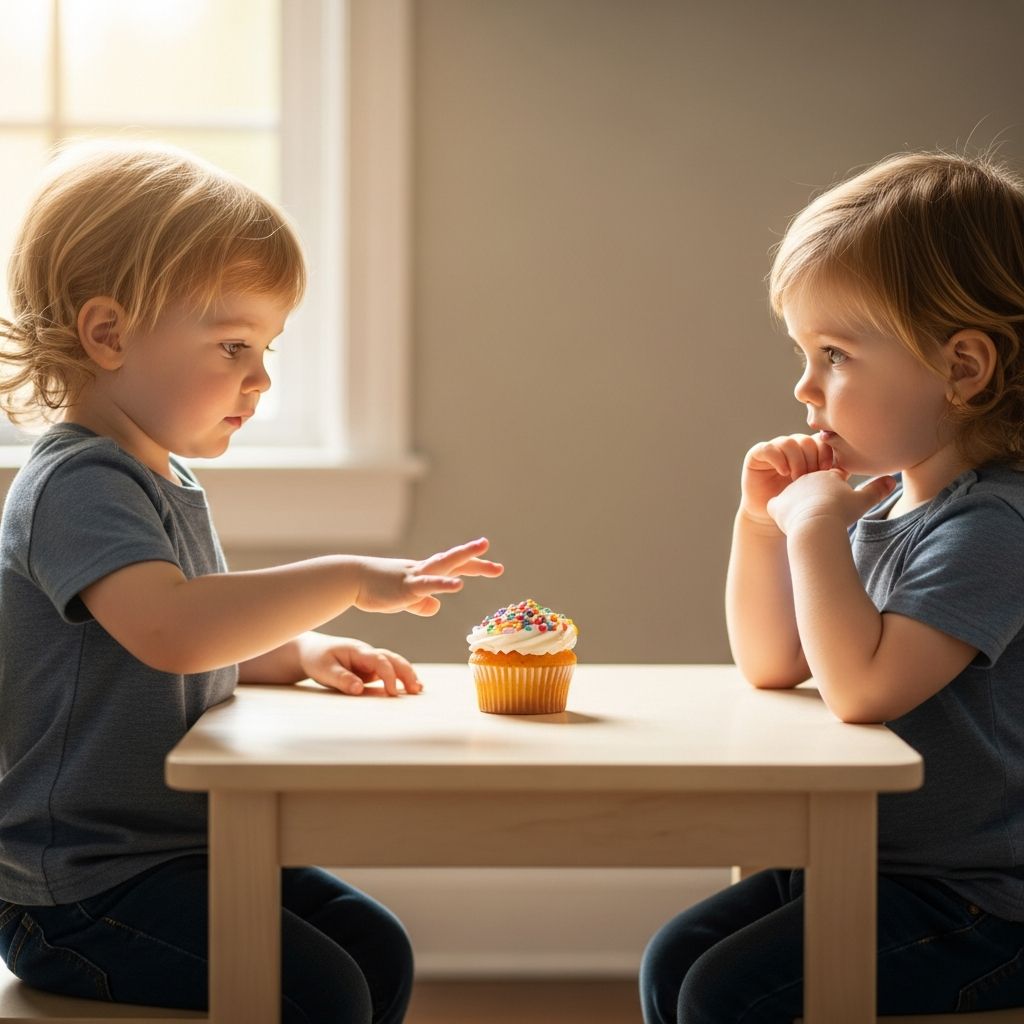
In the video that inspired this article, two young twins sit side by side as their parent sets down one small cupcake for both of them to share. The parent steps back, clearly curious to see what the children will do with the tempting treat in front of them. Instead of instantly grabbing or fighting, the twins look at the cupcake, look at each other, and appear to silently work through what comes next.
For many viewers, the most striking detail is not the cupcake itself but the restraint. The twins pause, hesitate, and show uncertainty before taking action. That pause offers a rich opportunity to understand toddler thinking: the pull between impulse and self-control, the desire to please a parent, and the early awareness of a sibling’s feelings.
- One cupcake, two children, and a clear opportunity for conflict.
- Visible hesitation shows the beginnings of self-regulation and social awareness.
- The scene resonates with parents who see similar moments play out in their own homes.
Why This Scene Resonates With Parents
Parents react so strongly to this type of video because it compresses a familiar daily struggle into a tiny, emotionally charged moment. The cupcake stands in for every toy, snack, or privilege children are asked to share. Watching the twins navigate this challenge subtly reassures caregivers that hesitation, confusion, and even small conflicts are all part of normal development.
There is also a deeper emotional pull: many adults were once the older sibling, younger sibling, or twin expected to share. Seeing toddlers face a similar dilemma can stir memories of learning fairness as children, often without the language to fully express how difficult it felt.
- The cupcake moment symbolizes everyday negotiations over fairness and turn-taking.
- Parents see proof that even very young children are capable of surprising empathy.
- These videos can validate gentle parenting approaches that emphasize modeling and patience over punishment.
What the Twins’ Reactions Reveal About Toddler Development
Toddlerhood is a bridge between pure impulse and emerging self-control. At this stage, children are naturally driven by immediate desires, especially with something as appealing as a sweet treat. Yet they are also beginning to understand simple rules, expectations, and the emotional states of others. Watching how the twins respond to the cupcake offers clues about several developmental skills.
Even the act of looking back and forth between the cupcake and each other shows that the twins are processing more than hunger. They may be weighing whether grabbing it would cause disapproval, or wondering if one should wait for the other to make the first move. That internal conflict is at the heart of early social and emotional growth.
- Impulse control: Delaying the urge to grab the cupcake is an early form of self-regulation.
- Social referencing: Looking at each other or toward the parent helps them gauge what is expected.
- Emerging empathy: Awareness that there are two people and only one treat drives the hesitation.
Sharing, Fairness, and the Toddler Brain
Adults understand that one cupcake can be split in half, saved for later, or replaced with a second dessert. Toddlers, on the other hand, often view prized objects as “all or nothing.” Sharing is not intuitive at this age. It has to be modeled, practiced, and gently reinforced over time. The cupcake scenario illustrates how complex sharing really is for young children.
When parents see the twins waiting, it can be tempting to assume they are fully grasping fairness. In reality, they may only partially understand that each of them is supposed to get some. The pause may come from confusion, a desire to obey, or even fear of doing the wrong thing. This complexity is why experts often remind caregivers that consistent, patient teaching matters far more than a single dramatic example.
- Sharing challenges both emotional maturity and problem-solving skills.
- Concepts like “half,” “turn,” and “fair” are learned gradually through repeated experiences.
- Moments like the cupcake test become part of a larger pattern of learning about generosity.
Twin Dynamics: Cooperation, Competition, and Connection
Twins add another layer of fascination to the story. From birth, they share resources, attention, and space. This constant togetherness can foster deep closeness as well as moments of intense competition. When only one cupcake appears, both children know instinctively that their twin’s reaction will matter just as much as their own.
Many parents of twins notice that their children quickly become aware of what the other sibling is getting. The idea of “one for you, one for me” tends to develop early, especially if caregivers consistently strive for fairness. When only one treat appears, it slightly disrupts that expectation and invites the twins to respond in a more flexible way.
- Twins often show strong sensitivity to unequal treatment, even in toddlerhood.
- Cooperation can emerge faster in twins because they constantly practice navigating shared resources.
- Testing them with one item highlights their ability to balance personal desire with relational harmony.
Parenting Intentions Behind the “Cupcake Test”
For the parent, placing one cupcake between two toddlers is rarely about creating stress; it is usually about curiosity, growth, and sometimes gentle humor. Many caregivers are simply wondering, “Will they share? Will they fight? Will one sacrifice their piece?” That curiosity can lead to a valuable learning opportunity for both children and adults.
However, intention matters. The most supportive versions of this scenario focus on observation and guidance rather than shaming. When parents step in to help after watching for a moment, they can turn a potentially tense situation into a shared success story, praising kind choices and helping both children feel seen and valued.
- Parents may use such moments to assess how well children are learning sharing and patience.
- Staying calm and playful keeps the experience positive rather than punitive.
- Stepping in with guidance models solutions instead of leaving children to struggle alone.
What This Teaches About Gentle, Attachment-Based Parenting
The one-cupcake twin video also reflects a broader shift toward gentle parenting and attachment-based approaches. Rather than forcing sharing or using harsh consequences, the parent observes, allows the children to attempt problem-solving, and then supports them. This style respects the child’s emotional experience while still holding age-appropriate expectations.
Over time, children raised with consistent sensitivity often become more capable of genuine empathy. They are less likely to share out of fear and more likely to share because they understand that kindness strengthens relationships. The cupcake is a stand-in for countless future situations where their sense of connection will guide their choices.
- Gentle parenting prioritizes connection, understanding, and guidance over control.
- Allowing space for children to try sharing on their own builds internal motivation.
- Supportive commentary afterward helps children put words to what happened and why it mattered.
Practical Tips: Helping Young Children Learn to Share
Inspired by scenes like the twin cupcake moment, many parents ask how to encourage similar patience and cooperation at home. While every child is unique, there are some practical habits that make sharing more natural and less stressful over time. These work with both twins and siblings of different ages.
The goal is not perfection but practice. Sharing is a skill that develops in layers, and toddlers will have many imperfect attempts before it becomes more consistent. Supportive adults can shape these moments into gentle lessons rather than power struggles.
- Model sharing yourself: Use phrases like “I’ll share this with you” and “Your turn, then mine” in everyday life.
- Use simple language: Short, concrete phrases such as “Two kids, one snack, let’s split it” help young children follow along.
- Prepare them in advance: Before bringing out a limited treat, explain that it is for everyone and decide together how to divide it.
- Praise specific behaviors: Instead of generic praise, comment on actions: “You waited for your sister, that was kind.”
- Offer practice with easy items: Start with things that children are less attached to, like extra crayons or bubbles.
Using One Treat for Two Kids: Options That Feel Fair
There are many ways to handle situations where there is one dessert and multiple children. Some families always cut things in half, while others rotate who gets the “special” item. The cupcake video highlights just how emotionally loaded this decision can feel to toddlers.
Choosing a method and sticking with it consistently can reduce arguments. When children know what to expect, their focus can shift from “Is this fair?” to “How do we enjoy this together?” Parents can adapt these strategies as kids grow and become more capable of negotiating with each other.
| Method | How It Works | Best For |
|---|---|---|
| Split in half | Parent or child divides the treat so each gets a visible, equal portion. | Early toddler years when concrete fairness matters most. |
| One cuts, one chooses | One child cuts the treat, the other picks which piece they want. | Preschoolers and older kids learning deeper fairness and responsibility. |
| Turn-taking | One child gets the treat this time, the other gets a special item next time. | Siblings who can remember and accept turns over time. |
| Share the experience | Children eat together while a parent emphasizes conversation and connection, not exact equality. | Families focused on emotional connection more than perfect symmetry. |
Turning Everyday Moments Into Learning Opportunities
The beauty of the twin cupcake clip is that it reminds parents that ordinary life is full of teachable moments. Snacks, toys, seats on the couch, and bedtime stories all present chances to practice patience, fairness, and communication. The key is not to stage constant tests but to be ready when these moments naturally appear.
When caregivers respond with calm, curiosity, and guidance, children learn that conflicts over resources are solvable. Over time, this mindset helps them approach future friendships, classrooms, and even adult relationships with more flexibility and compassion.
- Look for small, low-stakes opportunities each day to talk about sharing and kindness.
- Use storytelling after the fact: “Remember how you and your brother shared the cookie? That made both of you happy.”
- Keep expectations realistic, especially for toddlers still learning language and impulse control.
Frequently Asked Questions
At what age can toddlers realistically share?
Most toddlers begin to show the earliest signs of genuine sharing between 2 and 3 years old, but it is usually inconsistent at first. Before that, they may imitate sharing behaviors without fully understanding them, which is still an important step in learning.
Is it unfair to give one treat for two children?
It can be fair if the situation is handled thoughtfully and consistently. When parents explain the plan, help divide or rotate, and reassure each child that their needs matter, one treat can become a helpful lesson rather than a source of resentment.
Should parents step in immediately if kids hesitate?
A brief period of hesitation is not harmful and can encourage problem-solving, especially if children are safe and calm. If the tension rises or turns into distress, stepping in to guide them toward a solution helps protect emotional safety while still teaching important skills.
What if one child always gives up their portion?
While generosity is wonderful, consistently sacrificing without support can leave one child feeling overlooked. In these cases, it helps for parents to gently ensure both children receive something and to praise the generous child while still protecting their right to enjoy the treat too.
How can parents prevent siblings from keeping score about fairness?
Children are keenly aware of fairness, especially in multi-child families. Clear routines, honest explanations, and regular reassurance that each child is loved and valued can reduce the sense of constant competition and help them see fairness as a long-term pattern rather than a single moment.
The image of two tiny twins facing one cupcake will continue to charm viewers, but its real power lies in what it reveals about growing hearts and minds. Sharing does not magically appear; it is patiently built through hundreds of small, everyday experiences. With empathy, consistency, and a sense of humor, parents can turn even a single cupcake into a lasting lesson in kindness.