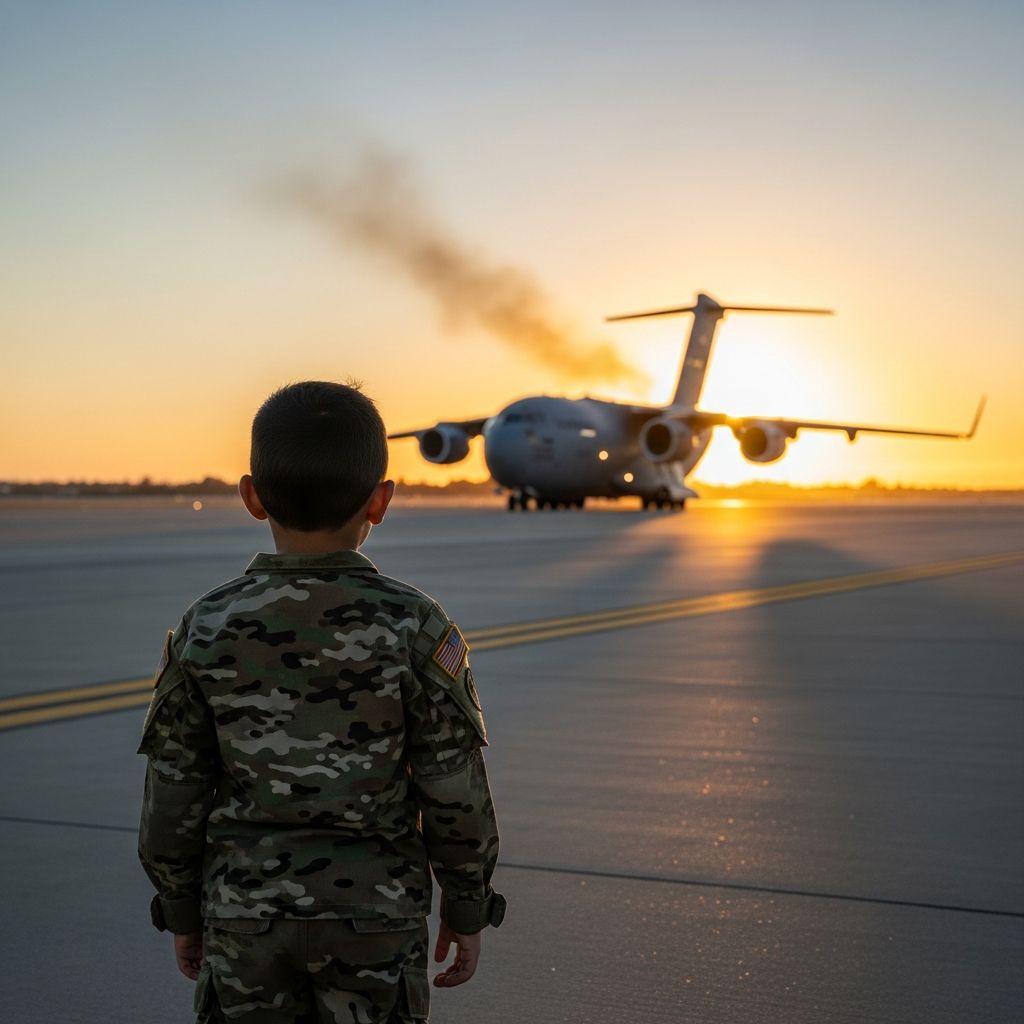
Children who grow up in military families live a kind of childhood that is both ordinary and extraordinary at the same time. They go to school, fight with siblings, and watch cartoons, yet they also learn to pack up a life in cardboard boxes, say goodbye on short notice, and measure time by deployments and postings rather than by school years.
This article explores what it really means to be a “military brat”: why this label is worn as a badge of honor, how constant moves shape personality, what family life looks like under military discipline, and how this unusual upbringing can leave lasting strengths and quiet scars.
Who Are Military Brats?
“Military brat” is the informal term often used for children whose parent or parents serve in the armed forces. Far from being an insult, within the military world it usually conveys affection, shared experience, and a sense of belonging to an informal club of kids who understand one another instantly.
These children grow up inside a culture that is tightly connected to the military structure, language, and expectations that shape their parents’ working lives. Bases, barracks, postings, and deployments are the background rhythm of their childhood, and this rhythm tends to set them apart from peers whose families are rooted in one town.
- They often spend their early years on or near military bases.
- They may move nationally or internationally several times before adulthood.
- They learn early that their parent’s job is not “just a job” but a duty that affects every member of the family.
Living on the Move
Frequent relocation is one of the defining features of a military childhood. Moves can happen every few years, or even more often, and assignments might range from small domestic bases to overseas posts in countries with unfamiliar languages and customs.
Where many children associate childhood with one neighborhood or hometown, military brats often measure their past by bases, countries, or the names of housing areas rather than cities and streets. A simple question like “Where are you from?” can become surprisingly difficult to answer.
How Moves Reshape Childhood
- No fixed hometown: Many military brats feel they do not have a single place that counts as home; instead, they collect a patchwork of locations and memories.
- Repeated fresh starts: Each new posting usually means a new school, new friends, and a new local culture to navigate.
- Portable life skills: Kids learn to sort, pack, and travel efficiently at an age when many peers have never changed bedrooms.
For some, the constant change feels adventurous and exciting. For others, it can also feel like loss: just as friendships deepen and a new place begins to feel familiar, the family is packing again, and the cycle restarts in a place where no one knows their name.
Growing Up on Base
Life on a military base creates a small, dense universe with its own rules and rhythms. Supermarkets, schools, medical clinics, playgrounds, and recreation centers might all sit within the same guarded perimeter. Children learn to move through this space with an awareness that uniformed adults, security checks, and clear rules are normal parts of daily life.
Because most neighbors live within the same military system, base communities can feel close-knit, with children playing together in clusters and families knowing one another’s routines and challenges. Yet this tightness is temporary; every year, familiar faces vanish as families rotate to their next assignment.
Typical Features of Base Life
- Playgrounds, youth centers, and schools filled with children whose parents also serve.
- Events, parades, and ceremonies that highlight national service and military tradition.
- Visible reminders of rules and hierarchy, from salutes and ranks to curfews and security gates.
Discipline, Structure, and High Expectations
Military culture prizes order, punctuality, and respect for authority, and these values spill directly into family life. Schedules tend to be firm, lateness is often unacceptable, and children learn early that the chain of command is more than a workplace idea; it shapes how the entire family organizes its days.
Many military brats grow up with clear expectations around chores, manners, school performance, and personal presentation. This can produce children who appear mature and responsible for their age, but it can also place them under pressure to reflect well on the serving parent’s career.
- Household routines may mirror the precision of military life: early mornings, specific tasks, and shared standards.
- Respect for elders and superiors is often non-negotiable.
- Children may feel that their behavior has consequences beyond the home, affecting how their parent is perceived.
Family Bonds Under Pressure
Underneath the structure, military families live with a particular kind of uncertainty. Training missions, temporary duty assignments, and long deployments remove a parent from the home in ways that are very different from a typical business trip or long commute.
These separations can strain relationships but can also forge intense loyalty and solidarity among remaining family members. Siblings may become each other’s closest confidants, and the non-deployed parent often shifts into both caregiver and emotional anchor while simultaneously managing all household responsibilities alone.
Common Emotional Themes
- Anticipation and anxiety: The lead-up to a deployment can fill a home with tension, as children sense change even before they fully understand its implications.
- Temporary single-parent realities: Kids adapt to one parent making decisions, while knowing that the returning parent will eventually step back in.
- Strong sibling alliances: Brothers and sisters often become each other’s most stable relationships, carrying shared memories from one posting to the next.
School, Friends, and Saying Goodbye
School life for military brats is a repeated lesson in starting over. New classrooms, curricula, and expectations are challenging enough, but social life can dominate the emotional landscape. Being “the new kid” again and again teaches certain skills—yet it also demands repeated emotional risks.
Some children learn to jump into new friendships quickly, sensing that time is limited. Others become cautious and guarded, wary of bonding too deeply when experience tells them that another move may be only a year or two away.
| Aspect | Civilian Childhood | Military Brat Childhood |
|---|---|---|
| Number of schools attended | Often 1–3, mostly in same area | Sometimes many schools across regions or countries |
| Friendships | Long-term, rooted in one community | Intense but short-lived; friends scattered worldwide |
| Community continuity | Neighbors and classmates remain familiar over years | Constant flow of arrivals and departures on base |
| Sense of “hometown” | Often strong and clearly defined | Diffuse, or linked more to family than to place |
Making and Losing Friends
- Many military brats become skilled at small talk and first impressions, because they have had so much practice entering new peer groups.
- Goodbyes can become a repeated source of grief, sometimes leading kids to protect themselves by keeping some emotional distance.
- Long-distance friendships may rely on letters, video calls, or social media, turning military kids into early experts at staying in touch across time zones.
Cultural Adaptability and Global Perspective
Children who move across states or countries during their formative years absorb a wide range of accents, customs, and daily routines. What might seem exotic to their peers—a school lunch in another language, a holiday parade in a foreign city—can become simply another chapter in a normal year of life.
This exposure often builds strong cultural awareness and adaptability. Military brats learn to listen for unspoken rules, watch how locals behave, and adjust to new norms without losing their core identity. In adulthood, this can translate into ease in international environments, flexible thinking, and a natural comfort with change.
- They may pick up bits of different languages, foods, and traditions.
- They often become keen observers of people and social cues.
- They are frequently described as open-minded and curious about the wider world.
Identity, Roots, and the Question “Where Are You From?”
For many military brats, identity is not anchored to a single location. Instead, it is woven from the people, bases, and cultures they have known. This can be enriching but also confusing, particularly in adolescence when the urge to belong to a place or group intensifies.
The seemingly simple question “Where are you from?” can trigger a complex inner calculation. Should the child name the place they were born, the country they liked most, the base where they spent the longest time, or simply answer with the name of the parent’s branch of service?
Common Identity Patterns
- Service-based identity: Some military brats define themselves less by geography and more by the branch their parent serves in.
- Family-as-home identity: Others feel that home is wherever the family is together, regardless of the map.
- Third-culture blend: Children who spend significant years abroad may not feel entirely part of either their passport country or their host nations, instead developing a blended “third” culture of their own.
Strengths That Often Grow From a Military Childhood
While a military childhood can be demanding, it can also cultivate powerful strengths. The same patterns that force children to adapt—moves, separations, strict routines—tend to build skills that prove valuable for the rest of their lives.
- Resilience: Repeated change teaches that difficult transitions are survivable and that new stability can emerge in unexpected places.
- Social agility: Many military brats can walk into a room of strangers and quickly find a way to connect.
- Responsibility and self-discipline: Early expectations around chores, time-keeping, and respect often translate into strong work habits.
- Empathy: Witnessing peers go through the same cycles of leaving and loss can deepen compassion and emotional understanding.
- Global awareness: Cross-cultural experiences broaden their sense of what is “normal,” reducing prejudice and encouraging curiosity.
Hidden Costs and Quiet Scars
Alongside these strengths, there are costs that can be harder to see. Continual relocation can interfere with long-term friendships, stable mentorship, and the continuity of education. Children might struggle with grief they have never fully processed, because goodbyes have come so often that there was no time to sit with each loss.
Some military brats carry a faint, ongoing sense of rootlessness into adulthood. They may change jobs or cities frequently, drawn to novelty or simply accustomed to movement. Others may develop the opposite tendency, clinging to one location as soon as they are free to choose it, determined to give their own children the stability they lacked.
- Unresolved sadness from repeated farewells can surface later in life as difficulty with long-term relationships or strong fear of abandonment.
- Children who have lived near conflict zones or through particularly stressful deployments may experience anxiety or hyper-vigilance.
- Because military brats often appear capable and mature, adults may overlook the emotional load they are carrying.
Adulthood: Always a Military Brat
Even after leaving home, many former military brats still describe themselves using that label. The patterns of their childhood—packing boxes, arriving in new cities, decoding unfamiliar cultures—leave traces in how they approach work, relationships, and even leisure.
Some choose careers connected to travel, service, or international work. Others gravitate toward communities with diverse populations, where the mix of backgrounds feels familiar. For many, the experience of growing up in a military family remains a central, organizing story of their life, shaping how they understand both themselves and the wider world.
Practical Tips for Supporting Military Brats
Parents, teachers, counselors, and community members can play a crucial role in easing the challenges and amplifying the strengths of military children. Awareness and small, consistent actions often make the biggest difference.
- Validate mixed feelings: Encourage kids to talk openly about both the exciting and the painful parts of moving or deployment.
- Create continuity rituals: Keep certain family traditions the same in every posting—favorite meals, weekly routines, or small objects that travel from bedroom to bedroom.
- Support friendships: Help children keep in touch with old friends through planned calls, letters, or online chats.
- Watch for quiet distress: Pay attention to signs of withdrawal, sleep problems, or school difficulties around times of major transition.
- Connect with other military families: Peer support, for both adults and kids, provides understanding that does not require lengthy explanations.
Frequently Asked Questions
Is the term “military brat” offensive?
Outside the armed forces community, the word “brat” can sound negative, but within military circles it is usually used with affection and pride. Many children and adults who grew up in military families use the term for themselves as a shorthand for a shared, distinctive upbringing.
Do all military brats move constantly?
No. Some families spend long stretches at a single posting, while others move frequently across different regions or countries. However, even when moves are less frequent, the family still lives within a culture shaped by the military’s rules, expectations, and potential for sudden change.
Are military brats better behaved than other kids?
Military children are often encouraged to be respectful, punctual, and responsible, reflecting the discipline of their parents’ work environment. Still, they are individuals with their own personalities, strengths, and struggles, and it is important not to expect uniform behavior simply because of their family background.
How does a military childhood affect adult life?
Many former military brats report strong adaptability, comfort with diversity, and resilient coping skills. At the same time, some also describe ongoing feelings of rootlessness or difficulty answering questions about where they belong, showing that the effects of such a childhood are complex and deeply personal.
What can schools do to help?
Schools can support military brats by recognizing their frequent transitions, providing orientation for new arrivals, and watching closely for students who may need academic or emotional support after a move or during a parent’s deployment. Simple gestures of inclusion can go a long way in helping these students feel grounded in yet another new environment.