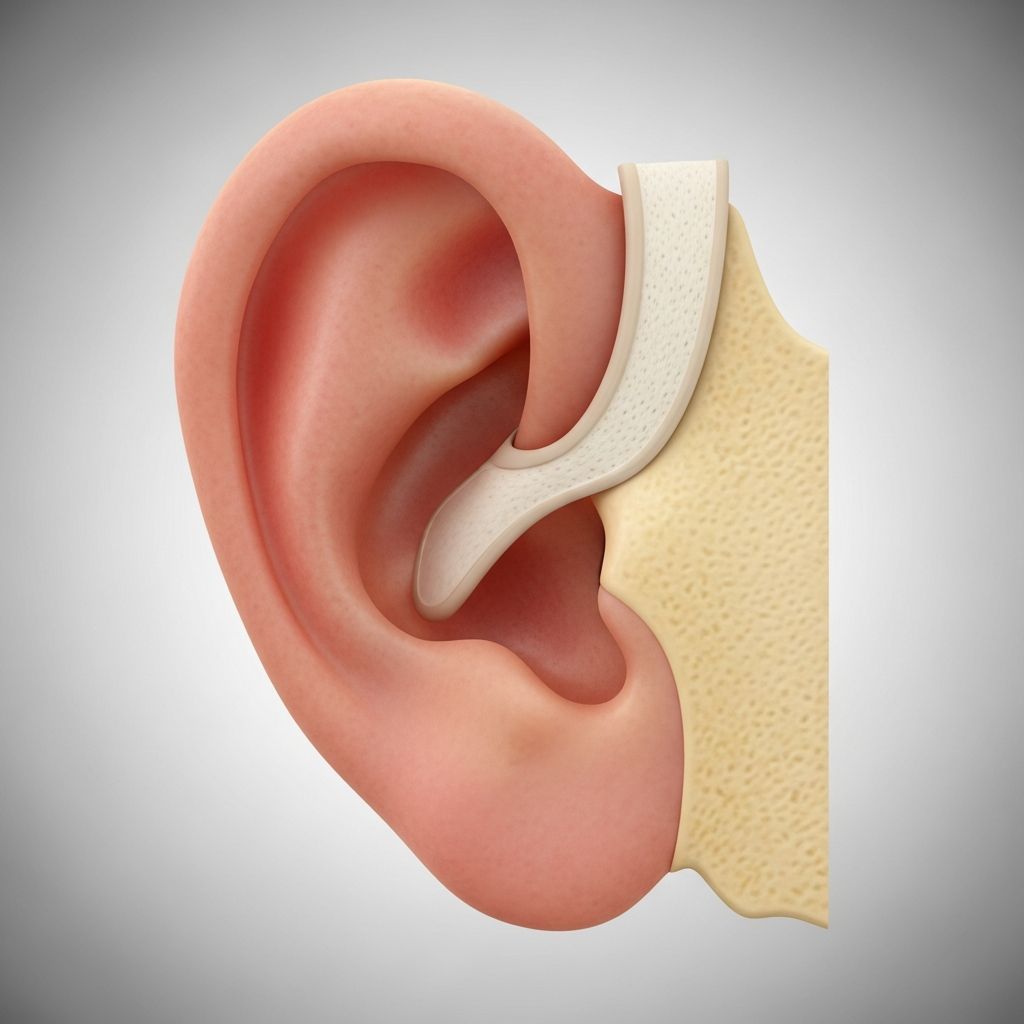
When you look at your ear in the mirror, you might notice a small, firm bump right in front of the ear opening. That little bump has a big job and a special name: it is called the tragus. In this guide, you will learn where the tragus is, what it does, how to keep it healthy, and why such a tiny part of the ear matters so much.
Meet the Tragus: Where It Is and What It Looks Like
The tragus is a small piece of cartilage covered with skin that sticks out in front of the hole that leads into your ear canal. Cartilage is the same firm, bendable tissue found in your nose tip and in your joints, which makes the tragus sturdy but slightly flexible.
If you gently touch the front edge of your ear, just next to the ear opening, you can feel the tragus. Pressing on it will partly block sound from reaching the ear canal, which helps you notice where it is and how it can change the sounds you hear.
- It is located at the front of the ear canal opening.
- It is made mostly of firm cartilage covered by skin.
- It can be gently moved but should not bend sharply or be pulled hard.
How the Tragus Fits Into Ear Anatomy
The tragus is part of the outer ear, also called the auricle or pinna. The outer ear includes all the visible parts on the side of your head, plus the ear canal that leads inward to the eardrum. Each part of the outer ear changes sound in a slightly different way.
Close to the tragus, there are several other features that work together to collect and guide sound into your ear. Learning their names can help you understand exactly where the tragus sits in this system.
| Part | Where It Is | Main Role |
|---|---|---|
| Tragus | In front of the ear canal opening | Helps guard the canal and shape incoming sound |
| Antitragus | Across from the tragus, above the earlobe | Forms part of the curve that shapes sound outside the canal |
| Concha | Bowl-shaped area leading into the ear canal | Acts like a shallow dish that collects and funnels sound inward |
| Helix | Outer rim that curves around the ear | Frames the ear and helps capture sound waves from around you |
| Lobule (earlobe) | Soft, lower part of the ear | Contains skin and fat; often used for earrings |
What the Tragus Does: More Than Just a Bump
The tragus does not move as much as some other body parts, but it quietly helps you every day. Its shape and position affect how sound enters the ear canal and how your ear is protected from the outside world.
Together with the rest of the outer ear, the tragus helps you tell where sounds are coming from and keeps some unwanted objects from reaching your ear canal. Even though it is small, it plays important roles in both hearing and protection.
Helping You Hear Better
When sound waves reach your ear, they do not travel in a straight, simple line. They bounce off the curves and ridges of your outer ear, including the tragus, before moving into the ear canal toward the eardrum. These tiny changes in sound help your brain figure out direction and distance.
Because the tragus sits in front of the ear canal and faces slightly backward, it can change how you hear sounds that come from behind you compared with those that come from in front. This helps your brain make better guesses about whether a sound is coming from the front, the back, or the side.
- The tragus slightly blocks and redirects sound waves.
- Those small changes give your brain clues about sound direction.
- This helps you locate where voices, alarms, or footsteps are coming from.
Protecting the Ear Canal
The tragus acts like a small shield at the front of the ear canal. Because it partially covers the opening, it can help keep out larger bits of dust, sand, or other small objects that might try to enter your ear while you play or move around.
This bump also helps slow down strong blasts of air or water directed at your ear opening. It does not close the ear fully, but it adds one more layer of protection to the delicate inner parts of the ear by making the entrance less exposed.
- Acts as a barrier to large particles and small objects.
- Helps shield the ear canal from wind and splashes.
- Works together with earwax and tiny hairs to protect deeper ear structures.
The Tragus and Everyday Activities
In daily life, the tragus is involved in more activities than you might realize. From using earphones to blocking loud noises, this little structure is often pressed, touched, or moved without you even thinking about it.
Knowing how the tragus is used can help you handle your ears more gently and avoid habits that might irritate this area or increase your risk of infection or injury.
Using Earphones and Earbuds
Many earphones and earbuds rest just under or around the tragus when they sit inside the outer ear. This means that if earbuds are too large, too tight, or worn for a long time, they can cause soreness near the tragus and the surrounding skin.
Choosing the right shape and size for earphones can keep pressure off your tragus and make listening more comfortable. Keeping your earbuds clean and not sharing them with others also helps protect the skin around the tragus from germs.
- Pick earbuds that fit snugly but do not press hard on the tragus.
- Limit how long you wear earbuds at a time to let your ears rest.
- Clean earbuds regularly to reduce bacteria that can irritate the tragus.
Blocking Loud Noises
If a sound suddenly feels too loud, many people naturally press the tragus inward to cover the ear opening. Pushing this bump over the canal reduces how much sound gets inside, which can make noisy situations a little more comfortable.
While gently pressing the tragus can be helpful in a pinch, it is safer to use proper ear protection such as earplugs or earmuffs in very loud places. That way, your ears are shielded more evenly and you do not need to press on your ear repeatedly.
How to Take Care of Your Tragus
Taking care of the tragus mostly means taking care of your outer ear in general. The skin, cartilage, and ear canal all benefit from gentle cleaning and safe habits. Over-cleaning or poking the ear can do more harm than good.
Simple steps at home can keep the tragus and the area around it healthy, while also helping to protect your hearing. If something feels painful or looks unusual, it is always best to ask an adult and talk to a health professional.
Safe Cleaning Steps
The tragus and the rest of the outer ear can be kept clean with warm water and a soft cloth. There is no need to dig into the ear canal or scrub the tragus forcefully. The skin is delicate, and rough cleaning can lead to scratches or infections.
- Use a damp, soft cloth to gently wipe around the tragus and outer ear.
- Do not insert cotton swabs or other objects into the ear canal.
- Dry the outside of the ear carefully after swimming or showering.
What to Avoid
Some common habits can bother the tragus or even cause small injuries. Knowing what to avoid helps you protect not only this little bump but also your entire ear. Pain, swelling, or redness around the tragus are signs that something may be wrong.
- Avoid poking or scratching the tragus with fingernails or sharp objects.
- Do not force earbuds or hearing devices into the ear if they feel too tight.
- Avoid very loud music directly into the ear, even if the earbuds are comfortable.
When the Tragus Hurts or Looks Different
Sometimes the tragus can become sore, swollen, or tender to the touch. This can happen because of an infection in the ear canal, an insect bite, a bump or fall, or irritation from earrings or devices that press on that area. Listening to your body and noticing changes is important.
If the tragus hurts, looks red, feels very warm, or if you notice fluid, it is a good idea to tell a parent, guardian, or teacher. A health professional can check your ear and decide whether you need medicine or other treatment.
Signs You Should Get Help
Pay attention to warning signs that something is not right. The sooner you ask for help, the easier it usually is to treat the problem and protect your hearing.
- Pain when you touch or move the tragus.
- Swelling, redness, or warmth around the tragus or ear canal.
- Fluid, pus, or blood coming from the ear.
- Trouble hearing, ringing in the ear, or dizziness.
- Fever along with ear pain.
Fun Facts About the Tragus
The tragus may look simple, but there are some interesting facts about it. From hearing science to fashion trends, this small ear feature shows up in many different areas of life. Learning a few fun details can make anatomy more memorable.
- Some animals have large, movable tragi that help them detect very tiny differences in sound direction.
- Certain headphones and hearing devices are designed to rest gently near the tragus for better sound and comfort.
- Some people choose to decorate the area around the tragus with piercings, which requires careful cleaning and proper aftercare.
- The exact size and shape of the tragus can be different from person to person, just like fingerprints or ear shapes.
Tragus Piercings: What Kids and Teens Should Know
A tragus piercing is a small hole made through the tragus so that jewelry, such as a tiny stud or ring, can be worn there. Because the tragus is made of thick cartilage, this kind of piercing usually takes longer to heal than a simple earlobe piercing.
Anyone thinking about a tragus piercing should talk with a parent or guardian and a health professional first. It is important to understand the risks and the care needed to keep the piercing clean and to avoid infection.
- Healing can take several months, during which the area must be cleaned regularly.
- There is a higher chance of infection than with some other types of piercings.
- Headphones and helmets may press on the jewelry, causing discomfort.
Frequently Asked Questions About the Tragus
Is the tragus important for hearing?
Yes, the tragus helps change how sound reaches the ear canal and gives your brain more information about where sounds are coming from. Without it, small details of sound direction might be harder to detect, especially for sounds behind or beside you.
Why does it hurt when I push on my tragus?
Mild pressure on a healthy tragus may feel odd but should not be very painful. If pressing on it causes strong pain, there may be irritation, infection, or injury in the ear canal or outer ear, and you should tell an adult and see a health professional.
Can earwax build up near the tragus?
Earwax is made deeper in the ear canal, past the tragus, but it can move outward over time and appear near the opening. The tragus does not create wax, but it helps shape the path that wax follows as it slowly leaves the canal.
Will my tragus change as I grow?
The tragus grows as your ear grows, especially when you are younger, but its basic position and role stay the same. As you become an adult, the size and shape of your outer ear, including the tragus, usually remain fairly stable.
Should I clean behind my tragus?
Yes, you can gently clean the skin around and behind your tragus when you wash your face or shower. Use a soft cloth and water, and avoid inserting anything into the ear canal while you clean around this area.
Key Takeaways About the Tragus
The tragus is a small but important part of the outer ear that helps protect the ear canal and adds useful clues for your brain to understand sounds. Simple habits like gentle cleaning, safe earphone use, and watching for signs of pain or swelling can keep this little structure healthy.
By paying attention to your tragus and the rest of your outer ear, you support your hearing, comfort, and overall ear health. Even the smallest parts of the body can make a big difference in how you experience the world.