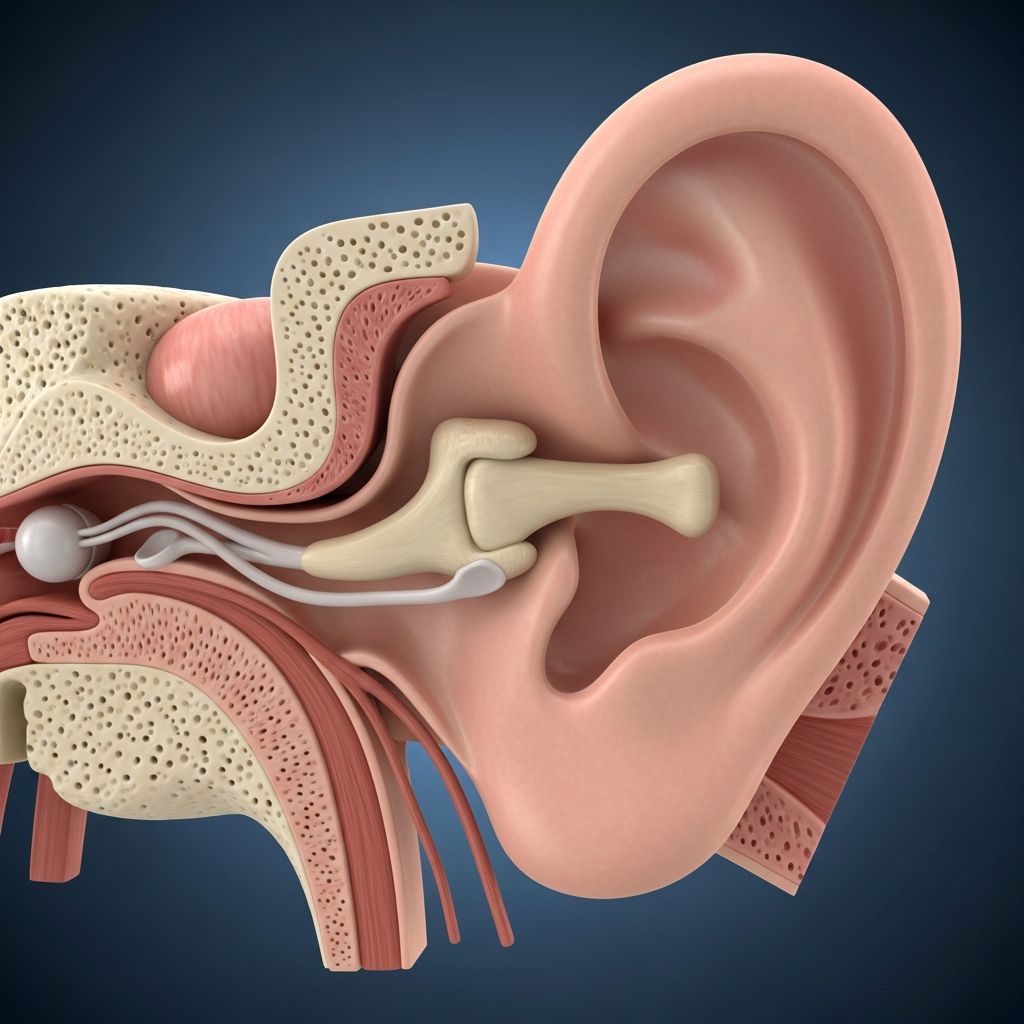
Deep inside each of your ears hides a bone so small that it could sit on the tip of a pencil. That bone is called the stapes, and even though it is tiny, it plays a huge role in helping you hear the world around you.
Without the stapes, everyday sounds like music, voices, and birds singing would be much harder to hear. Understanding how this little bone works can help you appreciate just how amazing your ears really are.
Where the Stapes Lives in Your Ear
Your ear is divided into three main parts: the outer ear, the middle ear, and the inner ear. The stapes lives in the middle ear, behind your eardrum, where you cannot see or touch it.
- Outer ear: The part you can see (the ear flap) and the ear canal that leads to the eardrum.
- Middle ear: A tiny air-filled space that holds three small bones, including the stapes.
- Inner ear: A deeper area filled with fluid and special cells that send sound signals to your brain.
The stapes sits at the end of the chain of middle ear bones and connects the middle ear to the inner ear through a small opening covered by a membrane.
Meet the Three Tiny Ear Bones
The stapes is part of a team of three tiny bones called the ossicles. These bones are the smallest in your entire body, and they work together to carry sound from the eardrum to the inner ear.
- Malleus: Attached to the eardrum and picks up its vibrations first.
- Incus: In the middle, passing vibrations from the malleus to the stapes.
- Stapes: The last bone in the chain, sending vibrations into the inner ear.
Because they are linked together like a tiny bridge, when the eardrum moves, all three bones move in order, with the stapes finishing the job.
What the Stapes Looks Like
The stapes is often described as being shaped like a stirrup from a horse’s saddle. That means it has a top part, two thin supports, and a flat bottom part.
- Head: The top part that connects to the incus.
- Two little arches: These thin “legs” form the sides of the stirrup-like shape.
- Footplate: The flat bottom that fits into a small opening to the inner ear.
Even though it looks delicate, the stapes is strong enough to move thousands of times every second as it carries sound vibrations.
How the Stapes Helps You Hear
Hearing starts when sound waves travel through the air and reach your outer ear. These waves move down the ear canal and hit the eardrum, making it vibrate like a tiny drum skin.
From there, the middle ear bones take over:
- The malleus moves when the eardrum vibrates.
- The incus moves next, pushed by the malleus.
- The stapes presses in and out on the membrane at the entrance to the inner ear.
When the stapes pushes on this membrane, it sends waves through the fluid inside the inner ear. Special cells there turn these waves into electrical signals that travel along the hearing nerve to your brain, which then understands them as sounds like words, music, or noise.
Fun Facts About the Stapes
Kids are often surprised when they learn just how tiny and busy the stapes is. Here are some fun facts that make this little bone extra interesting.
- It is the smallest bone in the human body.
- It moves incredibly quickly, keeping up with even very high-pitched sounds.
- Both of your ears have a stapes, so you actually have two of these mini bones.
- Its name comes from a word that means “stirrup,” matching its shape.
How the Stapes Protects Your Hearing
The stapes does not work alone. A tiny muscle attached to it can help protect your ears from very loud sounds by slightly changing how much the stapes moves.
When there is a sudden loud noise, this little muscle can tighten briefly, making the stapes move less and reducing the strength of the vibrations that reach the inner ear. This does not make you immune to loud sounds, but it offers a small layer of protection.
What Happens When the Stapes Has Problems?
If the stapes cannot move the way it should, sound cannot travel properly into the inner ear. This can lead to hearing loss or muffled hearing in one or both ears.
Some possible problems include:
- Hardening of the bone so it does not move easily.
- Injury to the stapes from serious head trauma.
- Damage from repeated infections or other middle ear issues.
Doctors who specialize in ears can use tests to check how well the stapes and the other middle ear bones are working and then suggest treatment options.
How Doctors Check the Stapes and Middle Ear
Even though no one can see your stapes just by looking in your ear, doctors have tools and tests that help them understand how well your middle ear is working.
- Ear exam: A small lighted tool lets the doctor look at your ear canal and eardrum.
- Hearing test: Special headphones and sounds check how well you can hear quiet and loud tones.
- Middle ear tests: Some tests gently change the air pressure in your ear to see how well your eardrum and middle ear bones move.
These tests are usually quick and painless, and they give important clues about whether the stapes is doing its job.
Keeping Your Stapes and Ears Healthy
You cannot directly clean or exercise your stapes, but you can take good care of your ears so this tiny bone can keep working well.
- Avoid sticking objects like cotton swabs, pencils, or fingers deep into your ears.
- Wear hearing protection, such as earplugs or earmuffs, at very loud events.
- Tell an adult if you have ear pain, ringing, or trouble hearing.
- Follow your doctor’s advice if you get ear infections.
By protecting your ears, you help the stapes and the rest of your hearing system stay strong for many years.
Simple Table: The Three Ear Bones
Here is a quick look at how the three middle ear bones compare and how they work together.
| Bone | Nickname | Location | Main Job |
|---|---|---|---|
| Malleus | Hammer | Attached to the eardrum | Picks up vibrations from the eardrum first |
| Incus | Anvil | Between malleus and stapes | Passes vibrations from malleus to stapes |
| Stapes | Stirrup | Next to the inner ear opening | Sends vibrations into the inner ear fluid |
How the Stapes Helps With Balance
The stapes mainly helps with hearing, but it also affects balance because it sends vibrations into the inner ear, where balance organs are located.
In the inner ear, there are special structures filled with fluid that sense movement and position. When the stapes moves the fluid for hearing, it must do so smoothly so that these balance organs are not disturbed, helping you stand, walk, and run without feeling dizzy.
When Surgery May Be Needed
In some cases, if the stapes is badly damaged or cannot move at all, a doctor may suggest surgery to improve hearing. This type of surgery is usually done by an ear, nose, and throat specialist.
A surgeon might repair the stapes or use a tiny artificial device to take over some of its work. These operations are carefully planned, and hearing tests before and after surgery help show how much improvement there is.
Talking to Kids About the Stapes
Parents and teachers can use simple examples to help kids understand the stapes. For instance, you might compare the three ear bones to a row of dominos or a series of people passing along a message.
Explaining that the stapes is the last “helper” in the chain, passing the sound message into the inner ear, makes it easier for children to picture what is happening inside their heads when they listen.
Key Takeaways About the Stapes
- The stapes is the smallest bone in your body.
- It is part of a three-bone chain that carries sound from the eardrum to the inner ear.
- Its stirrup-like shape helps it press gently on the entrance to the inner ear.
- Healthy ears and safe listening habits help the stapes work well for a lifetime.
Frequently Asked Questions (FAQ)
Is the stapes the same in kids and adults?
The stapes in children and adults has the same basic shape and job. As kids grow, the structures around the stapes develop and mature, but the bone remains one of the tiniest parts of the skeleton.
Can I feel my stapes if I touch my ear?
No. The stapes is deep inside the middle ear, behind the eardrum, so you cannot feel or see it by touching your ear or looking in a mirror.
What happens if the stapes breaks?
A broken or badly damaged stapes can cause serious hearing problems because sound cannot be passed properly into the inner ear. Doctors would need to examine the ear and may recommend special tests or treatments.
Why is the stapes so small?
Being small and light helps the stapes move very quickly and accurately. This makes it easier to carry even tiny sound vibrations into the inner ear so that you can hear quiet and high-pitched sounds clearly.
Can loud music hurt my stapes?
Loud sounds mainly harm delicate cells in the inner ear, but the stapes and other middle ear parts can also be stressed by very strong noise over time. Protecting your ears by turning down the volume and using ear protection helps all parts of the ear, including the stapes.