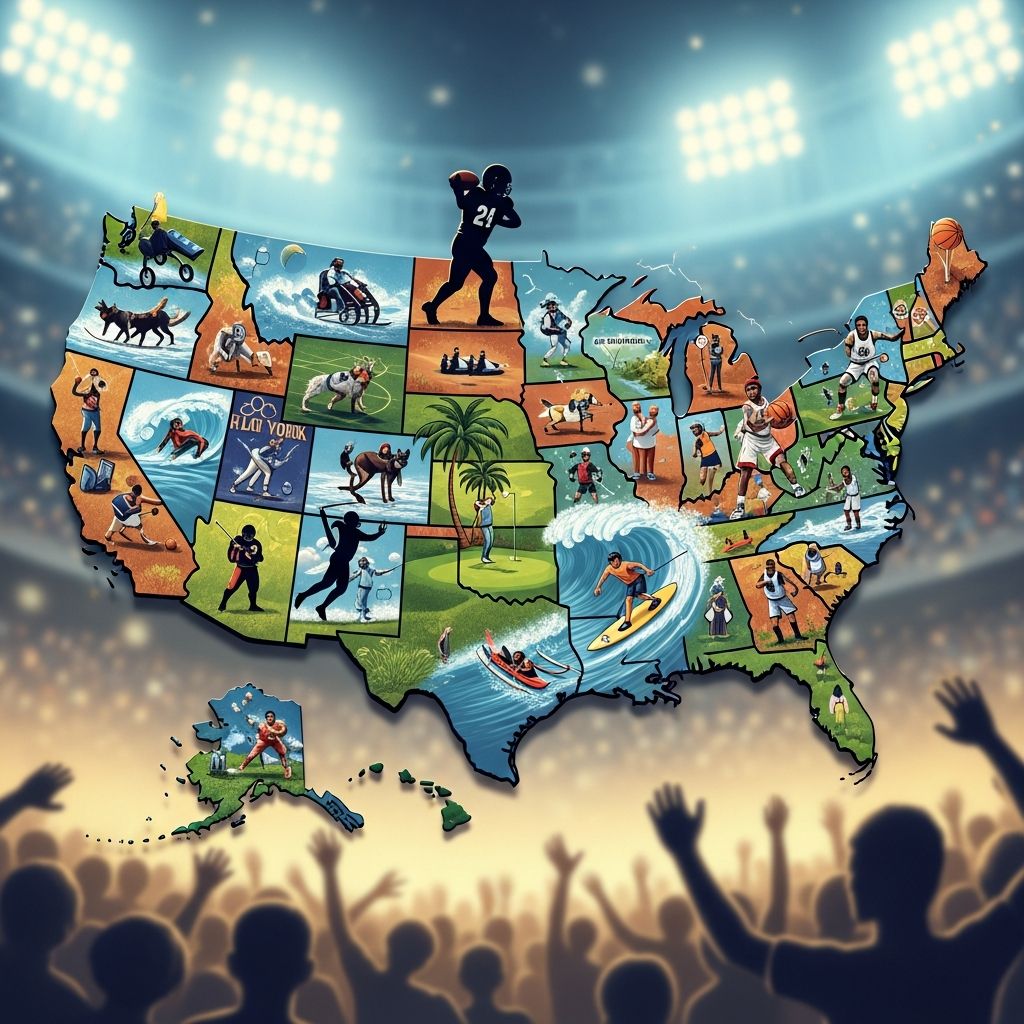
Across the United States, the sports people care about most are far from random. Each state’s favorite game reflects its history, climate, economy, and sense of community, turning stadiums, arenas, and fields into stages where local identity is on display.
The Big Four That Dominate the Conversation
There are hundreds of organized sports played in the U.S., but when people talk about “major” sports, four usually come to mind: American football, baseball, basketball, and ice hockey. These four attract the largest professional audiences, drive the biggest media deals, and shape how fans across the country think about competition.
- American football is the clear national powerhouse, uniting professional, college, and high school fans.
- Baseball blends nostalgia and statistics, keeping a particular hold on older, urban, and coastal fan bases.
- Basketball thrives in cities and on playgrounds, with fast-paced action and globally known stars.
- Hockey remains essential to colder regions, where ice and winter sports are woven into everyday life.
Why One Sport Rises Above the Rest
Even though sport is everywhere in American culture, most states tend to rally hardest around one primary game. That “number one” sport often reflects which league sells the most tickets, dominates TV ratings, or drives the strongest emotional loyalty from local fans.
In many places, that top sport becomes part of the local calendar: work, school, and family gatherings bend around kickoff times, playoff runs, and championship hopes. The result is a patchwork map where the same game can mean wildly different things depending on where you live.
American Football: The Heartbeat of Many States
In most of the country, some form of American football is the main event. It might be a professional franchise, a powerhouse college program, or even a high school dynasty, but the rhythm of the fall often follows the football schedule.
- Professional football (NFL) often leads in states with established franchises and large metro areas.
- College football dominates in regions where universities serve as cultural anchors and pro teams are sparse.
- High school football can be the backbone of small towns, where Friday nights feel like community holidays.
Economics, media coverage, and tradition all reinforce football’s hold. Large stadiums generate significant revenue, national broadcasts turn local games into shared experiences, and decades of rituals—from tailgating to homecoming—keep new generations invested.
Baseball’s Lasting Hold on Certain States
Baseball may no longer be the undisputed “national pastime,” but it remains the central sport in several influential states, particularly those with deep professional histories and iconic ballparks. In these places, baseball is as much about memory and storytelling as it is about wins and losses.
States with multiple professional teams or legendary franchises often see baseball merchandise, talk radio, and local media keep the game in the spotlight year-round. Long seasons and daily box scores make baseball feel like a constant background track to spring and summer life.
- Urban centers support devoted fan bases that pass fandom from grandparents to grandchildren.
- Historic rivalries and playoff runs become part of local identity and city pride.
- Minor league clubs help smaller communities feel connected to the big leagues.
Basketball’s Urban and College Strongholds
Basketball’s popularity thrives where access matters. A hoop, a ball, and an open court are often enough, which helps the game spread in dense cities and schoolyards nationwide. Some states identify most strongly with basketball, especially those home to storied college programs or beloved professional teams.
In these states, arenas fill up for winter and spring games, and tournament time can overshadow other major events. The sport’s pace, personality, and star power make it a perfect fit for social media and highlight culture, further amplifying its draw among younger fans.
- College basketball can eclipse every other sport in areas with blue-blood programs and tournament traditions.
- Professional teams in basketball-first markets shape streetwear, music, and local aesthetics.
- Youth leagues and pickup culture keep the pipeline of passionate fans constantly refreshed.
Hockey’s Ice-Bound Regions
Ice hockey tends to dominate in colder states where frozen ponds, long winters, and established youth systems make the sport feel natural rather than niche. In these regions, kids grow up learning to skate almost as soon as they can walk, and rinks serve as year-round community hubs.
The sport’s intensity and speed reward fans willing to learn its rules and appreciate its flow. Strong ties between local youth programs, college teams, and professional clubs help maintain a clear path from neighborhood rinks to national stages, reinforcing regional pride.
How Geography Shapes Favorite Sports
Climate and landscape make some sports easier to adopt than others. Warm-weather states can sustain year-round outdoor play, favoring games like football and baseball, while cold-weather states naturally gravitate toward ice and winter sports. Even within a single league, the style of play can differ by region due to local coaching traditions and available facilities.
Rural and urban divides also matter. Wide-open spaces are ideal for large fields and stadiums, while dense cities support basketball courts and indoor arenas. Over time, these physical realities become cultural preferences, and those preferences harden into tradition.
| Region Type | Common Favorite Sport | Key Influences |
|---|---|---|
| Cold, northern states | Hockey or football | Long winters, indoor arenas, strong youth systems |
| Warm, southern states | Football or baseball | Outdoor seasons, large high school and college programs |
| Big coastal metros | Baseball or basketball | Historic franchises, dense populations, media coverage |
| College-town regions | Football or basketball (NCAA) | University culture, student populations, campus traditions |
Economics, Tickets, and Fan Behavior
Money also plays a major role in determining what each state considers its favorite sport. Ticket sales, merchandise, and broadcast rights generate data that reveal where fans are putting their time and cash. High-demand games sell out quickly, drive secondary markets, and shape how local businesses plan their weekends.
When a particular league consistently draws bigger crowds, sponsors and advertisers follow, reinforcing attention on that sport. As a result, youth programs, media outlets, and even city planners invest more heavily in facilities and events for that game, cementing its status as the state’s primary pastime.
- Sold-out stadiums encourage teams and leagues to schedule more marquee events in fan-heavy states.
- Local bars and restaurants build promotions around game days for their region’s top sport.
- Higher visibility feeds a feedback loop, turning casual observers into emotionally invested fans.
Tradition, Identity, and Family Rituals
Statistics alone cannot fully explain why a state loves one sport more than another. Family traditions and local stories often matter just as much. Many people’s first memories of sports involve sitting with parents or grandparents, wearing hand-me-down jerseys, and learning the rules of the “home” team.
Over time, these experiences grow into rituals: annual rivalry games, holiday matchups, and historic comebacks retold at every gathering. In some states, cheering for the dominant sport feels almost like a civic duty, a way to show loyalty to the place you call home.
How New Generations Are Changing the Map
While the current landscape is dominated by the traditional big four, younger fans are gradually reshaping the picture. Rising interest in global sports, streaming platforms, and non-traditional competitions makes it easier for fans in any state to follow whatever game they love, regardless of local preferences.
Soccer, women’s sports, and niche activities like esports are carving out bigger roles, especially among kids and teenagers. Over time, this could loosen the grip of legacy sports in some states, or at least create a more balanced ecosystem where multiple games share the spotlight.
- Youth participation trends foreshadow which sports could gain ground over the next decade.
- Digital communities let fans in any state follow teams from anywhere in the world.
- Greater visibility of women’s leagues and international tournaments diversifies the sports conversation.
Tips for Families Choosing a Sport in Their State
For parents trying to decide which sport might be the best fit for their kids, understanding local favorites can be helpful but not limiting. States where one sport dominates usually offer better facilities, more leagues, and deeper community support for that game. However, children’s interests and safety should always come first.
- Explore what the community offers: Look at youth leagues, school teams, and recreational programs to see which sports have strong local support.
- Consider climate and schedule: Outdoor sports may be seasonal in colder states, while indoor options can provide year-round play.
- Balance passion and practicality: If your state loves football but your child thrives in individual or non-contact sports, look for alternative paths within the same culture, like marching band, cheer, or support roles.
- Expose kids to multiple sports: Early variety helps children discover what they truly enjoy rather than feeling pushed into a single option.
Frequently Asked Questions About State Sports Preferences
Why is football the top sport in so many states?
Football benefits from a unique combination of spectacle, tradition, and structure. With clearly defined seasons for high school, college, and professional levels, the sport offers a continuous storyline that keeps fans engaged. Large rosters, marching bands, and tailgating traditions also help football double as a social event as much as a competition.
Can a state’s favorite sport change over time?
Yes. A state’s primary sport can shift due to franchise relocations, the rise of a successful college program, demographic changes, or new investment in different facilities. For example, a state that adds a new professional team or hosts major tournaments can see public attention gradually move toward that sport, especially among younger fans.
Do states ever have more than one “favorite” sport?
In practice, many states have overlapping loyalties. A place might statistically lean toward football while maintaining intense affection for baseball or basketball. The concept of a single “favorite” sport often reflects which league currently sells the most tickets or draws the most sustained viewing, rather than erasing passion for other games.
How do college sports affect what a state prefers?
In states without numerous professional teams, college programs often fill the spotlight and shape statewide identity. A winning football or basketball program can become a rallying point that transcends campus boundaries, turning game days into unofficial holidays and helping that sport take precedence over others in public life.
What does the future of state sports preferences look like?
Looking ahead, the dominance of legacy sports will likely remain, but the edges of the map may soften. As digital platforms expand access to international competitions and emerging leagues, more states will nurture sizable fan bases for multiple sports at once. The next generation’s preferences—fueled by global exposure—could make the U.S. sports map more varied and dynamic than ever.
Whether your state gathers under stadium lights in the fall, around frozen rinks in the winter, or at ballparks in the summer, its favorite sport offers a window into how communities celebrate, compete, and come together. Understanding that story turns a simple game into a living expression of local culture.