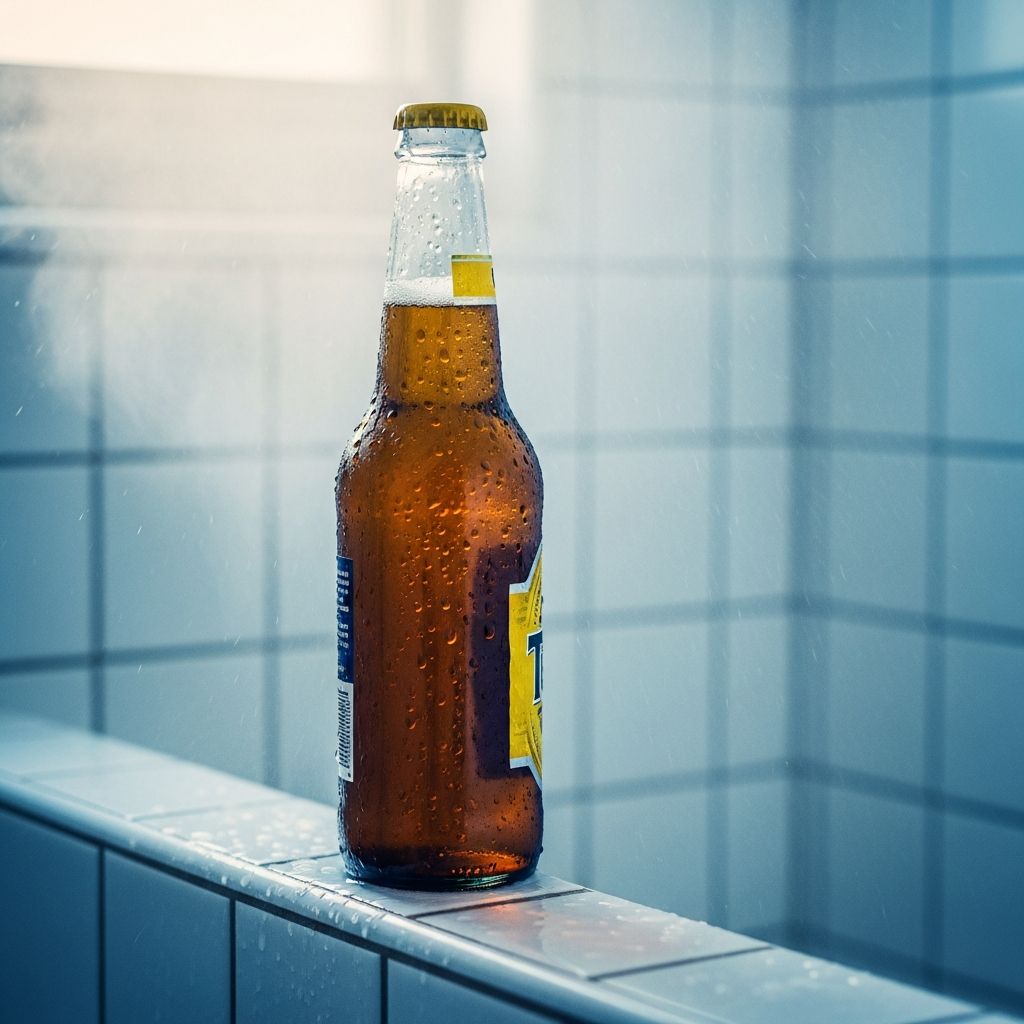
For many adults, the idea of cracking open a cold beer under a stream of hot water sounds oddly perfect: it feels indulgent, relaxing, and strangely productive for clearing your head. This blend of simple pleasures even has a name — the shower beer. But why does this specific combination feel so satisfying, and is there any science behind it?
This article explores what researchers know about warm showers, light alcohol consumption, mood, and creativity, and how they might interact. It also explains how to enjoy a shower beer safely, when it might be a bad idea, and some alternatives if alcohol is not right for you.
The Shower Beer, Defined
Before talking about benefits or risks, it helps to clarify what people usually mean by a “shower beer.” It is not heavy drinking, and it is not an all-evening activity.
- Quantity: Typically one standard beer (about 12 oz / 355 ml at ~5% alcohol).
- Timing: Consumed during a short shower, often after work, exercise, or a stressful day.
- Goal: To relax, unwind, and enjoy a small reward — not to get drunk.
In other words, when people talk about a shower beer in a positive light, they usually mean a single drink, in moderation, in a private and safe setting.
How Showers Affect Your Brain and Body
Long before anyone added beer to the equation, researchers were interested in what showers and bathing do for the body and mind. Warm-water bathing has been linked to relaxation, stress relief, and even improvements in sleep quality in both clinical and everyday settings.
Warm Water and Dopamine
Taking a warm shower is a form of mild hydrotherapy. Studies of warm baths and hot-water immersion show that they can:
- Encourage muscle relaxation and reduce perceived tension.
- Support parasympathetic nervous system activity (the “rest and digest” mode).
- Promote feelings of comfort and calm, particularly before sleep.
Although dopamine is not typically measured directly in routine bathing studies, pleasant sensory experiences — warmth, comfort, and reduced pain — are associated with activity in the brain’s reward and relaxation circuits. That is one reason many people report their best ideas come in the shower: the mind is both relaxed and lightly stimulated, a state linked with increased creative thought.
Showers and Creativity
Creative insights often appear during activities that require little focused attention but keep your body gently engaged, such as walking, showering, or washing dishes. Cognitive research refers to this as incubation: you stop consciously working on a problem, and your mind keeps processing it in the background.
- Low-demand tasks can free up mental resources for associative thinking.
- Relaxed states reduce anxiety, which otherwise narrows your focus and makes it harder to form novel connections.
- Environmental cues — like the feel of water, ambient noise, and steam — provide mild stimulation without overwhelming your attention.
While laboratory studies do not usually test “shower thinking” directly, they find that mind-wandering and low-intensity activities can support creative problem-solving compared with constant effortful focus.
How Light Drinking Affects Mood and Reward
Now add beer. To understand why a single drink might feel rewarding, it helps to look at what alcohol does to the brain’s reward pathways, especially when consumed in small amounts.
Alcohol, Endorphins, and Reward
Human brain imaging studies have provided direct evidence that moderate alcohol intake can stimulate the release of endorphins — the body’s natural opioids — in areas linked with pleasure and reward. These regions include the nucleus accumbens and orbitofrontal cortex, which play central roles in experiencing things as “enjoyable” or “rewarding.”
In one widely cited study, researchers used positron emission tomography (PET) to measure the binding of opioid receptors before and after alcohol consumption. They found that drinking alcohol caused measurable endorphin release in these brain areas, correlating with how pleasurable participants reported the experience to be.
At low to moderate doses, many adults report:
- Mild mood elevation.
- Reduced social or performance anxiety.
- A sense of warmth or ease.
These effects are part of what make alcohol attractive — and also part of why it can lead to misuse when not handled carefully.
Light Drinking and Happiness
Population-based research has examined whether people who drink lightly are happier than those who do not drink or those who drink heavily. A large UK study found that, even after adjusting for factors like income, health, and social activity, light to moderate drinkers tended to report higher levels of subjective well-being than heavy drinkers or non-drinkers, although the reasons are complex and may reflect social and cultural factors as much as biology.
At an individual level, this does not mean alcohol is necessary for happiness or recommended for everyone. Instead, it suggests that, for some adults without contraindications, occasional light drinking can coincide with positive mood, especially in pleasant settings.
Why Combining a Shower and a Beer Feels So Good
When you put these two pieces together — the relaxing, idea-sparking effect of a warm shower and the mild euphoria from a single beer — you get a distinct experience that feels better than the sum of its parts.
| Component | Main Effect | How It Contributes to a Shower Beer |
|---|---|---|
| Warm shower | Muscle relaxation, comfort, reduced stress | Creates a calm, safe environment and helps your mind drift, supporting creative thinking. |
| Steam and sensory cues | Gentle sensory stimulation | Provides a pleasant, immersive backdrop without demanding focus. |
| Single beer | Endorphin release and mild disinhibition | Enhances feelings of reward and can lower tension or self-consciousness. |
| Context (end of day, after workout) | Psychological signal of “day is done” | Reinforces a sense of closure, making the moment feel like a personal ritual. |
Subjectively, many people describe a shower beer as:
- A small, contained celebration.
- A way to transition from work mode to home mode.
- A mental reset button after physical effort, like a long run or demanding shift.
The Role of Ritual and Expectation
Beyond chemistry, a shower beer is also about ritual. Psychology studies show that simple, repeated actions performed with intention can amplify enjoyment and reduce stress, partly because they:
- Provide predictability in a chaotic day.
- Mark boundaries between roles (employee vs. parent, athlete vs. off-duty self).
- Signal to your brain that it is time to slow down.
If you intentionally reserve a shower beer for specific occasions — finishing a difficult project, getting through a long week, or completing a race — your brain begins to associate the ritual with accomplishment and relief. Expectation alone can boost perceived pleasure through placebo-like effects.
Health Guidelines: When a Shower Beer Fits, and When It Doesn’t
Any discussion of potential upsides has to be balanced with clear information about risks. Alcohol is a depressant, and even low levels can be harmful for some people or in certain situations.
Evidence-Based Drinking Limits
Many countries have issued guidelines on low-risk drinking. For example, the U.S. Dietary Guidelines for Americans recommend that adults who choose to drink should limit intake to:
- Up to one drink per day for women, and
- Up to two drinks per day for men,
and note that drinking less is better for health than drinking more. Some individuals — including people who are pregnant, have certain medical conditions, take specific medications, or are in recovery from substance use disorder — are advised not to drink at all.
Added Risks in a Slippery Environment
Alcohol can impair balance, coordination, and reaction time, even at relatively low doses. Combined with a wet floor, soap, and slippery surfaces, this can raise the risk of falls and injuries. To minimize risk if you choose to have a shower beer:
- Use a non-glass container (e.g., metal can or plastic cup) to avoid broken glass.
- Install or use a non-slip mat and grab handles if needed.
- Keep it to one drink and avoid shower beers if you already feel impaired.
- Skip it entirely if you have balance problems, recent injuries, or conditions that increase fall risk.
Who Should Avoid Shower Beers Entirely
Certain groups should not drink alcohol in any setting, shower or otherwise. These include, but are not limited to:
- People who are pregnant or trying to conceive.
- Individuals with a history of alcohol use disorder or those in recovery.
- People taking medications that interact with alcohol (many psychiatric, pain, and sleep medications).
- Individuals with specific medical conditions, such as some liver, heart, or pancreatic diseases.
- Anyone who needs to drive or operate machinery soon after bathing.
If you are unsure whether drinking is safe for you, it is best to consult a healthcare professional.
When a Shower Beer Might Be Helpful
For adults who safely consume alcohol and are within recommended limits, a shower beer can function as a small, hedonic self-care practice. Situations where it may feel particularly rewarding include:
- After strenuous exercise: The shower helps your muscles relax, while a single beer feels like a reward. Note: rehydrate with water first, as alcohol is a diuretic.
- Following a demanding workday: The combination can mark the shift from “on” to “off,” especially if you struggle to stop thinking about work.
- Completing a major project or milestone: Saving the ritual for noteworthy moments can make it feel more meaningful and less routine.
In these contexts, the key is that the shower beer is intentional, occasional, and clearly bounded — not an automatic response to every minor stressor.
Alternatives If You Don’t Drink (or Don’t Want To)
You do not need alcohol to capture most of what makes a shower beer enjoyable. Many of the positive elements — warmth, ritual, sensory pleasure, and a marked transition — can be recreated in other ways.
- Non-alcoholic beer or sparkling water: You still get a cold, flavorful drink in a fun setting, without the intoxicating effects.
- Aromatherapy shower: Scented shower steamers or essential-oil products can heighten sensory enjoyment and relaxation.
- Guided breathing: Using the shower as a cue to practice slow breathing can enhance stress reduction benefits.
- Music or podcasts: Listening to something enjoyable can turn the shower into a short entertainment break.
For many people, these alternatives offer the same sense of indulgence and reset — sometimes even more so, since there is no concern about overdoing it with alcohol.
Frequently Asked Questions (FAQs)
Is a shower beer healthier than a regular beer on the couch?
From a purely physiological standpoint, the main difference is context, not the alcohol itself. A single beer has roughly the same impact whether you drink it in a shower or on the sofa. The shower may feel more relaxing and satisfying, but alcohol-related risks and guidelines are the same.
Can a shower beer really improve creativity?
Indirectly, it might. Warm showers are linked to relaxed, mind-wandering states that can promote creative insights, and small amounts of alcohol can reduce self-consciousness. However, there is no direct study specifically testing “shower beers” and creativity together, so this idea is based on combining separate findings about bathing and light drinking.
How often is it reasonable to have a shower beer?
Frequency depends on your overall drinking habits and health. If you already drink most days, adding a daily shower beer may push you beyond recommended low-risk limits. Many people treat it as an occasional ritual — for example, once a week or tied to special milestones — to keep it from becoming a default coping mechanism.
Does hot water make alcohol hit harder?
There is limited research directly on heat and alcohol absorption, but being in hot environments can lead to faster dehydration and lower blood pressure. This may make you feel lightheaded sooner. That is why it is important to stay hydrated, avoid very long or extremely hot showers with alcohol, and always stand up slowly if you feel dizzy.
Are there long-term benefits to shower beers?
There is no evidence that combining a shower with a beer produces long-term health benefits. Any advantages are mainly about short-term mood, relaxation, and perceived enjoyment. Over the long term, health outcomes are driven more by your overall drinking pattern, sleep, stress management, diet, and exercise than by whether you occasionally enjoy a beer in the shower.
References
- Soaking in a hot tub bath at home can improve sleep quality in patients with insomnia — Sato D. et al., Journal of Physiological Anthropology. 2018-12-01. https://doi.org/10.1186/s40101-018-0176-5
- Endogenous opioid release following alcohol intoxication — Mitchell JM. et al., Science Translational Medicine. 2012-01-11. https://doi.org/10.1126/scitranslmed.3002655
- Alcohol consumption and happiness: a cross-sectional analysis of the UK Household Longitudinal Study — Angeletos A. et al., BMJ Open. 2016-09-01. https://doi.org/10.1136/bmjopen-2016-011045
- Dietary Guidelines for Americans, 2020–2025 — U.S. Department of Agriculture & U.S. Department of Health and Human Services. 2020-12-01. https://www.dietaryguidelines.gov
- Alcohol — World Health Organization. 2022-05-01. https://www.who.int/news-room/fact-sheets/detail/alcohol