For many parents, the line “This little piggy went to market” sounds cute and harmless—until they pause and wonder what it actually means and whether it is as innocent as it seems.
Overview of the “Piggy Market” Meaning
When adults talk about the “piggy market meaning”, they are usually referring to the first line of the traditional toe-counting rhyme, “This little piggy went to market.” The rhyme is typically used as a playful bonding game with babies and toddlers, with each “piggy” standing in for one of the child’s toes.
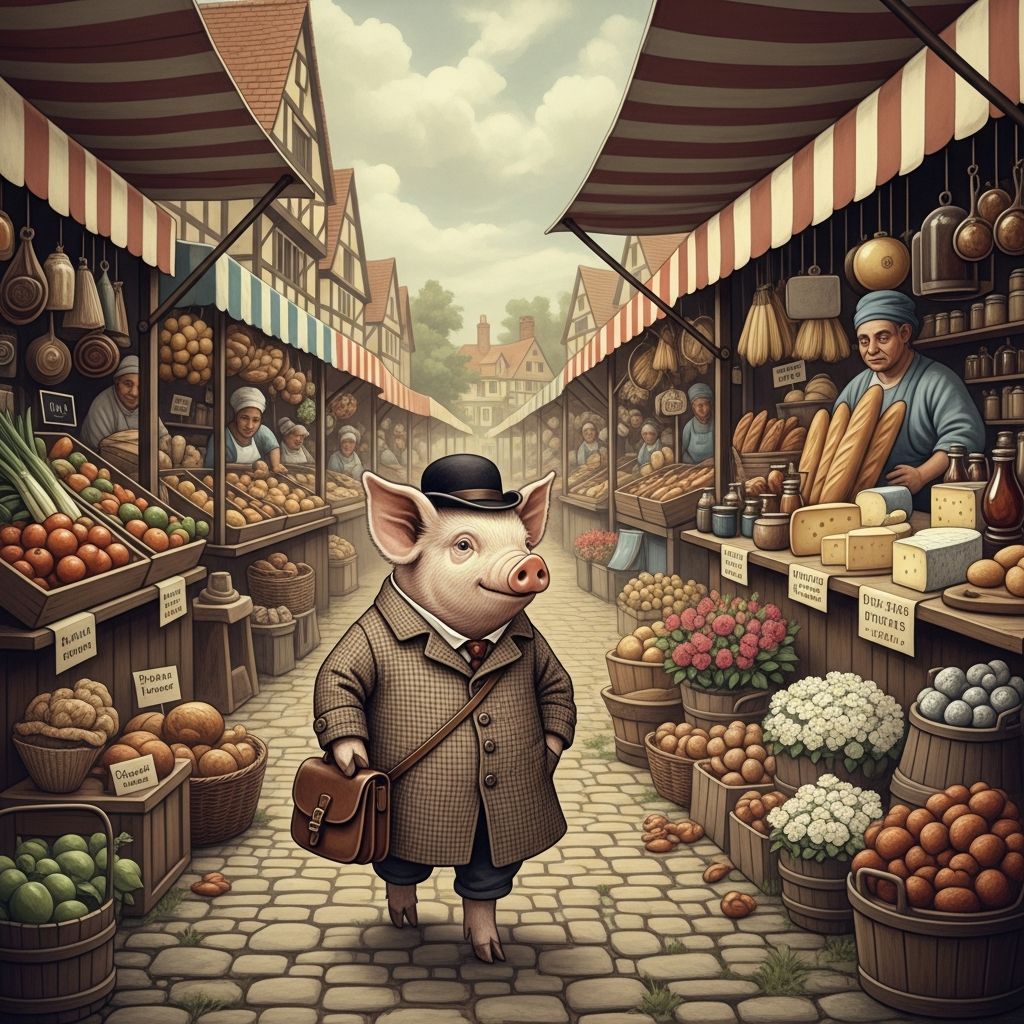
The word “market” in the rhyme can be interpreted in two main ways: a child-friendly version where the pig goes shopping or exploring, and a more literal farm-life version in which pigs go to market to be sold as meat. Both interpretations coexist today, which is why the phrase raises questions for thoughtful parents.
Origins of “This Little Piggy”
“This Little Piggy” is an old English nursery rhyme that dates back to at least the 18th century, and possibly earlier in partial forms. Over time it evolved into the short, rhythmic version that many English-speaking families know today.
The rhyme has long been used as a fingerplay or toe-play activity, where a caregiver gently wiggles each toe in turn while reciting the lines. Historically, nursery rhymes often contained references to everyday rural life, and pigs being taken to market were simply part of that world.
Literal Meaning vs. Kid-Friendly Interpretation
On the surface, the rhyme lists what each “little piggy” does: one goes to market, another stays home, one eats well, one has none, and the last squeals all the way home. Children usually hear it as a silly story about funny pigs, not as a realistic description of farm life.
Adults, however, recognize that in traditional farming communities, a pig going to market usually meant it was being sold for meat rather than going on a casual shopping trip. This creates a tension between the rhyme’s cheerful tone and its potentially darker literal meaning.
Two Common Ways People Explain It
- Gentle, child-focused version: The piggy “goes to market” like a person goes grocery shopping—he’s off to buy food or see something new.
- Literal farm version: The piggy is being taken to market to be sold, likely for slaughter, reflecting the realities of traditional agriculture.
Most parents today choose the gentler explanation for young children and reserve any deeper discussion about farming or meat production for when their kids are older and more ready for nuance.
Why Parents Are Suddenly Asking About the Meaning
Many parents grew up hearing this rhyme without thinking twice about it. The recent wave of questions about the “piggy market meaning” is largely driven by social media, parenting blogs, and a wider cultural shift toward examining the stories we pass down to children.
Viral posts often highlight the idea that the “piggy” is not going shopping but going to be sold, leading some adults to feel uneasy or even guilty about having repeated the lines so casually. That discomfort can be a chance to rethink how to explain classic rhymes while still enjoying their playful elements.
Is the Rhyme Really Dark?
Whether “This little piggy went to market” feels dark depends heavily on how literally one takes it. On the level of a toddler game, it is usually perceived as cheerful nonsense, paired with tickles and laughter.
Looked at through an adult lens, the reference to pigs being sold at market can seem grim, especially for families who try to keep themes of slaughter or death away from small children. Still, it is important to remember that many traditional rhymes contain similar references to work, illness, or hardship, even when sung in a playful tone.
Context Matters
- Children mainly focus on the rhythm, sound, and attention from the adult, not the literal meaning of every word.
- The rhyme does not describe violence or gore; it hints at everyday farm realities from a past era.
- Parents are free to reframe, edit, or reinterpret rhymes in ways that fit their family values.
Line-by-Line Conceptual Breakdown
Even without quoting any specific version of the rhyme, it is helpful to walk through what each “little piggy” is generally understood to represent. This gives parents a clearer sense of what they are saying and what they might want to adapt.
| Line Concept | Traditional Farm-Life Meaning | Kid-Friendly Explanation |
|---|---|---|
| Piggy went to market | The pig is taken to market to be sold, likely for meat. | The piggy goes on a big adventure to the market, maybe to shop or look around. |
| Piggy stayed home | A pig left behind at the farm, not sold or taken anywhere that day. | A cozy piggy enjoying a quiet day at home, perhaps relaxing. |
| Piggy had a big meal | A well-fed pig, possibly being fattened up before sale. | A lucky piggy who gets to enjoy a favorite dinner. |
| Piggy had none | A pig who did not get that special meal, hinting at inequality or timing. | A piggy who missed out this time but might eat later, inviting empathy and sharing. |
| Piggy cries and goes home | A squealing pig, possibly frightened or being moved. | A dramatic, squeaky piggy who runs home, leading to tickles and giggles. |
Seen this way, the rhyme balances elements of abundance and lack, safety and fear, home and away—typical themes in traditional stories, even when aimed at children.
How to Talk About the Meaning With Kids
For very young children, it is usually enough to treat the rhyme as a silly story with funny characters. They tend to delight in the rhythm, the physical interaction, and the surprise of the last toe being tickled.
As kids get older and start asking what “going to market” actually means, parents can decide how much detail fits their child’s emotional maturity and family beliefs about animals, food, and honesty.
Age-Appropriate Ways to Explain It
- Toddlers (1–3 years): Focus on the idea that the piggy is going out on a fun trip. You might say, “He’s going to the market to look at all the food and people.”
- Preschoolers (3–5 years): Offer a slightly broader view: “Farm animals sometimes go to market so people can buy them or their food. In our rhyme, we just pretend it’s a funny trip.”
- School-age children: If they ask directly, you can gently explain that, in the past, markets were where people bought animals for meat, and that the rhyme comes from those times.
You do not have to raise the darker interpretation unless your child is asking questions that clearly point in that direction or unless it fits into a wider conversation about where food comes from.
Modern Rewrites and Alternatives
Because of discomfort with the traditional farm interpretation, some families enjoy creating playful new verses that keep the structure but change the activities. Creativity can make the rhyme feel more aligned with contemporary values while preserving the toe-wiggling fun.
For example, the piggies might go to the park, visit the library, help in a garden, or share different snacks instead of hinting at farm-to-market realities. These homemade variations can become cherished, personalized family traditions.
Ideas for Gentler Versions
- Have each piggy visit a different place, like the beach, the zoo, or a friend’s house.
- Turn the rhyme into a sharing story where one piggy shares food or toys with another.
- Use other animals that feel less tied to meat production in your family’s context, such as bunnies or bears.
Cultural and Educational Value of the Rhyme
Despite the potentially dark literal reading, “This Little Piggy” offers real developmental benefits. The rhyme introduces rhythm, repetition, and basic narrative sequencing in a way that is easy for young children to follow.
The toe-wiggling aspect also supports sensory awareness and bonding: children link the sound of the words with touch and movement, which can strengthen language learning and emotional connection with the caregiver.
Benefits for Young Children
- Language development: Repetition of similar phrases helps children anticipate words and patterns.
- Body awareness: Associating each line with a specific toe reinforces a sense of the body.
- Emotional bonding: Close, playful physical contact supports attachment and feelings of safety.
Frequently Asked Questions About the “Piggy Market” Meaning
1. Does the piggy really go to be slaughtered?
In traditional farming terms, a pig taken to market was usually being sold, often for meat. However, the rhyme itself never explicitly describes what happens at the market; that part is left to interpretation. Many families choose a lighthearted version, treating it as a shopping trip or adventure instead of focusing on slaughter.
2. Is it wrong to say this rhyme to kids?
Most child development experts view classic rhymes as generally harmless, especially when adults use gentle tone and affectionate physical contact. The key is to be attentive to your child’s reactions: if they simply giggle and enjoy it, there is no clear harm in continuing the tradition.
3. Should I stop using the original wording?
That decision depends on your comfort level and your family values. Some parents continue using the traditional wording and simply delay deeper explanations, while others modify lines so that the story is clearly playful and non-threatening. Both approaches are valid if they feel right for your household.
4. How do I answer if my child asks directly what “going to market” means?
A simple, age-appropriate explanation often works best. You might say that a market is a place where people buy and sell things, and that in old farm days animals sometimes went there too. You can add more detail about meat or farming later, as your child’s understanding and questions grow.
5. Are there other rhymes with hidden or darker meanings?
Many traditional nursery rhymes contain references to historical hardships, illness, or everyday struggles that adults can recognize but children usually do not. Over the years, families and educators have often softened or reinterpreted those rhymes, just as some do with the “piggy market” line today.
Key Takeaways for Parents
The phrase “piggy went to market” sits at the intersection of history, culture, and modern parenting concerns. It reflects a time when farm realities were so normal that they naturally found their way into children’s verses.
Parents today do not have to choose between authenticity and sensitivity. It is entirely possible to honor the playful spirit of the rhyme, adapt any parts that feel too harsh, and use your child’s questions as gentle openings for future conversations about food, animals, and where everyday things come from.
- You can keep the rhyme, adapt it, or replace it—whatever fits your family best.
- Children mainly experience it as a game, not as a lesson on farming or death.
- Honest but age-appropriate explanations help maintain trust when kids ask for more detail.