Nathaniel “Coyote” Peterson is best known as the daring wildlife educator who lets bullet ants, tarantulas, and other creatures bite or sting him on camera, all in the name of science and storytelling. Yet behind the viral moments sits a thoughtful father whose life offers unexpected guidance for raising curious, resilient kids.
This article uses his public career and story as inspiration to explore how parents can encourage adventure, respect for animals, and emotional courage in everyday family life.
From Backyard Creeks to a Global Wildlife Stage
Coyote Peterson grew up in rural Ohio, far from television studios and streaming platforms. His childhood terrain was creeks, ponds, and forest edges, not red carpets.
- Early fascination with animals: As a kid, he spent hours catching frogs, turtles, and snakes in the woods and wetlands near his home, learning through direct experience rather than formal training.
- Self-taught naturalist: He has described himself as largely self-educated in animal behavior, building knowledge through books, working with experts, and relentless field time.
- Film school foundation: Peterson later studied film at The Ohio State University, graduating in 2004, which gave him the technical and storytelling skills to turn his hobby into a career.
These threads—unstructured outdoor play, intense curiosity, and creative storytelling—eventually united in what became the Brave Wilderness YouTube channel, which went on to set Guinness World Records as the most-subscribed and most-viewed animal channel on the platform.
The Brave Wilderness Era: Turning Curiosity into a Career
Today, Coyote Peterson is known worldwide as a wildlife educator, author, and host of TV and online series that spotlight animals from deserts to rainforests.
- Brave Wilderness: His flagship YouTube channel focuses on wildlife encounters, conservation messages, and up-close perspectives on animals that many people fear, from venomous insects to large reptiles.
- Multiple series: Over the years he has hosted or co-hosted shows such as Breaking Trail, Beyond the Tide, Dragon Tails, On Location, and more, each exploring different habitats and species.
- Animal Planet crossover: His popularity helped launch the Animal Planet series Coyote Peterson: Brave the Wild, bringing his style of wildlife education to cable television.
In 2019, Guinness World Records recognized Brave Wilderness for both subscriber count and views, noting that his content had become the dominant animal-focused channel on YouTube.
The Sting Videos: Pain as a Teaching Tool
One of the most controversial aspects of Peterson’s work is his willingness to be stung or bitten by creatures like the bullet ant or executioner wasp on camera.
| Element | What Kids See | What Parents Can Emphasize |
|---|---|---|
| The sting | Shocking pain and drama | Respect for animals, why we avoid provoking wildlife |
| Preparation | Safety gear and medical planning | Risk assessment, research, and having a plan |
| Explanation | Cool facts about venom and behavior | Science communication and critical thinking |
| Recovery | Coyote handling the aftermath | Resilience, emotional regulation, and honest reflection |
Peterson has said he began these experiments because the audience responded so strongly to them, but later signaled that he was likely moving away from sting and bite content to focus more on broader wildlife storytelling.
What His Story Reveals About Raising Adventurous Kids
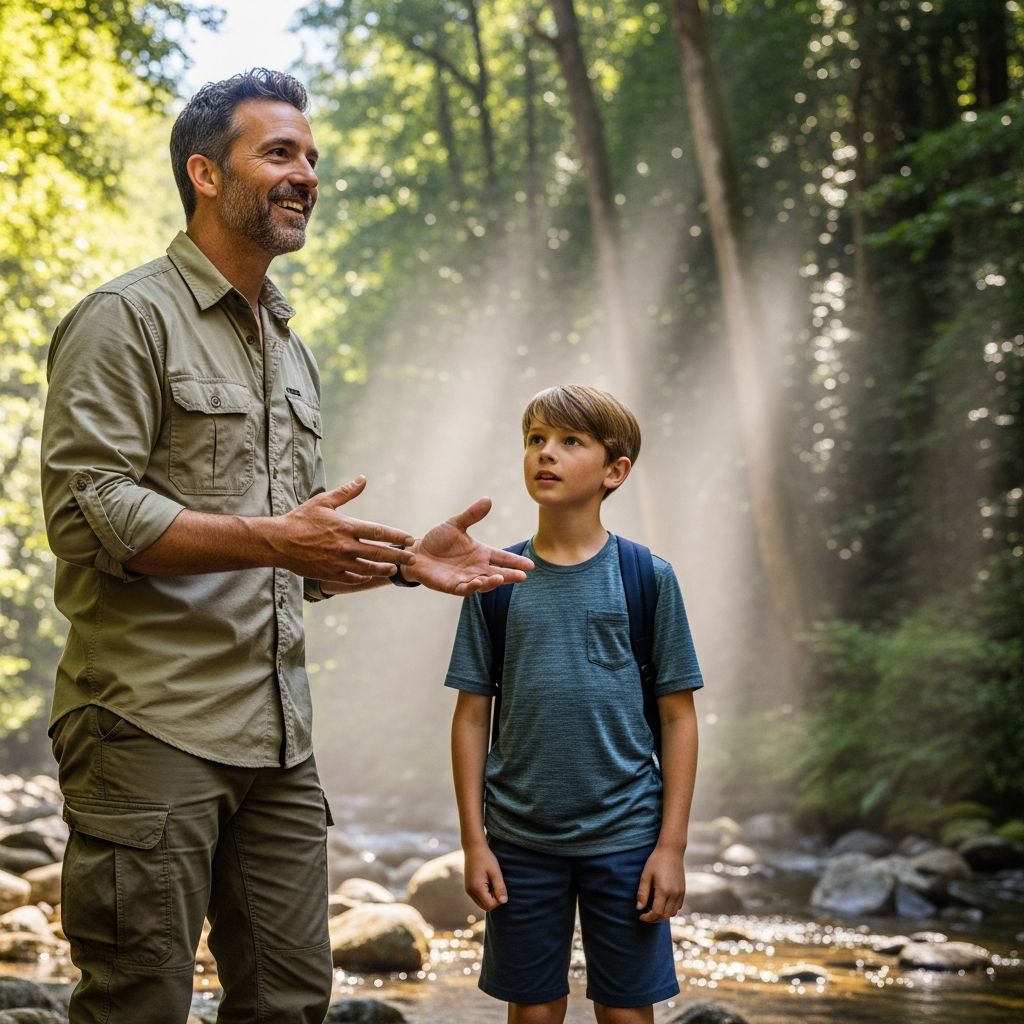
While Coyote Peterson is not a parenting expert, his background and public choices illuminate several principles that are useful for families raising curious, nature-loving children.
1. Unstructured Outdoor Time Builds Real Confidence
Peterson’s childhood was defined by unsupervised exploration of ponds, creeks, and forests. Modern research supports the value of such play:
- Studies link outdoor play in natural settings with better motor skills, social development, and emotional resilience in children.
- Time in green spaces is associated with reduced stress and improved attention in kids, particularly those with ADHD symptoms.
Parents can draw from this by:
- Letting kids explore local parks, streams, or backyards with gradually increasing independence.
- Allowing some risk—mud, scrapes, and minor mishaps—within clear safety boundaries.
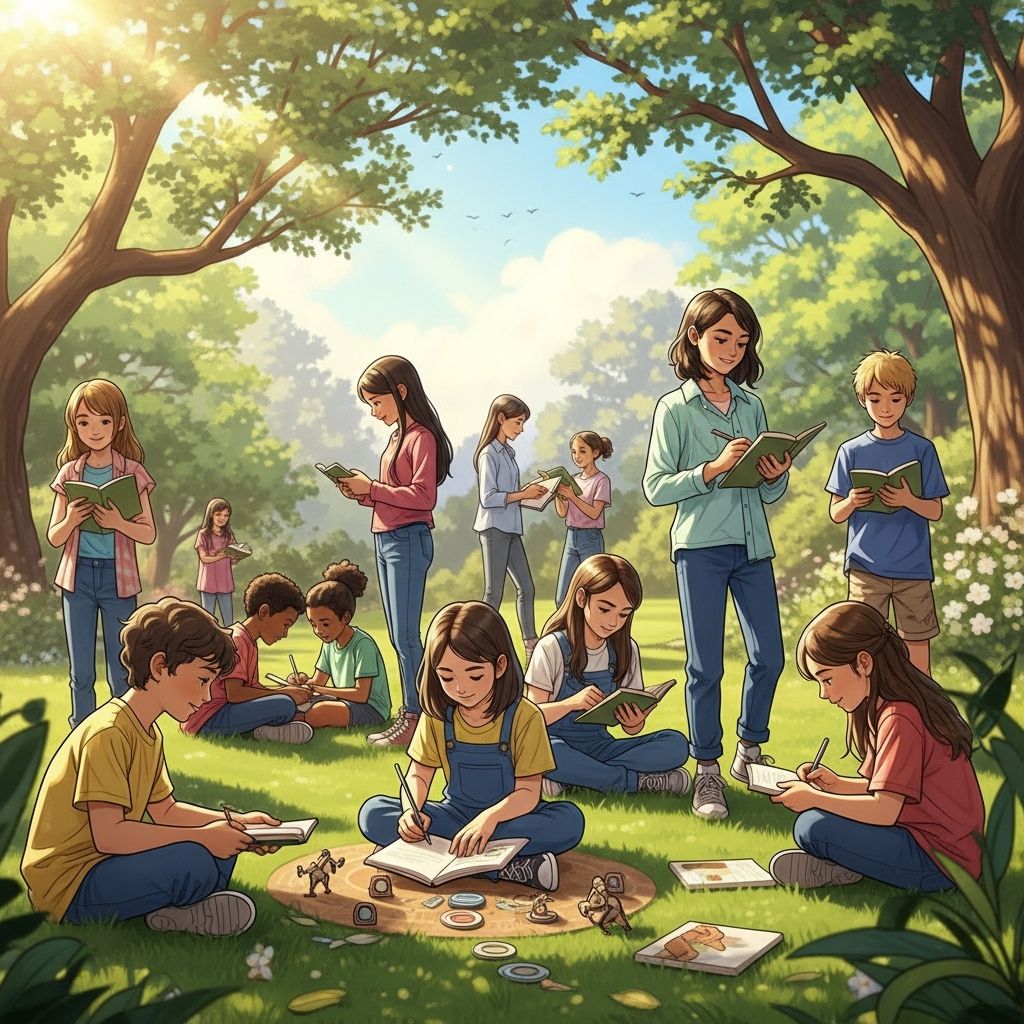
- Encouraging kids to observe, sketch, or photograph animals instead of simply watching screens.
2. Curiosity Plus Guidance Is Safer Than Curiosity Alone
As a child and later a professional, Peterson pursued dangerous animals—but always with an evolving sense of safety and preparation. Parents can mirror that approach:
- Teach kids to watch before touching: observe behavior and habitat before approaching any animal.
- Model basic field safety: checking weather, telling someone where you are going, and carrying appropriate gear.
- Use his videos as conversation starters about risk: ask what he did right, what he did wrong, and what your family would never copy.
3. Storytelling Turns Science into Something Kids Remember
Peterson’s success is not just about animals; it is about how he tells their stories. Research on science communication shows that narratives significantly improve understanding and memory compared with lists of facts.
Parents can apply this at home by:
- Turning nature walks into “missions” with a beginning, middle, and end: What are we looking for? What did we find? What surprised us?
- Asking kids to recount an animal encounter as a story when they get home.
- Encouraging kids to make simple videos, drawings, or photo journals about local wildlife.
The Line Between Spectacle and Responsibility
Peterson’s work also highlights the tension between entertainment and ethics in wildlife content.
- Guinness World Records visibility: His platform gives him enormous influence over how millions of children think about animals and wilderness.
- Teaching moments: In later years, he has increasingly emphasized conservation messaging, proper field conduct, and the importance of not replicating his more extreme stunts.
- Public scrutiny: Incidents like his viral primate skull story sparked discussions about scientific responsibility and how social media stunts can mislead audiences, prompting him to address the issue in follow-up content.
For parents, this is an opportunity to teach kids media literacy: not everything dramatic on-screen should be repeated, and ethical exploration means considering both animal welfare and accurate information.
How His Career Shows the Power of Persistence
Peterson’s professional path from film student to world-famous wildlife host was not quick or guaranteed.
- After college, he spent more than a decade developing concepts, pitching shows, and working behind the camera before any major breakthrough.
- Early attempts at wildlife TV involved someone else as the on-screen host, with Peterson catching animals behind the scenes; networks were eventually more interested in him than the original format.
- When traditional media deals failed, he and his team launched their own YouTube channel, gradually building an audience from scratch.
This journey underscores a message parents can reinforce: passion and skill might not pay off immediately, but persistence, adaptability, and willingness to learn from failure often matter more than overnight success.
Practical Ways Families Can Explore Nature Together
You do not need venomous insects or remote jungles to raise a child with Coyote-like enthusiasm for the outdoors. Small, consistent experiences matter most.
Simple Activities Inspired by His Work
- Backyard biodiversity hunt: Challenge kids to list or photograph every insect, bird, or plant they can find in a set area. Look up names later together.
- “Camera crew” walks: Let your child pretend to host a nature show, using a phone (with supervision) to “document” discoveries.
- Local field guides: Visit the library to borrow guides on reptiles, birds, or insects, then take them along on short hikes.
- Respectful encounters: Practice observing from a distance, never handling wildlife unless guided by experts or official programs.
Setting Ground Rules Without Killing the Adventure
Borrowing from the way professional field teams operate, parents can create family rules that keep exploration safe while still exciting:
- “No solo water or woods time” for younger kids; older children earn more freedom gradually.
- “If you don’t know what it is, don’t touch it” for plants and animals.
- Always wear appropriate footwear, sun protection, and weather-appropriate clothing.
- Teach kids to leave habitats as they found them: no collecting wild animals unless part of a supervised educational program.
Balancing Fear and Bravery
What draws many children to Coyote Peterson is that he clearly feels fear but does not pretend otherwise. He often acknowledges his anxiety before a sting or difficult encounter, then shows how preparation and focus help him proceed.
Parents can harness this dynamic by:
- Normalizing fear: explaining that being nervous is part of being human, not a sign of weakness.
- Teaching graduated exposure: starting with small challenges (touching a worm, holding a harmless insect) and building up.
- Reflecting after challenges: asking, “What was the scariest moment? What helped you get through it?”
This mirrors principles from exposure-based therapies, where people face manageable amounts of fear in controlled conditions to build long-term resilience.
FAQs About Coyote Peterson and Family-Friendly Nature Exploration
Who is Coyote Peterson in simple terms?
Coyote Peterson is an American wildlife educator, author, and digital creator best known for his YouTube channel Brave Wilderness and his Animal Planet series, where he teaches audiences about animals through close-up encounters and adventurous fieldwork.
Are his videos appropriate for children?
Many families watch his content together because it is educational and focused on real animals, but some episodes feature intense stings, bites, or injuries that may be frightening for younger viewers. Parents should preview episodes, consider their child’s sensitivity, and watch together to discuss what happens.
Should kids try to copy what they see him do?
No. Peterson works with a trained team, safety planning, and medical support. His most extreme stunts are intentionally framed as demonstrations of why people should not provoke or handle dangerous wildlife. Parents can use these videos to talk about risk and respect for animals, not as a how-to guide.
What can my child learn from following his work?
Kids can learn basic animal biology, conservation concepts, and field safety ideas. They may also see how curiosity, persistence, and storytelling can combine into a meaningful career, reinforcing that passion for nature and science has real-world value.
How do I encourage my kid’s interest in animals without expensive travel?
Focus on local nature: city parks, ponds, community gardens, and backyard wildlife. Free resources such as libraries, museums’ online materials, and citizen-science apps can help children identify species and contribute observations, building real scientific skills close to home.
References
- Coyote Peterson — Wikipedia. 2024-03-20. https://en.wikipedia.org/wiki/Coyote_Peterson
- Coyote Peterson on His Wild Career (That Almost Didn’t Happen) — Outdoors.com. 2022-06-01. https://outdoors.com/coyote-peterson-on-his-wild-career/
- Coyote Peterson Facts for Kids — Kiddle. 2023-07-10. https://kids.kiddle.co/Coyote_Peterson
- Coyote Peterson: getting to know the man behind YouTube’s biggest wildlife channel — Guinness World Records. 2019-05-01. https://www.guinnessworldrecords.com/news/2019/5/coyote-peterson-getting-to-know-the-man-behind-youtubes-biggest-wildlife-channel
- Ahead of free conversation, Coyote Peterson reflects on time at Ohio State — The Ohio State University College of Arts and Sciences. 2020-02-05. https://artsandsciences.osu.edu/news/ahead-free-conversation-coyote-peterson-reflects-time-ohio-state
- Green environments and child development: Evidence from a systematic review — Danish National Research Centre for the Working Environment. 2017-09-01. https://pubmed.ncbi.nlm.nih.gov/28851061/
- Storytelling as a tool for science education — National Academies Press (in: Communicating Science Effectively). 2017-01-11. https://nap.nationalacademies.org/catalog/23674/communicating-science-effectively-a-research-agenda
- Exposure Therapy for Anxiety: Principles and Practice — Oxford University Press. 2012-05-01. https://doi.org/10.1093/med:psych/9780195335330.001.0001