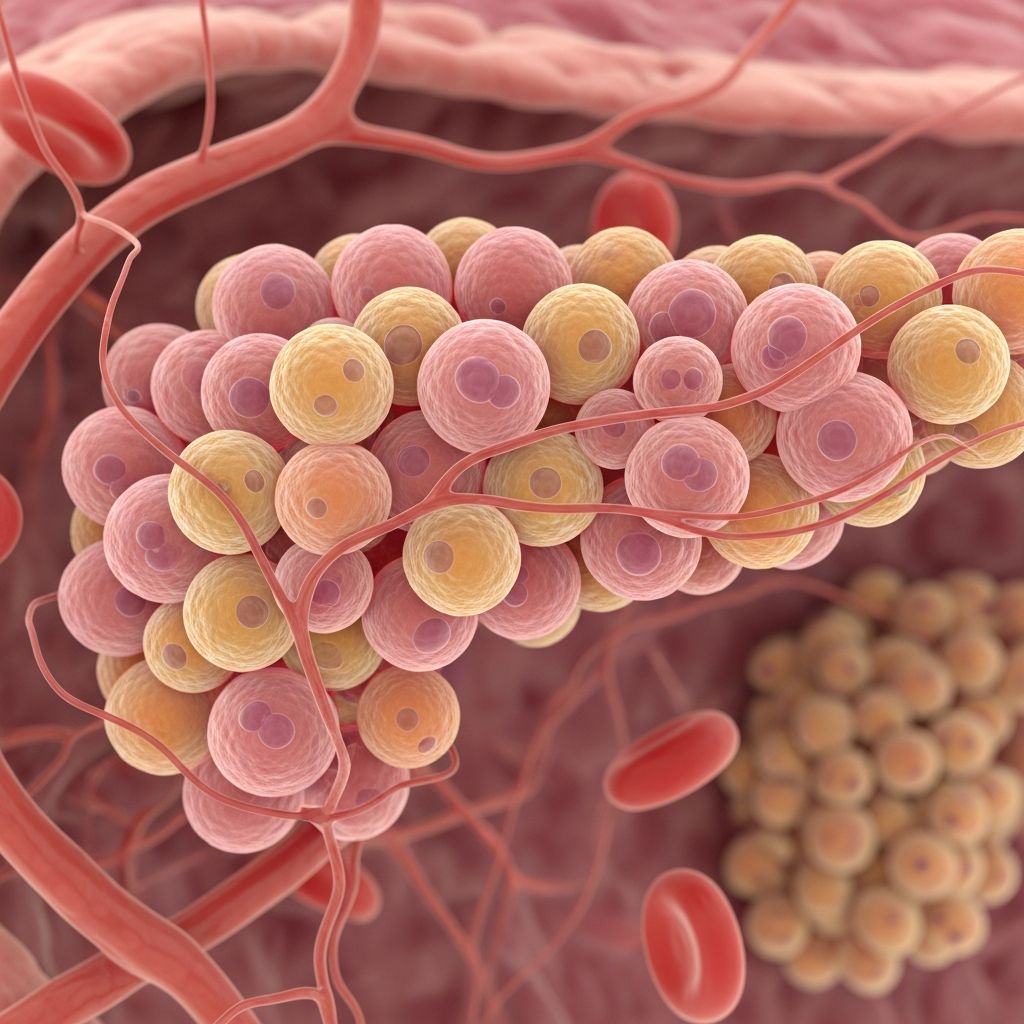
Inside the pancreas are tiny clusters of special cells called islet cells that act like miniature hormone control centers. They release hormones directly into the bloodstream to help keep blood sugar in a healthy range and support normal growth, energy, and overall health.
Where Are Islet Cells and What Do They Do?
The pancreas is a soft, leaf-shaped organ that sits behind the stomach. It helps with digestion and also makes hormones that travel through the blood. Islet cells are small groups of hormone-making cells scattered throughout the pancreas, separate from the parts that make digestive juices.
Even though each islet is tiny, together they form an important network that constantly monitors the level of sugar in the blood. When blood sugar changes, islet cells respond by releasing hormones that either lower or raise sugar levels so the body has enough energy but not too much.
- The digestive part of the pancreas makes enzymes to help break down food.
- The hormonal part of the pancreas is made up of islet cells that release hormones into the bloodstream.
- Islet cells are key players in conditions like type 1 and type 2 diabetes.
Main Types of Islet Cells and Their Hormones
Islet cells come in several types, each making a different hormone with a specific job. Two of the most important are alpha cells and beta cells, which work as a team to balance blood sugar. Other cell types fine-tune this balance and help the body respond smoothly to changes in food intake and energy use.
| Cell Type | Main Hormone | Primary Effect on Blood Sugar |
|---|---|---|
| Beta cells | Insulin | Lowers blood sugar by helping sugar move from the blood into cells |
| Alpha cells | Glucagon | Raises blood sugar by signaling the liver to release stored sugar |
| Delta cells | Somatostatin | Helps regulate the release of insulin and glucagon |
| Other islet cells | Additional hormones | Fine-tune digestion, appetite, and hormone release |
Beta Cells: Insulin Producers
Beta cells are the most common cells inside the islets and are responsible for making insulin. Insulin acts like a key that unlocks the body’s cells and lets sugar from the blood move inside, where it can be used for energy or stored for later.
- After meals, rising blood sugar signals beta cells to release more insulin.
- Insulin helps muscles, the liver, and fat cells absorb sugar.
- Without enough insulin, sugar builds up in the bloodstream instead of being used properly.
Alpha Cells: Glucagon Producers
Alpha cells make glucagon, a hormone that has almost the opposite effect of insulin. When blood sugar drops too low, glucagon tells the liver to release stored sugar back into the blood.
- Glucagon prevents blood sugar from falling too low between meals or overnight.
- It works closely with insulin to keep sugar levels in a safe range.
- This push-and-pull between insulin and glucagon is essential for steady energy.
Other Supporting Islet Cells
Islets also contain other cell types that help smooth out hormone responses. These cells act as regulators, making sure that insulin and glucagon are not released too quickly or in the wrong amounts.
- Delta cells help slow down or adjust the release of other hormones.
- Additional hormone-producing cells can influence digestion and appetite.
- Together, all of these cells create a finely tuned system for controlling blood sugar.
How Islet Cells Keep Blood Sugar in Balance
Blood sugar levels naturally rise and fall throughout the day, especially after eating or during physical activity. Islet cells respond to these changes automatically, without any conscious effort. Their main goal is to keep blood sugar in a range that is safe for the brain, heart, muscles, and other organs.
After Eating
When a person eats, especially foods containing carbohydrates, the digestive system breaks the food down into simpler sugars. These sugars enter the bloodstream and cause blood sugar levels to rise.
- Higher blood sugar signals beta cells to release more insulin.
- Insulin helps move sugar into cells to be used as energy or stored in the liver and muscles.
- As sugar leaves the blood and enters cells, blood sugar levels drop back toward normal.
Between Meals and Overnight
When someone has not eaten for a while, blood sugar levels can begin to fall. The body still needs energy, especially the brain, which relies heavily on a steady supply of sugar.
- Falling blood sugar prompts alpha cells to release glucagon.
- Glucagon tells the liver to release sugar that has been stored from previous meals.
- This keeps blood sugar from dropping too low when a person is sleeping or going long periods without food.
Islet Cells and Type 1 Diabetes
In type 1 diabetes, the body’s own immune system mistakenly attacks and destroys the beta cells in the islets. As more beta cells are lost, the pancreas can no longer make enough insulin to control blood sugar. This often begins in childhood or the teen years but can occur at any age.
Without insulin, sugar cannot easily move from the blood into cells. This causes blood sugar to climb much higher than normal, which can make a child feel very sick and can damage organs if not treated.
- Type 1 diabetes is an autoimmune condition, not caused by eating too much sugar.
- Most children with type 1 diabetes need insulin every day from injections or an insulin pump.
- Regular blood sugar checks help families and care teams adjust insulin doses safely.
Islet Cells and Type 2 Diabetes
Type 2 diabetes is different from type 1, but islet cells still play an important role. In type 2 diabetes, the body’s cells do not respond to insulin as well as they should, a problem called insulin resistance. Over time, the beta cells may also struggle to keep up with the extra demand for insulin.
While type 2 diabetes is more common in adults, it is also seen in older children and teens, especially when there are strong family risk factors and low activity levels. Healthy habits can help protect islet cells by reducing the stress placed on them.
- Regular physical activity helps the body use insulin more effectively.
- Balanced meals with fruits, vegetables, whole grains, and lean proteins support overall hormone health.
- Maintaining a healthy weight can reduce the strain on beta cells over time.
Common Signs When Islet Cells Are Not Working Well
Problems with islet cells, especially beta cells, often show up as changes in blood sugar. In children, early signs can develop gradually or appear quickly, depending on how fast insulin production is lost. Recognizing symptoms early allows families to seek help before serious complications develop.
- Increased thirst and frequent urination.
- Unusual tiredness or weakness.
- Unexpected weight loss despite normal or increased appetite.
- Blurry vision or trouble concentrating.
- Fruity-smelling breath or rapid breathing in more severe cases.
Any child with these symptoms should be evaluated by a healthcare professional. Simple blood tests can check blood sugar levels and help determine whether there is a problem with insulin production or use.
How Doctors Test Islet Cell Function
Doctors use a combination of blood tests and clinical information to see how well islet cells are working. The main focus is usually on how much insulin is being made and how the body is handling sugar over time. These tests help guide treatment decisions and monitor how well a plan is working.
- Random or fasting blood sugar tests: Measure the level of sugar in the blood at a single point in time.
- Long-term sugar tests: Show average blood sugar levels over several months.
- Autoantibody tests: In suspected type 1 diabetes, look for immune system markers that target islet cells.
Sometimes, doctors may also look at related hormones or use additional tests to evaluate how the body responds to a sugar load. These results help confirm the type of diabetes and shape the treatment plan.
Supporting Healthy Islet Cells
Some causes of islet cell damage, like autoimmunity in type 1 diabetes, are not yet fully preventable. However, healthy habits can still support overall pancreatic health and help the body use insulin more effectively. These steps benefit children with or without diabetes.
- Encouraging regular movement, such as walking, biking, dancing, or sports.
- Offering balanced meals that include fiber-rich foods and limit sugary drinks.
- Helping children build consistent sleep routines, which support hormone balance.
- Scheduling regular checkups so growth, weight, and general health can be monitored.
For children already diagnosed with diabetes, working closely with the care team, taking insulin or other medicines as prescribed, and checking blood sugar as recommended are key parts of protecting long-term health.
Looking Ahead: Islet Cells and New Treatments
Because islet cells are so important in diabetes, many researchers are studying ways to protect, replace, or support them. Some approaches focus on shielding beta cells from the immune system, while others explore transplanting islet cells from donors or growing new cells in the lab.
These strategies are still being refined, but they offer hope for more natural insulin control in the future. Even now, advances in insulin types, insulin pumps, and continuous glucose monitors are helping many people manage life with damaged or missing beta cells more safely and flexibly.
Quick Reference: Islet Cell Roles
This brief overview highlights the main actions of islet cells and their hormones in everyday life.
| Hormone | Made By | When It Is Released | What It Does |
|---|---|---|---|
| Insulin | Beta cells | When blood sugar rises, such as after meals | Helps sugar move from the blood into cells, lowering blood sugar |
| Glucagon | Alpha cells | When blood sugar begins to fall | Signals the liver to release stored sugar, raising blood sugar |
| Other islet hormones | Supporting islet cells | As needed to fine-tune digestion and hormone balance | Regulate how quickly or slowly other hormones are released |
Frequently Asked Questions About Islet Cells
Are islet cells the same as the whole pancreas?
No. The pancreas is a full organ with different parts. Islet cells are tiny clusters within that organ that make hormones, while other areas of the pancreas make digestive juices to help break down food.
Can islet cells grow back if they are damaged?
In type 1 diabetes, the immune system continues to attack beta cells, so any new cells that appear are often damaged again. Researchers are investigating ways to protect new or transplanted islet cells so they can survive and function longer.
Does every child with high blood sugar have islet cell damage?
Not always. Some children may have temporary changes in blood sugar due to illness, medicines, or stress. However, repeated high readings may point to problems with insulin production or use, and these cases deserve careful evaluation.
How can parents explain islet cells to kids?
A simple way is to compare islet cells to tiny factories inside the pancreas that send out special “messages” called hormones. One message, insulin, helps sugar get into cells, and another, glucagon, helps bring sugar out of storage when the body needs more energy.
Can lifestyle choices completely prevent diabetes?
Healthy habits can lower the risk of type 2 diabetes and support better blood sugar control, but they cannot prevent type 1 diabetes. Type 1 diabetes is an autoimmune condition, and there is currently no sure way to stop it from developing.