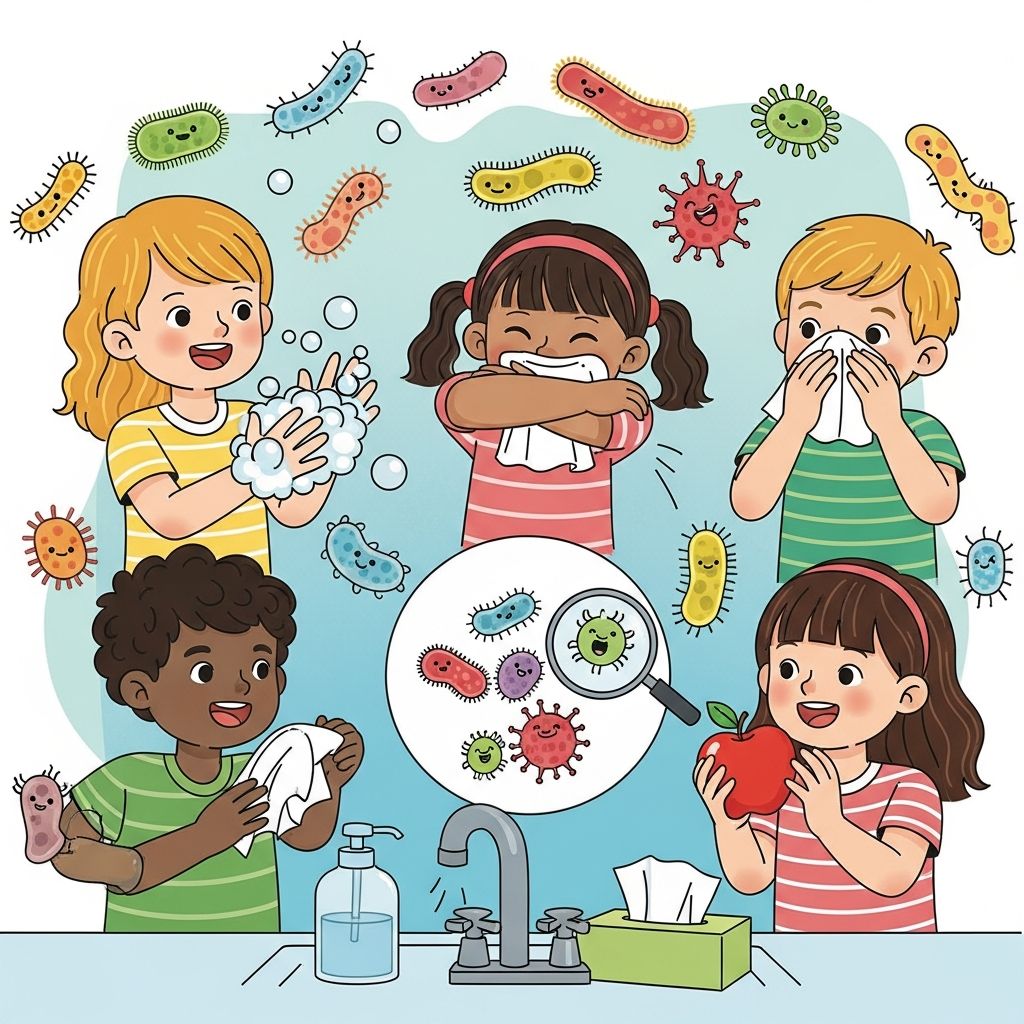
Germs are tiny living things that are all around you, even though you usually cannot see them. Some germs can make you sick, but many are harmless, and a few are even helpful. This guide explains what germs are, how they work, and what you can do every day to stay strong and healthy.
What Exactly Are Germs?
Germs are microscopic organisms, which means they are so small that you need a microscope to see them. They can live almost anywhere: in the air, in water, in soil, on your skin, and on things you touch every day like doorknobs and toys.
- Some germs are single-celled (they are made of just one tiny cell).
- They can multiply very quickly when they find a place they like, such as inside your body.
- Different kinds of germs behave in different ways and can cause different illnesses.
Even though the word “germs” sounds scary, your body has a powerful defense system that works day and night to protect you. Understanding germs helps you make smart choices that give your body a better chance to win.
Main Types of Germs
There are four main types of germs that often affect people: bacteria, viruses, fungi, and protozoa. Each type has its own shape, favorite places to live, and ways of causing trouble.
| Type of germ | What it is | Some illnesses it can cause |
|---|---|---|
| Bacteria | Tiny single-celled organisms that can live almost anywhere, including inside your body. | Strep throat, some ear infections, some kinds of pneumonia. |
| Viruses | Even smaller than bacteria; cannot live on their own and must take over your cells to reproduce. | Colds, flu, some stomach bugs, certain rashes. |
| Fungi | Include molds and yeasts that like warm, damp places. | Athlete’s foot, some skin rashes, yeast infections. |
| Protozoa | Single-celled organisms that often live in water and moist environments. | Certain types of diarrhea and stomach illnesses. |
Not all members of these groups are bad. Some bacteria in your intestines, for example, help you digest food and keep your body balanced. The trouble starts when harmful germs get into places where they do not belong and begin to grow.
How Germs Sneak Into Your Body
Germs cannot cause an infection unless they find a way inside and start multiplying. They use different “doors” to get into your body, which is why everyday habits matter so much.
- Mouth and nose: You breathe in germs in the air or swallow them on food, drinks, or dirty hands.
- Eyes: Rubbing your eyes with unwashed hands can move germs directly onto a moist surface where they can enter.
- Cuts and scrapes: Broken skin gives germs a shortcut past your outer defenses.
- Other body openings: Some germs spread through contact with body fluids, like saliva or mucus.
Once inside, germs look for warm, moist places rich in nutrients, such as your throat, lungs, or intestines. When they find a good spot, they begin to multiply quickly, which can lead to infection.
What Germs Do When You Get Sick
When harmful germs settle in your body, they can change how your cells work. Some steal nutrients from your cells, while others release substances that irritate or damage tissues.
- Bacteria may release chemicals that irritate tissues and cause swelling and pain.
- Viruses move into your cells and turn them into virus factories, which can destroy the cells.
- Your body responds with defenses that create symptoms like fever, mucus, or swelling.
Even though symptoms like fever, cough, or a runny nose feel uncomfortable, they are often signs that your body is fighting back. For example, a higher temperature can make it harder for some germs to grow, and extra mucus can help trap and wash away invaders.
Your Immune System: Built-In Bodyguard
The immune system is your body’s built-in defense team that protects you from germs. It is made of cells, tissues, and organs that work together like a well-trained group of guards and detectives.
- First line defenders: Your skin and the lining inside your nose and mouth act like walls that block many germs.
- Special cells: White blood cells move around your body, looking for germs to attack and remove.
- Memory cells: After you recover from an infection, some immune cells “remember” that germ, so they respond faster if it returns.
This memory is one reason you might only get certain illnesses, like some childhood diseases, once. If the same germ tries to infect you again, the immune system can often stop it before you even notice.
Where Germs Hide in Everyday Life
Because germs are so tiny, it is easy to forget they are almost everywhere. Knowing the most common hiding spots helps you focus your cleaning and hygiene habits where they matter most.
- Frequently touched surfaces: door handles, light switches, phones, and remote controls.
- Shared objects: classroom supplies, toys, tablets, and game controllers.
- Bathrooms and kitchens: sinks, countertops, toilet handles, and sponges.
- Public places: bus or train rails, elevator buttons, and shopping carts.
Germs thrive especially well on moist surfaces and in warm environments. Drying surfaces, washing hands, and regular cleaning can greatly cut down the number of harmful germs you encounter.
How Germs Spread From Person to Person
Germs move from place to place in several main ways. Understanding these helps you see why certain habits, like covering your cough, are so important.
- Through the air: When someone coughs, sneezes, or even talks, tiny droplets can carry germs through the air.
- By touch: Shaking hands, high-fiving, or touching the same objects can transfer germs from person to person.
- Food and water: Eating food or drinking water that has been contaminated can bring germs directly into your digestive system.
- Body fluids: Some germs move through saliva, mucus, or blood.
Germs usually need a “chain” of events to spread: a source (like someone who is sick), a way to travel (like droplets), and a new person who is not protected. If you break any part of that chain—by washing your hands, staying home when sick, or getting vaccines—you help stop the spread.
Good Germs vs. Bad Germs
Even though harmful germs get the most attention, there are also helpful microbes that your body needs. They assist with digestion, protect your skin, and help your immune system work properly.
- Helpful bacteria in your intestines help break down food and produce certain vitamins.
- Some skin microbes form a shield that makes it harder for harmful germs to find space to grow.
- Exposure to a variety of everyday microbes can help your immune system learn and become stronger.
The goal is not to live in a world with zero germs, which is impossible anyway. Instead, it is to limit harmful germs while allowing your body to interact with normal, everyday microbes in a healthy way.
Smart Hygiene Habits That Really Work
Good hygiene is not about being afraid of dirt; it is about using simple habits to stay healthier. These habits help stop harmful germs from reaching your body or from spreading to others.
- Wash hands often: Use soap and clean, running water when your hands are visibly dirty, after using the bathroom, before eating, and after sneezing, coughing, or blowing your nose.
- Use hand sanitizer when needed: If you cannot reach a sink, an alcohol-based sanitizer can reduce many germs on your hands.
- Avoid touching your face: Keep your hands away from your eyes, nose, and mouth when possible.
- Cover coughs and sneezes: Use a tissue or your elbow, then wash your hands.
- Keep nails trimmed: Germs like to hide under long or dirty fingernails.
These small actions may not feel dramatic, but they make a big difference over time. When everyone in a family, classroom, or team follows these habits, fewer people get sick and illnesses tend to spread less.
Clean Spaces, Healthier Bodies
Keeping your surroundings reasonably clean reduces places for harmful germs to grow. This does not mean your room has to look perfect; it means focusing on hygiene hot spots.
- Disinfect frequently touched items like phones, keyboards, and game controllers.
- Wash dishes with hot, soapy water and let them air-dry.
- Use separate cutting boards for raw meat and vegetables in the kitchen.
- Launder towels, sheets, and sports uniforms regularly.
Opening windows when possible, not sharing personal items like toothbrushes, and promptly cleaning up spills also limit moisture, which many germs prefer. These basic steps support your immune system and make it harder for infections to spread in your home.
Eating, Sleeping, and Moving: Hidden Germ Fighters
Healthy habits like good nutrition, regular sleep, and exercise are powerful allies in your fight against germs. They keep your body strong so it can respond quickly when invaders appear.
- Balanced meals: Fruits, vegetables, whole grains, lean proteins, and plenty of water help fuel immune cells.
- Enough sleep: During sleep, your body repairs itself and strengthens its defenses.
- Physical activity: Moving your body helps circulate blood and immune cells more effectively.
These habits do not kill germs directly, but they make your body a tougher target. When your immune system is well supported, infections may be shorter or less severe.
How Vaccines Help Your Body Prepare
Vaccines are special medicines that train your immune system to recognize certain dangerous germs. They usually contain a weakened or inactive piece of a germ that cannot cause the full disease but is enough to teach your body what to look for.
- After a vaccine, your immune system practices fighting a safe version of the germ.
- It creates memory cells that remember the invader’s “signature” for later.
- If the real germ shows up, your body can respond faster and more strongly.
Vaccines protect not only the person who gets them, but also people who cannot be vaccinated, such as some babies or those with certain medical conditions. When many people are protected, germs have fewer chances to spread through a community.
When to See a Doctor About Germs
Most minor infections from germs, like simple colds, go away on their own with rest, fluids, and time. However, some signs mean that it is important to talk with a healthcare professional.
- High fever that does not improve or keeps returning.
- Difficulty breathing, chest pain, or severe cough.
- Severe sore throat, ear pain, or headache that gets worse.
- Vomiting or diarrhea that lasts more than a day or leads to signs of dehydration (such as very little urine or extreme tiredness).
- Rashes that spread quickly, are very painful, or are accompanied by fever.
A doctor can examine you, ask questions, and sometimes take a sample of blood, mucus, or other fluids to look for specific germs. This helps them decide what treatment, if any, is needed.
Medicines That Fight Germs
Sometimes the immune system needs help from medicines to clear an infection. Different medicines work against different types of germs, so they are not interchangeable.
- Antibiotics: These fight many bacterial infections but do not work on viruses.
- Antivirals: These help treat certain viral infections.
- Antifungals and antiparasitics: These target fungi and protozoa, respectively.
It is important to take these medicines exactly as prescribed and not to use leftover pills or someone else’s prescription. Misusing medicines can make germs harder to treat in the future and may not help your illness at all.
Helping Others Stay Healthy
Fighting germs is a team effort. The choices you make can protect not only you, but also your friends, family, classmates, and teammates.
- Stay home or rest when you are sick, especially if you have a fever or are vomiting.
- Throw away used tissues right away and wash your hands afterward.
- Wear a mask when recommended, especially in crowded places or around vulnerable people.
- Avoid sharing drinks, utensils, lip balm, or toothbrushes.
When everyone does their part, fewer people get sick at once, and those who are more fragile—like infants, older adults, or people with chronic illnesses—are better protected.
Kid-Friendly Germ Prevention Checklist
This simple checklist can help kids remember everyday actions that keep germs under control.
- Wash hands before eating and after using the bathroom.
- Cover coughs and sneezes with elbow or tissue.
- Keep fingers away from eyes, nose, and mouth.
- Do not share water bottles, straws, or snacks from the same container.
- Tell an adult if feeling very hot, very cold, very tired, or if something hurts a lot.
Posting this checklist near a sink, on the fridge, or in a classroom can turn these habits into a normal part of the day rather than something you only remember when someone is already sick.
Frequently Asked Questions About Germs
Are all germs bad?
No. Many microbes are harmless, and some help your body with important jobs like digesting food or protecting your skin. The main goal is to reduce harmful germs while allowing normal, everyday microbes to live in balance with your body.
Why do I get sick more in winter?
In colder months, people often spend more time indoors and closer together, which makes it easier for germs to move from one person to another. The air inside can also be drier, which may help some viruses spread more easily.
Can I get sick from playing outside in the dirt?
Simply touching dirt usually does not cause illness, especially if you wash your hands before eating. In fact, normal outdoor play often exposes you to a variety of harmless microbes that can help your immune system learn and grow stronger.
Why do I need to finish all my antibiotic medicine?
Stopping antibiotic treatment early can leave behind some bacteria that are stronger or more resistant, which can cause the infection to return and become harder to treat. Taking the full course as directed gives the medicine the best chance to clear the infection completely.
Can I avoid germs completely?
No one can live in a completely germ-free environment. The goal is to avoid large amounts of harmful germs and to support your immune system with good hygiene, healthy habits, vaccines, and smart use of medicines when they are truly needed.
Putting It All Together
Germs are tiny organisms that can sometimes make you sick, but your body has powerful defenses that are always working to protect you. By washing your hands, covering coughs and sneezes, keeping your surroundings reasonably clean, and following healthy lifestyle habits, you give your immune system the support it needs to do its job well.
Learning how germs work turns fear into understanding and gives kids and families clear, simple steps to stay healthier together, at home, at school, and everywhere in between.