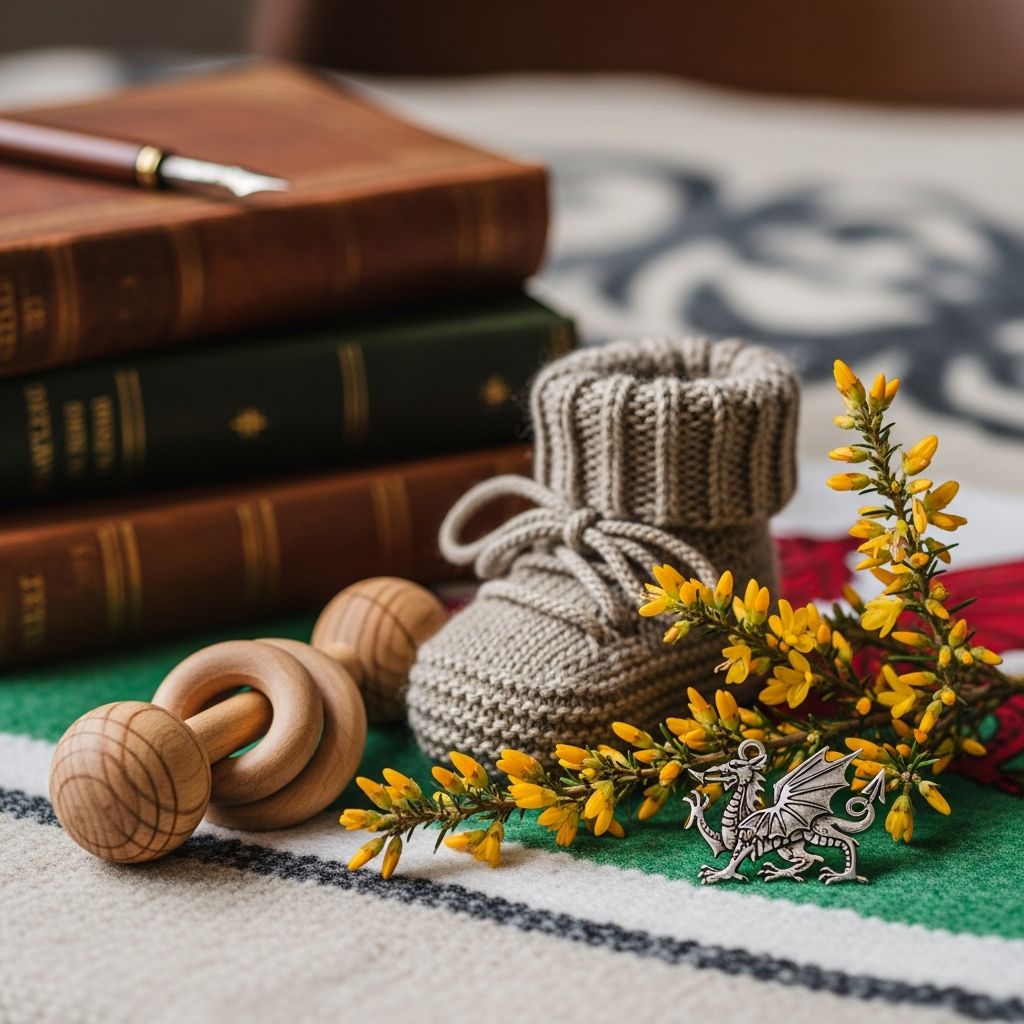
Welsh baby names are loved for their musical sound, deep roots in Celtic history, and nature-inspired meanings. They can feel both ancient and fresh, offering parents distinctive choices with strong stories behind them.
Why Choose a Welsh Baby Name?
Parents often turn to Welsh names because they combine lyrical sounds with rich meanings drawn from nature, virtues, and mythology. Even if you have no Welsh ancestry, these names can offer a unique yet authentic alternative to more common English or international choices.
- Many Welsh names are tied to legends, saints, and medieval literature.
- The language creates striking letter combinations like ll, dd, and rh that make the names stand out.
- Short, simple names sit alongside elaborate, romantic ones, giving a wide range of styles.
Understanding Welsh Pronunciation Basics
Before looking at specific names, it helps to know a few simple pronunciation rules. Welsh spelling is phonetic, but several letters differ from English values.
- ll is a voiceless sound made by blowing air around the sides of the tongue; it does not exist in standard English.
- dd sounds like the th in “this”.
- ff represents the English f, while single f sounds like v.
- rh is a breathy, voiceless version of r, often heard at the start of names.
- Vowels are generally clear and consistent: a as in “cat”, e as in “met”, i like “ee”, o like “or”, and u/y vary by position but are usually close to “i” or “uh”.
Learning these patterns makes Welsh names far less intimidating and helps you choose spellings you feel comfortable explaining to others.
Traditional Welsh Girl Names
Traditional Welsh girl names often come from saints, literary figures, and descriptive words that highlight beauty, purity, and nature. Many have been in use for centuries and remain recognisably Welsh even when adapted into English.
- Elin – A Welsh form related to “Helen”, usually interpreted as “bright” or “shining”.
- Megan – Widely used beyond Wales, this is a Welsh pet form of Margaret, associated with “pearl”.
- Lowri – The Welsh form of “Laura”, often connected with honor and laurel symbolism.
- Nia – A short, modern-sounding name used in Wales, sometimes linked to ideas of brightness or radiance.
- Rhian – Built from a word meaning “maiden”, giving a soft but dignified feel.
These names balance a sense of tradition with accessibility, making them suitable for families who want something rooted yet easy to pronounce internationally.
Traditional Welsh Boy Names
Classic Welsh boy names frequently derive from early saints, kings, warriors, and mythic heroes. They tend to have strong consonant clusters and meanings related to strength, leadership, or landscape.
- Dafydd – The established Welsh form of David, widely linked to the patron saint of Wales.
- Dylan – Connected in Welsh legend to the sea, usually interpreted as related to the “great tide” or “great sea”.
- Cai – A short, sharp name found in Arthurian tradition, sometimes associated with lordship or bravery.
- Emyr – Traditionally associated with the idea of a ruler or leader.
- Gareth – Known through medieval literature, often given a chivalric, knightly association.
Traditional male names from Wales can feel both heroic and grounded, especially for families interested in Celtic legends or historical figures.
Unusual and Rare Welsh Names
For parents seeking something truly distinctive, the Welsh language offers many lesser-known gems that remain rare outside Wales. These names might come directly from mythology, old descriptive words, or poetic reinterpretations of older forms.
- Briallen – A feminine name related to the Welsh word for “primrose”, evoking spring and delicacy.
- Gwyneira – An elegant compound that combines elements for “white” and “snow”, making it ideal for a winter baby.
- Taliesin – A legendary bard whose name is often analysed as “radiant brow”, associated with prophecy and poetry.
- Pryderi – A mythic male figure whose name is linked with the notion of care or concern.
- Caradog – Traditionally interpreted as “beloved”, with roots that go back to ancient Celtic history.
Because many of these names remain tied to story cycles and medieval texts, they have a romantic, almost mystical aura. Parents should also consider how comfortable they are explaining and spelling these names in everyday life.
Nature, Seasons, and Landscape Names
Welsh is a poetic language with an especially rich vocabulary for landscape, weather, and plants. This makes it a natural source for baby names inspired by the natural world, perfect for parents who want a name that feels grounded in place and season.
- Eirlys – Related to the word for “snowdrop”, symbolising purity and the first sign of spring.
- Celyn – Derived from the word for “holly”, frequently chosen for babies born around winter holidays.
- Glyn – Connected with the idea of a valley or glen, conjuring an image of green, sheltered landscapes.
- Ffion – Often linked to plant or vine imagery, giving it a soft, botanical feel.
- Mai – Using the Welsh name for the month of May can celebrate a spring birth.
These choices are especially appealing for families who love walking, hiking, or specific places in Wales. A nature-based name can act as a lifelong reminder of a favourite landscape or season.
Religious and Saintly Welsh Names
Like many European naming traditions, Welsh naming has been strongly shaped by Christianity, especially through saints and biblical names rendered in Welsh forms. These names carry spiritual significance while still sounding distinctively local.
- Dewi – A form of David that connects directly to Saint David, the patron saint of Wales.
- Elis – A Welsh form associated with Elias or Elijah, linked with devotion and faith.
- Crystin – A feminine name parallel to Christine, often glossed as “follower of Christ”.
- Sion – The Welsh form of John, tied to the idea of divine grace.
- Steffan – The local form of Stephen, usually read as “crowned” or connected to laurels.
These saintly names offer a bridge between traditional Christian naming customs and Welsh language identity, making them meaningful choices for religious families with Celtic roots.
Short Welsh Names for Modern Families
While some Welsh names look long and complex, there are many short options that fit easily into contemporary, minimalist naming trends. These can be ideal if you want a distinct heritage name that still feels simple and sleek.
- Jac – A concise Welsh spelling of Jack that preserves familiarity while hinting at Welshness.
- Huw – The Welsh equivalent of Hugh, short and straightforward once its spelling is explained.
- Mai – Three letters with a gentle sound, suitable for international use.
- Nia – Brief yet musical, working well across many languages.
- Wyn – A compact name element meaning “fair” or “blessed”, sometimes used alone.
Short names are easy for children to learn to write and for others to remember, making them practical as well as attractive.
Meanings and Symbolism in Welsh Names
Meaning is often central to the appeal of a Welsh baby name. Parents may choose a name because its translation resonates with their hopes for their child or reflects a personal story, such as a winter birth, a love of the sea, or a connection to faith.
| Name | Gender | General Meaning or Association | Theme |
|---|---|---|---|
| Dylan | Boy | Associated with the sea or great tide in legend | Nature / Myth |
| Eirlys | Girl | Linked with snowdrops and early spring | Seasonal / Floral |
| Glyn | Boy | Connected to a valley or glen | Landscape |
| Gwyneira | Girl | Combines ideas of whiteness and snow | Winter / Imagery |
| Caradog | Boy | Typically interpreted as beloved or dear | Virtue / Emotion |
When narrowing down your list, consider how much the literal meaning matters to you compared with sound, family connections, or cultural significance.
Combining Welsh First Names and Middle Names
One way to balance distinctiveness with familiarity is to pair a Welsh first name with a more common middle name, or vice versa. This gives your child options: a heritage name that stands out, plus a widely recognised name that may feel easier in some contexts.
- Use a Welsh first name like Dylan with a classic middle name such as James or Elizabeth.
- Choose a familiar first name like Sophia or Daniel and add a Welsh middle name such as Eirlys or Gethin.
- Blend two Welsh names if you want to emphasise cultural identity, for example Nia Lowri or Owain Glyn.
Think about the total rhythm of the full name, the initials, and how it sounds when spoken aloud in everyday situations.
Tips for Choosing the Right Welsh Name
Selecting any baby name can feel like a big responsibility, and Welsh names add extra considerations such as spelling and pronunciation outside Wales. A thoughtful approach will help you make a decision you feel confident about.
- Say the name out loud with your surname and any middle names; check the flow and whether any unintended words appear in the initials.
- Consider how often you will need to explain pronunciation to non-Welsh speakers, and decide whether you are comfortable with that.
- Research the stories, saints, or mythological figures behind the name to ensure the associations align with your values.
- Imagine your child at different ages – a baby, teenager, and adult – and ask whether the name suits each stage.
- If possible, talk to Welsh speakers or listen to recordings to grasp authentic pronunciation.
Ultimately, the best Welsh baby name is one that you love, that feels meaningful, and that you are happy to share and explain to others over the years.
Frequently Asked Questions About Welsh Baby Names
Are Welsh baby names hard to pronounce?
Some Welsh baby names can seem challenging at first because of unfamiliar letter combinations like ll or dd, but the rules are consistent once you learn them. If you prefer an easier option, there are many Welsh names, such as Megan, Dylan, or Nia, that feel intuitive for English speakers.
Can I use a Welsh name if I am not Welsh?
Yes, many people choose Welsh names simply because they love the sound, meaning, or cultural background. If you are not from Wales, it is respectful to learn how to pronounce the name correctly and be ready to share its story with others.
Do Welsh names always have a specific meaning?
Most traditional Welsh names can be connected to words, saints, or historical figures whose names carried particular meanings. Modern usage, however, often emphasises the sound and family or cultural ties just as much as literal translation.
Are there unisex Welsh names?
Yes, like many languages, Welsh has names and name elements that can be used for more than one gender. Some nature-based names or shorter forms may be chosen for any child, depending on family preference.
How can I verify the meaning of a Welsh name?
Because etymology can be complex, consult multiple reputable sources such as Welsh language references, academic works on Celtic names, or established naming guides. Hearing from native speakers or Welsh cultural organisations can also help you confirm pronunciation and historical background.
Welsh baby names offer a rare blend of musical sound, layered history, and meaningful imagery. Whether you are drawn to legends, to nature, or simply to the unique look and rhythm of the language, you are likely to find a name that feels both timeless and one-of-a-kind.