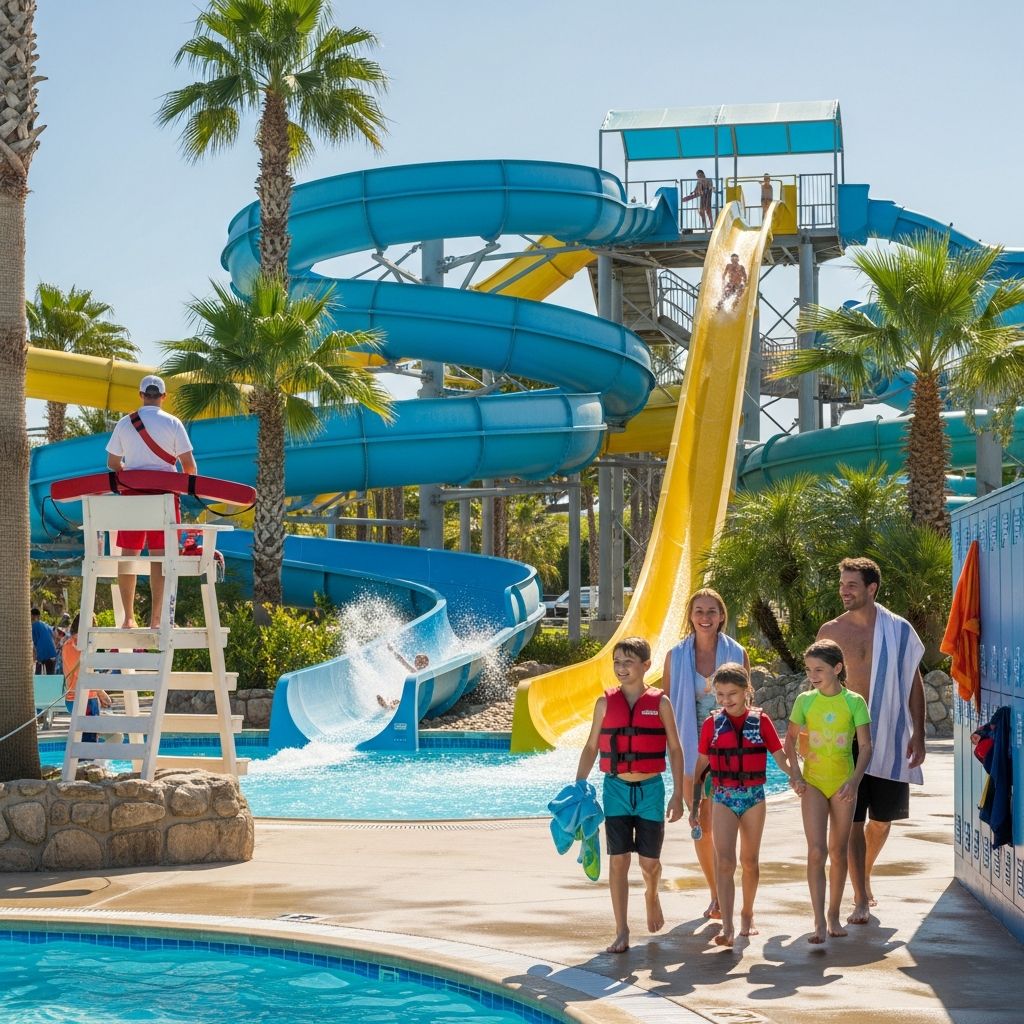
Water parks deliver thrilling splashes and cooling relief during hot days, drawing families eager for aquatic adventures. Yet beneath the excitement lies the need for vigilance to avert slips, drownings, and other hazards. This guide equips parents with actionable strategies drawn from authoritative safety protocols, emphasizing preparation, awareness, and quick response to ensure joyful, incident-free outings.
Mastering Supervision in Crowded Aquatic Environments
Constant oversight forms the cornerstone of water park security, especially amid bustling crowds and diverse attractions. Parents must designate a single vigilant adult per group of young children, avoiding distractions like phones or chats that divert attention from water zones. Designate meeting points at park entry to regroup if separated, and teach kids to recognize lifeguards by uniform and whistles.
- Position yourself poolside with eyes locked on children, resisting urges to relax in shaded loungers.
- For toddlers, maintain arm’s reach in shallow play areas where currents can unexpectedly sweep them away.
- Enforce the “one hand on child, one eye on water” rule during wave pools or lazy rivers.
Studies from aquatic safety experts underscore that drownings often occur in seconds under distracted supervision, making proactive watching non-negotiable.
Navigating Ride Rules and Physical Limits
Each slide and tube boasts unique stipulations on height, weight, and rider count to prevent ejections, collisions, or entrapments. Heed posted placards detailing feet-first descents, solo tubing prohibitions, or double-rider maximums—violations spike injury rates dramatically. Pre-measure children against ride minima to sidestep dashed expectations mid-day.
| Ride Type | Typical Restrictions | Why It Matters |
|---|---|---|
| High-Speed Slides | 48+ inches, single rider | Prevents falls or high-velocity impacts |
| Wave Pools | Life vests for under 48 inches | Counteracts unpredictable surges |
| Lazy Rivers | Max 2 per tube, no flips | Avoids pile-ups and submersions |
Follow exact positioning—arms crossed, legs extended—for controlled glides, as improper form risks spinal strains or head trauma.
Sun Defense and Hydration Imperatives
Prolonged exposure amplifies burn risks on reflective water surfaces, even under clouds. Slather broad-spectrum SPF 30+ sunscreen every two hours, prioritizing faces, ears, and feet. Seek shade via umbrellas or covered eateries during peak UV hours (10 AM-4 PM), and enforce wide-brimmed hats plus UV rash guards for little ones.
- Reapply post-swim or towel-dry to combat rinsed-off layers.
- Pack refillable bottles for sips between rides, countering dehydration masked by ambient wetness.
- Spot heat exhaustion via flushed skin or lethargy, retreating to cooled zones promptly.
Beyond UV, hydration combats fatigue; dry mouths signal peril amid chlorine-imbued air.
Facility Features That Bolster Guest Protection
Reputable parks deploy lifeguards at 1:25 ratios during peaks, certified in CPR and AED use, scanning zones rotationally without lapses. Visible signage—multilingual where apt—marks depths, no-dives, and aid stations, fostering informed navigation. Anti-slip decking with textured grout encases walkways, slashing fall incidences by half per engineering benchmarks.
Barriers cordon mechanical pits and surge basins, while pristine filtration sustains clear, balanced waters free of cryptosporidium threats. Routine audits verify ride seams sans cracks, bolting integrity, and padding wholeness.
Health Protocols to Dodge Illness Outbreaks
Pre-swim showers rinse lotions curbing chemical overloads; abstain if diarrhea-afflicted, as fecal pathogens thrive in treated pools. Shun swallowing splashes, and wash post-toilet hands rigorously. Vulnerable groups—immunocompromised or diapered—opt for padded play zones.
- Monitor for eye irritations or rashes signaling pH imbalances, notifying staff.
- Choose parks touting hyperchlorination post-outbreaks for sanitized assurance.
Red Cross protocols affirm hygiene slashes recreational water illnesses by 70%.
Crafting Family Emergency Playbooks
Locate neon-signed first aid huts stocked with bandages, epi-pens, and ice packs upon arrival, noting paths from hotspots. Quiz staff on lost-child codes and AED sites; arm kids with wristbands scripting contacts and allergies. Practice “stop, yell, point” for mishaps, empowering swift aid summons.
Insurance checklists advocate simulating reunions, imprinting lifeguard signals like upward arms for rescues.
Age-Tailored Adventure Planning
Infants thrive in zero-entry shallows with flotation mandates; school-agers tackle moderate flumes sans vests if proficient swimmers. Teens eye extreme drops, but all heed fatigue cues—reddened eyes or shivering prompt breaks.
- Under 5s: Stick to splash pads, vigilant shadows.
- 6-12s: Supervised mid-tier rides, hydration checks hourly.
- Teens: Buddy system, rule adherence pacts.
Weight caps safeguard against chute jams, per operator audits.
Weather Savvy and Park Selection Criteria
Lightning policies halt operations 30 minutes post-strike; hunker in solid shelters, not pavilions. Vet venues via online reviews spotlighting staffing and upkeep, prioritizing IAAPA-aligned parks with transparent safety logs.
Avoid overcrowding by early arrivals; mid-week dodges peak chaos.
Frequently Asked Questions
What height mandates most slides?
Typically 42-48 inches minimums ensure control; always verify per attraction signage for compliance.
Are life jackets obligatory?
Mandatory for weak swimmers under 48 inches in dynamic zones like waves; complimentary at quality parks.
How to handle lost children?
Head to guest services or any lifeguard; wrist ID bands accelerate reunions.
Does sunscreen wash off instantly?
Water-resistant formulas endure 80 minutes; reapply religiously post-immersion.
What signals trouble in water?
Silent vertical arm raises or face-down floating demand immediate alerts to guards.
Proactive Steps for Lifelong Aquatic Confidence
Instill swim lessons pre-visit; American Academy of Pediatrics endorses formal training slashing drowning risks by 88% for tots. Pack kits with waterproof phones, spare suits, and meds. Post-trip debriefs refine future tactics, transforming outings into confidence-builders.
By weaving these layers—supervision, rules, gear, hygiene—families unlock water park magic sans peril, fostering enduring splash memories.
References
- Water Park Safety Checklist for Operators — ROLLER Software. 2023-06-15. https://www.roller.software/blog/water-park-safety-checklist
- Water Park Risk Management: 7 Tips for a Safe Experience — Prime Insurance Company. 2024-02-20. https://www.primeis.com/education-center/articles/water-park-risk-management-7-tips-for-a-safe-experience/
- Essential Safety Features for Water Park Attractions — Landmark Aquatic. 2023-11-10. https://landmarkaquatic.com/essential-safety-features-for-water-park-attractions/
- Water Park Safety – 101 Critical Days of Summer — U.S. Air Force. 2009-09-29. https://www.157arw.ang.af.mil/Portals/51/documents/safety/AFD-090929-046.pdf?ver=2016-12-05-132145-533
- 5 Things You Need to Know About Water Parks — American Academy of Pediatrics. 2023-05-12. https://www.healthychildren.org/English/safety-prevention/at-play/Pages/Water-Park-Safety.aspx
- Water Park Safety — IAAPA. 2024-01-08. https://iaapa.org/safety-security/water-park-safety
- Water Park Safety Rules — Great Wolf Lodge. 2023-07-22. https://www.greatwolf.com/water-park-safety-rules
- Water Safety Tips for the Pool, Beach and Water Park — American Red Cross. 2018-06-14. https://www.redcross.org/about-us/news-and-events/news/2018/water-safety-tips-for-the-pool–beach-and-water-park.html