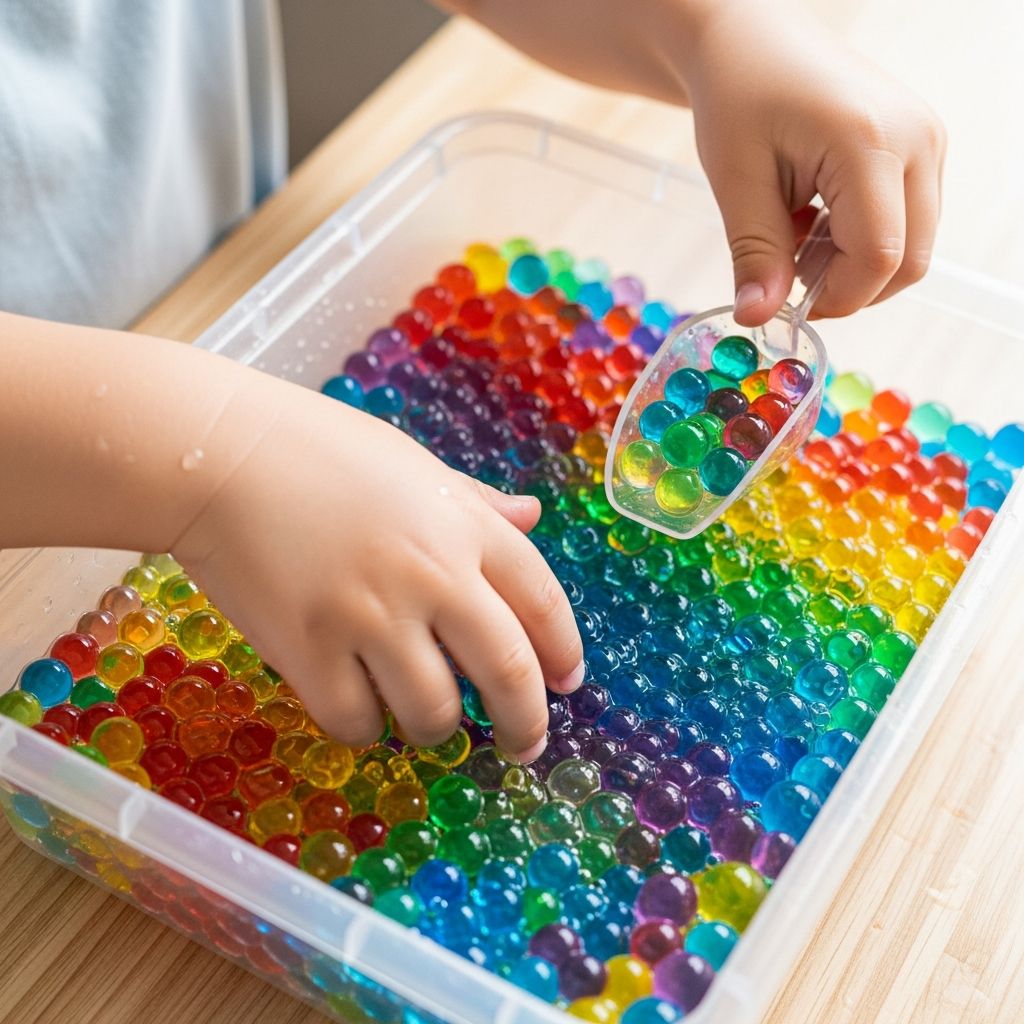
When energy is high and going outside is not an option, a water bead sensory bin can transform an ordinary afternoon into calm, focused, hands-on play. This simple setup invites kids to scoop, pour, and explore textures while secretly building fine motor, language, and problem-solving skills.
This guide walks through everything you need to know: how to prepare water beads, set up the bin, keep children safe, clean up easily, and turn playtime into rich learning moments with very little effort.
Why Sensory Bins Matter for Young Children
Sensory play is more than a trendy activity; it is a foundation for early learning. When children dig, pour, and squeeze materials, they are processing information with their whole bodies, not just their eyes and ears.
- Multi-sensory engagement: Water beads invite children to use touch, sight, and sometimes sound as they scoop and pour, helping the brain form strong connections between senses.
- Emotional regulation: Repetitive motions like stirring, scooping, and letting beads slip through fingers often help kids relax and refocus.
- Independent play: A well-set-up bin encourages children to explore on their own, giving caregivers a small but valuable pocket of time nearby.
Choosing Water Beads and Basic Supplies
Water beads are tiny polymer beads that grow into soft, squishy spheres when soaked in water. They are widely sold for floral arrangements, but many families use them for sensory play as well. If you choose to use them, build your setup around safety and supervision from the start.
Core Materials Checklist
- Packet of water beads (often labeled as “gel beads” or “water pearls”)
- Large, shallow plastic bin or storage tub
- Water for soaking (room temperature is fine)
- Bowls, cups, and scoops in different sizes
- Large spoon, ladle, or measuring cups
- Old towel or plastic tablecloth to protect the floor
Optional add-ins can stretch the activity further: toy animals, plastic letters, small funnels, ladles, colanders, or large tweezers for extra fine motor practice.
Safety First: Important Considerations
Water beads can be safe for supervised play with older toddlers and preschoolers, but they are not suitable for babies or children who still put many items in their mouths. The beads can be a choking hazard when dry or hydrated, and swallowing them can be dangerous. Always prioritize safety before play.
- Use water beads only with children who clearly understand “these are not food.”
- Stay within arm’s reach during play, especially with younger kids.
- Keep dry beads locked away before and after the activity; they are much smaller and easier to swallow.
- Do not use water beads in the bathtub, near sinks, or anywhere they can go down the drain.
If you feel unsure about water beads, you can use alternative fillers such as cooked pasta, pom-poms, dry rice, or ice cubes for a similar sensory experience with different safety considerations.
Preparing the Water Beads
Hydrating the beads is a small science experiment in itself, and kids often enjoy watching them grow. Build in extra time for this step, since full expansion takes several hours.
Step-by-Step Hydration Instructions
- Measure a small amount: Start with 1–2 teaspoons of dry beads for a standard storage bin. They expand dramatically.
- Place in a large bowl: Use a container big enough for the fully grown beads; they will multiply in size many times over.
- Add water: Cover the beads with several inches of water. Extra water is fine; you can drain it later.
- Wait and observe: Check on the beads every 30–60 minutes. Depending on brand and size, full hydration takes 4–8 hours.
- Drain excess water: Once the beads are plump and slippery, pour them through a colander to remove extra water before adding them to the sensory bin.
Making hydration a “preview activity” works well: set the beads to soak in the morning, then bring out the finished bin after nap or later in the day as a surprise.
Setting Up the Indoor Play Space
A little preparation makes the activity smoother and less messy. Choose a play area that you can easily clean and that allows you to stay close.
- Location ideas: Kitchen floor, tiled hallway, or a play mat in the living room.
- Floor protection: Spread a towel, sheet, or tablecloth under the bin to catch stray beads and drips.
- Comfort: Invite children to sit or kneel on a pillow or soft mat to make longer play more comfortable.
Set a simple boundary before you start: beads stay in the play zone, and cleanup happens before anyone leaves the area.
Building Your Water Bead Sensory Bin
Once the beads are hydrated and the space is set up, it is time for the fun part. The goal is to keep things simple but inviting. Too many toys can overwhelm some children; start with a few tools and add more if interest fades.
Layering the Bin
- Pour in the beads: Add the water beads to the empty bin, spreading them out in an even layer.
- Add containers: Place a few cups, bowls, and spoons right into the bin so children see them immediately.
- Include a theme (optional): For extra excitement, add a simple theme like sea creatures, construction trucks, or rainbow sorting cups.
- Invite exploration: Model one or two simple actions like scooping or pouring, then step back and let the child direct the play.
Developmental Benefits at a Glance
Water bead play looks like pure fun, but it also supports several areas of development at once. The table below highlights key benefits you can nurture while your child is happily engaged.
| Area of Development | How the Sensory Bin Helps | Simple Add-On Activity |
|---|---|---|
| Fine motor skills | Scooping, pouring, and pinching beads strengthen small muscles in hands and fingers. | Offer large tweezers or tongs and ask children to move beads from one bowl to another. |
| Hand-eye coordination | Children aim beads into cups, funnels, and containers, practicing precise movements. | Set up a “target” container and cheer as kids try to pour beads in without spilling. |
| Language skills | Talking about colors, textures, and actions introduces new descriptive words. | Use phrases like “smooth,” “squishy,” “full,” and “empty” during play and invite kids to repeat them. |
| Cognitive skills | Sorting, counting, and comparing bead amounts support early math and problem-solving. | Ask children to sort beads by color or to guess which container holds more. |
| Social skills | Sharing tools and space encourages turn-taking, cooperation, and simple negotiations. | Provide limited scoops and help children take turns using them. |
| Emotional regulation | Repetitive motions and soothing textures can help some children calm down and focus. | Use the bin as a “calm corner” activity during transitions or after school. |
Simple Games and Learning Ideas
Once free exploration has run its course, you can gently introduce small games that add structure and new skills. Keep these activities optional and light-hearted.
Color and Counting Challenges
- Color hunts: Ask your child to find all the blue beads and place them into a specific cup. Then switch to another color.
- Number scoops: Challenge children to scoop exactly five beads into a bowl, then ten, then “more than ten.”
- Size comparisons: If you have beads of different sizes, invite kids to sort them into “big” and “small” groups.
Storytelling and Imaginative Play
- Ocean adventure: Add toy fish, boats, or sea creatures and invite children to create a story about what is happening in the “ocean.”
- Cooking pretend play: Offer measuring cups, ladles, and bowls so kids can “cook soup” or “make potions.”
- Rescue missions: Hide a few toys under the beads and send children on a “rescue mission” to find and free them.
These playful prompts give you control over the difficulty level. For older preschoolers, add simple rules or multi-step directions to build listening and memory skills.
Managing the Mess: Cleanup and Storage
Even with boundaries, a few beads will escape the bin. Planning your cleanup strategy in advance helps you stay relaxed during the activity. Treat cleanup as part of the game instead of an afterthought.
Cleanup Tips
- Give children a small dustpan or handheld broom and invite them to “catch runaway beads.”
- Use a colander to separate beads from any water that accumulated during play.
- Wipe the floor carefully; water beads can be very slippery underfoot.
If the beads are still in good condition and you want to reuse them, store them in a sealed container out of reach of children and pets. Add a little water if they begin to shrink, or discard them once they become cloudy or damaged.
Eco-Friendly Disposal Ideas
Disposal is an important part of water bead play. Never rinse beads down a sink, tub, or toilet, as they can expand and create plumbing problems. Instead, use one of the following options.
- Trash disposal: Seal used beads in a bag and place them in the household trash.
- Drying first: Spread beads on a tray and let them dry out for several days before discarding; they shrink and become lighter.
- Check local guidelines: Some communities have specific recommendations for disposing of absorbent polymers; follow local rules where available.
If minimizing waste is a priority, consider rotating between water bead bins and reusable fillers like beans, pasta, or fabric scraps to balance both fun and sustainability.
Adapting the Activity for Different Ages
Children’s needs change quickly in the early years, so adapt the bin to match developmental stages. Safety and supervision should always guide your choices, but small tweaks can keep the activity fresh and appropriate.
Ideas by Age Group
- Young toddlers (with close supervision): Use a smaller number of beads, larger cups, and simple scooping motions. Keep tools chunky and easy to grasp.
- Older toddlers: Add color sorting, pretend cooking, and simple counting activities to extend attention and build vocabulary.
- Preschoolers: Introduce more complex games such as measuring, estimating which container holds more, or following multi-step directions (“Fill the red cup, then pour it into the big bowl”).
If siblings of different ages are playing together, designate clear roles. The older child might be the “head chef” or “scientist,” while the younger one pours or stirs.
Frequently Asked Questions
Are water beads safe for all ages?
No. Water beads are not suitable for babies or children who tend to put non-food items in their mouths. Always supervise closely, keep dry beads locked away, and discontinue use if your child tries to taste the beads.
How long do hydrated water beads last?
With careful storage in a sealed container and occasional fresh water, hydrated beads can last for several play sessions. Discard them if they become cloudy, moldy, or start to break apart.
Can water beads go in the bathtub or sink?
No. Water beads should never go down drains, as they can swell and cause plumbing issues. Keep the play bin away from sinks and tubs, and dispose of beads in the trash.
What if I prefer not to use water beads?
You can create similar sensory bins using cooked spaghetti, foam shapes, dry rice, cornmeal, kinetic sand, or pom-poms. The same tools—cups, spoons, funnels—work beautifully with many different fillers.
How long will my child actually play with this?
Attention spans vary, but many children will play for 15–45 minutes or more when the bin is new. Rotating themes, tools, and games can keep interest high over multiple days.
Making Sensory Play Part of Your Routine
Setting up a water bead sensory bin once shows how powerful a simple, hands-on activity can be for mood, focus, and learning. With a bit of planning and clear safety rules, it can become a reliable part of your rainy-day or after-school toolkit.
Whether your child is scooping quietly, narrating an elaborate ocean adventure, or practicing new words for textures and colors, this kind of play invites them to slow down, explore, and learn at their own pace—one handful of squishy beads at a time.