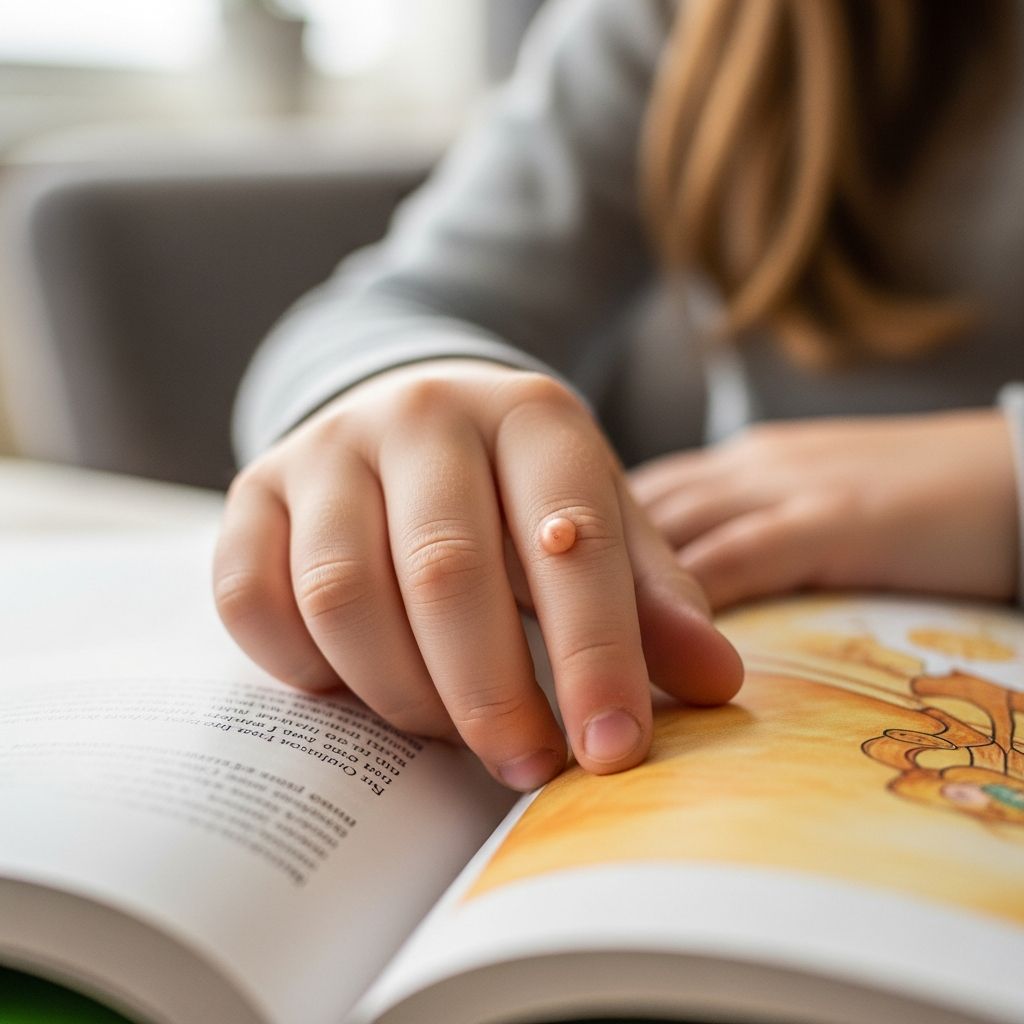
Warts are a very common skin problem in kids. They can look strange and sometimes feel uncomfortable, but they are usually harmless and treatable. Understanding what warts are and how to manage them can help your child stay comfortable and reduce the chance of spreading them to others.
What Exactly Is a Wart?
A wart is a small, noncancerous skin growth caused by certain types of human papillomavirus (HPV) infecting the top layer of the skin. The virus triggers extra skin cell growth, forming a bump that may be rough, smooth, flat, or raised, depending on the type of wart.
In children, warts are especially common on:
- Fingers and hands
- Around the fingernails
- Knees and elbows
- Feet (especially the soles)
- Face (particularly flat warts)
Why Kids Get Warts More Often
Children develop warts more often than adults because their immune systems are still building experience with different viruses, including HPV. This does not mean your child has a weak immune system; it simply reflects normal childhood exposure to common infections.
How the HPV Virus Causes Warts
HPV enters the body through tiny breaks in the skin, such as:
- Small cuts and scrapes
- Cracked or dry skin
- Areas where a child scratches or picks at the skin (like hangnails)
After the virus gets in, it can take weeks or even months before a wart becomes visible.
Ways Kids Can Pick Up the Virus
HPV that causes common skin warts spreads primarily through skin contact and shared items.
- Touching another person’s wart
- Sharing towels, washcloths, bathmats, or sports equipment
- Walking barefoot on damp surfaces, such as pool decks or locker room floors
- Picking or biting at existing warts, which can spread them to nearby skin
Types of Warts Seen in Children
Not all warts look the same. Doctors group them by where they appear and how they look.
| Type of Wart | Typical Location | Key Features |
|---|---|---|
| Common warts | Hands, fingers, knees, elbows, around nails | Rough surface, skin-colored or grayish; may have small black dots (clotted blood vessels). |
| Plantar warts | Soles of the feet | Often flat from pressure; can be painful when walking, sometimes mistaken for calluses. |
| Flat warts | Face, arms, legs | Small, smooth, and flat-topped; often appear in clusters. |
| Periungual warts | Skin around fingernails or toenails | Thickened skin that can distort nail growth or crack and become sore. |
What Warts Look and Feel Like
The exact appearance depends on the type of wart, but common features include:
- A small bump that may grow slowly over weeks or months
- A surface that can be rough, grainy, or occasionally smooth
- Color ranging from skin-toned to lighter or darker
- Tiny black dots inside the wart (these are small clotted blood vessels, not “seeds”)
Most warts are painless. Plantar warts on the feet and warts that get bumped or rubbed often can be sore, especially during walking, running, or certain sports.
Are Warts Dangerous?
In healthy children, ordinary skin warts are generally benign (noncancerous) and do not cause serious health problems. Many clear on their own without any treatment, though this can take months or even years.
However, warts can still cause problems, such as:
- Embarrassment or self-consciousness, especially for warts on the face or hands
- Pain when walking or using the hands, particularly with plantar or periungual warts
- Spreading to other body areas or to family members and classmates
When Parents Should Call the Doctor
In many cases, parents can safely watch and wait or use simple home measures. Still, medical advice is important in certain situations.
Contact your child’s healthcare provider if:
- You are not sure the growth is a wart
- The wart is on the face, genitals, or near the eyes
- The wart bleeds frequently, changes quickly, or looks unusual
- Your child has diabetes, poor circulation, or a medical condition that affects the immune system
- Home treatments have not helped after several weeks to a few months
- The wart is very painful or interferes with walking, writing, or sports
Treatment Options for Warts in Children
There is no single best treatment for every wart. Doctors consider the child’s age, the type and location of the wart, how long it has been present, and how much it bothers the child.
Watchful Waiting
Because many warts eventually disappear as the immune system recognizes and fights the virus, doctors sometimes recommend simply watching and waiting if the wart is small, painless, and not bothersome.
- Can be a good approach for young children who are frightened of procedures
- Avoids side effects from treatment
- Requires patience; clearance may take months or longer
At-Home Treatments (Under Medical Guidance)
Over-the-counter wart remedies often contain salicylic acid, which gradually breaks down the thickened skin. These products may come as liquids, gels, or medicated pads.
Key points for safe use:
- Follow the instructions on the package or your doctor’s directions carefully
- Protect the surrounding healthy skin with petroleum jelly or a bandage, if advised
- Treatment usually needs to be repeated daily or several times a week for many weeks
- Do not use on the face or genitals unless specifically directed by a doctor
In-Office Medical Treatments
If home care is not effective or the wart is painful or spreading, a healthcare professional may suggest one or more of the following options:
- Cryotherapy: Freezing the wart with liquid nitrogen to destroy the infected tissue. Multiple sessions are often needed.
- Topical prescription medicines: Stronger peeling agents or immune-modifying creams applied by the doctor or at home under supervision.
- Minor surgical removal: Carefully cutting or scraping away the wart under local anesthesia; usually reserved for stubborn cases.
- Other methods: In some cases, doctors may use laser therapy or injections to help the immune system recognize and fight the wart.
Your child’s doctor will discuss benefits, discomfort, and possible scarring risks before choosing a method.
What Parents Can Do at Home
Even if you are not actively treating the wart, home care can make your child more comfortable and help prevent spread.
Comfort Measures
- Use cushioning pads or soft insoles for plantar warts to reduce pressure when walking.
- Keep the area clean and dry; change socks daily if the wart is on the foot.
- Discourage your child from scratching, picking, or biting at the wart.
Protecting Others from Infection
- Cover warts with a bandage during activities like gymnastics, swimming, or contact sports.
- Avoid sharing towels, socks, shoes, or razors.
- Have your child wear flip-flops or sandals in public locker rooms and around pools.
Prevention: Lowering the Risk of New Warts
There is no guaranteed way to prevent all warts, but simple habits can lower your child’s chance of getting or spreading them.
- Teach regular handwashing with soap and water.
- Encourage kids to avoid biting their nails or picking at hangnails.
- Make sure small cuts and scrapes are gently cleaned and covered.
- Have children wear sandals or shoes in shared wet areas like locker rooms and pool decks.
- Remind kids not to touch or scratch existing warts on themselves or others.
Special Situations
Some children need closer medical supervision for warts.
- Children with eczema or very dry skin: Cracked skin increases entry points for HPV; moisturizing and gentle skin care are important.
- Children with chronic illnesses or immune problems: Warts may be larger, more numerous, or more difficult to treat, making professional care especially important.
Frequently Asked Questions (FAQs)
Q: Can my child’s warts turn into cancer?
A: The types of HPV that cause common skin warts on the hands and feet are different from the high-risk HPV types linked with cancers. Ordinary skin warts in otherwise healthy children are considered benign and not precancerous.
Q: How long do warts last in kids?
A: Many warts disappear on their own within months to a couple of years as the immune system gradually clears the virus. Some go away faster with treatment, while others can be stubborn and need several rounds of therapy.
Q: Should I try to cut or pick off my child’s wart?
A: No. Cutting, picking, or shaving a wart at home can cause pain, bleeding, infection, and may even help the virus spread. Removal should only be done by a healthcare professional when appropriate.
Q: Are warts a sign that my child has poor hygiene?
A: Not necessarily. Even children who bathe regularly and wash their hands well can get warts. They are caused by a virus that spreads easily through everyday contact. Good hygiene helps reduce the risk, but it does not eliminate it.
Q: Can my child go to school or daycare with warts?
A: In most cases, yes. Warts are common and usually not a reason to stay home. Covering the wart, teaching your child not to pick at it, and avoiding sharing personal items can help limit spread to other children.
References
- Skin Warts in a Child — St. Louis Children’s Hospital. 2023-05-01. https://www.stlouischildrens.org/conditions-treatments/warts
- Kids Health Info: Warts — The Royal Children’s Hospital Melbourne. 2022-09-15. https://www.rch.org.au/kidsinfo/fact_sheets/Warts/
- Common Warts: Symptoms and Causes — Mayo Clinic. 2023-02-18. https://www.mayoclinic.org/diseases-conditions/common-warts/symptoms-causes/syc-20371125
- Warts: How To Identify, Causes, Types, Treatment & Prevention — Cleveland Clinic. 2023-08-10. https://my.clevelandclinic.org/health/diseases/15045-warts
- Warts | Symptoms, Diagnosis & Treatment — Cincinnati Children’s Hospital Medical Center. 2022-06-30. https://www.cincinnatichildrens.org/health/w/warts
- Symptoms of Warts — HealthyChildren.org (American Academy of Pediatrics). 2021-11-05. https://www.healthychildren.org/English/tips-tools/symptom-checker/Pages/symptomviewer.aspx?symptom=Warts