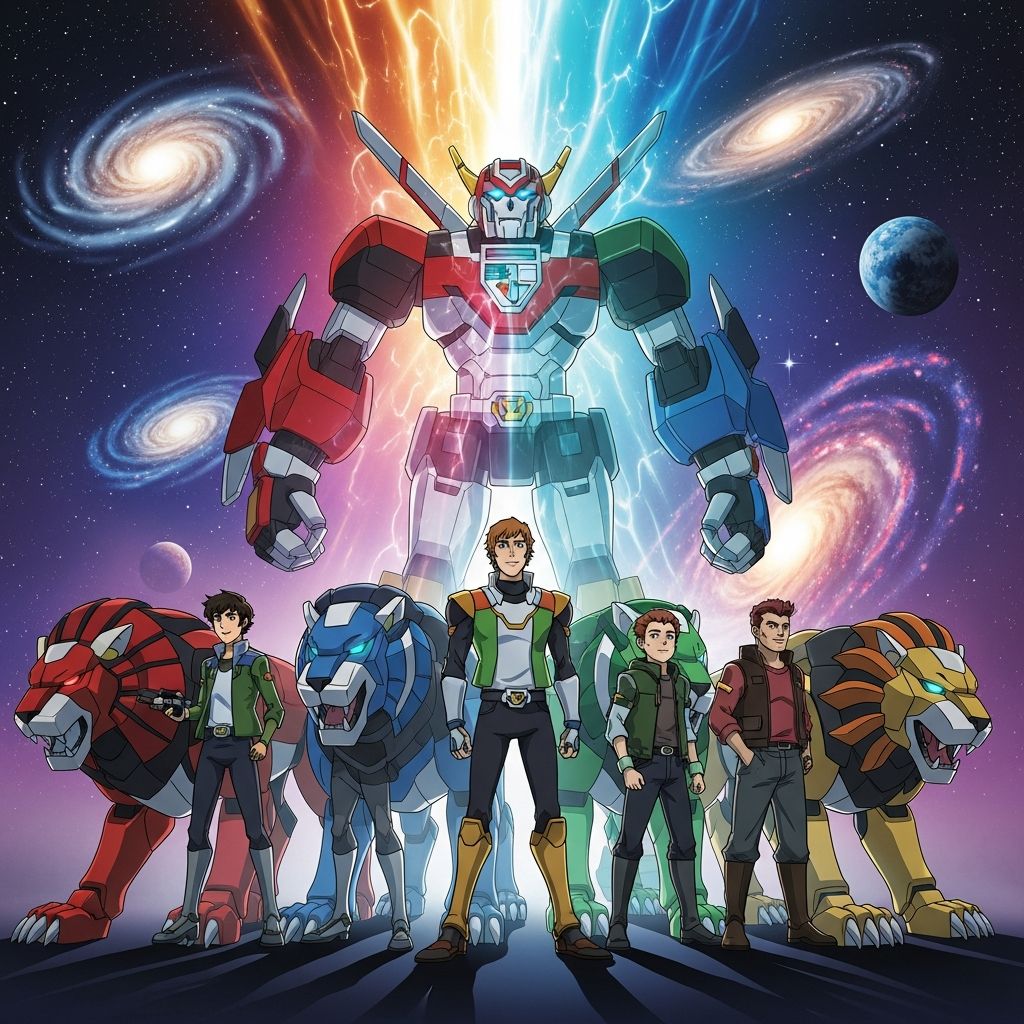
When parents scroll through streaming menus packed with bright thumbnails and noisy trailers, it can be hard to know which shows are actually worth your child’s time and attention. Voltron: Legendary Defender, the Netflix reboot of the classic 1980s franchise, stands out as a modern, story-driven space adventure that aims as much at character growth and moral choices as it does at giant-robot battles.
This article offers a parent-centered overview of the series: what it’s about, what values it promotes, how intense it gets, and how you might use it to spark meaningful conversations at home.
What Is ‘Voltron: Legendary Defender’ About?
Voltron: Legendary Defender is an animated science-fiction series produced by DreamWorks Animation for Netflix. It originally ran from 2016 to 2018 and spans eight seasons, totaling 78 episodes. The series reimagines the original Voltron concept for today’s kids while staying true to its core idea: five young pilots, each with their own flaws and strengths, learning to work together to control giant robotic lions that combine into a towering warrior called Voltron.
Set in a galaxy threatened by the militaristic Galra Empire, the show follows a group of teens from Earth—often called the Paladins of Voltron—who accidentally stumble into a war that has been raging for thousands of years. With the help of alien allies, advanced technology, and a mysterious energy known as quintessence, they become the universe’s last, best hope.
- Target audience: Children and tweens, but with enough depth for teens and nostalgic adults.
- Genre blend: Action, comedy, emotional drama, and serialized sci-fi storytelling.
- Episode length: About 22 minutes per episode, making it manageable for family viewing.
Key Characters Kids Will Talk About
Children often connect first with the characters rather than the plot. Voltron: Legendary Defender gives each Paladin a clear personality arc, which can help kids see different approaches to courage, friendship, and responsibility.
| Character | Role | What Kids Learn From Them |
|---|---|---|
| Shiro | Leader of the team, Black Lion pilot | Calm leadership, dealing with trauma, putting others first. |
| Keith | Red Lion pilot | Managing anger, accepting help, embracing a complex identity. |
| Lance | Blue/Red Lion pilot | Turning insecurity into confidence, learning humility. |
| Pidge | Green Lion pilot | STEM skills, perseverance, and redefining traditional gender roles. |
| Hunk | Yellow Lion pilot | Compassion, emotional intelligence, bravery despite fear. |
| Princess Allura | Altean royal, strategic leader | Grief, duty, cultural pride, and moral courage. |
| Emperor Zarkon | Main early antagonist | Embodies tyranny and the abuse of power, offering a clear moral contrast. |
Together, these personalities create a dynamic that ranges from slapstick humor to serious ethical debates, reflecting the more serialized, character-driven nature of modern children’s television.
Major Themes Parents Can Leverage
Beyond space battles and colorful lions, Voltron: Legendary Defender explores ideas that naturally lend themselves to family conversations.
1. Teamwork and Shared Responsibility
The entire premise of Voltron depends on cooperation: five separate lions are powerful, but they can only become Voltron when the pilots are mentally and emotionally in sync. Conflicts within the group have real consequences, making teamwork feel less like a slogan and more like a hard-won achievement.
- Episodes often show how personal grudges or miscommunication weaken the team.
- Children see that admitting mistakes is part of being a good teammate.
- Leadership is shown as something that can rotate depending on who has the best skills for a given situation.
2. Diversity and Inclusion in Space
The cast is notably diverse in terms of background, personality, and even species. The team includes characters of different ethnicities, a nonbinary-coded alien culture, and later, LGBTQ+ representation, reflecting an ongoing trend toward inclusion in children’s media.
- Kids see that heroes do not look or think just one way.
- Alliances with various alien species model respect across cultures.
- The show normalizes working with people whose experiences are very different from your own.
3. The Ethics of Power
The series spends significant time exploring what it means to have enormous power, whether magical, technological, or political. Characters are repeatedly asked to decide not just if they should use power, but how and for whom.
- Antagonists misuse quintessence—a potent energy source—to exploit people and worlds, mirroring real-world concerns about resource abuse.
- Some characters believe the ends justify the means; others insist that methods matter as much as outcomes.
- Children can compare how different characters make decisions when responsibility weighs heavily on them.
4. Loss, Trauma, and Healing
Unlike many lighthearted kids’ shows, Voltron does not completely shield its heroes from long-term emotional consequences. Characters experience abduction, war, displacement, and grief. The series hints at PTSD and survivor’s guilt, particularly through Shiro’s storyline.
For parents, this can be an opportunity to normalize talking about mental health, especially for older children. According to the American Academy of Pediatrics, open conversations and supportive adults are crucial protective factors for kids who encounter difficult topics in media or real life.
How Intense Is It? Looking at Age-Appropriateness
On Netflix, Voltron: Legendary Defender is generally labeled as suitable for children and families (a TV-Y7 style rating, with fantasy violence). That means it aims for school-aged kids who can handle mild to moderate action scenes.
Violence and Battle Scenes
- Fantasy violence: Laser blasts, spaceship dogfights, sword duels, and large-scale robot battles are common.
- Limited gore: The show avoids graphic injury, but danger and destruction are clearly portrayed.
- High stakes: Entire planets are threatened, and some characters do die over the course of the series, usually handled with restraint rather than shock value.
Parents who are cautious about war imagery may want to preview a few episodes. However, compared with live-action violence, animated fantasy combat tends to be easier for children to process, a distinction commonly recognized in media-rating guidelines.
Emotional Intensity
- Some story arcs explore betrayal, loss, and moral gray areas.
- Younger children may need reassurance after intense scenes.
- Older children and tweens often find the emotional stakes compelling and engaging rather than overwhelming.
Language and Romantic Content
- Language: Occasional mild insults and sarcasm, but no strong profanity.
- Romance: Light crushes, a few kisses, and one notable same-sex relationship later in the series, all portrayed in a restrained way.
- Humor: Much of the comedy comes from character quirks, misunderstandings, and visual gags.
Why Kids Gravitate Toward This Series
Voltron: Legendary Defender taps into several things that modern young viewers tend to love: continuity, character development, fast-paced action, and a sense of a larger, connected universe.
- Ongoing story: Plotlines continue across seasons, rewarding attentive viewers with big payoffs.
- Complex villains: Some antagonists have sympathetic backstories, helping kids practice perspective-taking.
- Visual flair: The animation blends influences from Japanese anime with Western storytelling, creating dramatic action scenes and expressive character designs.
- Relatable humor: Jokes land at kid level, but adults will catch references and subtler character humor too.
From a media-literacy standpoint, the show supports the kind of narrative complexity that researchers have found can help children build comprehension skills and emotional intelligence, as long as it is accompanied by occasional adult guidance and discussion.
Using Voltron as a Springboard for Conversations
Viewed actively rather than passively, Voltron becomes a rich starting point for family discussions.
Questions You Can Ask After an Episode
- “Who made the toughest decision in this episode? What would you have done in their place?”
- “Was there a time when the team didn’t listen to each other? How did that affect the battle?”
- “Which character changed their mind about something important? Why do you think they changed?”
- “What did you notice about how different species or cultures worked together?”
Guided discussions like these align with recommendations from child-development experts, who suggest that co-viewing and conversation help children learn to interpret and evaluate what they see on screen, rather than simply imitating it.
Values to Highlight
- Accountability: Characters own up to mistakes and try to repair the damage.
- Empathy: Many episodes involve understanding an enemy or stranger’s perspective.
- Nonviolent problem-solving: Not every conflict is resolved through fighting; diplomacy and negotiation are often crucial.
- Curiosity: Pidge’s love of technology and research models intellectual curiosity and persistence.
How It Compares to Other Kids’ Sci-Fi Shows
Parents familiar with series like Avatar: The Last Airbender or The Dragon Prince may find Voltron operates in a similar space: serialized storytelling, a mix of humor and serious themes, and a young ensemble cast learning to carry adult responsibilities.
| Aspect | Voltron: Legendary Defender | Typical Light Kids’ Cartoons |
|---|---|---|
| Story Structure | Long-form arcs across seasons, with ongoing character growth. | Mostly standalone episodes with minimal continuity. |
| Themes | War, ethics of power, identity, grief, and cooperation. | Simple conflicts, everyday school or family issues. |
| Violence | Frequent fantasy combat, moderate intensity. | Milder slapstick and low-stakes peril. |
| Age Sweet Spot | Roughly 8–14, with flexibility depending on maturity. | Often 5–10, aimed at younger elementary viewers. |
Practical Tips for Parents Considering Voltron
- Preview the first few episodes: You will get a clear sense of tone, humor, and visual intensity very quickly.
- Start with daytime viewing: If your child is sensitive to scary imagery, avoid watching the heaviest episodes right before bed.
- Watch together: At least for the first episodes or major plot arcs, co-viewing allows you to pause, clarify, and reassure as needed.
- Set boundaries: Because the show is serialized, kids may want to binge; consider limits that keep viewing balanced with offline activities.
- Connect it to real-world concepts: Use fictional conflicts about empires and resources to talk about fairness, environmental responsibility, or history at an age-appropriate level.
Frequently Asked Questions (FAQs)
What age group is Voltron: Legendary Defender best for?
The show is generally suited to kids around 8 and up, depending on individual sensitivity. The TV-Y7 style rating and fantasy violence place it slightly above preschool fare; older tweens and younger teens may appreciate the more complex story arcs most.
Is the show too scary or violent for younger children?
Voltron contains regular action scenes involving battles, explosions, and looming threats to entire planets, but it avoids graphic gore. Sensitive younger viewers might find some episodes intense, so previewing and co-viewing can help you assess your child’s comfort level.
Does Voltron: Legendary Defender include positive role models?
Yes. The Paladins and their allies repeatedly model teamwork, resilience, empathy, and moral reflection, even when they make mistakes. Leaders are depicted as listening to feedback and learning from failure, which can provide strong examples of growth for children.
How does the series handle diversity and representation?
The main team is racially diverse, includes strong female characters in leadership positions, and features later LGBTQ+ representation, reflecting broader shifts toward inclusivity in children’s animation. Various alien cultures further reinforce the idea that difference is a strength rather than a weakness.
Is Voltron educational in a traditional sense?
Voltron is not an educational program in the narrow sense of teaching academics, but it can support social-emotional learning and media literacy when paired with parental guidance. Themes like cooperation, ethical decision-making, and coping with loss can resonate strongly with children and open doors for deeper discussion.
References
- Voltron: Legendary Defender — Wikipedia Contributors. 2024-05-15. https://en.wikipedia.org/wiki/Voltron:_Legendary_Defender
- Voltron: Legendary Defender (TV Series 2016–2018) — IMDb. 2018-12-14. https://www.imdb.com/title/tt5580664/
- Voltron: Legendary Defender — Rotten Tomatoes. 2018-12-14. https://www.rottentomatoes.com/tv/voltron_legendary_defender
- Voltron: Legendary Defender — Voltron Wiki (Fandom). 2022-09-10. https://voltron.fandom.com/wiki/Voltron:_Legendary_Defender
- Media and Young Minds — Council on Communications and Media, American Academy of Pediatrics. 2016-11-01. https://publications.aap.org/pediatrics/article/138/5/e20162591/60620/Media-and-Young-Minds
- The Common Sense Census: Media Use by Tweens and Teens — Rideout V, Robb MB, Common Sense Media. 2019-10-29. https://www.commonsensemedia.org/research/the-common-sense-census-media-use-by-tweens-and-teens-2019