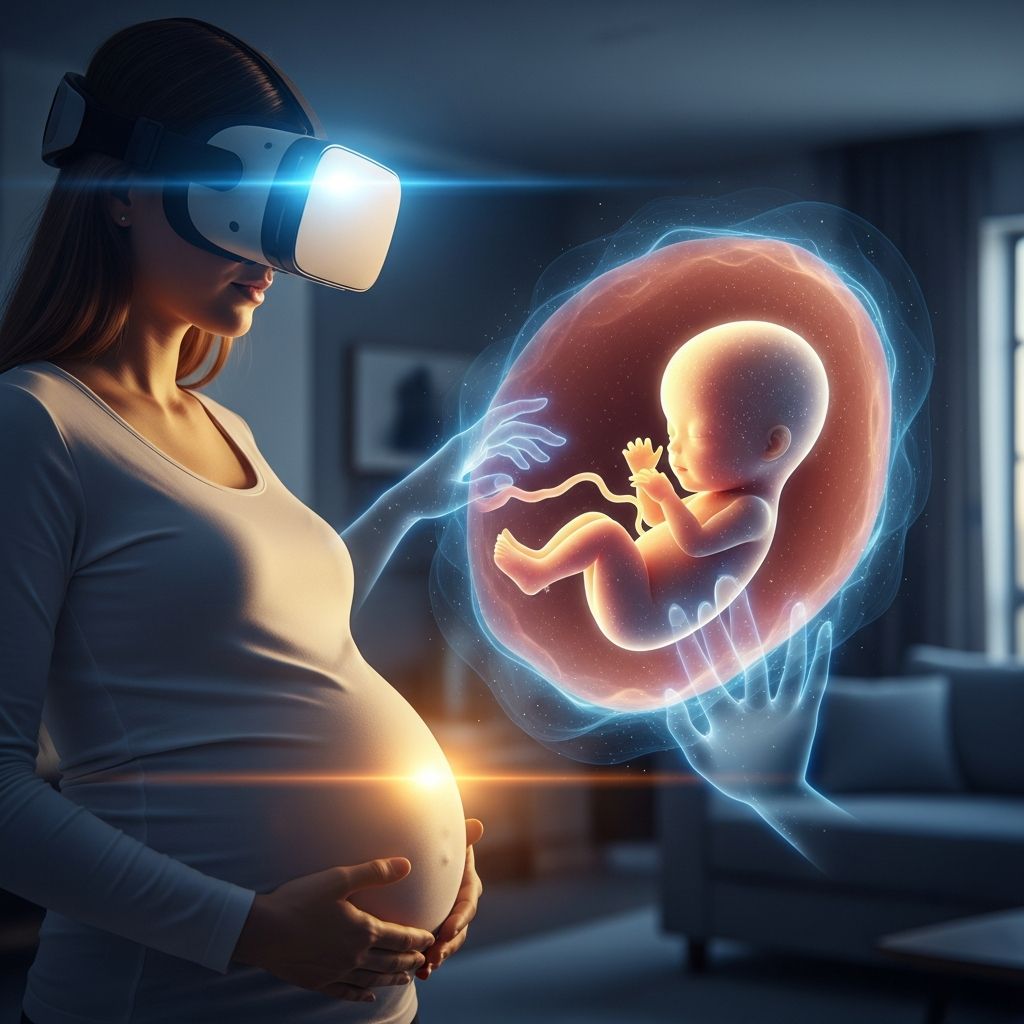
Virtual reality (VR) is reshaping the pregnancy experience by allowing expectant parents to step into immersive digital worlds where they can observe and interact with detailed 3D representations of their developing child. This innovation combines medical imaging like ultrasound and MRI with VR software to generate realistic fetal models, offering a profound way to bridge the gap between conception and birth.
The Science Behind Fetal VR Visualization
At the core of this technology lies advanced medical imaging processed through specialized algorithms. Ultrasound provides real-time glimpses of the fetus, capturing movements and basic structures, while MRI offers higher-resolution details of anatomy, particularly useful for complex cases. Researchers convert these scans into 3D models that VR headsets or large screens can render in a 360-degree environment.
For instance, Brazilian teams have pioneered methods to immerse parents in these visualizations, turning flat images into explorable spaces. The process typically involves a short MRI session—around 15 minutes—to gather data without prolonged exposure risks, as studies confirm its safety during pregnancy. Software then reconstructs the fetus in a virtual womb, complete with fluid dynamics and subtle movements, making the experience feel tangible.
Emotional Connections: Parents ‘Meeting’ Their Baby
One of the most compelling aspects is the emotional impact. Expectant mothers and fathers report heightened attachment when they can ‘meet’ their child in VR. Videos demonstrate parents donning headsets, reaching out virtually toward a life-sized hologram of their baby, witnessing kicks and heartbeats up close.
This isn’t just novelty; it fosters bonding similar to postnatal skin-to-skin contact. For visually impaired parents, adaptations like 3D-printed models from ultrasounds extend this accessibility, allowing tactile exploration. In clinics, families gather around massive VR walls, like the I-Wall at Erasmus MC, where physicians rotate holographic fetuses to highlight features, turning clinical visits into memorable encounters.
Medical Applications in Fetal Health Monitoring
Beyond bonding, VR aids diagnostics. Physicians use these models to scrutinize organs, measure volumes, and detect anomalies without the limitations of live ultrasounds, where fetal movement can obscure views. For high-risk pregnancies, detailed MRI-based VR reveals congenital issues vividly, helping parents understand conditions and treatment options.
Non-stress tests (NST), which monitor fetal heart rates, benefit too. VR distracts mothers from discomfort, shortening perceived procedure times and reducing anxiety, which correlates with better fetal reactivity. Meta-analyses show VR lowers maternal stress, potentially improving outcomes for both mother and child.
| Imaging Type | Resolution | Use Case | Accessibility |
|---|---|---|---|
| Ultrasound | Moderate | Routine checkups, bonding | Widespread, low-cost |
| MRI | High | High-risk diagnostics | Limited to medical need |
| VR Reconstruction | Enhanced 3D | Visualization, education | Clinic-based, emerging |
Safety Considerations for VR in Pregnancy
Concerns about VR’s effects on pregnant women and fetuses have been studied. Systematic reviews of randomized trials indicate no adverse physiological changes; instead, VR reduces blood pressure and anxiety through immersive distraction. Sessions are brief, minimizing any risks from headsets or screens.
For obese patients, image quality may suffer due to tissue interference, but optimizations are underway. Experts recommend VR only under medical supervision, especially for MRI-integrated models, ensuring it’s a complementary tool rather than a replacement for standard care.
Real-World Implementations and Innovations
Companies like Meet Your Baby are commercializing patented 360-degree VR from ultrasounds, viewable on various platforms. In Europe, Adventure Club creates custom VR models from scans, as shared by founders who experienced it personally. Hospitals deploy giant VR walls for consultations, enhancing communication.
These tools extend to education: simulating labor processes to demystify birth, boosting first-time mothers’ confidence. Future licensing deals with imaging giants could mainstream this in the US.
Benefits for Diverse Families
- Strengthened Parental Bond: Visual and interactive encounters accelerate emotional investment.
- Improved Mental Health: Reduces prenatal anxiety, with studies showing significant drops post-VR.
- Enhanced Diagnostics: Precise anomaly detection aids timely interventions.
- Inclusivity: Benefits blind parents via haptic integrations.
- Educational Value: Prepares families for potential challenges.
Challenges and Future Directions
Cost remains a barrier; MRI-VR is reserved for complicated cases due to expense. Wider adoption depends on affordable ultrasound-only versions and regulatory approvals. Ongoing trials will peer-review efficacy, potentially expanding to routine prenatal visits.
Ethical questions arise: should all parents access this, or only those with medical needs? Balancing wonder with realism is key, as overly idealized models might set unrealistic expectations.
Frequently Asked Questions (FAQs)
Is VR safe for pregnant women?
Yes, research shows VR reduces anxiety without harming mothers or fetuses; use supervised short sessions.
How is the 3D fetal model created?
Ultrasound or MRI scans are processed into VR-compatible 3D renders, often in 15 minutes or less.
Can anyone access fetal VR?
Primarily clinic-based now, but consumer apps like Meet Your Baby are emerging for ultrasound data.
Does it help with high-risk pregnancies?
Absolutely; it clarifies anomalies for better decision-making.
What’s the difference between ultrasound VR and MRI VR?
Ultrasound VR is less sharp but routine; MRI VR is detailed for diagnostics.
Preparing for Your VR Prenatal Experience
Discuss with your OB/GYN if your clinic offers VR. Prepare by understanding scan types and what to expect emotionally. This technology promises to make pregnancy more connected and informed.
References
- Pregnant Mothers Meet Their Unborn Babies in Virtual Reality — YouTube (Meet Your Baby VR). 2023. https://www.youtube.com/watch?v=VFB7SX14Gfs
- Pregnant women can soon use Virtual Reality to ‘meet’ their unborn babies — Mother.ly. 2023. https://www.mother.ly/life/pregnant-women-can-soon-use-virtual-reality-to-meet-their-unborn-babies/
- Blind Pregnant Woman Meets Unborn Baby on 3D Printed Ultrasound — TIME. 2015-07-30. https://time.com/3849981/huggies-blind-pregnant-3d-ultrasound/
- Virtual reality provides vivid look inside a fetus — but is it useful? — STAT News. 2016-11-21. https://www.statnews.com/2016/11/21/virtual-reality-fetus-pregnancy/
- Meet Your Unborn Baby with VR — YouTube (TWiT Tech Podcast). 2023. https://www.youtube.com/watch?v=2Z4jaZfLQFY
- The effect of virtual reality on pregnant women and fetuses: a systematic review and meta-analysis — PMC (PubMed Central). 2024. https://pmc.ncbi.nlm.nih.gov/articles/PMC12334377/
- I-Wall brings congenital abnormalities in the unborn child vividly to life for parents — Erasmus MC. 2023. https://amazingerasmusmc.com/pregnancy-child/i-wall-brings-congenital-abnormalities-in-the-unborn-child-vividly-to-life-for-parents/