In the fast-paced world of modern education, teachers constantly seek innovative ways to connect with students beyond textbooks and tests. One such approach, a simple yet profound classroom exercise centered on **emotional baggage**, captured global attention. By encouraging students to anonymously share their inner burdens, a veteran educator demonstrated the transformative power of vulnerability and collective understanding. This activity not only brought tears and hugs among preteens but also ignited conversations about mental health support in schools worldwide.
The Birth of a Powerful Teaching Tool
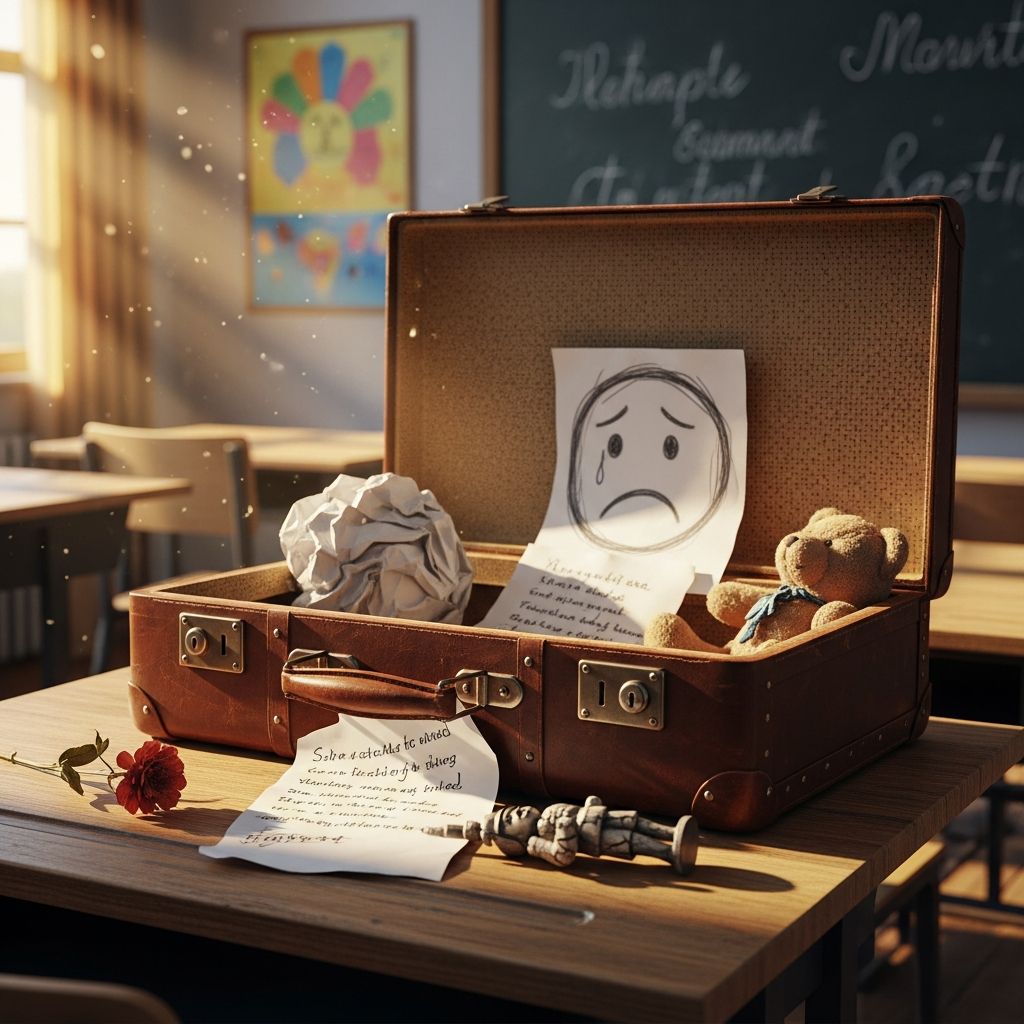
The concept emerged from a middle school English teacher’s desire to instill kindness on the first day of school. With 22 years of experience, she adapted an idea spotted online, tailoring it to resonate with her seventh- and eighth-graders in Collinswood, Oklahoma. Students were asked to jot down personal worries—heavy hearts, family troubles, or hidden pains—on slips of paper, no names attached. These notes were then crumpled into balls and tossed across the room, symbolizing the release of emotional weight.
Each child picked up a random paper and read it aloud voluntarily. What followed was a cascade of revelations: confessions of depression, grief over lost loved ones, parental incarcerations, pet deaths, and friendship betrayals. The room fell silent, then erupted in empathy as peers recognized shared struggles. ‘Who wrote this?’ the teacher would ask gently, opening the door for voluntary sharing without pressure.
Unexpected Reach and Resonance
A single photo of the resulting bag of crumpled papers, hung by the classroom door as a daily reminder, exploded online. Posted on Facebook, it amassed over 400,000 shares in days, liked by hundreds of thousands. The teacher expressed surprise at the viral phenomenon, noting it as one of her most impactful days ever.
- Key Metrics of Virality: Shared 335,000+ times in three days; total shares exceeded 500,000.
- Emotional Impact: Students hugged, cried, and vowed mutual support.
- Symbolic Gesture: The bag serves as a visual cue: ‘Leave your baggage here—you’re not alone.’
This resonance extended beyond the classroom, touching parents, educators, and adults who reflected on their own unseen loads. It underscored a universal truth: everyone carries invisible weights, yet few discuss them openly.
Building Empathy Through Shared Stories
At its core, the activity dismantled isolation. Hearing peers’ raw admissions—’My dad is in prison,’ ‘I’m battling depression,’ ‘I miss my dog’—shattered assumptions of uniqueness in suffering. Students realized classmates, who seemed fine on the surface, grappled with profound challenges. This fostered immediate bonds, with many choosing to reveal themselves, leading to group catharsis.
Psychological research supports such interventions. Sharing vulnerabilities activates mirror neurons, enhancing emotional attunement. A study from the American Psychological Association highlights how peer disclosure in safe spaces reduces anxiety and builds resilience. In this case, the no-names rule initially protected anonymity, while optional ownership empowered agency.
Broader Classroom Mental Health Strategies
This wasn’t an isolated effort. Another high school teacher in California implemented a daily ‘mental health check-in’ board with options like ‘great,’ ‘okay,’ ‘meh,’ or ‘struggling.’ Students place magnets accordingly, normalizing mood fluctuations without verbal disclosure.
| Strategy | Description | Benefits |
|---|---|---|
| Baggage Toss | Anonymous paper sharing and reading | Reveals common struggles, sparks empathy |
| Mood Board | Visual self-assessment magnets | Quick daily check-ins, low-pressure |
| Kindness Circles | Group discussions on positives | Boosts positivity, counters negativity |
| Gratitude Journals | Daily written appreciations | Shifts focus to strengths |
These tools align with guidelines from the U.S. Department of Education, emphasizing social-emotional learning (SEL) to improve academic outcomes and well-being.
Navigating the Shadows: Potential Risks
While heartwarming, the exercise isn’t without critique. Revealing heavy issues like suicidal ideation publicly might retraumatize or expose without adequate follow-up. Critics argue classrooms aren’t therapy rooms; trained counselors should handle severe cases.
The teacher clarified participation was voluntary, with unread papers discarded if preferred. Still, the viral narrative’s feel-good sheen sometimes overlooks complexities. Professional bodies like the National Association of School Psychologists recommend teacher training in trauma-informed practices before such activities.
- Pros: Immediate empathy boost, community building.
- Cons: Risk of unresolved trauma surfacing.
- Best Practices: Partner with counselors; ensure post-activity support.
Why This Matters for Parents and Educators
Parents gained insight into tweens’ worlds, prompting home conversations. One viral comment read: ‘My child came home lighter after this.’ Educators worldwide replicated it, adapting for ages 10-18. Statistics reveal 1 in 6 U.S. children faces mental health disorders, yet stigma persists.
Incorporating such activities addresses CDC data showing rising youth anxiety post-pandemic. Schools integrating SEL see 11% academic gains and reduced suspensions.
Long-Term Ripples in Student Lives
Weeks later, the bag remained a fixture, symbolizing solidarity. Students reported feeling ‘seen’ and less alone. The teacher noted sustained kindness: fewer bullies, more helpers. This mirrors longitudinal studies where early empathy training predicts adult prosocial behavior.
For preteens navigating puberty, divorce, social media pressures, such validations are lifelines. The activity humanized peers, turning potential rivals into allies.
Implementing Similar Activities Safely
Educators eager to try should:
- Prepare: Inform school counselors; gauge class dynamics.
- Frame Positively: Emphasize shared humanity, not judgment.
- Follow Up: Offer private chats; monitor for distress.
- Adapt: For younger kids, use drawings; older, journals.
Resources from Child Mind Institute provide templates and training.[10]
Frequently Asked Questions (FAQs)
What ages is the baggage activity best for?
Middle school (11-14), but adaptable for high school with deeper discussions. Younger children may use symbols instead of words.
Is it safe without a counselor present?
Proceed cautiously; have support ready. Voluntary sharing minimizes risks, but training is essential.
Can parents do this at home?
Yes, in family settings. Use it dinner table-style to open dialogues gently.
How has it impacted schools long-term?
Reports show increased peer support and teacher-student trust, per replicating educators.
Are there digital versions?
Apps like anonymous poll tools (e.g., Mentimeter) offer virtual equivalents for remote classes.
Empowering the Next Generation
This viral moment proves simple acts can shift cultures. By normalizing emotional baggage, we equip youth with tools for resilient, compassionate lives. As the bag hangs, so does hope—for understanding, connection, and healing.
References
- “We all have baggage’: Teacher’s viral class activity inspires kindness — ABC News GMA. 2019-09-05. https://abcnews.go.com/GMA/Family/baggage-teachers-viral-class-activity-inspires-kindness/story?id=65246421
- Teacher’s viral ‘baggage activity’ brought her students to tears — Upworthy. 2019-09-01. https://www.upworthy.com/teachers-baggage-activity-rp
- The other side of that viral classroom ‘baggage activity’—it’s not as feel-good as it seems — Upworthy. 2019-09-01. https://www.upworthy.com/the-other-side-of-that-viral-classroom-baggage-activity-its-not-as-feel-good-as-it-seems
- This Teacher’s Awesome Back-to-school ‘baggage’ Activity Is Going Viral — WKBW. 2019-09-01. https://www.wkbw.com/this-teachers-awesome-back-to-school-baggage-activity-is-going-viral
- Social Emotional Learning Programs Improve Student Outcomes — U.S. Department of Education. 2023-10-15. https://www.ed.gov/news/press-releases/social-emotional-learning-programs-improve-student-outcomes