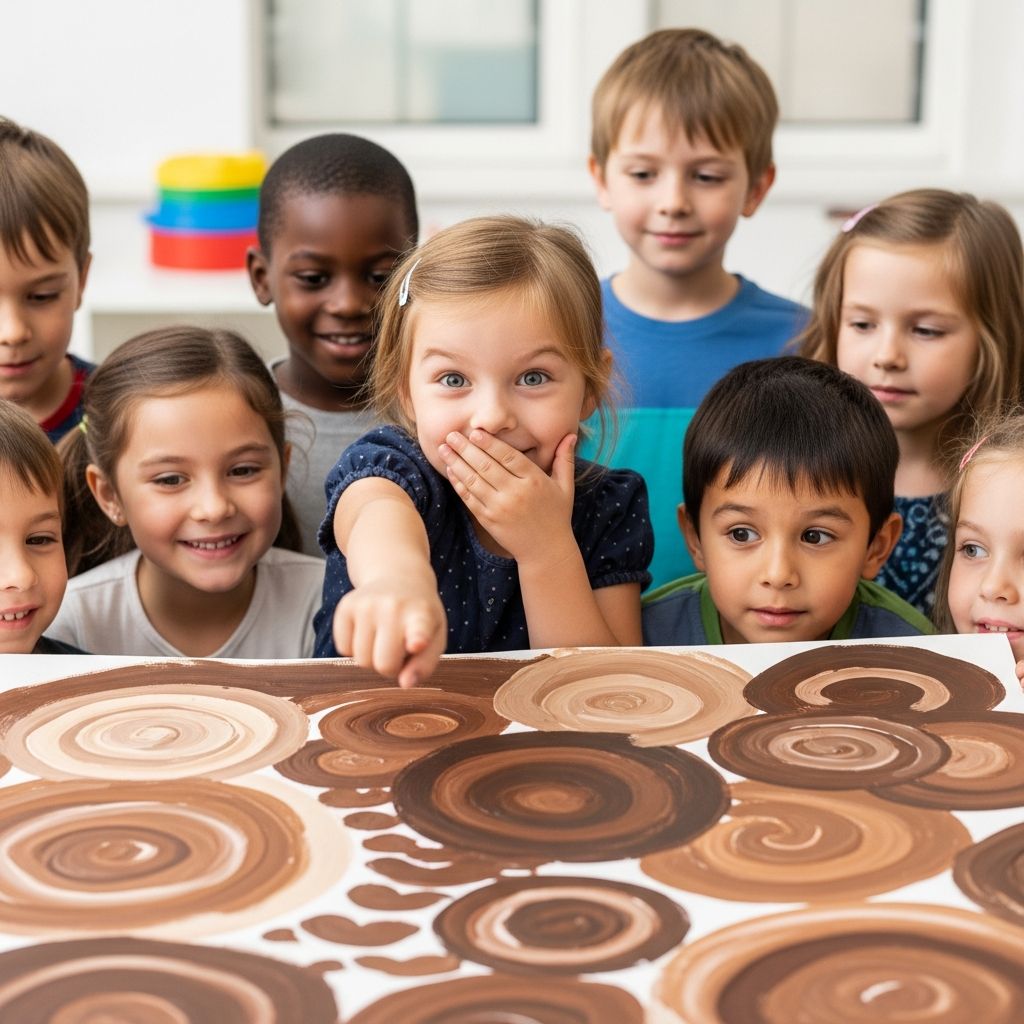
When a preschooler cheerfully announced that she loves “all the browns,” the adults around her burst into laughter — and then into reflection. The short clip, shared widely on social media and parenting sites, shows how children’s unfiltered honesty can be both hilarious and deeply revealing, especially when it touches on topics like race and identity.
Without reproducing the original article or video, this piece explores the key ideas and themes: the child’s innocent declaration, the adult’s hysterical reaction, why people online rallied around the little girl, and what parents can learn about talking with kids about differences in a healthy and loving way.
What Happened in the Viral Video?
The heart of the clip is simple: a young girl confidently explains that she loves “all the browns,” using her own childlike language to talk about people whose skin is darker than hers. The grown-up filming her is shocked into loud, uncontrollable laughter, which immediately gives the video its comedic punch.
Even without the full transcript, it’s clear the girl is not trying to be controversial. She is, in her own words, trying to express affection and admiration for a group of people she has grouped together in her mind. Her wording feels surprising to adults, but to her, it is a straightforward way to describe what she sees and feels.
- The girl uses simple, descriptive language drawn from what she notices around her.
- The adult’s reaction is big, loud, and instantly relatable — many viewers recognized themselves in that kind of surprised laughter.
- The situation is funny because it is unexpected, but also sweet because her comment is clearly rooted in love, not judgment.
The Adult’s Hysterical Reaction
One major focus of discussion around the video is the adult’s reaction. Instead of calmly nodding, the grown-up practically explodes with laughter. That reaction made the clip go viral, because it mirrors what many adults feel when kids say something that is both socially loaded and completely innocent.
From an adult perspective, the phrase “all the browns” brushes against complex social conversations about race, language, and respect. For the child, though, it is a clumsy but loving attempt to talk about people she admires. The gap between how adults hear it and what she means creates the comedic tension.
- Adults often hear subtext and social rules even when none are intended by the child.
- Children usually speak from a place of direct observation and emotion, not politics or social commentary.
- The adult laughs partly from surprise, partly from relief that the child is expressing love rather than something hurtful.
Why ‘All the Browns’ Struck a Nerve
Many people who watched the clip found themselves stuck between laughing and thinking. The phrase “all the browns” is not a term adults typically use, and that discomfort is exactly what made the moment so powerful: it pushed viewers to ask why a loving, positive statement from a child could feel so awkward to grown-ups.
At the same time, numerous viewers and commenters expressed visible affection for the girl, insisting that “all the browns” would love her right back if they met her. Her clear enthusiasm, open admiration, and total lack of malice made the phrase land as sincere and endearing rather than insulting.
- The comment turned a potentially tense topic into something playful and light for many viewers.
- People connected with the idea that kids often say what adults are too nervous to say aloud, but from a kinder, simpler place.
- The moment helped some adults reflect on how language can feel heavier to grown-ups than to children.
Childhood Innocence and Honest Observations
Kids frequently use concrete descriptors when they talk about people: tall, short, curly hair, glasses, brown skin, light skin. Adults sometimes panic when those observations involve race, but children are usually just trying to describe what they see in the most basic way possible.
In this case, the child connected her visual observation (different shades of skin) with an emotion (love). Instead of turning differences into something negative, she turned them into something to celebrate. That simple connection is what made so many viewers feel unexpectedly moved between fits of laughter.
- Young children rarely understand the social weight of certain words, but they do understand affection and admiration.
- What sounds clumsy to adults can still be an authentic expression of kindness for a child.
- Parents can treat these moments as openings for gentle guidance, not as reasons to shut kids down.
How Social Media Reacted
Clips like this tend to take off because they mix humor with heart. Viewers shared the video with captions describing how they laughed out loud, replayed it several times, or showed it to friends and family. Many identified with the adult who could not keep a straight face while hearing something so unexpectedly adorable.
At the same time, people in different communities embraced the child, joking that if she loves “all the browns,” then all the browns love her right back. The idea of a little girl throwing her arms open to an entire group of people felt both funny and extremely endearing, especially to those who are often the subject of serious conversations about race.
- Viewers framed the video as both comic relief and a reminder of how pure kids’ intentions often are.
- Many comments emphasized pride that the child’s instinct was to express love, not fear or exclusion.
- The clip temporarily turned a heavy cultural topic into a shared moment of joy.
Key Themes Highlighted by the Clip
Beyond the initial laugh, the story touches on several broader parenting themes. It raises questions about how children learn to see and name differences, how parents respond when kids say something socially awkward, and how those responses shape a child’s future understanding of respect and inclusion.
The situation also highlights how public parenting moments have become part of a much larger online conversation. A short, casual interaction at home can quickly travel around the world, picking up likes, comments, and interpretations from people who have never met the family involved.
| Theme | How It Appears | Why It Matters for Parents |
|---|---|---|
| Childhood innocence | A young child uses simple, descriptive language to express love. | Reminds adults that kids often start from curiosity and affection, not judgment. |
| Adult discomfort | The grown-up laughs nervously and loudly at the unexpected phrase. | Shows how adults carry social anxieties that kids do not yet understand. |
| Race and language | The phrase “all the browns” touches on how we label people by appearance. | Encourages parents to think about how to guide kids toward respectful terminology. |
| Online amplification | A private moment becomes a viral post shared across platforms. | Illustrates how quickly family moments can become part of public dialogue. |
| Community support | Viewers jokingly assure the girl that the people she loves would embrace her back. | Highlights how positive online reactions can affirm children’s empathy. |
Lessons for Parents and Caregivers
While the video is primarily funny, it also offers practical lessons for adults who are raising or working with young children. When kids use imperfect language around topics like skin color, race, disability, or body size, adults have an opportunity to respond in ways that either encourage curiosity and kindness or shut it down.
Parents do not have to deliver a full lecture in the middle of a funny moment, but they can follow up later with age-appropriate talk about words, respect, and how to describe people in ways that feel good and kind. Turning nervous laughter into later reflection is often the most realistic approach.
Practical Tips for Handling Similar Moments
- Stay calm first, laugh later: It is normal to find kids’ phrasing funny, but try to respond gently in the moment so they feel safe asking questions.
- Affirm the positive intent: If they are expressing love or admiration, reflect that back: “It’s great that you like being around those friends so much.”
- Offer better language: Without scolding, you can say, “A lot of people prefer to say…” and share kinder or more accurate terms.
- Invite questions: Let children know they can always ask about differences instead of guessing or staying silent.
- Model respect: Kids pay close attention to how adults talk about other people, especially in casual conversation.
Talking About Race with Young Children
Many adults were raised to believe that children should be “colorblind,” or that the best approach is to avoid any mention of race. However, kids do notice differences, and they quickly pick up on whether adults are comfortable or anxious when those differences are mentioned out loud.
Helping children develop language that is both accurate and kind can prevent confusion later on. Rather than shutting down comments like this girl’s, parents can build on them: “You like those people because they are kind to you” or “You love how they dance, talk, and dress,” shifting the focus from appearance alone to who people are as whole individuals.
- Age-appropriate conversations about race can actually reduce fear or shame, because kids learn that differences are normal and valued.
- Linking observations (like skin color) with positive traits (like kindness or humor) helps kids avoid stereotypes.
- Being honest about differences, while centering respect, boosts empathy instead of discomfort.
Why People Said ‘All the Browns Would Love Her Right Back’
One of the most repeated reactions to the video was the idea that “all the browns” — the very people the girl mentioned — would be thrilled to have her on their side. Viewers saw in her a kind of ally-in-training: a child whose first instinct was to express admiration and affection.
That sentiment points to a deeper hope many people hold: that the next generation will handle differences more naturally and kindly than previous ones. When children grow up comfortable noticing race without attaching negativity, they are more likely to build inclusive friendships and communities as adults.
- The video became a symbol of young, open-hearted curiosity rather than division.
- Viewers projected a future onto the girl, imagining her as someone who will continue to stand up for and love people who may look different from her.
- Community members saw her comment as a small but genuine expression of solidarity.
Balancing Humor and Responsibility
There is nothing wrong with laughing when kids say something unexpectedly funny. Humor can be a relief valve in parenting, and videos like this go viral precisely because they let people share that relief. The danger only appears if laughter becomes a way to avoid important conversations altogether.
The most balanced approach holds both truths at once: yes, it is hilarious to hear a tiny child make a big, sweeping statement about “all the browns,” and yes, there is also a responsibility to guide her gently toward language that honors people’s humanity and dignity. Parents can laugh in private, then talk with care.
- Humor makes hard topics feel lighter, which can make it easier to talk about them later.
- Children learn from what happens after the laugh — whether adults dismiss them or engage with them.
- Balancing joy and responsibility helps families handle sensitive topics without fear.
Frequently Asked Questions (FAQ)
1. Did the little girl mean anything offensive by saying “all the browns”?
No. In the context of the video, her tone, body language, and expressions make it clear that she is speaking with affection. She is trying to name a group of people she likes, using the most obvious visual detail she notices about them. The phrase is clumsy, but her underlying intent is loving.
2. Should parents correct kids when they describe people by skin color?
Correction does not have to mean scolding. Parents can acknowledge what the child is noticing while also offering more respectful language. For example, they might say, “Yes, people have many beautiful skin colors, and some people prefer you say Black or brown instead of ‘the browns.’” The goal is to guide, not shame.
3. Is it okay to laugh when kids say things like this?
It is completely understandable to laugh; surprise is a normal human reaction. What matters is what happens after the laugh. If adults follow up with warmth, clarification, and a chance for kids to ask questions, the moment can become a positive learning experience instead of a source of embarrassment.
4. How can this kind of moment open a conversation about race?
A comment like “all the browns” gives parents a natural entry point to talk about how people are both similar and different. Adults can explain that people identify in many ways, including by race and culture, and that the most important thing is to treat everyone with consistent kindness and respect. Short, age-appropriate talks over time are often more effective than one long, serious lecture.
5. What if a child copies language heard from adults that feels more harmful?
In that case, parents may need to respond more firmly, making it clear that certain words can hurt people. Even then, it is helpful to separate the child from the language: “You are not bad, but that word can make people feel bad, so we do not use it.” Emphasizing empathy and alternatives (“Here is a better way to say that…”) keeps the door open for growth.
Final Thoughts: Laughing, Learning, and Loving Out Loud
The viral “all the browns” moment is more than just a quick laugh; it is a snapshot of how children stumble their way into big topics with small, brave words. Her cheerful declaration shows that kids naturally notice differences and just as naturally wrap those differences in love when adults have not yet taught them to be afraid.
For parents and caregivers, the clip is both a delightful piece of entertainment and a gentle reminder: when kids say something that makes adults gasp or giggle, there is often an opening underneath the humor. That opening is a chance to shape how the next generation will speak about and care for one another, in all their many beautiful shades.