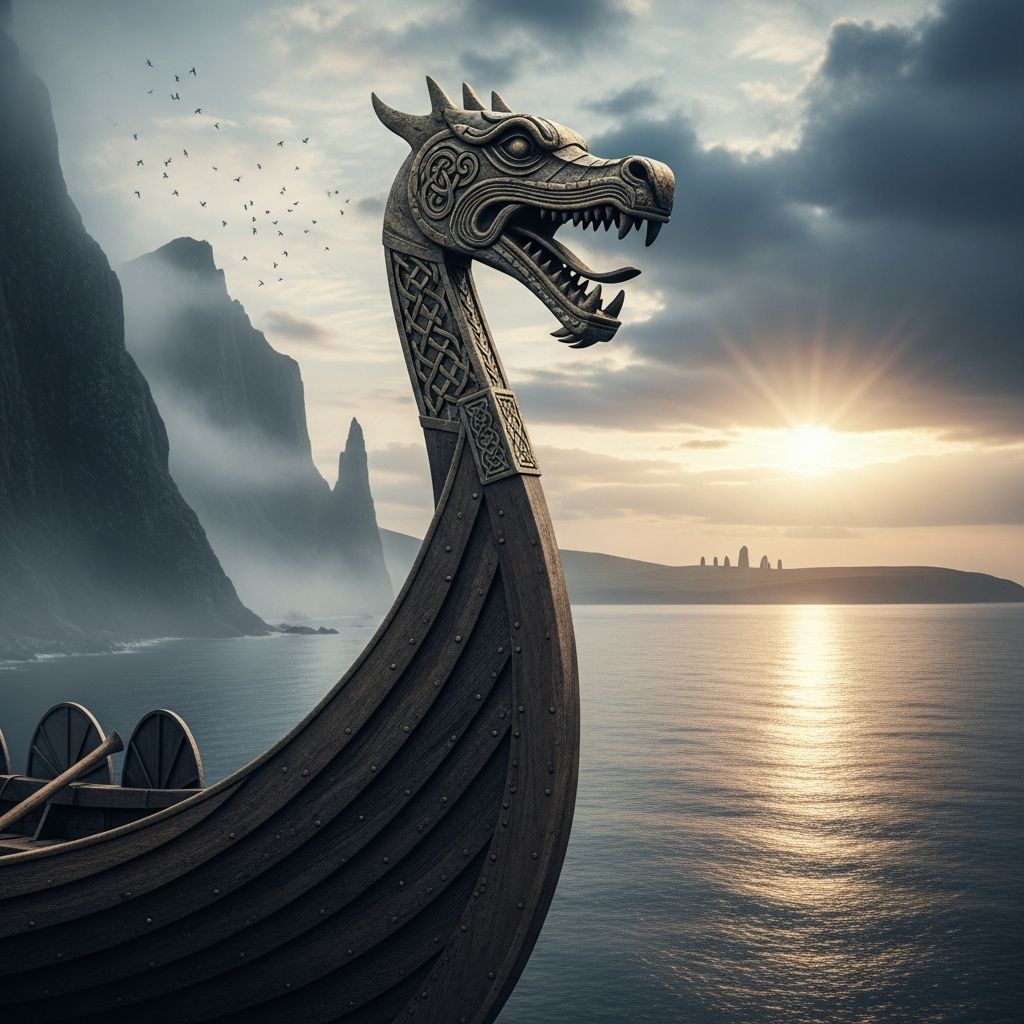
Viking and Old Norse names carry a sense of adventure, strength, and mystery that still fascinates people today. Whether you are naming a baby, building a fantasy world, or reconnecting with Scandinavian roots, Viking names offer a rich blend of history, myth, and meaning.
What Makes a Name \”Viking\”?
When people talk about \”Viking names,\” they usually mean the personal names used in Scandinavia during the Viking Age, roughly from the late 8th century to the 11th century. These names often come from Old Norse, the language spoken across much of Scandinavia at the time.
Traditional Viking names tend to emphasize courage, honor, the natural world, and connections to gods or legendary heroes. Many are built from meaningful word elements that can be combined in different ways, which is why so many Norse names feel related yet distinct.
Key Themes in Viking Names
Most Viking names fall into several repeating themes. Understanding these themes makes it easier to pick a name that matches the qualities you want to honor.
- War and bravery: Names that reference battle, victory, warriors, or weapons.
- Myth and the gods: Names linked to deities like Thor, Odin, or Freyja, or to heroic saga characters.
- Nature and animals: Names drawn from wolves, bears, eagles, storms, and other powerful images.
- Virtues and character: Names that highlight qualities such as wisdom, protection, beauty, or peace.
- Family and legacy: Names that suggest ancestry, inheritance, or being a descendant of a great person.
Popular Viking Name Elements and Their Meanings
Many Old Norse names are compound words: two elements combined to form a new meaning. Learning some of the most common building blocks can help you understand or even invent your own historically inspired names.
| Element | Basic Meaning | Example Name | Illustrative Sense |
|---|---|---|---|
bj\u00f6rn / bj\u014drn | bear | Bj\u00f6rn | “bear”; symbolizes strength and toughness |
ulf / ulfr | wolf | Ulf | “wolf”; hints at cunning and ferocity |
thor / \u00fe\u00f3rr | Thor, thunder | Thorstein | “Thor’s stone”; evokes divine protection |
leif / leifr | heir, descendant | Leif | “descendant”; ties to lineage and legacy |
astr / \u00e6s(t)r | god, beauty, divine | Astrid | “divine strength” or “beautiful, loved by the gods” |
gunn / gunnr | battle | Gunnar | “battle warrior”; bravery and combat skill |
sigr / sig | victory | Sigrid | “beautiful victory”; combining grace and triumph |
These elements appear again and again with different partners, allowing for names that are both meaningful and flexible. For example, a “victory” element might be paired with “guardian” in one name and “beauty” in another, changing the nuance while keeping a shared core idea.
Viking Names for Boys
Names historically used for men in Viking societies often stress courage, leadership, and toughness. Some have become widely known through sagas, legends, and modern media, while others remain more understated and traditional.
- Erik: Usually interpreted as “eternal ruler” or “ever-powerful leader,” associated with kings and explorers.
- Leif: A name linked to explorers and navigators, often understood as “descendant” or “heir.”
- Ragnar: A legendary-sounding name commonly associated with a wise and battle-tested warrior.
- Bj\u00f6rn: Literally “bear,” this name suggests raw physical power and resilience.
- Gunnar: A name tied to the concept of a bold fighter or soldier in battle.
- Harald: Connected with leadership in war and command of armies.
- Ulf: “Wolf,” a short, striking name hinting at stealth and loyalty within a pack.
These names work well if you want a strong, familiar option with clear Viking roots that is still pronounceable in many modern languages.
Viking Names for Girls
Names used for women in Norse culture often weave together ideas of beauty, wisdom, and power. Rather than being purely soft or gentle, many women’s names carry decisive, heroic undertones.
- Astrid: Typically associated with “divine beauty” and inner strength.
- Ingrid: A name that blends ideas of beauty and divine favor, used in royal and noble families.
- Freyja: Named after the goddess of love, magic, and battle, often read as “lady” or “noble woman.”
- Sigrid: Combines “victory” with “beloved” or “beautiful,” suggesting both success and grace.
- Hilda: Linked to battle and combat, giving the image of a determined shieldmaiden.
- Saga: Evokes storytelling, memory, and foresight, perfect for a character with wisdom or prophetic insight.
These names balance a strong sound with rich symbolism, making them appealing for both real-life use and fictional heroines.
Gender-Neutral and Modern Norse-Inspired Choices
While historic Viking naming followed traditional gender lines, many Old Norse roots adapt easily to contemporary, gender-neutral use. Short, nature-based or virtue-based names tend to feel especially flexible.
- Storm: Drawn from wild northern weather, this name feels dramatic and powerful for any gender.
- Skadi: A name from a winter and hunting goddess that also works as a bold, modern given name.
- Fjord: Inspired by the long sea inlets of Scandinavian coastlines, ideal for nature lovers.
- Rune: Refers to the old writing symbols and hidden knowledge, perfect for a mystical or intellectual character.
- Bergen: Linked to mountains and rugged landscapes, making it strong, place-based, and unisex.
Choosing a gender-neutral Norse-inspired name can be an elegant way to capture Viking flavor while keeping things modern and inclusive.
Viking Names and Norse Mythology
Many Viking names either reference the gods directly or carry echoes of mythological stories. Using such a name can signal courage, spiritual strength, or a connection to a favorite legend.
- Thor: Taken from the thunder god known for his hammer, storms, and protection of humanity.
- Odin: Connected to the chief god associated with wisdom, poetry, war, and death.
- Tyr: Linked to a god of law, honor, and single-minded bravery.
- Loki: A complex name associated with trickery, shapeshifting, and chaos.
- Freyja: As noted earlier, a powerful goddess of love and war whose name suggests both charm and determination.
Myth-based names can feel intense, so it is worth thinking about whether you want a direct god name, or a more subtle reference through elements like “Thor’s stone” or “protected by the gods.”
Historical and Legendary Viking Figures
Some Viking names are famous because of real or semi-legendary people. Borrowing one of these for a child or character can instantly add narrative depth, but also carries the weight of the stories attached to it.
- Leif Erikson: An explorer often credited with reaching parts of North America long before later European voyages.
- Erik the Red: Known for his fiery temperament and for establishing a Norse settlement in Greenland.
- Ragnar: A heroic name tied to legendary saga material and popular culture.
- Lagertha: Sometimes portrayed as a formidable shieldmaiden and leader in her own right.
When you choose a legendary name, it can help to read a brief, age-appropriate version of the story so you understand the reputation that comes with it.
How to Choose a Viking Name
Picking the right Viking name means balancing meaning, sound, cultural respect, and practicality. A name that looks amazing on paper might be difficult for friends and relatives to pronounce, while a simpler name could fit smoothly into everyday life.
Questions to Ask Yourself
- Do you want the name to honor a specific heritage, or simply evoke a general Norse atmosphere?
- Is the meaning more important to you than exact historical usage?
- Will the name be easy to say and spell where you live?
- Are you comfortable explaining the name’s origin and story when people ask?
Practical Tips
- Try saying the name aloud with your last name to check rhythm and flow.
- Test a few possible nicknames and shortened forms to see how they feel.
- Consider a more familiar first name paired with a bolder Viking middle name if you are unsure.
- Look for names that have clear spellings in your primary language to minimize confusion.
Pronunciation and Spelling Considerations
Many Old Norse names include letters or sounds that do not appear in modern English, such as \u00fe (thorn) or \u00f0 (eth). In practice, most modern versions either use simpler spellings or adapt the name for local pronunciation.
If you want an authentic feel but straightforward usage, you can often drop accent marks and special letters while keeping the core of the name intact. For example, “Bj\u00f6rn” can appear as “Bjorn,” and “Sigr\u00ed\u00f0r” can become “Sigrid.”
Using Viking Names in Stories and Games
Viking-flavored names are especially popular in fantasy novels, role-playing games, and online worlds. They can quickly signal that a culture in your setting is sea-faring, warrior-like, or tied to ancient traditions.
- Mix meaningful roots, such as combining a battle element with an animal reference.
- Vary length: pair short names like “Ulf” with longer, multi-syllable options like “Sigrunn” to create a natural feel.
- Reserve overt god names for major figures, while using subtler variations for everyday characters.
- Create place names that share similar sounds or elements to tie your world together.
Keeping a small glossary of your characters’ names and their intended meanings can help maintain consistency across a series or campaign.
Sample Viking-Inspired Name Ideas
The examples below are grouped by vibe rather than by strict historical category. They are meant as inspiration you can adapt, combine, or modify to suit your needs.
Strong and Stormy
- Thorvald – evokes Thor and a powerful ruler.
- Haldor – suggests “Thor’s rock,” steady and reliable.
- Steinar – linked with stone and resilience.
- Storm – direct and dramatic, like the northern sky.
Wild and Animal-Themed
- Bj\u00f6rn – bear-like strength.
- Ulf – the cunning and loyalty of a wolf.
- Arvid – conjures forests and birds of prey.
- Rollo – associated with wolves and renowned leaders.
Graceful and Mythic
- Astrid – beautiful and strong at the same time.
- Sigrid – a name that blends victory and beauty.
- Ingrid – a timeless, noble-sounding choice.
- Saga – ideal for a storyteller, seer, or scholar.
Frequently Asked Questions About Viking Names
Are Viking names still used today?
Yes. Many names that originated in the Viking Age are still common in modern Scandinavian countries and have spread worldwide. Names like Erik, Ingrid, Leif, and Astrid feel classic yet remain closely tied to Norse heritage.
Do Viking names have to be historically accurate?
Not necessarily. If you are naming a baby, you may prefer a name that is inspired by Old Norse but easy to use in daily life. Writers and game designers sometimes bend historical accuracy to fit their settings, as long as the names are respectful and coherent.
Can I use a Viking name without Scandinavian ancestry?
Many people choose Viking or Norse-inspired names simply because they appreciate the sound, stories, and symbolism. Being thoughtful about the cultural background and avoiding stereotypes helps show respect, regardless of ancestry.
Are there soft-sounding Viking names?
Yes. While many people associate Viking names with harsh consonants and warrior imagery, there are also smoother, gentler options. Names like Liv, Alva, or Sigrid can feel elegant while still retaining their Norse roots.
How do I find the meaning of a specific Viking name?
The most reliable approach is to consult reputable name dictionaries, academic resources on Old Norse, or specialized databases focused on Scandinavian onomastics. Because some names have more than one possible interpretation, comparing several sources is often helpful.
Viking names open a doorway into a world of sagas, sea voyages, and snow-covered landscapes. By understanding their themes, structures, and stories, you can choose a name that not only sounds powerful but also carries a deeper meaning that fits the person or character who will bear it.