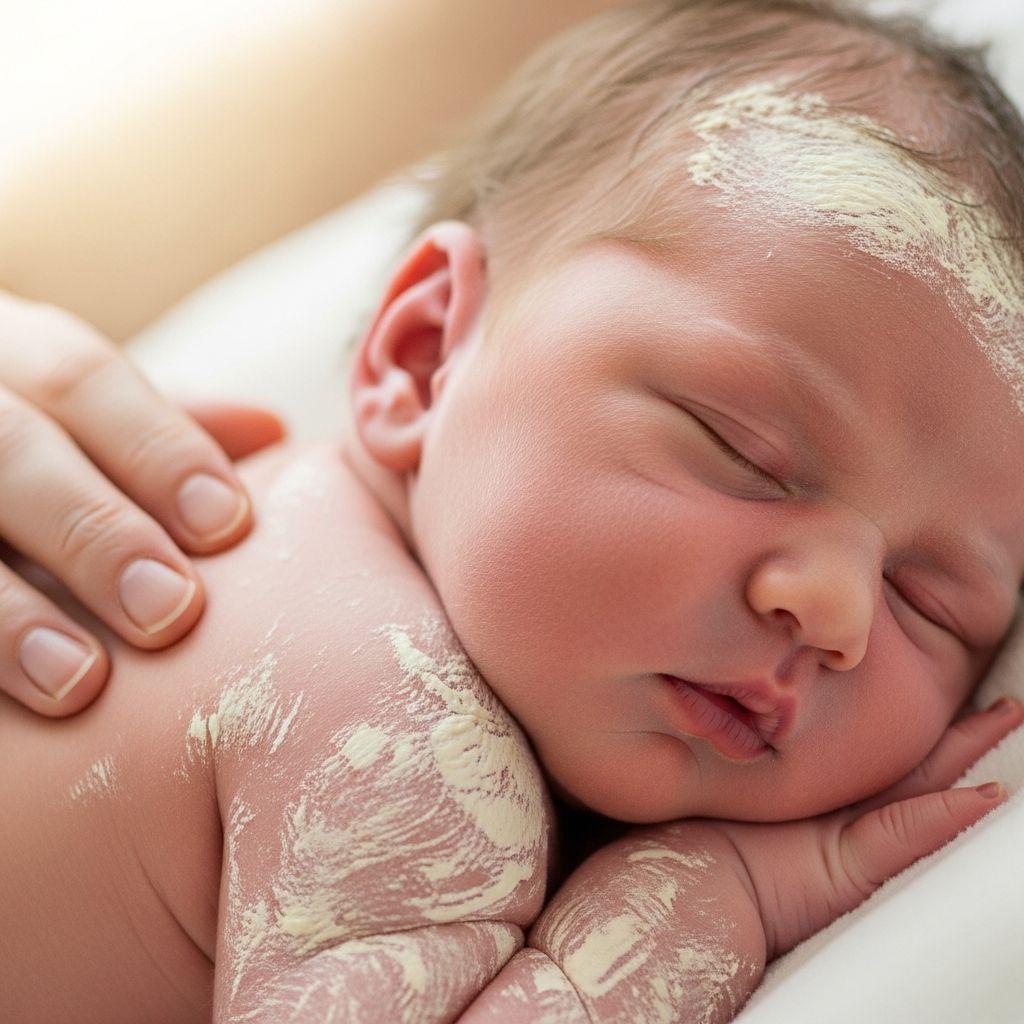
Many newborns arrive coated in a thick, white, creamy layer that can surprise first-time parents. This substance is called vernix caseosa, and it is far more than just delivery-room “gunk.” It is a biologically active coating that develops before birth and continues to benefit your baby in the hours and days afterward.
Understanding vernix can help you feel more confident in the delivery room, support your baby’s skin health, and make informed decisions about that first bath.
What Exactly Is Vernix Caseosa?
Vernix caseosa is a naturally occurring, white, creamy film that covers a baby’s skin during the last part of pregnancy. The term comes from Latin: “vernix” meaning varnish, and “caseosa” meaning cheesy, a reference to its thick, cheese-like appearance.
This coating is made from:
- Water held within soft, flattened skin cells.
- Natural fats and oils (lipids) produced by your baby’s sebaceous glands.
- Proteins, including immune-related molecules and enzymes.
Rather than being waste, vernix functions like a personalized, living moisturizer and shield for your baby’s skin.
When Does Vernix Form and Who Has More of It?
Vernix begins to appear on the fetal skin around the second half of pregnancy. As the third trimester progresses, it thickens and spreads, particularly over areas like the back, shoulders, and scalp.
How much vernix your baby has at birth can vary:
- Preterm babies often have a thick, generous layer covering much of the body.
- Full-term babies usually have a moderate amount, with some patches where it has already been absorbed or shed.
- Post-term babies (born over 41–42 weeks) may have very little visible vernix, as it can dissolve into the amniotic fluid closer to or after term.
These differences are normal and reflect how long vernix has had to build up or break down in the womb.
How Vernix Protects Skin Before Birth
Inside the uterus, your baby spends months surrounded by fluid. Without protection, delicate developing skin could become swollen, irritated, or damaged. Vernix acts as a barrier and conditioning layer during this time.
Key prenatal roles of vernix include:
- Preventing “waterlogging” of the skin by forming a hydrophobic film that limits over-absorption of amniotic fluid.
- Supporting skin maturation by creating a moist environment that encourages healthy development of the outer skin layer.
- Reducing fluid and heat loss through the skin, which helps maintain stability in the womb.
Think of vernix as a combination raincoat and skin conditioner, helping your baby’s skin develop in a protected, cushioned environment.
Helping Baby Through the Birth Canal
Vaginal birth requires a baby to move through a narrow, muscular passage. Vernix assists during this transition by acting like a natural lubricant and shield.
During birth, vernix can:
- Reduce friction between your baby’s skin and the birth canal.
- Help protect skin from minor abrasions or irritations.
- Serve as an extra physical barrier between your baby and bacteria in the vaginal environment.
Even in cesarean births, vernix remains valuable, as it continues its protective and moisturizing roles on the skin immediately after delivery.
Post-Birth Benefits: More Than Just Moisturizer
Parents often assume vernix is only useful before birth, but research suggests it continues to play a role in those first hours and days. If left on the skin, vernix gradually absorbs, acting like a slow-release protective treatment.
Benefits after birth may include:
- Hydrating the skin: Vernix is rich in water and lipids, helping prevent excessive dryness and flaking as your baby adjusts to air.
- Supporting temperature balance: By limiting water loss and acting as a thin insulating coating, vernix may help newborns maintain body temperature, especially in the first hours after birth.
- Protecting the skin barrier: Vernix helps preserve the integrity of the outer skin layer while it finishes maturing in the outside world.
Immune Support and Microbial Defense
Newborns are building their immune defenses from the moment they are born. Vernix contributes to this process not only as a physical shield but also through its biochemical makeup.
Components of vernix are thought to:
- Contain proteins and small molecules that can discourage the growth of harmful bacteria.
- Support the establishment of a healthy balance of skin microbes as your baby adapts outside the womb.
- Work alongside the developing immune system, providing an extra layer of early defense on the skin.
Combined with practices like skin-to-skin contact and, when chosen, breastfeeding, vernix contributes to a multi-layered protection plan for your newborn.
Vernix and Wound Healing
The same properties that protect and hydrate the skin may also support skin repair. Vernix contains water, lipids, and nutrients that appear to encourage healthy skin metabolism.
In clinical and laboratory settings, vernix-like substances have been studied for their ability to:
- Promote faster recovery of the outer skin layer after it is disrupted.
- Improve the skin’s ability to hold moisture, which can be important in healing.
- Inspire the development of topical products for fragile or damaged skin.
While routine use of vernix on adults is not part of everyday care, this research underlines that what appears on newborn skin is a sophisticated biological material, not simple residue.
Typical Appearance: What Parents Usually See
Not all vernix looks the same. Some babies will be almost entirely white, while others have only small patches in skin folds.
You may notice:
- Color: Milky white, pale yellow, or off-white.
- Texture: Thick and paste-like or thin and lotion-like.
- Distribution: Concentrated in the armpits, groin, neck, behind the ears, and between the fingers and toes.
As hours pass, vernix begins to soak into the skin, and any excess can be gently wiped away during routine care.
Newborn Vernix vs. Post-Term Peeling
It is easy to confuse vernix with post-birth skin changes like peeling and dryness. However, they represent different processes.
| Feature | Vernix Caseosa | Post-Term or Newborn Peeling |
|---|---|---|
| Appearance | White or creamy, thick or lotion-like | Thin, dry flakes or sheets of skin |
| Location | Often in folds, back, shoulders, scalp | May be widespread on hands, feet, trunk |
| Timing | Visible at birth | Develops over days as skin adjusts to air |
| Feel | Soft, creamy, slightly greasy | Dry, papery, sometimes rough |
Both vernix and mild peeling are usually normal; your baby’s care team can help you distinguish between typical changes and issues needing attention.
Should Vernix Be Washed Off Immediately?
Standard practice in many places is shifting away from scrubbing away vernix right after birth. Instead, many health organizations encourage delaying the first bath to let vernix be absorbed.
Delaying a full bath for 12–24 hours or longer can:
- Allow more time for vernix to moisturize and protect your baby’s skin.
- Reduce drops in body temperature that can happen with early bathing.
- Support uninterrupted skin-to-skin contact and early feeding.
You can always ask your birth team about their usual routine and request that vernix be gently patted in instead of removed, unless there is a medical reason for earlier cleaning.
Practical Tips for Parents After Birth
Once your baby is in your arms, it helps to know what to do—and not do—about vernix. Gentle handling and minimal interference go a long way.
Simple tips include:
- Use soft cloths or your hands to spread vernix into the skin during skin-to-skin time.
- Avoid vigorous rubbing, which can irritate delicate skin.
- Skip soaps, fragrances, and adult skincare products on newborn skin unless specifically advised by a healthcare provider.
- When the first bath does happen, use lukewarm water and a mild, baby-safe cleanser only if necessary.
In most cases, vernix will disappear naturally over the first couple of days without any special effort.
Situations Where Vernix May Be Less Visible
Some babies are born with very little or no obvious vernix. This does not mean anything is wrong; it often reflects timing and individual variation.
Less visible vernix is more common when:
- Your baby is born after the estimated due date.
- A lot of vernix has already mixed into the amniotic fluid before labor.
- Individual genetic or developmental factors influence how much is produced.
Even if you cannot see a thick coating, remnants of vernix may still be present and performing subtle functions at the skin surface.
Medical and Research Interest in Vernix
Because vernix has such robust protective and moisturizing qualities, it has drawn attention from clinicians and researchers. It offers a natural example of how to protect very immature skin.
Areas of investigation include:
- Using vernix-like substances to support skin healing in preterm infants.
- Developing creams inspired by vernix for wound care or chronic skin conditions.
- Exploring its immune and antimicrobial properties for vulnerable patients.
While most of this work occurs behind the scenes in hospitals and laboratories, it further reinforces the idea that vernix is bioactive, not simply cosmetic.
Myths and Misconceptions About Vernix
Because vernix looks unusual, it is often misunderstood. Clearing up common myths can help you feel more comfortable with how your baby appears at birth.
- “It is just dirt or waste.” Vernix is produced by your baby’s own skin and glands with protective functions, not as a form of contamination.
- “It must be washed off right away.” In most healthy babies, there is no need for rapid removal; many providers now favor delayed bathing.
- “A lot of vernix means something is wrong.” A thick coating is especially common in preterm babies and can reflect developmental stage, not disease.
If you feel uncertain or uncomfortable, talking with your healthcare team can provide reassurance and specific guidance.
How Vernix Fits Into Overall Newborn Care
Vernix is only one piece of the newborn-care puzzle, but it connects closely with other early practices. When planning your birth and postpartum period, you can think about vernix alongside topics like cord clamping and first feeds.
As you prepare, consider adding these items to your birth or newborn care plan:
- Your preference for delaying your baby’s first full bath, when medically appropriate.
- Comfort with leaving vernix on the skin to absorb naturally.
- Questions you want to ask about skin-to-skin contact, temperature checks, and early feeding.
Sharing these preferences with your care team ahead of time can help align expectations and reduce stress immediately after birth.
Frequently Asked Questions About Vernix Caseosa
Is it safe to leave vernix on my baby’s skin?
For most healthy newborns, it is not only safe but beneficial to leave vernix on the skin to absorb naturally. If there is a medical reason to wash earlier—such as concerns about certain infections—your baby’s team will explain the plan.
How long does vernix stay on the skin?
Visible vernix typically soaks in or is gently wiped away within the first day or two after birth. Small traces may linger in skin folds a bit longer without causing harm.
Can vernix cause rashes or irritation?
Vernix itself is not known to cause rashes and is generally well tolerated by newborn skin. Irritation is more likely from harsh soaps, rough towels, or environmental factors than from vernix.
What if I find vernix in skin folds days later?
If you notice small patches of vernix in areas like the neck or groin after a few days, you can gently clean with warm water and a soft cloth. Avoid scrubbing; soft wiping is usually enough.
Does every baby have vernix?
Almost all babies have some vernix during development, but the amount visible at birth varies. Some babies, especially those born after their due dates, may appear to have little or none.
Key Takeaways for Expectant and New Parents
Vernix caseosa is one of nature’s ways of preparing your baby for life outside the womb. It moisturizes, shields, and supports the skin and may provide added assistance for temperature control and immune defense.
- Vernix is a normal, healthy coating—not something dirty or harmful.
- Delaying the first full bath often allows vernix to do its job more completely.
- Gentle handling, minimal products, and skin-to-skin contact complement vernix’s natural benefits.
Understanding this unique substance can help you embrace how your baby looks and feels at birth, turning what might seem surprising into something reassuring and remarkable.