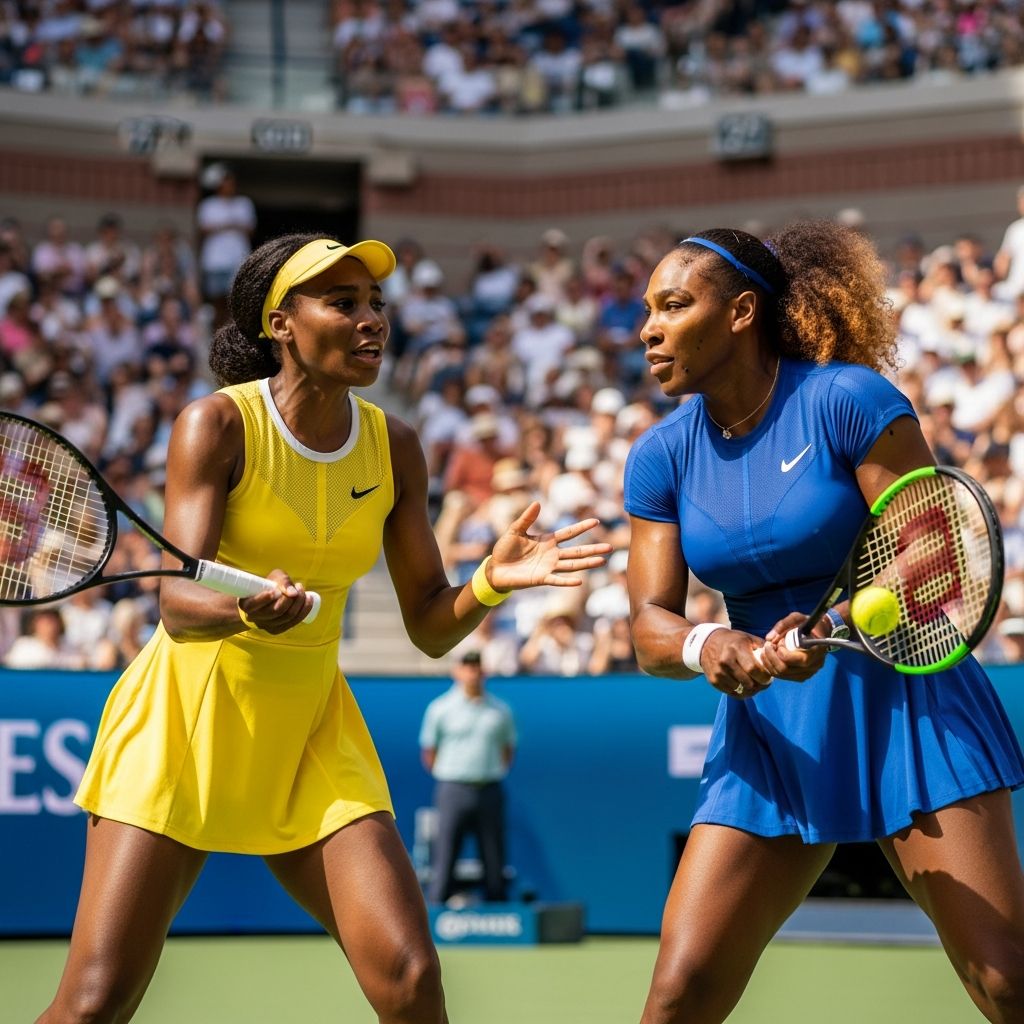
The Foundation of a Unique Partnership in Professional Tennis
When two siblings reach the pinnacle of professional athletics simultaneously, questions inevitably arise about competition, rivalry, and the nature of their relationship. However, the story of Venus and Serena Williams diverges significantly from the typical narrative of familial competition in sports. Rather than allowing the pressures of elite athletics to fracture their bond, the Williams sisters have consistently demonstrated that their connection as siblings supersedes the competitive dynamics of their sport. This fundamental difference in approach has not only defined their individual careers but has also reshaped how the world perceives female athleticism and the role of personal relationships within high-stakes competitive environments.
The journey of these two athletes began in Compton, California, where they were introduced to tennis by their parents as children. What started as a shared activity evolved into parallel careers that would eventually place them among the greatest players to ever compete in professional tennis. Yet unlike many sibling athletes throughout history, Venus and Serena have consistently prioritized their relationship, creating a model that challenges conventional wisdom about ambition, rivalry, and family dynamics in sports.
Redefining Female Athlete Narratives Through Personal Connection
Professional sports have long been dominated by narratives centered on individual achievement and competitive triumph. The media landscape has traditionally emphasized rivalry, personal records, and championship victories as the primary measures of athletic success. When female athletes compete at the highest levels, these narratives often take on additional layers of complexity, with public discourse frequently focusing on comparisons, rankings, and hierarchical positioning. The Williams sisters disrupted this paradigm by consistently framing their accomplishments not as individual triumphs separate from their sisterhood, but as achievements that were meaningfully shaped by their familial bond.
This reframing has profound implications for how contemporary female athletes approach their careers. By demonstrating that excellence and sisterhood are not mutually exclusive but rather mutually reinforcing, Venus and Serena provided a template for future generations of female competitors. Their approach suggests that personal relationships can enhance rather than detract from athletic performance, and that the psychological support derived from family connections can contribute meaningfully to sustained success at the highest competitive levels.
The Power of Shared Experience
One of the most significant aspects of the Williams sisters’ partnership is their shared understanding of the unique pressures and experiences associated with elite tennis competition. Having grown up together and trained in similar environments, both Venus and Serena possess an intimate knowledge of the challenges their sibling faces. This shared experience creates a form of support that extends beyond what external coaches, trainers, or even friends might offer. When competing at professional levels, the emotional and psychological dimensions of athletic performance become increasingly important, and having someone who understands these dimensions from personal experience proves invaluable.
Challenging Traditional Notions of Sibling Rivalry
The cultural expectation surrounding sibling athletes typically assumes that competition will inevitably create tension or estrangement. This assumption stems from deeply ingrained beliefs about the zero-sum nature of athletic achievement, wherein one person’s success is implicitly understood as another person’s loss. The Williams sisters explicitly rejected this framework, demonstrating through their actions and public statements that their individual achievements did not diminish the other’s accomplishments or the strength of their bond.
This deliberate choice to prioritize their relationship over competitive dynamics required both Venus and Serena to engage in ongoing emotional and psychological work. They had to consciously resist the pressures and narratives that suggested their success should create distance or resentment. Their ability to maintain a strong connection while competing at the highest levels of professional tennis required intentionality, communication, and a shared commitment to values that transcended individual competitive outcomes.
Strategic Communication and Emotional Intelligence
Maintaining a close sibling relationship while engaging in direct professional competition demands sophisticated emotional intelligence and communication skills. The Williams sisters have demonstrated these capacities through their public interactions, interviews, and the way they have managed situations where they competed directly against one another. Rather than avoiding these encounters or allowing them to create lasting tension, Venus and Serena have approached head-to-head competitions with maturity and grace, treating these matches as professional responsibilities while maintaining their personal connection outside competitive contexts.
The Evolution of Their Public Presence and Advocacy
Beyond their individual athletic accomplishments, the Williams sisters have leveraged their platform and influence to advocate for broader issues affecting women in sports and society. This collective advocacy work has reinforced their bond while simultaneously expanding the impact of their message. By working together on initiatives related to equal pay, racial justice, and women’s empowerment, they have demonstrated that their partnership extends beyond personal relationships into the realm of social influence and cultural change.
Their collaborative efforts in business, philanthropy, and public advocacy have created a complementary dynamic where their individual strengths and interests combine to create something greater than the sum of their parts. Venus’s entrepreneurial ventures and Serena’s business acumen, combined with their shared commitment to social justice, have enabled them to build a legacy that transcends professional tennis and speaks to broader questions about power, representation, and equity in sports and society.
Business Partnerships and Shared Ventures
The sisters have engaged in various business endeavors that reflect their shared values and interests. These collaborations extend their influence beyond the tennis court and into industries including fashion, entertainment, and investment. By pursuing these ventures together or supporting one another’s individual projects, they have created additional touchpoints for their relationship beyond athletic competition, further strengthening the non-competitive dimensions of their partnership.
Impact on Contemporary Female Athletes and Sports Culture
The Williams sisters’ approach to sisterhood and professional competition has had measurable impacts on how female athletes navigate similar circumstances. Their example has provided permission and inspiration for other sibling athletes to prioritize relationships and family connections rather than subscribing to narratives that suggest competition necessitates estrangement. Additionally, their prominence has allowed them to influence broader cultural conversations about femininity, ambition, and the possibility of pursuing both personal relationships and professional excellence simultaneously.
The cultural shift initiated by Venus and Serena’s example extends to how media outlets, sponsors, and the sporting establishment discuss and frame female athletic competition. Rather than predominantly emphasizing rivalry and comparison, contemporary discussions increasingly acknowledge and celebrate the personal connections, mentorship, and support systems that sustain elite female athletes throughout their careers. This shift represents a meaningful change in sports culture and demonstrates the influence that prominent athletes can exert in shaping narratives and expectations within their industries.
Lessons in Emotional Maturity and Relationship Management
The Williams sisters’ experience offers valuable lessons about managing relationships within high-pressure competitive environments. Their success in maintaining a strong bond suggests several principles that extend beyond professional athletics:
- Clear communication about expectations, boundaries, and emotional needs facilitates understanding and connection even during competitive circumstances.
- Distinguishing between professional interactions and personal relationships allows individuals to compartmentalize competitive dynamics without allowing them to contaminate intimate bonds.
- Active commitment to prioritizing relationships requires ongoing effort and intentionality, particularly when external pressures encourage distance or competition.
- Shared values and mutual respect provide foundational elements upon which strong familial relationships can weather competitive stresses.
- Public acknowledgment of relationships and their importance helps reinforce internal commitments and creates external accountability for maintaining connections.
The Significance of Witnessing Authentic Sisterhood
In contemporary culture, representations of female competition often emphasize conflict, jealousy, and interpersonal tension. Media depictions frequently portray female achievement and female friendship as inherently contradictory, suggesting that women cannot simultaneously pursue ambition and maintain meaningful personal relationships. The Williams sisters’ lived experience contradicts these narratives decisively. Their authentic sisterhood, visible throughout their careers and publicly discussed in interviews and collaborative projects, provides a counter-narrative that demonstrates the possibility of female solidarity alongside professional competition.
This counter-narrative holds particular significance for younger generations of female athletes and women entering competitive professional environments. By witnessing the Williams sisters’ genuine connection and mutual support, young women receive messages that contradict pervasive cultural scripts suggesting that female success requires sacrificing personal relationships or that female friendship cannot survive professional competition. This alternative representation expands the possible ways that women can imagine their own relationships with other women, particularly in contexts involving achievement and ambition.
Frequently Asked Questions
Q: Have Venus and Serena Williams competed directly against each other in professional matches?
A: Yes, the sisters have competed against each other multiple times throughout their professional careers in various tennis tournaments. Despite these direct competitions, they have maintained their personal connection and have spoken publicly about how they navigate these encounters professionally while preserving their sibling relationship.
Q: How do the Williams sisters balance competition with their personal relationship?
A: The sisters have emphasized the importance of clear communication, maintaining distinct boundaries between professional and personal contexts, and consciously prioritizing their relationship outside of competitive settings. Both have discussed the deliberate effort required to prevent professional competition from affecting their personal bond.
Q: What impact have the Williams sisters had on discussions about female athleticism?
A: The Williams sisters have significantly influenced cultural conversations about female athletes by demonstrating that women can simultaneously pursue individual excellence, maintain strong personal relationships, and advocate for social change. Their presence in professional sports has helped reshape narratives surrounding female competition and achievement.
Q: Do the Williams sisters work together on projects outside of professional tennis?
A: Yes, Venus and Serena have collaborated on various business, philanthropic, and advocacy initiatives. Their combined influence extends beyond professional tennis into entrepreneurship, social justice advocacy, and cultural commentary.
Q: What makes the Williams sisters’ relationship unique compared to other sibling athletes?
A: The Williams sisters distinguish themselves through their explicit and consistent prioritization of their personal relationship over competitive dynamics, their public advocacy for one another, their collaborative business ventures, and their willingness to speak openly about the emotional and psychological dimensions of maintaining sibiling connections within professional sports contexts.
References
- Nike Salutes the Transcendent Careers and Unbreakable Bond of Venus and Serena Williams — Muse by Clios. 2020. https://musebyclios.com/advertising/nike-salutes-the-transcendent-careers-and-unbreakable-bond-of-venus-and-serena-williams/
- Nike TV Spot, ‘You Can’t Stop Sisters’ Featuring Venus Williams, Serena Williams — iSpot.tv. September 01, 2020. https://www.ispot.tv/ad/nms3/nike-you-cant-stop-sisters-featuring-venus-williams-serena-williams