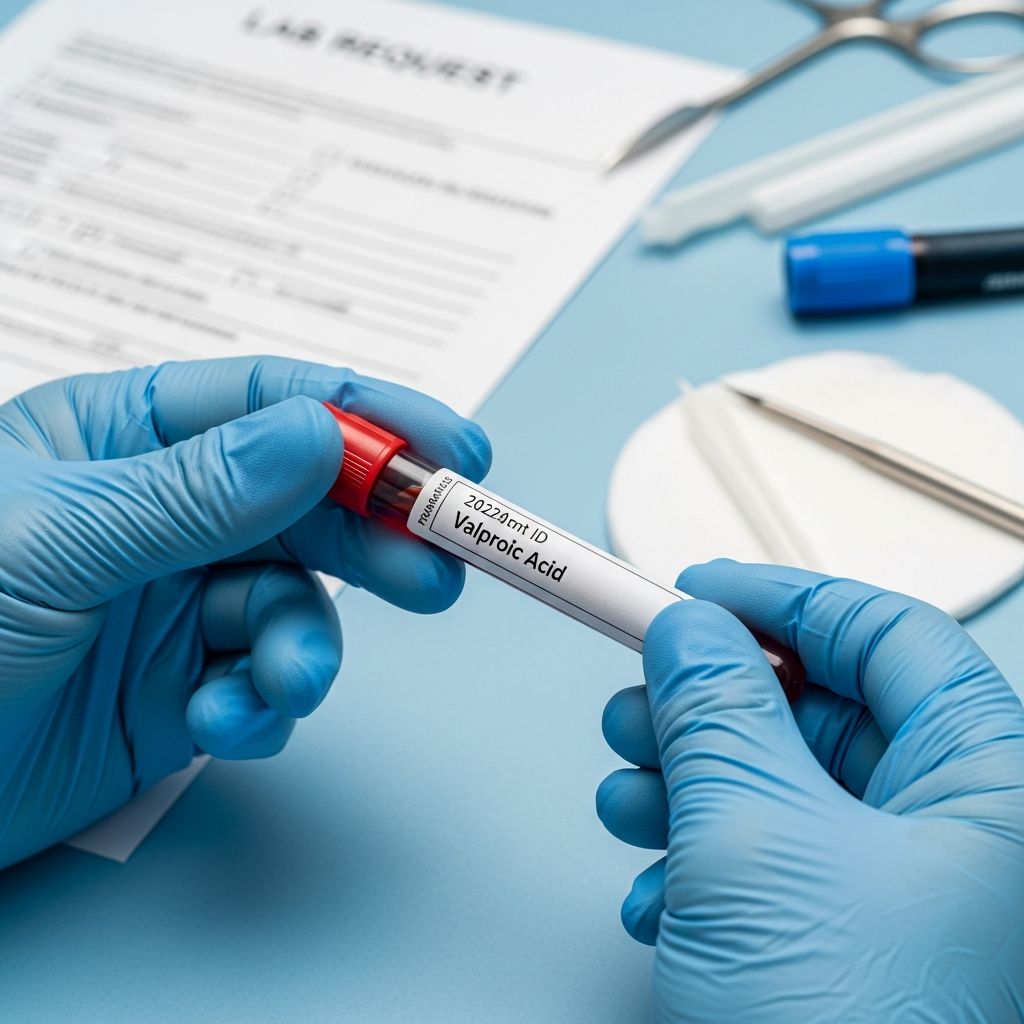
Valproic acid blood tests measure medication levels in a child’s bloodstream to ensure safe and effective treatment for conditions like epilepsy, bipolar disorder, and migraines.
Understanding Valproic Acid Therapy in Children
Valproic acid, also known as valproate, is a versatile medication primarily used as an anticonvulsant to manage various seizure types in children, including complex partial seizures and absence seizures. Pediatricians often prescribe it for epilepsy because it stabilizes overactive brain activity by boosting inhibitory neurotransmitters like GABA. Beyond seizures, it’s approved for preventing migraines and treating manic episodes in bipolar disorder, though use in youth requires careful oversight.
In pediatric care, starting doses are low and gradually increased to minimize side effects while achieving therapeutic effects. Regular monitoring via blood tests is crucial since children’s metabolism varies, affecting drug levels and efficacy. This test confirms if concentrations fall within the therapeutic range—typically 50-125 μg/mL for total valproic acid—to prevent seizures or mood swings without toxicity.
Primary Reasons for Testing in Pediatric Patients
- Therapeutic Monitoring: Ensures drug levels stay optimal for seizure control, migraine prevention, or mania management, adjusting doses as kids grow.
- Safety Checks: Detects excessively high levels that could cause liver damage, a risk highest in the first six months of therapy, especially in young children under 2.
- Dose Adjustments: Accounts for growth spurts, dietary changes, or interacting medications that alter absorption.
- Compliance Verification: Confirms children are taking prescribed doses consistently.
- Side Effect Investigation: Explains symptoms like drowsiness or nausea by correlating with blood levels.
How Valproic Acid Works in Young Brains
Valproic acid calms excessive electrical activity in the brain by enhancing GABA, an inhibitory neurotransmitter, and blocking voltage-gated sodium channels. It also reduces neural inflammation and promotes neuroprotective effects, which is vital for developing brains prone to epilepsy damage. In bipolar treatment, it stabilizes mood via inositol depletion and gene expression changes.
For children, these mechanisms help control seizures that disrupt learning and development. Blood tests are timed at trough (just before next dose) or peak levels to match steady-state concentrations, ensuring the drug’s AUC and Cmax align with steady-state expectations across oral forms.
Preparation Steps for Your Child’s Blood Draw
Preparation eases anxiety for kids facing needles. Schedule tests 10-12 hours post-dose for accurate trough levels, often before morning medication. Fast if instructed, but most pediatric labs allow light snacks. Hydrate well to plump veins, and dress in loose sleeves for arm access.
Discuss timing with your doctor—delayed-release forms peak at 4 hours, so align draws accordingly. Bring distractions like tablets or toys; explain simply: “A quick pinch checks if medicine works right.” Avoid lotions on arms.
The Blood Test Procedure Explained
The process takes 5-10 minutes in a pediatric lab or clinic. A phlebotomist cleans the arm, applies a tourniquet, and inserts a small needle into a vein, usually inner elbow. Blood fills 1-2 tubes (2-5 mL total), then pressure stops bleeding with a bandage.
For infants or wiggly toddlers, heel or finger sticks may substitute, though venous draws are standard for precision. Results process in 1-3 days, measuring total and free valproic acid (free: 6-22 μg/mL). No radiation or imaging involved—just a routine check.
Interpreting Your Child’s Test Results
| Level Type | Therapeutic Range | Implications |
|---|---|---|
| Total Valproic Acid | 50-125 μg/mL (350-700 μmol/L) | Optimal for seizure/mood control |
| Free Valproic Acid | 6-22 μg/mL (35-70 μmol/L) | Active unbound portion; monitor in liver issues |
| Below Range | <50 μg/mL | May need dose increase; risk breakthrough seizures |
| Above Range | >125 μg/mL | Toxicity risk: nausea, tremor, liver strain |
Doctors consider age, weight, and co-meds when interpreting. Low levels prompt dose hikes; high ones require reductions or holds. Retest in 1-2 weeks post-adjustment.
Potential Risks and Side Effects to Watch
While safe, valproic acid carries risks, especially hepatotoxicity in young kids or those with mitochondrial disorders—avoid in Alpers-Huttenlocher syndrome. Blood tests screen for this via liver enzymes alongside valproate levels.
Common side effects include nausea, tremor, hair loss, and weight gain; severe ones like pancreatitis or thrombocytopenia need immediate reporting. Pregnancy risks are critical for teen girls: neural tube defects. Overdose symptoms—somnolence, coma—hit at >1500 mg/L, treatable with hemodialysis.
Frequency of Monitoring for Kids
- New Starts: Weekly first month, then biweekly.
- Stable Therapy: Every 3-6 months or post-illness/dose change.
- High-Risk: Monthly if under 2, liver history, or polytherapy.
- Growth Spurts: Quarterly during rapid development phases.
Tailor to individual response; apps or logs track doses and symptoms between tests.
Special Considerations for Pediatric Use
Children metabolize valproic differently—faster clearance in toddlers means frequent dosing (2-3x daily). Syrups suit non-pill swallowers; extended-release cuts frequency. Avoid in urea cycle disorders or HIV, as it worsens thrombocytopenia.
Interactions with aspirin, warfarin, or carbapenems alter levels—test more often. Breastfeeding moms: minimal transfer, but monitor infant.
Common Parental Concerns Addressed
Blood draws scare kids, but numbing creams and child life specialists help. Results guide safe dosing, preventing ER visits for uncontrolled seizures. Cost varies by insurance; most cover routine monitoring.
Stopping abruptly risks status epilepticus—taper under guidance. Discuss alternatives like lamotrigine if issues persist.
Frequently Asked Questions (FAQs)
What if my child’s levels are too low?
Increase dose gradually; retest soon to avoid seizures.
Is fasting required?
Usually not, but confirm timing for trough accuracy.
Can tests detect liver damage?
Often paired with LFTs; watch first 6 months.
How accurate are home samplers?
Venous preferred; finger-stick options emerging but lab-validated.
What about during pregnancy?
Avoid if possible; high fetal risks—counsel teens.
Empowering Parents in Medication Management
Track doses with pill boxes, note side effects, and partner with neurologists. Blood tests demystify therapy, ensuring valproic acid protects without harm. Regular checks optimize outcomes, letting kids thrive seizure-free.
References
- Valproic acid: Uses, Interactions, Mechanism of Action — DrugBank Online. 2023-10-15. https://go.drugbank.com/drugs/DB00313
- Valproic Acid: MedlinePlus Drug Information — MedlinePlus, U.S. National Library of Medicine. 2024-05-15. https://medlineplus.gov/druginfo/meds/a682412.html
- Valproic acid (oral route) – Side effects & dosage — Mayo Clinic. 2024-08-20. https://www.mayoclinic.org/drugs-supplements/valproic-acid-oral-route/description/drg-20072931
- Valproate — Wikipedia (citing primary sources). 2025-01-10. https://en.wikipedia.org/wiki/Valproate