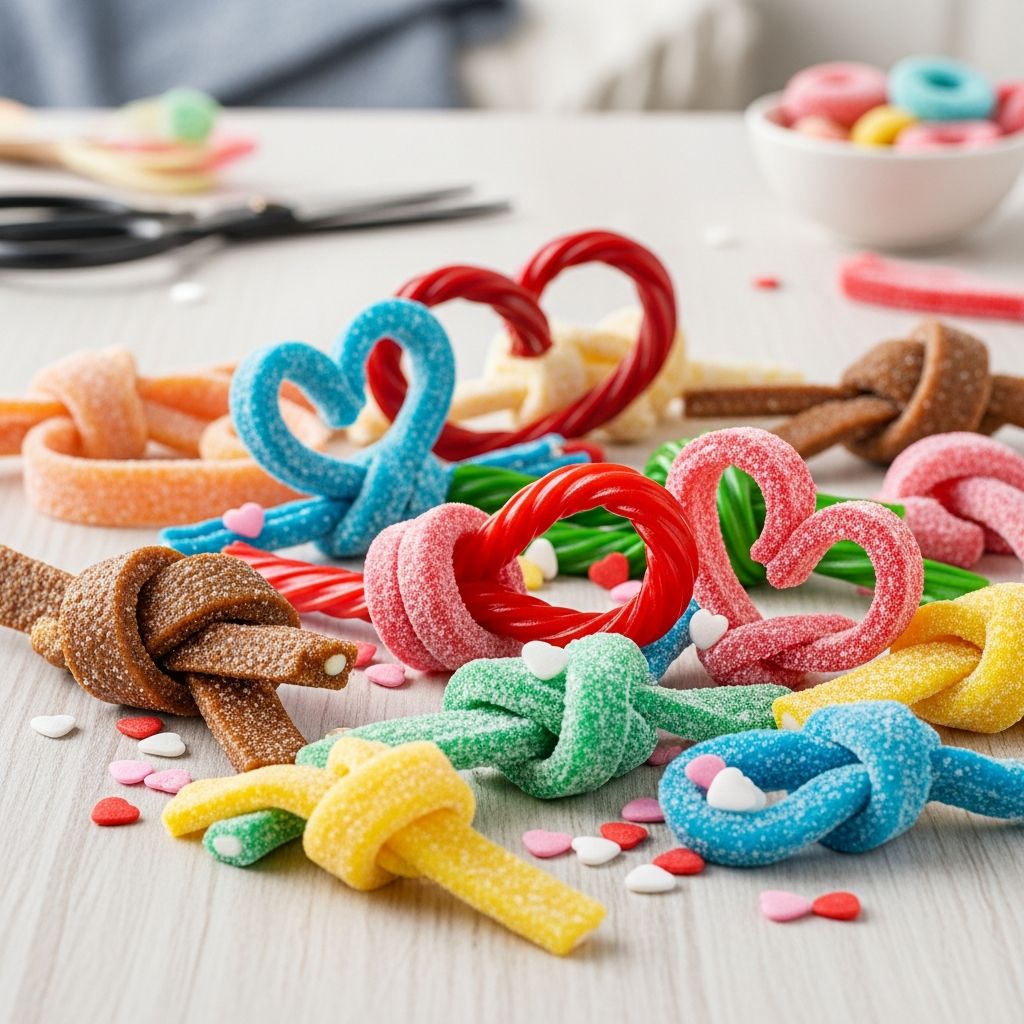
Valentine’s Day is the perfect excuse to turn a pile of colorful candy into a meaningful, hands-on craft that kids can proudly share with their friends, classmates, and family. This guide walks you through creating candy friendship knots: simple, bright little bundles of sweetness tied together like mini friendship bracelets.
Why Candy Friendship Knots Are a Great Valentine Craft
Candy friendship knots blend the fun of crafting with the joy of gift-giving, all without complicated tools or advanced skills. Kids enjoy choosing colors, practicing simple knot-tying, and handing out their creations as small tokens of appreciation.
These treats work well at home, in classrooms, at after-school programs, or as a quick party activity because they are customizable, inexpensive, and easy to adapt for allergies or non-candy alternatives.
- Minimal mess and no special equipment.
- Short, repeatable steps that kids quickly master.
- Built-in opportunity to talk about friendship and kindness.
Supplies You Will Need
You do not need a huge craft store haul to make these Valentine candy friendship knots. Most of the items can be found at a grocery store, dollar shop, or discount party aisle.
Core materials
- Soft rope-style candy (such as red or rainbow licorice, fruit twists, or other chewy ropes).
- Small wrapped candies (individually wrapped chocolates, caramels, gummies, or hard candies).
- Small gift tags or cardstock pieces for names and short messages.
- Fine-tip markers or pens for labeling.
Optional extras
- Clear snack bags for packaging.
- Decorative ribbon or baker’s twine.
- Stickers or washi tape for sealing bags or decorating tags.
- Heart-shaped paper punch or small Valentine-themed stamps.
Safety and hygiene items
- Disposable gloves for adults or older helpers if you want extra cleanliness.
- Hand sanitizer and a clean work surface.
- Small scissors (for adults or older kids only, if cutting tags or ribbon).
Planning the Craft Session
A bit of preparation makes the activity smoother, especially when crafting with groups of kids. Decide in advance how many knots each child will make and pre-portion supplies into small containers or cups.
Consider the age range of your group: younger children may need pre-cut licorice ropes and simplified knots, while older kids can handle longer ropes, decorative braids, and more detailed tags.
| Age group | Number of knots | Rope candy per knot | Wrapped candies per knot |
|---|---|---|---|
| Preschool (3–4) | 2–3 | 1 short rope | 2–3 pieces |
| Early elementary (5–7) | 3–5 | 1 medium rope | 3–4 pieces |
| Older kids (8+) | 5–8 | 1 long rope | 4–5 pieces |
Step-by-Step Instructions for Candy Friendship Knots
You can adapt these steps to suit your group’s skills, but the basic approach remains the same: line up the candy, tie it together, and add a personal touch with a tag.
1. Prepare the workspace
Start with freshly washed hands or a quick round of hand sanitizer for each child. Cover tables with butcher paper or a reusable plastic tablecloth to keep the surface clean and make cleanup faster.
- Lay out bowls of wrapped candies so kids can easily reach them.
- Distribute rope candies, tags, and markers to each workspace.
- Explain that kids should not eat while assembling to keep the treats sanitary for friends.
2. Choose a color theme
Invite kids to pick a color palette for their knots, such as all red and pink for a classic Valentine look, or rainbow mixes for a playful feel. This small step encourages decision-making and creativity before the craft even begins.
- Have kids group matching candies into tiny piles.
- Challenge them to create “friendship color codes,” such as red for family, pink for classmates, and gold wrappers for best friends.
3. Arrange the candy bundle
Ask kids to line up a few wrapped candies in a row or cluster, making sure all wrappers are fully closed. They can vary the shapes and sizes, but encourage them not to pile them too high or the knot will be difficult to tie.
- Three to five small candies usually create a nice bundle.
- Place the rope candy beneath or alongside the group of wrapped candies, leaving the two ends free for tying.
4. Tie the friendship knot
Show kids how to wrap the rope candy around the center of the bundle, crossing the ends over each other like the first step of tying shoelaces. Help them pull gently but firmly until the candies are snugly held together without squishing the wrappers.
- For a simple knot, make one secure over-under tie and then a second for extra hold.
- For older kids, you can introduce a basic slip knot or double wrap that looks decorative but still holds the bundle tight.
5. Add a personal message
Have kids write a short note or the recipient’s name on a small tag or strip of cardstock. Simple phrases such as “To a sweet friend” or “You make my day brighter” work well and keep writing time short.
- Punch a small hole in the tag and slide it onto one end of the rope candy before tightening the final knot.
- Alternatively, tape the tag directly to one of the wrapped candies if threading is too challenging.
6. Package and present
Once the knots are finished, choose whether to package them individually or leave them open like mini bouquets. Clear snack bags work well for classrooms and make it easier to add names for distribution later.
- Slide each knot into a bag, press out extra air, and close with ribbon, twine, or a sticker.
- Write each recipient’s name on the bag to make Valentine exchange time run smoothly.
Classroom and Group Variations
Teachers, troop leaders, and club organizers can easily scale this craft for large groups of kids. With a few tweaks, candy friendship knots become a structured, low-stress activity that still leaves plenty of room for creativity.
Station-based setup
For big groups, use stations instead of giving kids everything at once. This keeps congestion down and allows adult helpers to focus on one step at a time.
- Station 1: Kids choose rope candy and color schemes.
- Station 2: Kids select and arrange wrapped candies.
- Station 3: Adult or older helper assists with tying knots.
- Station 4: Kids write and attach tags, then package their knots.
Incorporating kindness lessons
Use the craft as a springboard for short discussions on kindness and inclusion. Before starting, ask each child to think of someone who might feel left out and make at least one knot specifically for that person.
- Invite kids to write one kind word about the recipient on the tag.
- Create a “kindness wall” where children post the tags’ words (not the names) to show how many different ways friends can be kind.
Allergy-Friendly and Non-Candy Alternatives
Food allergies and dietary preferences are common in classrooms and community groups, but that does not mean kids have to miss out on the fun. With a few thoughtful substitutions, you can create similar friendship knots using safer treats or non-food items.
Allergy-aware treat ideas
- Fruit leather strips or individually wrapped dried fruit snacks instead of chocolate or nut-containing candies.
- Individually wrapped marshmallows or allergy-safe gummies where allowed.
- Gluten-free or dye-free options for kids with specific sensitivities.
Non-food friendship knots
For classrooms that cannot use food at all, mimic the same knotting concept with small trinkets.
- Use yarn or thin fabric strips instead of rope candy.
- Bundle small erasers, stickers, mini pencils, or temporary tattoos.
- Add paper hearts or mini notes instead of candy pieces.
Tips for Crafting with Different Age Groups
Adjusting your expectations and instructions based on age helps keep the activity fun instead of frustrating. Younger kids benefit from clear visual models and simple tasks, while older kids often enjoy challenges and customization.
Preschoolers and early learners
- Pre-cut shorter pieces of rope candy to make tying easier.
- Limit each knot to a few candies to reduce bulk.
- Let adults or older buddies handle the actual knot while little ones choose colors and place candies.
Elementary-age kids
- Teach a simple overhand knot as a “friendship knot” and practice with string before using candy.
- Encourage kids to design themed bundles (all hearts, all gold wrappers, or alternating colors).
- Offer optional challenges like making matching sets for each member of a friend group.
Older children and preteens
- Introduce basic braiding with two or three strands of rope candy before tying.
- Allow them to create more elaborate tags, including short poems, jokes, or uplifting quotes.
- Ask them to help younger kids, turning the project into a leadership and mentoring opportunity.
Storage, Transport, and Display Ideas
Finished candy friendship knots look especially festive when displayed together before being handed out. A little planning helps keep them fresh, intact, and easy to transport.
Keeping knots fresh
- Store completed knots in airtight containers or sealed bags if they will sit for more than a day.
- Keep them in a cool, dry spot away from direct sunlight so colors do not fade and chocolate does not melt.
Cute display ideas
- Arrange knots in small baskets labeled “Sweet Friends,” “You’re the Best,” or “Classroom Crew.”
- Hang bagged knots from a string or bulletin board like mini Valentine garlands.
- Let kids place their knots in decorated shoe boxes or paper bags during a Valentine exchange party.
Frequently Asked Questions
How far in advance can kids make candy friendship knots?
Because the candy remains wrapped and the rope candy is relatively stable, these knots can typically be made several days in advance if they are stored in a cool, dry place. For freshness and best appearance, aim to make them within three to five days of when you plan to give them away.
What if some kids cannot have candy at all?
Do not leave those kids out. Offer non-food friendship bundles using small school supplies, paper hearts, or stickers tied together with yarn or ribbon. Present these at the same time as the candy versions so everyone participates equally.
How can I prevent the knots from coming undone?
Encourage kids not to overload the bundle and show them how to pull the rope candy tight without tearing it. If you notice knots slipping, gently press the rope candy together after tying or add a small piece of tape to the wrapper area underneath the knot for extra grip.
Can this craft work for holidays other than Valentine’s Day?
Yes, simply change the color palette and tag messages. For example, use orange and black for Halloween, green and gold for St. Patrick’s Day, or school colors for graduation and end-of-year celebrations.
How do I manage sugar limits while still doing this craft?
One approach is to keep knots small and encourage kids to give most of them away rather than eating them all themselves. You can also send the knots home with a note explaining that families can decide when and how to enjoy the treats.
Bringing It All Together
Valentine candy friendship knots turn simple sweets into thoughtful, handmade gifts that kids are excited to create and share. With only a few supplies and flexible steps, this project fits into busy schedules while still feeling special and heartfelt.
Whether you are organizing a classroom celebration, planning a family craft night, or leading a community group, these bright little bundles of candy and kindness make Valentine’s Day more personal, more creative, and a lot more fun.