When medicines do not fully control a child’s seizures, doctors may suggest a vagus nerve stimulator (VNS) as an additional treatment option. This small device uses gentle electrical signals to help calm seizure activity in the brain.
What Is a Vagus Nerve Stimulator?
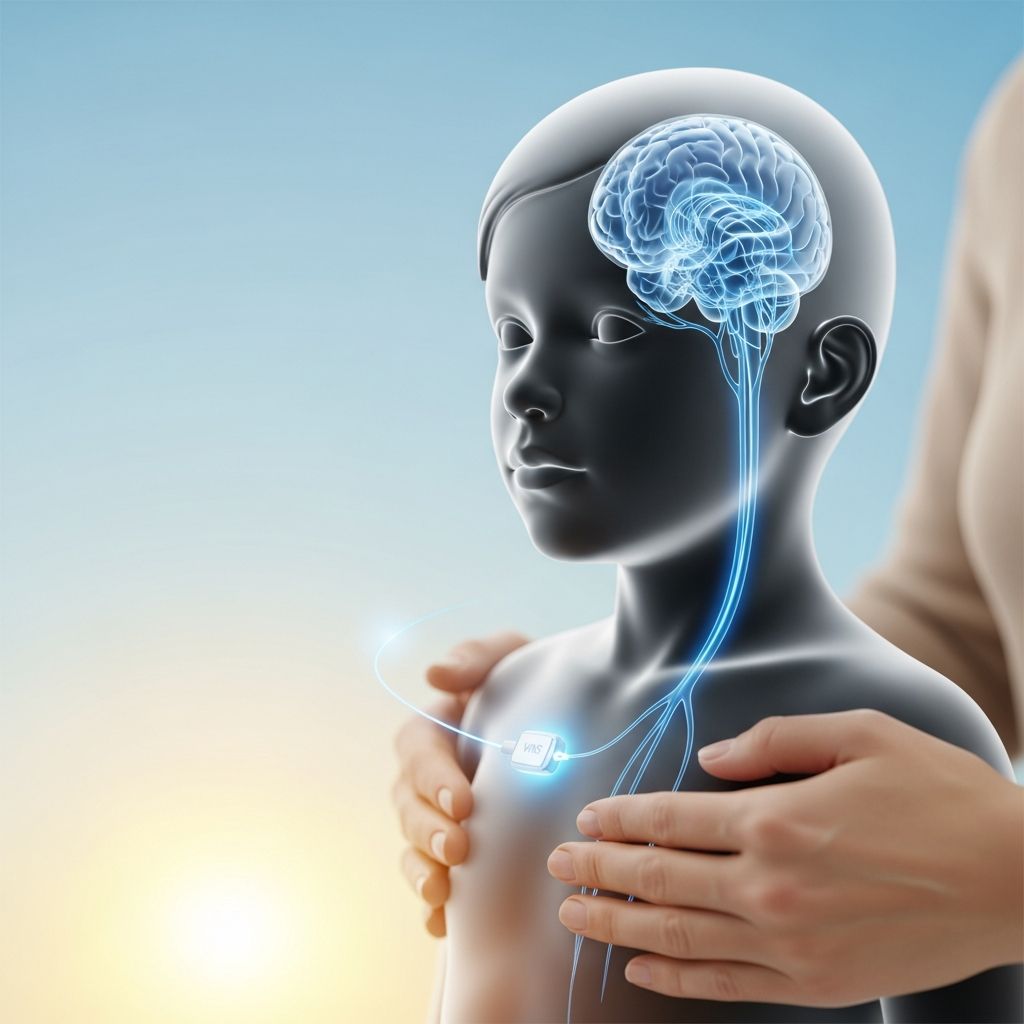
A vagus nerve stimulator is a small, battery-powered device that sends regular, mild electrical pulses to the vagus nerve in the neck. The vagus nerve then carries those signals to the brain, where they can help reduce the number or intensity of seizures over time.
The stimulator is sometimes called a “nerve pacemaker” because, like a heart pacemaker, it works quietly in the background without the child needing to do anything most of the time.
Key Parts of the Device
Even though the system sounds complex, it has only a few main parts. Understanding these can help you feel more comfortable with the treatment.
- Pulse generator: A flat, round metal device that contains the battery and computer chip; it is placed under the skin, usually in the upper chest area.
- Lead (electrode wire): A thin, insulated wire that runs from the generator up to the left side of the neck and wraps gently around the vagus nerve.
- Programming system: A special computer and wand used by the medical team to adjust how often and how strongly the device stimulates.
- Magnet: A hand-held or wrist-worn magnet that you or your child can swipe over the generator to give extra stimulation or, in some models, briefly turn the device off.
How the Vagus Nerve Helps the Brain
The vagus nerve is one of the main communication highways between the body and the brain. It carries signals that help regulate breathing, heart rate, digestion, and other automatic functions. By gently stimulating this nerve, the device can influence brain areas involved in seizures.
Researchers believe that repeated stimulation encourages the brain to adjust its activity patterns over time, making seizures less frequent or less severe for some children.
Who Might Benefit from a Vagus Nerve Stimulator?
VNS is not the first-line treatment for epilepsy. It is usually considered when other options have not provided enough seizure control. Doctors weigh several factors before recommending the device.
- Children who have tried multiple seizure medicines without good control.
- Kids who cannot tolerate higher doses of medication because of side effects.
- Children whose seizures come from several areas of the brain, making surgery to remove a single “seizure focus” less helpful.
- Families looking for an additional, long-term tool to support seizure management.
The decision is always individual. Your child’s neurologist will review seizure types, test results, and overall health before suggesting VNS.
Vagus Nerve Stimulator vs. Other Epilepsy Treatments
VNS is usually used together with other treatments, not instead of them. The table below shows how it compares to common options.
| Treatment Type | How It Works | When It Is Considered | Reversibility |
|---|---|---|---|
| Anti-seizure medicines | Change chemical activity in the brain to reduce seizures. | First-line treatment for nearly all children with epilepsy. | Fully reversible by adjusting or stopping medicines (under medical guidance). |
| Brain surgery (resective) | Removes or disconnects seizure-producing brain tissue. | When seizures come from a single, clearly identified area and medicines have failed. | Generally not reversible once tissue is removed. |
| Ketogenic or modified diets | High-fat, carefully controlled diet that can change how the brain uses energy. | Often tried when medicines alone do not work well, especially in younger children. | Reversible by transitioning back to a typical diet under supervision. |
| Vagus nerve stimulator (VNS) | Sends gentle electrical pulses to the vagus nerve to influence brain activity. | When multiple medicines have failed and brain surgery is not possible or has not helped enough. | Device can be turned off or removed, though surgery is needed for removal. |
Preparing Your Child for VNS Surgery
VNS implantation is usually an outpatient procedure, meaning children often go home the same day. Even so, it is still surgery and careful preparation can ease stress for both child and family.
- Discuss the procedure with your child in age-appropriate language, focusing on comfort, safety, and the goal of fewer seizures.
- Review medication instructions; some medicines may need to be taken or held on the day of surgery as directed by the care team.
- Pack familiar comfort items such as a stuffed animal, blanket, or favorite book.
- Arrange time off from school and activities to allow for rest during the first few days after surgery.
What Happens During the Operation?
The surgeon makes two small incisions: one in the upper chest area where the generator is placed, and one on the left side of the neck where the lead is wrapped around the vagus nerve. The wire is tunneled under the skin to connect the two sites.
The procedure is performed under general anesthesia, so your child will be asleep and feel no pain during the surgery. The operation typically takes under two hours in most cases, though your team will give a more precise estimate.
Right After Surgery: Recovery and Comfort
After the procedure, your child will spend time in a recovery area where nurses closely monitor breathing, heart rate, and comfort. Soreness in the neck and chest area is common for several days, especially with certain movements.
Pain medicines that are safe for your child’s condition will be provided as needed. Most kids return to light activities within a few days and gradually resume normal routines as they feel better.
When Is the Device Turned On?
The stimulator is usually not set to full strength right away. Instead, the neurologist or surgeon activates it at a follow-up visit, often a couple of weeks after surgery, once incisions have started to heal.
Initial settings are kept low to see how your child responds, then adjusted slowly over time. These visits are important chances to discuss seizure changes, side effects, and any concerns about the device.
How the Device Is Programmed
Programming visits are painless. A wand is placed over the skin where the generator sits, allowing the doctor to change settings without another surgery. Adjustments can include:
- Intensity: How strong each pulse of stimulation is.
- Pulse width and frequency: How long and how often pulses are delivered.
- On-time and off-time: How many seconds the device stimulates and how many seconds it rests in each cycle.
Fine-tuning may take several months. During this time, keeping a seizure and symptom diary can help the team understand how well the current settings are working.
Using the Magnet: Extra Control for Families
The magnet is a simple but powerful tool. By quickly swiping it over the generator (usually beneath the left collarbone), you can trigger an extra burst of stimulation outside the regular cycle.
- Some families use the magnet when a child feels a warning sign, such as an odd sensation or aura before a seizure.
- Teachers and caregivers can be trained to use the magnet at school, camp, or during activities.
- In certain situations, holding the magnet over the device for a longer time can temporarily stop stimulation if instructed by the doctor.
Your team will explain exactly how and when to use the magnet and will help you practice until you feel confident.
What Improvements Can Parents Expect?
It is important to have realistic expectations. VNS rarely stops seizures completely, but many children experience meaningful improvements over time. These may include:
- Fewer seizures overall.
- Shorter seizures or seizures that are less intense.
- Better recovery after a seizure, with less confusion or fatigue.
- Possible improvements in alertness, mood, or quality of life, even if seizures continue.
Benefits usually build gradually over months to a year or more. Doctors often recommend continuing seizure medicines, even if seizures improve, unless they specifically guide changes.
Possible Side Effects and Risks
Like any medical treatment, VNS has possible risks. Most side effects are related to stimulation of the vagus nerve and often occur during the “on” part of the cycle.
- Temporary voice changes or hoarseness.
- Coughing or throat-clearing sensations.
- Tingling in the neck or chest.
- Shortness of breath or discomfort during exercise in some children.
These are often mild and may improve as your child gets used to the device or as settings are adjusted. Surgical risks such as infection, bleeding, or nerve injury are uncommon but will be discussed in detail by the surgeon.
Battery Life, Replacement, and Long-Term Care
The battery inside the generator lasts several years, depending on the settings used. As it runs down, the device does not stop suddenly; instead, the medical team can see battery status during checkups.
When replacement is needed, a shorter surgery is performed to remove the old generator and connect a new one, usually through the same chest incision. The lead around the vagus nerve often stays in place unless there is a problem with it.
Daily Life With a Vagus Nerve Stimulator
Most children with VNS go to school, play sports with guidance, and enjoy everyday activities. Parents sometimes worry that the device will be highly noticeable, but it usually creates only a small bump under the skin.
- Normal clothing typically hides the device and scars.
- Activity limits are usually temporary, mainly right after surgery.
- Medical ID jewelry can be helpful to let others know your child has a VNS device.
Always inform healthcare providers, dentists, and therapists that your child has a stimulator, especially before procedures that involve strong magnets or electrical equipment.
Questions to Ask Your Child’s Care Team
Going into this decision with clear information helps families feel more at ease. Consider bringing these questions to your next appointment:
- Why are you recommending VNS for my child now?
- What changes should we realistically hope to see in seizure control?
- How often will follow-up visits and programming sessions be needed?
- What side effects should we call about right away?
- How will VNS affect school, sports, and future medical tests like MRI?
Frequently Asked Questions (FAQs)
Will my child still need seizure medicine after getting a VNS?
Most children continue taking their anti-seizure medicines after VNS implantation. The device is usually added to, not substituted for, medication. If seizures improve significantly over time, the neurologist may consider cautious medication changes, but this should never be done without medical guidance.
Can the VNS device be removed if we change our minds?
Yes. The generator and lead can be surgically removed if necessary, although this requires another operation under anesthesia. In many situations, doctors first try turning the device off through programming before considering removal.
Is the stimulation painful for children?
Most kids do not describe the stimulation as painful. Some notice a brief change in voice, a tickle in the throat, or a mild pulling sensation in the neck during stimulation cycles. If your child feels uncomfortable, the care team can adjust settings to improve comfort.
What about medical tests like MRI or surgery later on?
Many children with VNS can still undergo certain imaging tests and procedures, but there may be special rules or safety steps. Always tell any healthcare provider that your child has a vagus nerve stimulator before scheduling imaging, surgery, or physical therapy that uses electrical devices.
Does the VNS cure epilepsy?
VNS does not cure epilepsy. Instead, it is a long-term tool that may help reduce seizures and improve quality of life. Some children experience major improvement; others see only modest changes. Regular follow-up and realistic expectations are essential.
Supporting Your Child Emotionally
Beyond the medical facts, having a device implanted can feel like a big step for a child. Honest, reassuring conversations can help them cope with fears or questions about surgery and living with a stimulator.
- Encourage your child to share worries and listen without judgment.
- Use age-appropriate books or videos about hospitals and surgery if helpful.
- Talk with the care team about child life services, counseling, or support groups for families dealing with epilepsy.
When to Seek Immediate Help
Call your child’s medical team or emergency services right away if you notice any of the following after surgery or during treatment:
- Difficulty breathing or swallowing.
- Severe or rapidly worsening pain at the incision site.
- Redness, warmth, or drainage from the incisions suggesting infection.
- New or significantly different seizure types.
Trust your instincts. If something does not seem right, it is always better to ask.
Moving Forward With Confidence
Choosing a vagus nerve stimulator is a major decision, but for many families it becomes an important part of a broader seizure-management plan. With careful follow-up, honest communication, and support at home and school, this small device can play a big role in helping a child live more safely and comfortably with epilepsy.