What You Should Know About Urine Testing for Children
Urinalysis represents one of the most fundamental diagnostic procedures in pediatric healthcare, offering valuable insights into a child’s kidney function, urinary tract health, and overall metabolic status. This straightforward test can reveal important information about infections, protein levels, glucose presence, and other markers that may indicate underlying health concerns. Understanding the purpose, procedure, and preparation for urine testing can help parents support their children through the process with confidence and reduce unnecessary anxiety.
Why Doctors Recommend Urine Tests
Healthcare providers order urine tests for numerous clinical reasons. The most common indication is diagnosing or ruling out urinary tract infections, which frequently occur in children and present with symptoms such as painful urination, increased frequency of voiding, or difficulty with urinary control. Beyond infection detection, urinalysis can identify kidney and urinary tract abnormalities, assess protein loss through the urine, detect glucose or other substances that shouldn’t normally be present, and monitor children with known kidney conditions or diabetes.
In some cases, urinalysis serves as a preventive screening tool. Abnormal findings appear in a small percentage of healthy schoolchildren, making routine testing valuable for early detection of silent conditions that might otherwise go unnoticed. When a child presents with flank pain, fever, or other systemic symptoms alongside urinary complaints, urinalysis becomes an essential component of the diagnostic workup.
Age-Appropriate Methods for Collecting Urine Samples
The collection method varies significantly depending on the child’s age and developmental stage. Proper sample collection is critical because contamination can lead to false results that might prompt unnecessary treatment or mask genuine problems.
Collection for Infants and Young Toddlers
Infants who wear diapers cannot provide voluntary samples, requiring special collection techniques. The sterile urine collection bag method is commonly used in clinical and home settings. This technique involves thoroughly cleaning the genital and surrounding skin area with soap and water or provided cleansing wipes, allowing the area to dry completely, and then applying a self-adhesive plastic bag with a sticky strip designed to fit securely around the diaper area. Parents should ensure the bag is positioned properly and check frequently—usually within one hour—as the infant will wet the diaper. Once urine is collected, the bag should be removed carefully and the sample transferred to a sterile container.
An alternative approach for infants involves placing cotton balls inside the diaper in the area where urine collection will occur. Once the infant voids, parents can gently squeeze the urine from the cotton into a clean, dry container. Only a few drops of urine are typically required for testing.
For cases where infection is strongly suspected or previous samples yielded ambiguous results, healthcare providers may recommend catheterization or suprapubic bladder puncture. While these procedures sound more invasive, they are relatively simple and minimally uncomfortable, with the added benefit of providing samples with significantly lower contamination risk.
Collection for Potty-Trained Children
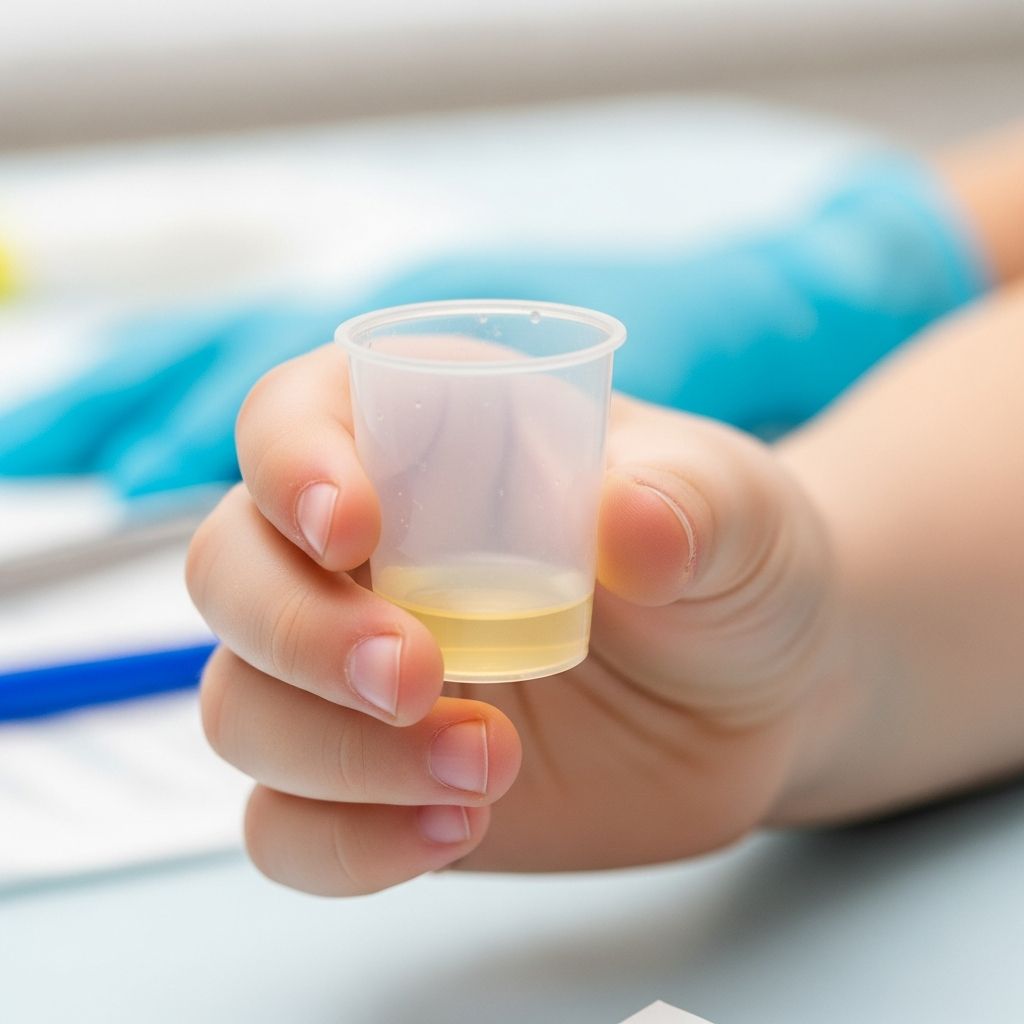
Once children achieve urinary continence and can follow instructions, the clean-catch midstream method becomes the standard collection technique. This method requires several coordinated steps to minimize contamination from bacteria normally present on the skin around the urinary opening.
The process begins with thorough cleaning of the genital area and surrounding skin using soap and water or the cleansing materials provided by the healthcare facility. The child should then begin urinating into the toilet or a container. After passing some initial urine, the child stops (if developmentally capable) and redirects the stream into a sterile sample cup, with the goal of collecting urine from the middle of the urinary stream—hence the term “midstream”. The cup should never touch the child’s skin during collection. Following urination, the cup should be capped immediately to prevent contamination and kept at room temperature unless otherwise instructed.
Some tests require morning samples, as the first voiding of the day provides the most concentrated urine suitable for biochemical testing. If collection occurs at home for a morning specimen, parents should follow specific storage and transportation instructions provided by the laboratory.
Understanding Different Types of Urine Tests
Not all urine tests examine the same parameters. Healthcare providers may order different types depending on clinical suspicions and the information they seek.
Dipstick Testing
Dipstick urinalysis represents the most commonly performed initial screening method. A thin plastic strip embedded with chemical compounds is briefly immersed in the urine sample. The various chemical patches on the strip can detect up to 10 different substances or conditions in urine, including the presence of white blood cells, nitrites, leukocyte esterase, protein, glucose, ketones, blood, bilirubin, urobilinogen, and specific gravity. Each patch changes color within seconds, and these color changes are compared against a provided reference chart to indicate the presence or absence of various substances.
To perform a dipstick test correctly, the strip should be held by the end opposite the color blocks and briefly dipped into urine to moisten all the reactive patches. Excess urine should be gently tapped from the strip back into the sample cup. The strip is then held horizontally for a few seconds to prevent the chemicals from different patches from mixing together, which could produce inaccurate results.
Culture Testing
When infection is suspected, culture testing identifies the specific microorganism causing the infection and determines which antibiotics will be effective. Culture requires a sterile sample with minimal contamination, making proper collection technique especially important. For infants and young children, this typically means using catheterization rather than bag collection, as bag samples frequently yield false-positive results due to skin bacteria contamination.
Quantitative Analysis
For children with kidney disease or proteinuria, doctors may request more detailed quantitative measurements rather than simple screening. The gold standard involves collecting urine over a 24-hour period to measure total protein excretion, though this proves particularly challenging in young children. As a practical alternative, doctors can measure the protein-to-creatinine ratio or albumin-to-creatinine ratio in spontaneously voided urine samples.
What Happens During and After Testing
Urine testing is entirely painless and non-invasive when standard collection methods are used. In most office or laboratory settings, children simply need to provide a sample into a cup. The entire process typically takes only a few minutes.
For children who are not yet potty-trained and cannot provide a sample through standard collection, catheterization may be performed by a healthcare provider. This procedure involves gently inserting a thin, soft tube into the bladder to collect urine directly. While slightly uncomfortable, the procedure is not painful and carries minimal risk of contamination.
After collection, samples should be processed promptly. If immediate analysis isn’t possible, proper storage and transportation according to laboratory guidelines ensures sample integrity. Results are typically available within 24 to 48 hours, though some facilities provide preliminary dipstick results on the same day.
Interpreting Test Results
Normal urine findings vary by age and require interpretation by healthcare professionals familiar with age-specific reference ranges. Abnormal findings may indicate infection, kidney problems, diabetes, or other metabolic conditions. When discrepancies appear between clinical presentation and test results, doctors typically recommend repeating the test before initiating treatment, as contaminated or improperly collected samples can produce misleading findings.
Positive culture results require confirmation, particularly when the initial sample was collected using methods with higher contamination risk. Repeat testing using more reliable collection methods helps confirm genuine infection versus contamination.
Preparing Your Child for Urine Testing
Parental preparation significantly influences a child’s comfort and cooperation during testing. Explaining the procedure in simple, age-appropriate language helps reduce anxiety and fear. Emphasizing that the test is painless and takes only minutes normalizes the experience.
For collection at home, ensure you have all necessary supplies before beginning. If using the clean-catch method, demonstrate the steps to your child beforehand so they understand what’s expected. For young children, positive reinforcement and matter-of-fact presentation of the procedure help establish cooperation without creating unnecessary stress.
When a healthcare provider will collect the sample, prepare your child by explaining that the nurse or doctor will help them provide the sample and that the process will be quick and painless. Avoiding language that suggests pain or discomfort prevents anxiety-driven resistance.
Special Considerations for Different Situations
Certain clinical scenarios require modified approaches. Children with a history of recurrent or complicated urinary tract infections may need culture testing using more reliable collection methods. Those with recent antibiotic exposure may harbor unusual pathogens requiring special culture media. Children with skin irritation around the genital area may be better served by catheterization rather than clean-catch collection, as the irritation itself can cause false-positive results.
For children with indwelling catheters, urine samples should be obtained from the catheter port rather than the collection bag to ensure accuracy. Long-term catheter users require different interpretation parameters than those providing samples through standard collection methods.
Common Questions About Urine Testing
How much urine is needed for testing?
For most routine tests, including dipstick analysis and culture, only a small sample is required—typically 30 to 60 milliliters (about 2 to 4 tablespoons). For 24-hour collections or specialized quantitative tests, larger volumes are necessary, and your healthcare provider will give specific instructions.
Can I collect a sample at home and bring it to the lab later?A: This depends on the type of test. For some tests, home collection is acceptable if you follow proper storage and transportation instructions. For culture testing, samples should be processed quickly—ideally within 30 minutes—to prevent bacterial growth that would distort results. Ask your healthcare provider or laboratory for specific guidance.
Q: What if my child can’t produce a sample at the appointment?
If your child is unable to void during the appointment, you may be asked to try again later or collect a sample at home. Giving your child extra fluids about 30 to 60 minutes before the appointment increases the likelihood of successful collection. If other methods fail, catheterization remains an option for obtaining a sample.
Are urine tests affected by diet or medication?
Certain foods and medications can affect urine test results. Before testing, inform your healthcare provider about any medications your child is taking. While you don’t need special diet restrictions for most routine tests, your doctor will provide specific pre-test instructions if needed.
How reliable are home urine test kits?
Dipstick tests performed at home can provide preliminary information, but professional laboratory analysis offers greater accuracy and the ability to perform culture when needed. If using home tests, positive results should always be confirmed by a healthcare provider with appropriate laboratory testing.
What does it mean if my child’s test shows white blood cells in the urine?
White blood cells in urine can indicate infection, inflammation, or contamination. Additional testing, including culture and sometimes imaging studies, helps determine the underlying cause. A single abnormal finding doesn’t automatically confirm infection, which is why follow-up testing is often recommended.
How quickly will we get results?
Dipstick results are often available on the same day, sometimes within minutes. Culture results typically take 24 to 48 hours because bacteria must be grown in laboratory conditions. Your healthcare provider will inform you when to expect results and how they’ll communicate them.
References
- Urinalysis in Children and Adolescents — National Center for Biotechnology Information (NCBI). Published in PMC4187024. https://pmc.ncbi.nlm.nih.gov/articles/PMC4187024/
- Urine collection – infants — MedlinePlus Medical Encyclopedia. U.S. National Library of Medicine. https://medlineplus.gov/ency/article/003417.htm
- Getting a Urine Test — Nemours KidsHealth. https://kidshealth.org/en/parents/get-urine-test.html
- Urine Test: Routine Culture — Dayton Children’s Hospital. https://childrensdayton.org/kidshealth/test-urine/
- Urine Dip Tests — Nationwide Children’s Hospital. https://www.nationwidechildrens.org/family-resources-education/health-wellness-and-safety-resources/helping-hands/urine-dip-tests
- How to Collect a Urine Sample From a Baby — HealthyChildren.org, American Academy of Pediatrics. https://www.healthychildren.org/English/health-issues/conditions/genitourinary-tract/Pages/how-to-collect-a-urine-sample-from-a-baby.aspx
- Urine Test: Dipstick — Rady Children’s Health. https://www.rchsd.org/health-article/urine-test-dipstick/