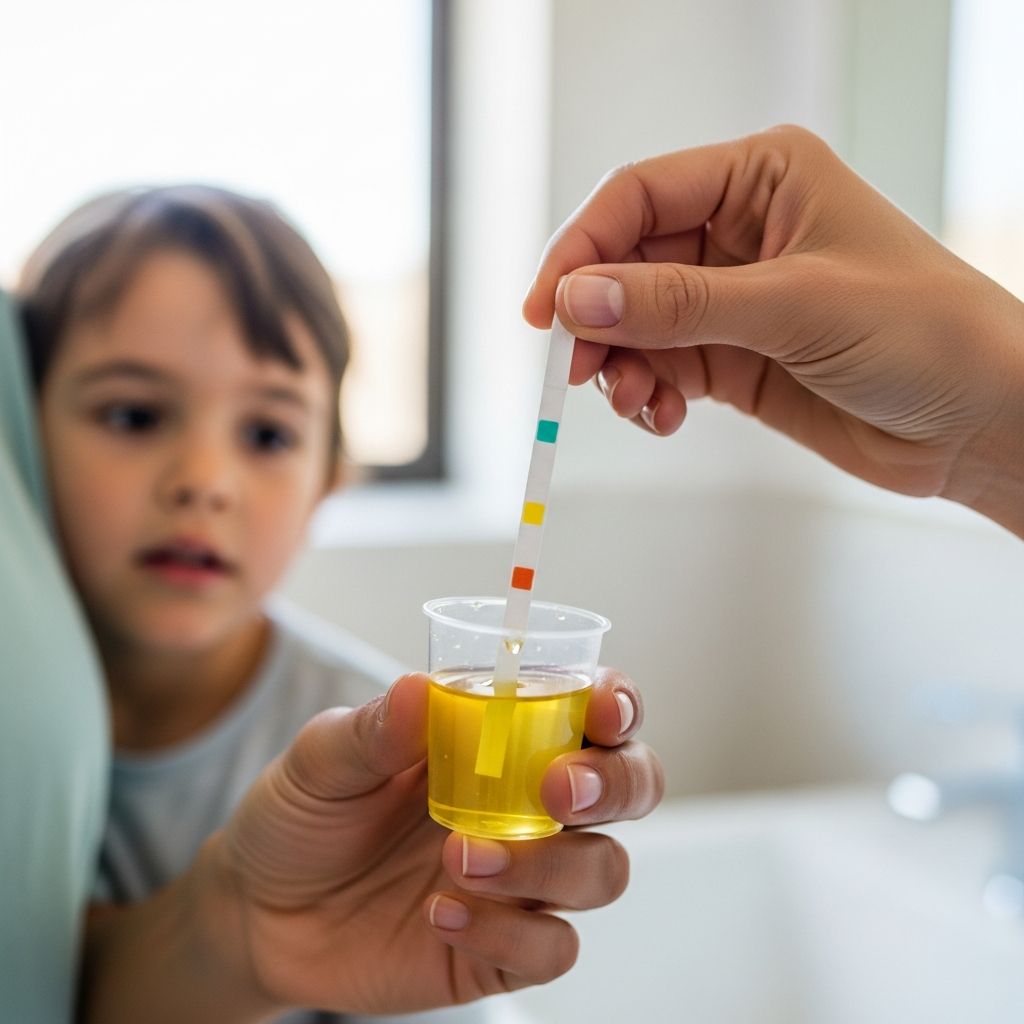
When a child suddenly develops a fever, starts complaining of belly pain, or needs to pee more often, a quick urine test is one of the simplest tools doctors use to look for answers. A common first step is the urine dipstick test, a fast screening test done right in the clinic or emergency room. This test uses a small strip of paper with colored pads that react to substances in the urine and can give important clues about infections, kidney problems, and other conditions.
Although the test is simple, the long list of possible results can look confusing or even scary to parents. Understanding what the test can and cannot tell you helps you stay calm, ask good questions, and work with your child’s healthcare provider on the next steps. This article explains what a urine dipstick test is, how it is done, what the color changes might mean, and what parents should know about limitations, follow-up tests, and home care.
What Is a Urine Dipstick Test?
A urine dipstick test, sometimes called a urine test strip, is a quick screening test that checks a urine sample for several different substances at once. Each small colored pad on the strip represents a different test. When the strip is dipped into fresh urine, chemicals on these pads react and change color if certain substances are present, such as blood, protein, sugar, or markers of infection.
The results are usually available within a few minutes. A healthcare professional compares the color of each pad to a reference chart to estimate whether each substance is absent, present in small amounts, or present in larger amounts. The dipstick test does not diagnose a disease by itself, but it provides strong hints that guide the need for more specific tests, such as microscope examination or a urine culture.
Why Doctors Order a Urine Dipstick for Kids
In children, urine dipstick tests are used as a fast, noninvasive way to look for signs of infection, inflammation, or other organ problems. Because urine passes through the kidneys and urinary tract, it carries clues from these organs, as well as from the body’s overall metabolism and hydration status.
- To check for a urinary tract infection (UTI) when a child has burning with urination, frequent trips to the bathroom, bedwetting after being dry, or unexplained fever.
- To screen for kidney problems when blood pressure is high, swelling is present, or blood appears in the urine.
- To monitor children with chronic conditions such as kidney disease, diabetes, or certain inherited disorders.
- To evaluate general health during a hospital stay or before surgery.
Sometimes a dipstick is done even when a child looks fairly well, because young children cannot always describe their symptoms clearly. In that case, the test acts like a quick safety check to make sure a hidden problem is not being missed.
How the Test Is Collected and Performed
The accuracy of the urine dipstick test starts with how the sample is collected. The goal is to obtain urine that represents what is inside the bladder, without extra germs or substances from the skin or diaper area. The method can differ depending on the child’s age and toilet-training status.
Common collection methods
- Clean-catch sample: For toilet-trained children, the child wipes the genital area with a cleansing wipe, then begins to urinate into the toilet. After a second or two, the urine stream is directed into a sterile cup, then the rest can go into the toilet again.
- Urine bag collection: For infants and toddlers who are not toilet trained, a soft adhesive bag may be placed over the genital area inside the diaper to catch urine. This method is easy and painless but more prone to contamination.
- Catheter or needle collection: In certain situations, especially when infection must be confirmed with high accuracy, urine may be collected using a small catheter placed briefly into the urethra, or by a needle into the bladder (suprapubic aspiration). These methods are more invasive but much less likely to be contaminated by outside bacteria.
After the urine is collected, the dipstick strip is dipped into the sample for a few seconds, then removed. Excess urine is gently shaken off, and the strip is held flat. Each pad is read at a specific time, often between 30 and 120 seconds after dipping. Staff then record the results in the medical chart.
Key Components Checked on a Urine Dipstick
Each pad on a urine dipstick reacts to one or more substances. Exact panels may vary by brand, but most pediatric dipsticks check for the following items.
| Component | What It Screens For | Possible Concerns When Abnormal |
|---|---|---|
| Leukocyte esterase | Enzyme linked to white blood cells | Inflammation or infection in the urinary tract |
| Nitrites | Certain bacteria that change nitrates to nitrites | Strong clue for bacterial UTI when positive |
| Blood (hemoglobin) | Red blood cells or free hemoglobin | Infection, stones, injury, kidney disease, or other causes |
| Protein | Excess protein leaking into urine | Possible kidney disease, inflammation, or temporary stress |
| Glucose | Sugar in urine | Possible diabetes or other metabolic disorders |
| Ketones | Products of fat breakdown | Dehydration, fasting, or uncontrolled diabetes |
| Bilirubin / Urobilinogen | Breakdown products from red blood cells and liver | Liver or bile duct problems, certain blood disorders |
| Specific gravity | Concentration of urine | Hydration status, ability of kidneys to concentrate urine |
| pH | Acidity or alkalinity | Effect of diet, infections, or metabolic conditions |
A single abnormal pad does not automatically mean a serious disease. Mild or temporary changes can appear after exercise, dehydration, minor illness, or even certain foods and medications. The healthcare provider always interprets the test in the context of symptoms and history.
Urinary Tract Infections and the Dipstick
One of the most common reasons children have a urine dipstick test is to look for a urinary tract infection. Bacteria in the bladder or kidneys can irritate the lining, causing pain, burning, frequent urination, or fever. In young children and infants, fever and fussiness might be the only visible signs.
- Leukocyte esterase: A positive result suggests that white blood cells are present in the urine, which often happens during infection or inflammation.
- Nitrites: Certain bacteria convert natural substances in urine into nitrites. A positive nitrite test strongly suggests a bacterial UTI, though not all bacteria produce nitrites and the test can miss some infections.
If both leukocyte esterase and nitrites are clearly positive in a child with typical symptoms, the chance of a UTI is high. Even so, providers often send urine for a culture, especially in infants and younger children, to confirm the diagnosis and identify the best antibiotic.
Other Conditions the Test Can Suggest
Beyond infections, urine dipstick findings may hint at many other conditions, though further testing is almost always required before a diagnosis is made. Parents should think of the dipstick as an early warning signal, not a final verdict.
- Kidney disease: Persistent protein or blood on repeated dipsticks may suggest a problem with the kidney filters or blood vessels and often leads to blood tests, imaging, or specialist referral.
- Diabetes: Glucose or large amounts of ketones in the urine can appear in untreated diabetes. However, normal dipstick results cannot fully rule out early disease.
- Liver or blood disorders: Abnormal bilirubin or urobilinogen may lead the provider to check liver function tests or blood counts.
- Dehydration: Very concentrated urine and the presence of ketones may point to not drinking enough fluids or ongoing losses from vomiting, diarrhea, or fever.
Normal vs. Abnormal: How Results Are Reported
Dipstick results are usually described as negative, trace, or a series of plus signs (for example, +, ++, +++). A “negative” result means that the substance was not detected, or only in a very tiny amount considered normal. Trace or a single plus sign can sometimes occur in healthy children and may not be meaningful if there are no symptoms.
When a pad shows two or more plus signs, or when an abnormal result appears together with concerning symptoms, the provider is more likely to order further tests. Because the dipstick is a rough estimate and not a precise measurement, the final interpretation always belongs to the healthcare professional who knows the child’s full story.
Limitations and Possible False Results
While urine dipstick tests are fast and convenient, they are not perfect. Sometimes they show a problem when none is present (false positive), and sometimes they miss a problem that does exist (false negative). Parents should understand a few common reasons this happens.
- Contamination: If bacteria or cells from the skin, stool, or diaper get into the sample, the test may falsely suggest infection or blood.
- Timing issues: Urine that has been sitting at room temperature for a long time may give unreliable results because bacteria can grow or chemicals can break down.
- Medications and foods: Certain drugs, vitamins, or intensely colored foods can change the color of urine or interfere with the color pads.
- Very dilute or very concentrated urine: If the child has just consumed a large amount of fluid, or is very dehydrated, some substances may be harder or easier to detect reliably.
Because of these limitations, abnormal dipstick results often need confirmation with more precise tests, such as microscopic analysis or a laboratory measurement of specific substances.
How Parents Can Help Improve Accuracy
Parents play a key role in obtaining a clean, reliable sample. A well-collected specimen can reduce the chance of repeat testing and unnecessary worry. Small steps before and during the collection make a big difference.
- Follow all cleaning and collection instructions provided by the clinic, including wiping front to back for girls and retracting foreskin gently only if advised for boys.
- Encourage your child to give a midstream sample if toilet trained, starting to urinate into the toilet first and then collecting urine in the container.
- Make sure the lid is closed tightly after collection and hand the sample to staff promptly instead of letting it sit in a warm place.
- Tell the provider about any medications, vitamins, or recent illnesses, as these may influence the interpretation of results.
Next Steps After Abnormal Results
When a dipstick shows abnormal findings, the response depends on how the child looks and what the problem is suspected to be. The same result may lead to different actions in different children, because age, symptoms, and medical history matter.
- Observation and repeat testing: Mild abnormalities without symptoms sometimes only require repeating the test at a later date to see if they persist.
- Urine culture: When infection is suspected, urine is often sent to a laboratory to grow any bacteria present and determine which antibiotics work best.
- Blood tests or imaging: Persistent blood or protein may prompt kidney function tests, an ultrasound, or other imaging studies.
- Referral: Complex or ongoing problems may lead to consultations with specialists such as pediatric nephrologists or urologists.
Parents should feel comfortable asking the provider which findings are most concerning, what the likely cause is, and what the plan is if the child does not improve or the results do not normalize.
Reassuring Your Child During the Test
For many children, the idea of giving a urine sample is unfamiliar and may seem embarrassing or stressful. A calm explanation from a trusted adult can help the process go more smoothly. Letting your child know why the test is being done can also reduce fear.
- Use simple language, such as “The doctor wants to check your pee to help figure out why your tummy hurts.”
- Offer privacy and respect, especially for older children, and ask staff for same-gender assistance if that helps the child feel more at ease.
- Bring a familiar item, like a toy or book, for younger children to hold while waiting.
- Praise your child for cooperating and being brave, emphasizing that they helped the doctor take good care of their body.
Frequently Asked Questions (FAQs)
Does a normal dipstick mean my child is completely healthy?
No. A normal urine dipstick result is reassuring, but it does not rule out every possible condition. Some illnesses do not change the urine at all, and others may be present even when the dipstick looks normal in early stages. Your child’s symptoms and physical exam remain just as important.
Can a dipstick alone diagnose a urinary tract infection?
Usually not. While certain combinations of results strongly suggest a UTI, especially when symptoms match, most healthcare providers rely on a urine culture to confirm the infection and guide treatment, particularly in babies and younger children. The dipstick is best viewed as a helpful screening tool rather than a final answer.
What happens if blood shows up on the dipstick but the urine looks clear?
The dipstick test is sensitive and can detect small amounts of blood that are not visible to the naked eye. This finding may require a repeat test or microscopic examination to confirm whether red blood cells are truly present and to estimate how many. Depending on the overall picture, the provider may investigate for infection, stones, or other causes, or simply monitor over time.
Is the test painful for my child?
Giving a urine sample itself is painless, since it involves normal urination into a cup or bag. Discomfort may occur if a catheter or needle is needed to obtain a sterile sample, but these methods are used only when the benefits clearly outweigh the short-term discomfort. In such cases, staff typically explain the procedure and may use strategies to reduce pain and anxiety.
How should we prepare at home before a urine test?
There is usually no special preparation for a basic urine dipstick test. Encouraging your child to drink a normal amount of fluids beforehand may make it easier to provide a sample, but overloading with liquids is not necessary. If your child takes regular medicines or supplements, bring a list with doses and timings so the provider can judge whether they might affect the test.
Key Takeaways for Parents
A urine dipstick test is a simple, rapid tool that helps healthcare providers decide which conditions to consider and what additional tests might be needed. Though the colored pads and numbers can appear complicated, the main message for parents is that the test offers early clues rather than final diagnoses. Clear communication with the provider about what the results mean for your child’s specific situation is essential.
- Do your best to follow collection instructions to obtain a clean, timely sample.
- Remember that abnormal results often need confirmation and do not always imply serious disease.
- Ask questions about what each key finding suggests and what the next steps will be.
- Focus on your child’s overall condition—how they feel, behave, eat, and drink—while tests are being processed or repeated.
By understanding the purpose and limits of the urine dipstick test, parents can feel more confident and engaged in their child’s care whenever this quick, common test is used.