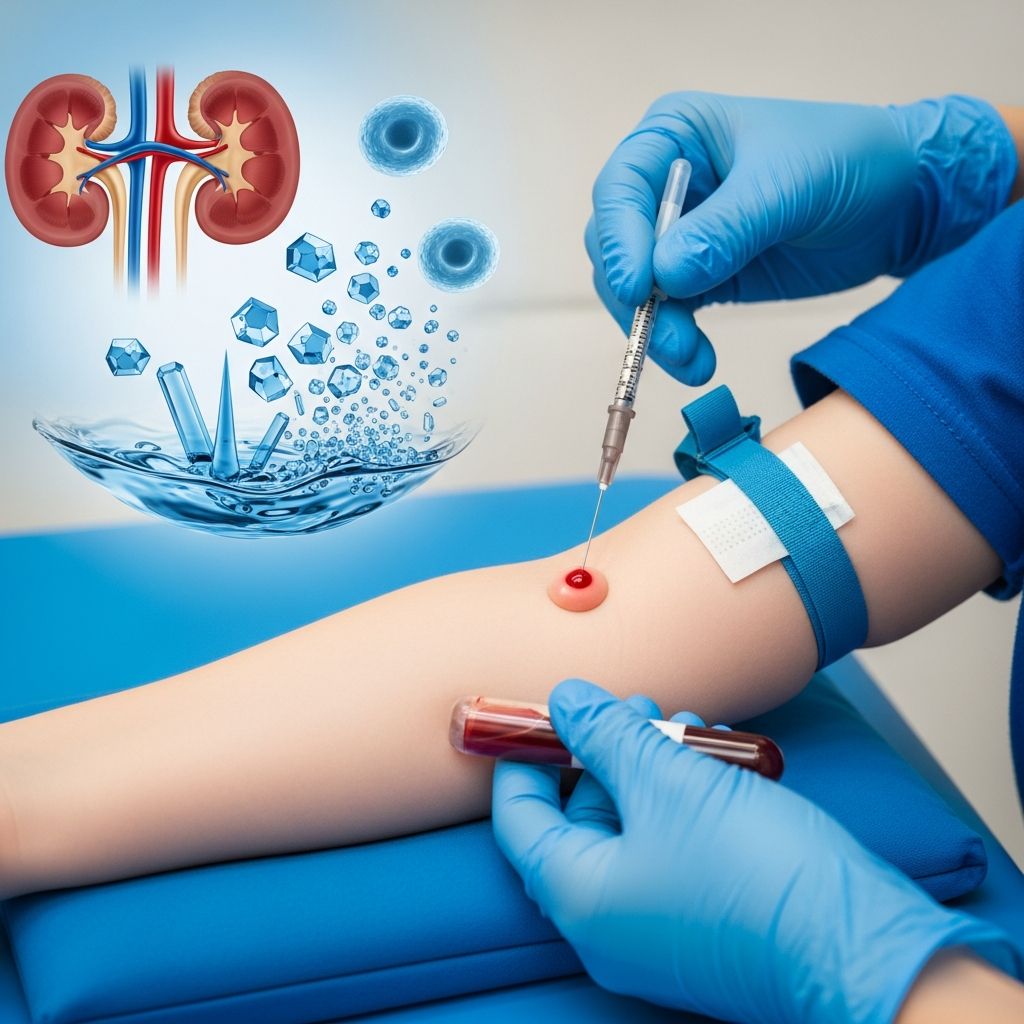
Fundamentals of Uric Acid and Its Role in Child Health
Uric acid is a chemical substance that forms naturally in the body when it breaks down compounds called purines, which are found in many foods and beverages. In healthy children, this waste product dissolves in the bloodstream and travels through the kidneys, where it is filtered out and passed through urine. However, when the body produces excessive amounts of uric acid or the kidneys cannot effectively eliminate it, problems can develop. Understanding this process is essential for parents who receive recommendations for uric acid testing from their child’s healthcare provider.
When Pediatricians Order Uric Acid Testing
Physicians may recommend a uric acid blood test for children in several distinct clinical scenarios. The primary reason is when a child’s body shows signs of breaking down cells at an unusually rapid rate or when kidneys are not efficiently removing uric acid from circulation. Additionally, children undergoing certain medical treatments often require monitoring through these tests.
Cancer Treatment and Chemotherapy Concerns
One of the most important indications for uric acid testing in pediatric patients involves children receiving cancer treatment. Some children with leukemia or other cancers develop elevated uric acid levels as cancer cells rapidly break down within the body. When chemotherapy or radiation therapy destroys cancer cells quickly, these treatments trigger the release of large amounts of purines into the bloodstream, which can lead to dangerously high uric acid concentrations. Regular uric acid testing helps oncologists monitor these levels and prevent serious complications from developing. Healthcare providers use these measurements to ensure that uric acid levels remain within safe ranges throughout the treatment course.
Kidney Function and Disease Detection
Abnormally low uric acid levels, a condition called hypouricemia, may signal kidney failure or other renal dysfunction in children. Conversely, kidney disease can impair the organ’s ability to eliminate uric acid efficiently, causing levels to rise. When children present with symptoms suggesting kidney problems, physicians often include uric acid testing as part of their diagnostic workup to assess kidney function and identify metabolic disorders affecting the urinary system.
Genetic and Metabolic Disorders Identified Through Testing
Uric acid levels in blood and urine serve as valuable diagnostic markers for rare genetic conditions that affect how the body processes purines and nucleic acids. Several inherited metabolic disorders produce characteristic patterns of abnormal uric acid levels that help physicians establish diagnoses.
Conditions Associated with High Uric Acid
Lesch-Nyhan syndrome represents a well-known genetic disorder affecting purine metabolism, resulting in markedly elevated serum uric acid and increased urinary excretion. Children with this condition often exhibit self-injurious behaviors, developmental delays, and a distinctive biochemical profile showing hyperuricemic hyperuricosuria. Another related condition, Kelley-Seegmiller syndrome, also presents with elevated uric acid levels and demonstrates how genetic variations in enzyme function can dramatically alter purine metabolism.
Conditions Associated with Low Uric Acid
Hereditary renal hypouricemia occurs when genetic mutations affect how kidneys handle uric acid, resulting in abnormally low serum levels despite normal or elevated urinary excretion. Children with molybdenum cofactor deficiency present with severe neurological symptoms along with low serum uric acid levels, making this test an essential component of diagnosis in infants with unexplained seizures and developmental problems.
Understanding Test Results and Normal Values
Interpreting uric acid test results requires understanding what constitutes normal ranges for children, which may differ from adult values. Healthcare providers consider the child’s age, sex, and overall health status when evaluating whether results are normal, elevated, or depressed. High uric acid levels may develop from several causes, including rapid cell breakdown from cancer treatment, certain medications, obesity, or dietary factors heavy in purine-rich foods.
Elevated Uric Acid Levels
When children have hyperuricemia, or elevated uric acid in the bloodstream, several potential explanations exist. Conditions causing rapid cell destruction naturally increase uric acid production. Additionally, certain medications, including some diuretics, immunosuppressants, and other pharmaceutical agents, can interfere with kidney function and uric acid elimination. Dietary factors also play a role, as foods high in purines can contribute to elevated levels in susceptible children.
Low Uric Acid Levels
Hypouricemia in children warrants investigation, as it may indicate kidney dysfunction, malnutrition from starvation, or rare inherited metabolic disorders. Low levels that result from genetic conditions require specialized testing to identify the specific enzyme defect or genetic mutation responsible for impaired uric acid production or excessive urinary loss.
Conditions and Symptoms Prompting Testing
Pediatricians recommend uric acid testing when children develop specific symptoms or receive diagnoses suggesting uric acid-related problems.
- Cancer patients undergoing chemotherapy or radiation therapy showing signs of tumor lysis syndrome
- Children experiencing sudden severe pain in the lower abdomen, side, groin, or back suggesting kidney stones
- Unexplained hematuria, or blood in the urine, particularly when accompanied by other symptoms
- Infants or young children with intractable seizures and developmental delays
- Children with recurrent kidney stones despite standard treatment
- Patients diagnosed with chronic kidney disease requiring metabolic monitoring
- Children showing self-injurious behaviors combined with developmental delays
- Cases of gout in children, an uncommon but possible presentation
The Blood Test Procedure and Patient Preparation
A uric acid blood test is a straightforward procedure involving collection of a small blood sample, typically from a vein in the arm. Parents can help their children prepare by discussing what to expect during the test. Some children benefit from learning about the procedure beforehand to reduce anxiety. Before the test, parents should ask their child’s healthcare provider whether any fasting is required, as some facilities may request that children avoid food or drink for a specific period beforehand. Additionally, parents should inform the healthcare provider about any medications their child takes, as certain drugs can affect test results.
Supporting Your Child During Testing
Children with anxiety about blood tests benefit from various coping strategies. Parents might discuss calming techniques, such as deep breathing or visualization. Some facilities allow parents to remain with younger children during the procedure, providing comfort and reassurance. Explaining the purpose of the test in age-appropriate language helps children understand why the test is necessary and what will happen.
Urine Testing for Uric Acid Assessment
In addition to blood tests, physicians sometimes order urine uric acid testing to obtain a more complete picture of the body’s uric acid metabolism. Urine testing measures how much uric acid the kidneys are filtering and eliminating, which provides different information than blood testing alone. This complementary test helps determine whether elevated blood uric acid results from overproduction or from inadequate kidney elimination.
Urine testing is particularly valuable when investigating kidney stone formation, as it can reveal whether high uric acid in the urine is contributing to stone development. The test also helps healthcare providers choose the most appropriate medications to lower uric acid levels, as treatment strategies differ depending on whether the problem involves excess production or impaired elimination.
Managing and Treating Abnormal Uric Acid Levels
Once testing reveals abnormal uric acid levels, healthcare providers develop treatment plans based on the underlying cause. For children receiving cancer treatment, managing uric acid may involve ensuring adequate hydration, adjusting medications, or using specific drugs that reduce uric acid production or increase its elimination. For children with genetic metabolic disorders, treatment addresses the specific enzyme defect or underlying problem.
Lifestyle and Dietary Modifications
Beyond medical treatment, dietary changes can help manage uric acid levels in some cases. Reducing foods high in purines, including certain meats, seafood, and organ meats, may help lower uric acid production. Encouraging adequate hydration supports kidney function and uric acid elimination through urine. Maintaining healthy weight reduces the risk of elevated uric acid levels in children who are overweight.
Frequently Asked Questions About Uric Acid Testing
Q: Will my child experience pain during a uric acid blood test?
A: Most children experience minimal discomfort, often just a brief pinch when the needle inserts. The actual blood collection takes only seconds. Urine testing causes no discomfort whatsoever.
Q: How quickly will we receive test results?
A: Most laboratories return uric acid test results within one to two business days. Your healthcare provider will contact you with results and discuss what they mean for your child’s health.
Q: Can diet significantly affect my child’s uric acid levels?
A: Yes, diet plays a role in uric acid production. Foods high in purines can increase levels, particularly in children with predisposition to elevated uric acid. However, genetic and metabolic factors are more significant than diet in determining overall uric acid levels.
Q: What should I do if my child’s uric acid levels are abnormal?
A: Follow up with your child’s healthcare provider to understand what the abnormal results mean and whether additional testing is needed. Your provider will determine whether treatment is necessary and what follow-up monitoring may be required.
Q: Are uric acid tests performed regularly during cancer treatment?
A: Yes, children undergoing chemotherapy or radiation often have uric acid levels checked regularly to monitor for dangerous elevations and adjust treatment as needed to prevent complications.
Q: Can medications affect uric acid test results?
A: Certain medications can influence uric acid levels, including diuretics, immunosuppressants, and other drugs. Always inform your healthcare provider about all medications your child takes before testing.
Conclusion: The Value of Uric Acid Testing in Pediatric Care
Uric acid testing provides pediatricians with crucial information about their young patients’ metabolic health, kidney function, and response to cancer treatments. Whether investigating unexplained symptoms, monitoring cancer therapy effects, or screening for genetic metabolic disorders, these tests serve as valuable diagnostic tools. Parents who understand the purpose and significance of uric acid testing can better support their children through the testing process and work collaboratively with healthcare providers to address any abnormal results. Open communication with your child’s physician about test recommendations, preparation, and result interpretation ensures that your family receives the most appropriate care based on comprehensive health assessment.
References
- Uric acid, an important screening tool to detect inborn errors of metabolism — National Center for Biotechnology Information (NCBI). 2017-12-01. https://www.ncbi.nlm.nih.gov/pmc/articles/PMC5588617/
- Blood Test: Uric Acid (for Parents) — Norton Children’s Kids Health. 2024. https://kidshealth.org/en/parents/test-uric.html
- Uric acid – blood — UCSF Benioff Children’s Hospitals. 2024. https://www.ucsfbenioffchildrens.org/medical-tests/uric-acid—-blood-
- Uric Acid Test: MedlinePlus Medical Test — National Library of Medicine. 2024. https://medlineplus.gov/lab-tests/uric-acid-test/
- Uric acid urine test — UCSF Health. 2024. https://www.ucsfhealth.org/medical-tests/uric-acid-urine-test