Understanding Toddler Behavior in Unexpected Situations
Parenting involves countless unpredictable moments, but few are as memorable as when a young child decides to have a complete meltdown in front of an audience. The challenge intensifies when that audience includes dignitaries, cameras, and millions of people who will eventually see the footage online. Toddlers lack the emotional maturity and impulse control to regulate their feelings, meaning that tantrums can erupt at any moment, regardless of the social significance of the occasion. Understanding why these outbursts happen is the first step toward managing them with grace and perspective.
The Nature of Early Childhood Development and Emotional Regulation
Children between the ages of one and three are navigating a complex developmental stage. Their brains are still forming neural pathways responsible for emotional control, decision-making, and social awareness. During this period, toddlers experience intense emotions but lack the vocabulary and coping mechanisms to express them appropriately. What adults perceive as defiance or rudeness is actually a toddler’s natural response to frustration, overstimulation, or discomfort. Tantrums are not character flaws or signs of poor parenting; they are a predictable and universal aspect of human development.
Triggers That Lead to Public Meltdowns
Several common factors can precipitate a toddler tantrum in formal settings:
- Discomfort with clothing, particularly tight or unfamiliar garments that restrict movement
- Overstimulation from unfamiliar environments, loud noises, or crowds of people
- Hunger, fatigue, or dehydration, which impairs emotional regulation significantly
- Lack of autonomy and control over their own choices and decisions
- Transitions between activities or changes to expected routines
- Sensory sensitivities or reactions to particular textures, sounds, or lighting
The Impact of Formal Settings on Young Children
Formal occasions like state dinners, holiday celebrations, or official events present unique challenges for families with young children. These settings typically involve several elements that conflict with toddler needs and preferences. Long periods of sitting still, restrictive clothing, unfamiliar food, and the expectation of polite behavior create a perfect storm for emotional dysregulation. Parents often find themselves caught between honoring the significance of the occasion and acknowledging their child’s legitimate need to move, express themselves, and find comfort.
The pressure to maintain composure and avoid embarrassment can actually intensify the situation. When parents become anxious about how their child’s behavior reflects on them, that tension often transmits to the child, potentially escalating the emotional response. Understanding that a tantrum is not a reflection of parental failure but rather a normal developmental occurrence can help parents respond with greater patience and effectiveness.
Strategies for De-escalating Toddler Tantrums
Several evidence-based approaches can help parents navigate these challenging moments:
Preparation and Prevention
While tantrums cannot always be prevented, thoughtful preparation can reduce their frequency and severity. Parents benefit from discussing expectations with their children in age-appropriate language, allowing them choices about certain aspects of the event, and building in flexibility for breaks and comfort measures. For formal occasions, considering the timing of the event relative to the child’s nap schedule, meal times, and typical energy levels can make a significant difference. Bringing comfort items, snacks, and entertainment options provides alternatives when a child becomes overwhelmed.
Remaining Calm and Composed
One of the most powerful tools a parent possesses during a child’s tantrum is their own emotional regulation. Children mirror the emotional responses of adults around them. When a parent remains calm, speaks softly, and maintains open body language, the child’s nervous system often responds by gradually reducing its stress response. Taking slow, deep breaths and reminding oneself that this is a temporary situation helps parents avoid reactive responses that might intensify the meltdown.
Validating Emotions While Setting Boundaries
Effective tantrum management involves acknowledging the child’s feelings while maintaining reasonable limits on their behavior. Phrases like “I see you’re feeling frustrated” or “Your feelings matter, and so do our family’s choices” validate the child’s experience without reinforcing the tantrum as an effective communication strategy. This balanced approach teaches emotional intelligence while still maintaining parental authority and consistency.
Notable Examples of Public Poise During Unexpected Moments
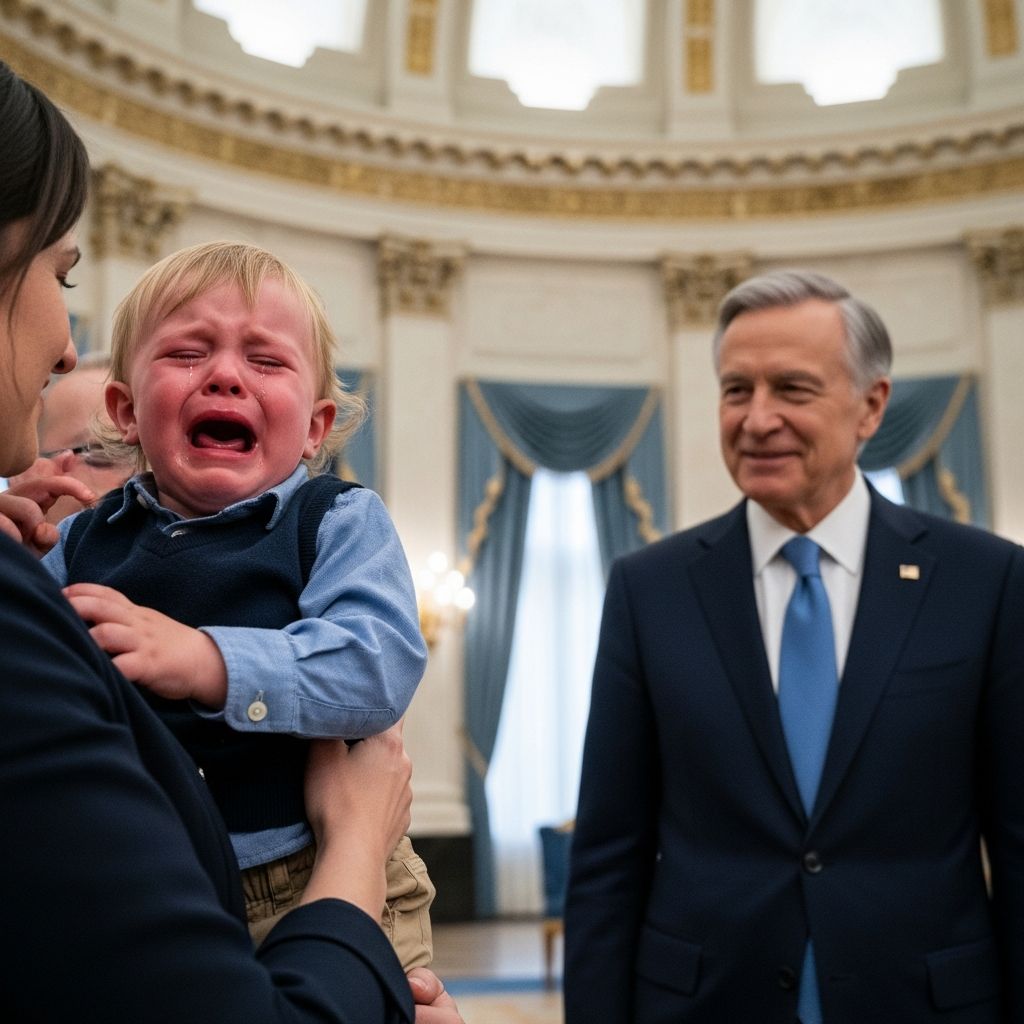
History provides examples of prominent figures handling unexpected disruptions with humor and composure. When a young child experienced an emotional outburst during an official White House event, the high-profile guest demonstrated remarkable equanimity. Rather than displaying frustration or disapproval, the individual acknowledged the moment with lightheartedness and understanding. This response accomplished several important things: it normalized the child’s experience, demonstrated compassion to the attending family, and transformed a potentially mortifying moment into something endearing and human.
The incident gained widespread media attention, ultimately opening conversations about childhood development, parental anxiety, and the gap between public expectations and private realities. Interestingly, the visibility of such moments can serve a beneficial purpose by reminding society that children are developmentally incapable of consistently meeting adult standards of decorum, and that this is entirely normal and healthy.
The Role of Social Media in Amplifying Parenting Moments
In the modern era, embarrassing parenting moments have the potential to reach global audiences within hours. What once might have been a private family anecdote can suddenly become the subject of millions of comments, opinions, and judgments. The viral spread of such content can create significant stress for parents, who find themselves second-guessed by strangers about their parenting choices and their child’s behavior.
However, the democratization of these moments through social sharing has also created unexpected benefits. Parents discover they are not alone in their experiences. The comments section often fills with supportive messages from other adults who have navigated similar situations. Seeing that accomplished people, including world leaders, respond to childhood meltdowns with grace and humor can reassure anxious parents that their worth as caregivers is not determined by their child’s ability to maintain perfect behavior in formal settings.
Navigating Judgment and Societal Expectations
One of the most challenging aspects of parenting in public is contending with unsolicited judgment from observers and commentators. Critics sometimes interpret a child’s tantrum as evidence of inadequate parenting, lack of discipline, or failure to prepare properly. These judgments reflect fundamental misunderstandings about child development and the limitations of parental control over toddler emotions.
Parents who encounter criticism for their child’s public tantrums benefit from reminding themselves of several important facts. First, tantrums are not caused by permissiveness or insufficient boundaries; they are neurobiological events related to brain development. Second, the person offering criticism may not have recent experience with toddler development, or may be drawing from outdated parenting models. Third, every parent encounters their child’s emotional dysregulation at some point, regardless of their parenting approach or dedication. Finally, how a parent responds to the tantrum—with compassion, patience, and appropriate guidance—matters far more than whether the tantrum occurs in the first place.
Teaching Emotional Skills for Long-term Development
While managing immediate tantrums is important, the broader goal involves helping children develop emotional intelligence and self-regulation skills over time. This process unfolds gradually across years, not weeks or months. Parents can support this development by:
- Naming emotions regularly in conversation, helping children develop emotional vocabulary
- Modeling appropriate emotional responses and coping strategies in their own lives
- Allowing children to experience a range of emotions without judgment or dismissal
- Teaching simple calming techniques like deep breathing or physical movement
- Maintaining consistent, predictable routines that support emotional stability
- Providing advance notice of transitions and unexpected changes
Reframing Embarrassing Moments as Opportunities
Parents who shift their perspective can view public tantrums as valuable teaching moments rather than failures. Each instance provides concrete opportunities to practice emotional regulation, problem-solving, and resilience. When parents respond to tantrums with patience and thoughtfulness rather than embarrassment and reactivity, they model important skills their children will need throughout their lives.
Furthermore, children who witness their parents handling difficult situations gracefully—including their own emotional outbursts—develop greater confidence in facing challenges themselves. They learn that making mistakes or having difficult emotions does not define their worth, and that compassionate responses to distress are always possible.
Frequently Asked Questions
Q: Is my toddler’s tantrum a sign that I’m not parenting correctly?
A: No. Tantrums are a universal and normal part of toddler development. They reflect the child’s developing brain and limited emotional regulation skills, not parenting effectiveness. How you respond to the tantrum matters more than whether it occurs.
Q: How can I prevent my child from having a tantrum in public?
A: While tantrums cannot always be prevented, you can reduce their likelihood by ensuring your child is well-rested, well-fed, and hydrated; providing advance preparation and discussion; allowing age-appropriate choices; and bringing comfort items or entertainment for formal occasions.
Q: What should I do if my child has a meltdown during an important event?
A: Stay calm, validate the child’s feelings, and move to a quieter location if possible. Remove any triggers you can control and wait for the intense emotion to pass. Remember that this moment is temporary and will not define you or your child.
Q: How do I respond to criticism about my child’s behavior?
A: You can politely remind critics that tantrums are developmentally normal and that your parenting approach focuses on teaching emotional skills over time rather than demanding perfect behavior from a young child.
Q: At what age do children gain better emotional regulation?
A: Significant improvements typically occur between ages three and five, though development continues throughout childhood and into adolescence. Each child develops at their own pace.
References
- Toddler Throws Tantrum in Front of President Obama — TIME Magazine. 2015-05-14. https://time.com/3895191/toddler-tantrum-president-obama/
- The Story Behind That Jewish Toddler Who Threw a Tantrum in Front of President Obama — Kveller. 2015. https://www.kveller.com/the-story-behind-that-jewish-toddler-who-threw-a-tantrum-in-front-of-president-obama/
- Social and Emotional Development in Early Childhood — American Psychological Association. 2024. https://www.apa.org/science/about/psa/social-emotional
- Understanding Toddler Tantrums and Emotional Regulation — Zero to Three. 2023. https://www.zerotothree.org/
- Parenting Young Children: Compassionate Approaches to Common Challenges — Child Development Institute. 2024. https://childdevelopmentinstitute.org/