Glucose, often called blood sugar, is the main fuel that powers a child’s body and mind. When glucose levels are balanced, kids have the energy, focus, and strength they need to grow and thrive, but when levels are too low or too high, children can feel unwell and, in some cases, face serious health risks.
What Glucose Actually Is
Glucose is a type of simple sugar that circulates in the bloodstream and provides energy to every organ, especially the brain. Children get glucose mainly from the carbohydrates in foods such as bread, pasta, fruit, milk, and sweets, but the body can also release stored glucose from the liver between meals.
The body carefully regulates the amount of glucose in the blood so that there is enough for energy without reaching levels that can damage blood vessels and organs over time. This process depends on hormones, with insulin playing the starring role in keeping blood sugar within a healthy range.
How a Child’s Body Uses Glucose
Once a child eats, the digestive system breaks carbohydrates down into glucose, which then enters the bloodstream. Rising blood sugar signals the pancreas to release insulin, a hormone that helps glucose move from the blood into the body’s cells to be used immediately for energy or stored for later.
Between meals, during sleep, or during long periods of play, the liver releases stored glucose to prevent blood sugar from dropping too low. This constant balancing act allows children to think clearly, move their muscles, and support normal growth and development.
Key roles of glucose in children
- Brain fuel: The brain prefers glucose as its main energy source, which is critical for learning, attention, and behavior.
- Muscle energy: Muscles use glucose to power movement, from running at recess to organized sports.
- Growth support: Adequate glucose helps support growth, repair tissues, and maintain a healthy immune system.
Blood Sugar: What the Numbers Mean
When healthcare professionals talk about blood sugar, they are referring to the concentration of glucose in the bloodstream, usually measured in milligrams per deciliter (mg/dL) or millimoles per liter (mmol/L). These measurements help determine whether a child’s glucose level is within a safe range, too low, or too high.
For healthy children without diabetes, blood sugar naturally goes up after meals and falls between meals, but it usually stays within a relatively narrow band. Children with diabetes or certain medical conditions need closer monitoring because their bodies do not regulate glucose as well on their own.
| Situation | Approximate Level | What It Often Means |
|---|---|---|
| Before a meal (fasting) | Lower end of the normal range | Child may feel hungry; body is ready for food. |
| After a meal | Moderately higher than fasting | Normal rise as the body digests carbohydrates. |
| Persistently low | Below the expected range for age | Possible hypoglycemia; may require quick treatment. |
| Persistently high | Above the expected range for age | Possible hyperglycemia; may be linked to diabetes or illness. |
Exact target numbers depend on age, health conditions, and guidance from a child’s healthcare team. Parents should always rely on individualized targets provided by their pediatrician or pediatric endocrinologist.
The Role of Insulin and Other Hormones
Insulin is produced by the pancreas and acts like a key, unlocking cells so glucose can enter and be used for energy. When insulin is working properly, blood sugar rises after meals and then gradually returns to a more steady level as glucose moves into cells.
Other hormones also influence blood sugar. Stress hormones, growth hormone, and glucagon can all raise blood sugar by encouraging the liver to release more glucose into the bloodstream, which is especially important during illness, puberty, or intense emotional stress.
When insulin does not work correctly
- Insulin deficiency: In type 1 diabetes, the pancreas makes little or no insulin, so glucose builds up in the blood instead of entering the cells.
- Insulin resistance: In some children, especially those with excess weight or certain risk factors, the body becomes less responsive to insulin, making it harder to keep blood sugar in range.
- Medication effects: Some medicines can change how insulin works or how much glucose the liver releases, so healthcare providers may adjust doses or monitor levels more closely.
Why Balanced Blood Sugar Matters for Children
Stable blood sugar helps children feel energetic, focused, and emotionally steady throughout the day. Big swings in glucose can cause symptoms that interrupt school, play, and sleep, and repeated extremes may harm health over time.
Both short-term and long-term effects are important. A sudden drop in blood sugar can cause dizziness or fainting, while ongoing high blood sugar can damage blood vessels, nerves, and organs if left untreated.
Everyday benefits of stable glucose
- More consistent energy levels and fewer “crashes.”
- Better concentration in class and during homework.
- Improved mood and behavior, with fewer sudden outbursts related to hunger or fatigue.
Low Blood Sugar (Hypoglycemia) in Kids
Hypoglycemia occurs when a child’s blood sugar drops below the healthy range for their age. Children with diabetes who use insulin or certain medications are at higher risk, but low blood sugar can also happen in other situations, such as prolonged fasting or intense exercise without enough food.
Parents and caregivers should learn to recognize signs of low blood sugar quickly, because prompt treatment is usually simple and very effective.
Common signs of low blood sugar
- Sudden hunger or complaining of feeling “starving.”
- Shakiness, sweating, or pale skin.
- Headache, dizziness, or trouble concentrating.
- Irritability, unusual crying, or mood changes.
- In more severe cases, confusion, clumsiness, or seizures.
What to do if you suspect low blood sugar
- Offer a quick source of sugar, such as glucose tablets or a small amount of sweetened drink, if recommended by the child’s healthcare team.
- Recheck symptoms after several minutes; if your child has diabetes and you have a meter, confirm with a blood sugar test if possible.
- Once the child feels better, follow up with a snack or meal that includes longer-lasting carbohydrates and some protein.
- Seek urgent medical care if the child is unconscious, having a seizure, or cannot safely swallow.
High Blood Sugar (Hyperglycemia) in Kids
Hyperglycemia happens when there is more glucose in the blood than the body can use or store safely. It is common in children with diabetes but can also occur during severe illness, high stress, or when certain medications are used.
Occasional mild elevations may not cause obvious symptoms, but persistent or very high levels need medical evaluation and treatment to prevent complications.
Typical signs of high blood sugar
- Increased thirst and a dry mouth.
- Frequent urination, including nighttime bedwetting in a previously dry child.
- Tiredness, weakness, or irritability.
- Blurred vision or headaches.
- Unexplained weight loss or increased hunger over time.
When high blood sugar is an emergency
Very high blood sugar, especially in a child with type 1 diabetes, can lead to a serious condition in which the body starts breaking down fat for energy and produces acids called ketones. When ketones build up in the blood, children may develop stomach pain, vomiting, rapid breathing, or a fruity odor on the breath.
Any child with suspected severe high blood sugar, vomiting, breathing changes, or confusion should receive urgent medical attention. Parents of children with diabetes are usually given written instructions on when to test for ketones and when to seek emergency care.
Factors That Influence Blood Sugar in Children
Many daily factors affect a child’s blood sugar, which is why numbers can change from hour to hour. Understanding these influences helps parents plan meals, activities, and medications more effectively.
Some of these factors are within a family’s control, while others, like growth and hormones, simply require extra monitoring and flexibility.
Common influences on glucose levels
- Food choices: Carbohydrate-rich foods raise blood sugar more than foods that are mostly protein or fat.
- Meal timing: Skipping meals or long gaps between eating can cause drops in blood sugar, especially in children on insulin.
- Physical activity: Exercise usually lowers blood sugar because muscles use more glucose for fuel.
- Illness and infection: Fevers, colds, and other illnesses can push blood sugar higher and make it harder to control.
- Stress and emotions: Worry, fear, or excitement can trigger hormones that increase blood sugar.
- Growth and puberty: Hormonal changes during growth spurts and adolescence often increase insulin needs.
How Blood Sugar Is Measured in Kids
Children may have their blood sugar checked for many reasons, including routine screening, symptoms of diabetes, or ongoing management of a known condition. Tests can be done in a healthcare office, clinic, or at home with portable devices.
Most day-to-day checks involve a small drop of blood from a finger, but longer-term control can be assessed with laboratory tests that look at average blood sugar over time.
Common blood sugar tests
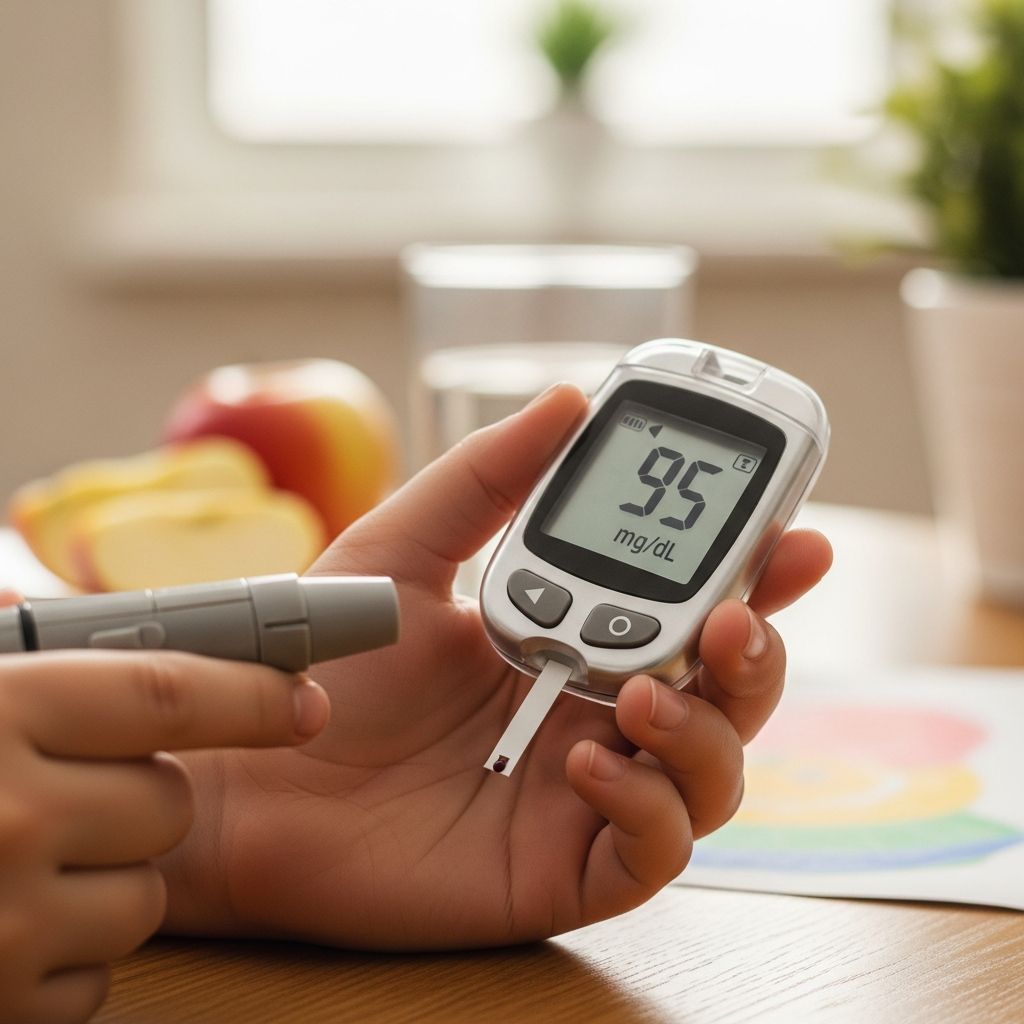
- Fingerstick test: A small drop of blood placed on a test strip gives a near-immediate reading of current blood sugar.
- Continuous glucose monitor (CGM): A tiny sensor under the skin measures glucose in tissue fluid throughout the day and night, sending readings to a receiver or smartphone.
- Laboratory blood tests: Fasting tests or average-glucose tests (often over several months) help doctors diagnose diabetes and assess long-term control.
Everyday Tips for Supporting Healthy Blood Sugar
Parents do not need to become experts in every detail of metabolism to help their children maintain healthy blood sugar. Small, consistent habits can make a big difference, especially for children at risk of diabetes or those already diagnosed.
Simple routines around meals, movement, and sleep can support more stable glucose levels and overall wellbeing.
Practical strategies at home
- Offer regular meals and snacks that combine carbohydrates with protein and healthy fats, such as yogurt with fruit or whole-grain toast with nut butter.
- Limit highly processed sugary drinks and snacks, reserving them for special occasions or using them thoughtfully for treating low blood sugar when advised.
- Encourage daily physical activity, from active play to sports, while being prepared with snacks if your child uses insulin or tends to drop low during exercise.
- Establish predictable sleep routines, since poor sleep can interfere with appetite hormones and blood sugar control.
- Teach school staff, relatives, and caregivers how to recognize and respond to low or high blood sugar if your child has diabetes or another glucose-related condition.
Talking to Children About Blood Sugar
Explaining blood sugar in simple, age-appropriate language helps children feel more in control and less afraid of medical checks. Even young kids can understand that food gives them “fuel” and that certain tools help doctors see how much fuel is in their bodies.
As children grow older, involving them in reading labels, planning snacks, and checking blood sugar (when appropriate) encourages independence and healthier habits that can last into adulthood.
When to Call a Healthcare Professional
Parents should contact a healthcare professional if a child has ongoing symptoms such as frequent thirst, constant tiredness, unexplained weight changes, or repeated episodes of feeling shaky or dizzy. These signs may indicate that blood sugar is often outside a healthy range.
Children already diagnosed with diabetes need regular follow-up to adjust medication doses, review blood sugar logs, and check for early signs of complications. Any sudden change in usual readings, frequent lows or highs, or concerns about growth and development should prompt a call to the child’s doctor.
Frequently Asked Questions
Is blood sugar testing painful for kids?
Most children describe fingerstick tests as a quick pinch rather than intense pain. Using modern lancet devices on the sides of the fingertips, rotating sites, and keeping the hands warm ahead of time can make the process more comfortable.
Can a child have blood sugar problems without having diabetes?
Yes. Certain illnesses, medications, hormonal conditions, or long periods without food can cause low or high blood sugar in children who do not have diabetes. Any recurring symptoms should be discussed with a healthcare professional for proper evaluation.
Do all kids with high blood sugar need insulin?
Not always. Children with type 1 diabetes rely on insulin because their bodies produce little or none. Some children with other conditions may manage high blood sugar with lifestyle changes or different medications, depending on the cause and medical advice.
How can parents support a child newly diagnosed with diabetes?
Parents can learn how to check blood sugar, give medications, and recognize symptoms of low and high glucose, while also providing emotional support. Working closely with a diabetes care team, attending education sessions, and connecting with other families can help make the adjustment smoother.
Will my child outgrow blood sugar problems?
Some temporary issues related to illness or short-term medication use may resolve, but chronic conditions like type 1 diabetes are long term and require ongoing care. Regular medical follow-up helps determine whether a child’s blood sugar challenges are temporary or part of a lasting diagnosis.
Important: This article provides general educational information and is not a substitute for professional medical advice, diagnosis, or treatment. Always discuss your child’s specific symptoms and test results with a qualified healthcare provider.