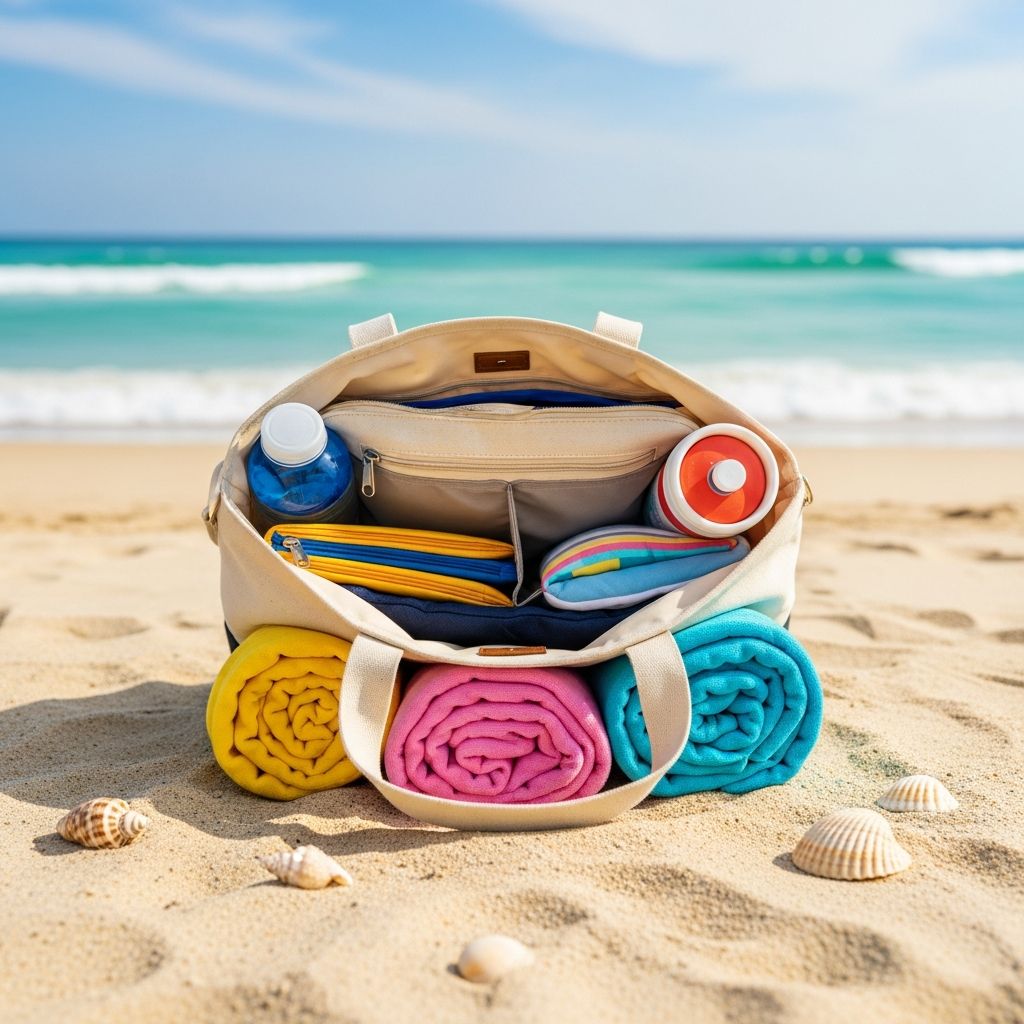
Heading to the beach with kids requires thoughtful preparation to balance fun, safety, and convenience. A well-packed bag prevents mishaps and maximizes enjoyment, covering everything from UV protection to playtime gear. This guide outlines key categories with practical tips drawn from family experiences and expert recommendations.
Selecting the Perfect Beach Bag and Setup Gear
Start with a sturdy, spacious carrier that withstands sand, water, and heavy loads. Opt for waterproof or quick-dry totes with zippers and compartments to organize items efficiently. Pair it with a large sand-resistant mat or blanket that folds compactly for easy transport.
- Recommended bag features: Zippered closure, multiple pockets, lightweight yet durable material.
- Sand-free mats: Quick-drying, oversized for family seating, packs into a small pouch.
- Extras: Beach wagon for hauling gear if walking long distances.
These foundation items create a clean base camp, keeping sand out of snacks and towels dry for post-swim use.
Sun Protection: Shielding Skin and Eyes
UV exposure is the top risk at beaches, especially for children whose skin is more sensitive. Prioritize broad-spectrum, water-resistant sunscreen with SPF 30-50, reef-safe formulas to protect marine life. Apply generously 15 minutes before sun exposure and reapply every two hours or after swimming.
| Item | Why Essential | Tips for Families |
|---|---|---|
| Mineral-based sunscreen | Blocks UVA/UVB rays effectively | Choose fragrance-free for sensitive skin |
| Rash guards/swim shirts | UPF 50+ coverage for torso | Long-sleeve, quick-dry fabrics |
| Wide-brim hats | Shades face and neck | Chin straps prevent loss in wind |
| UV sunglasses | Protects eyes from glare | Straps for kids to keep on |
Incorporate lip balm with SPF and after-sun aloe for soothing. The American Academy of Pediatrics recommends these measures to prevent sunburn and long-term skin damage.
Hydration and Nutrition: Fuel for Beach Adventures
Dehydration sneaks up fast in heat; pack insulated bottles and frozen pouches to keep drinks cold. Focus on portable, non-messy foods that sustain energy without attracting sand or wildlife.
- Insulated tumblers or reusable bottles: Aim for 1 per person plus extras.
- Snacks: Fresh fruit slices, cheese sticks, crackers, nut-free granola bars.
- Coolers: Soft-sided with ice packs for sandwiches and yogurt.
- Hydration hack: Freeze water bottles overnight for chilled drinks that double as ice.
Avoid sugary drinks; opt for electrolyte packets if active play leads to sweating. Proper nutrition supports immunity and mood during long days outdoors.
Water Safety and Swim Essentials
Beaches demand gear for safe water play. Life vests sized for each child provide flotation without restricting movement. Include swim diapers for infants to maintain pool/beach hygiene standards.
- Swimsuits and rash guards: Multiple changes in waterproof bags.
- Water shoes/flip-flops: Protect feet from hot sand, rocks, sharp shells.
- Goggles and nose clips: For comfortable snorkeling or wave jumping.
- Floaties/armbands: US Coast Guard-approved for supervised use only.
Always supervise closely; no gear replaces adult vigilance near rip currents or waves.
Sand Play and Entertainment Must-Haves
Keep kids engaged with simple, durable toys that spark creativity. Buckets, shovels, and molds build castles; inflatables add active fun.
| Toy Type | Age Suitability | Storage Tip |
|---|---|---|
| Bucket/shovel sets | All ages | Nestable for compact packing |
| Beach balls/frisbees | 3+ | Deflate to save space |
| Kites/nets | 5+ | String in ziplock bags |
| Sand wheels/sifters | 2+ | Lightweight plastic |
Bring a book or portable speaker for parent downtime, but prioritize kid-focused items to minimize boredom.
First Aid and Hygiene Kit
Mishaps happen; a compact kit handles cuts, stings, and irritations. Stock bandages, antiseptic wipes, tweezers, and motion sickness remedies.
- Core items: Waterproof bandages, hydrocortisone cream, antihistamines, pain relievers (age-appropriate doses).
- Hygiene: Sanitizing wipes, hand sanitizer, baby powder for sand removal.
- Special needs: Insect repellent (DEET-free for kids), earplugs for surfers.
The Red Cross advises including gloves and distilled water for wound flushing in beach first aid kits.
Comfort and Cleanup Conveniences
Quick-dry microfiber towels absorb fast and pack small. Cover-ups and extra clothes in ziplocs ease transitions from beach to car.
- Towels: Turkish or microfiber, one per person.
- Change of clothes: Dry outfits, underwear in sealed bags.
- Cleanup: Baby powder shakes off sand; wet bags contain swimsuits.
- Extras: Portable fan, misting spray bottle for instant cool-down.
These prevent gritty rides home and extend comfort into evenings.
Packing Organization Strategies
Divide the bag by category: Use pouches for toiletries, mesh bags for toys, cooler section for food. Color-code kid items (e.g., hats) for quick headcounts. A checklist app or printed list ensures nothing’s forgotten.
- Pre-pack night before: Test zippers, chill drinks.
- Family involvement: Assign each child a small pouch responsibility.
- Multi-use hacks: Sarongs as towels/blankets, bottles as weights for mats.
Efficient packing cuts stress, leaving more time for play.
Environmental and Safety Best Practices
Leave no trace: Pack out trash in dedicated bags. Choose biodegradable wipes and toys. Check local flags for water conditions; avoid peak sun (10am-4pm).
Teach kids ocean respect: No chasing wildlife, proper sunscreen disposal. NOAA emphasizes family education on rip currents for safer outings.
Frequently Asked Questions
What SPF sunscreen is best for kids at the beach?
SPF 30-50 broad-spectrum, water-resistant formulas reapplied frequently. Mineral options suit sensitive skin.
How do I keep sand out of everything?
Use baby powder post-swim, sand-free mats, and separate wet/dry zones in your bag.
Essential toys for toddlers vs. older kids?
Toddlers: Buckets/shovels. Older: Kites, balls for active play.
Can I pack a cooler in my beach bag?
Yes, soft-sided with ice packs; limit to half-full for insulation.
How much water per child per beach day?
Half body weight in ounces (e.g., 30lb child: 15oz minimum, more if hot).
Customizing for Your Family’s Needs
Tailor based on ages: Infants need swim diapers, shaded tents; teens want speakers, books. Test gear on short outings first. With these essentials, your beach day shifts from chaotic to cherished memories.
References
- Sunscreen for Children — American Academy of Pediatrics. 2023-06-01. https://www.aap.org/en/patient-care/sun-exposure/
- Hydration Guidelines for Children — Centers for Disease Control and Prevention. 2024-03-15. https://www.cdc.gov/healthywater/drinking/nutrition/index.html
- Water Safety Guidelines — U.S. Coast Guard. 2025-01-10. https://www.uscg.mil/water-safety/
- Beach First Aid Essentials — American Red Cross. 2024-07-22. https://www.redcross.org/get-help/how-to-prepare-for-emergencies/types-of-emergencies/water-safety/beach-safety.html
- Rip Current Safety — National Oceanic and Atmospheric Administration. 2024-05-20. https://www.noaa.gov/jetstream/rip-currents