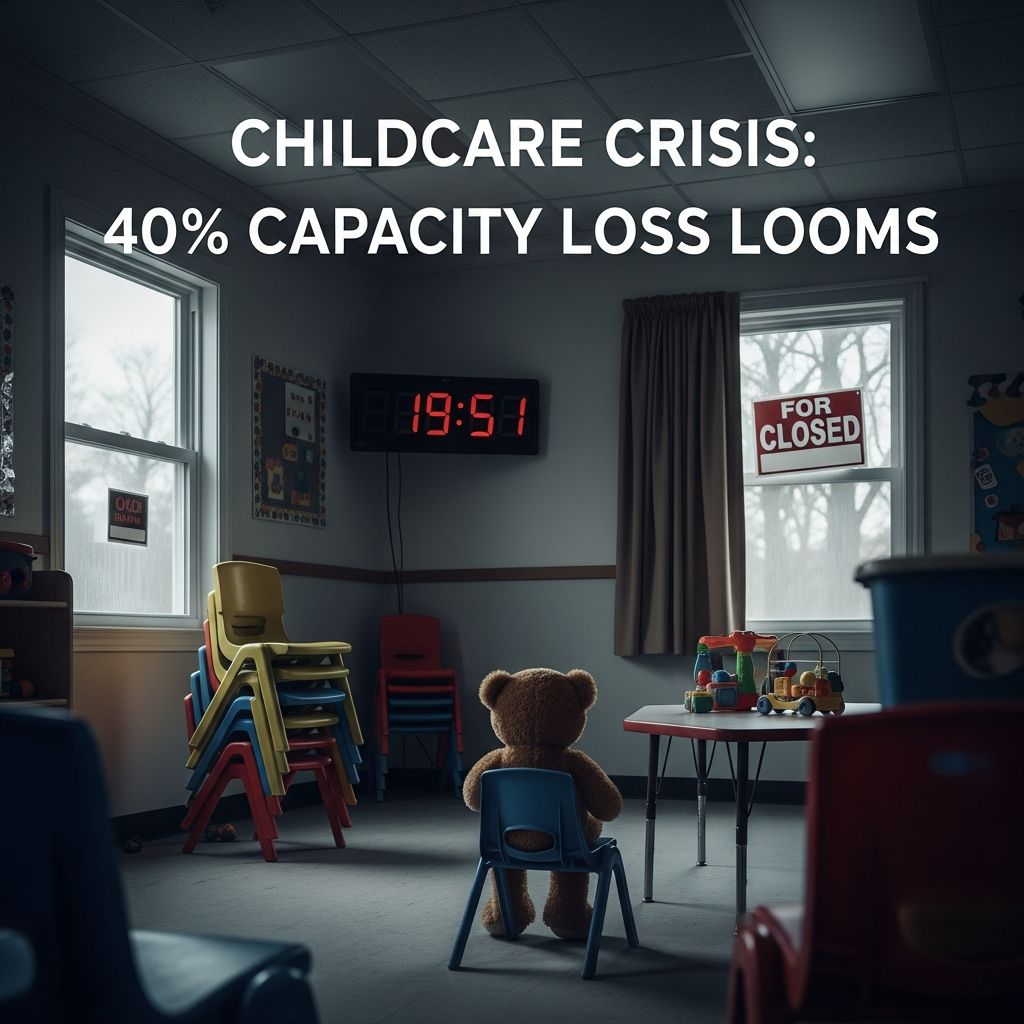
The United States is on the brink of a profound childcare catastrophe. Recent analyses reveal that without sustained federal support, approximately 40% of childcare centers could shutter their doors, displacing millions of children and forcing parents out of the workforce. This crisis, exacerbated by the lingering effects of the COVID-19 pandemic and recent policy shifts, threatens not only family stability but the broader economy, with projections estimating annual losses exceeding $172 billion.
The Scale of the Impending Collapse
Childcare infrastructure has been eroding for years, but the situation has reached critical mass. The expiration of American Rescue Plan (ARP) stabilization funds poses an existential threat to the sector. Experts predict that over 70,000 programs—one-third of those bolstered by ARP—will close, affecting roughly 3.2 million children nationwide. In states like Florida, Texas, New York, and Illinois, the fallout could displace hundreds of thousands of kids, severing access to essential early learning opportunities.
Pre-pandemic losses already decimated the landscape: the U.S. shed about 20,000 programs in the first two years of COVID-19, equating to nearly 10% of the total supply. Now, without intervention, the “child care cliff” looms larger, with some regions facing halving of licensed providers. Arkansas, Montana, Utah, Virginia, West Virginia, and Washington, D.C., could see reductions of 50% or more, while 14 other states brace for one-third cuts.
Economic Ripples: Billions in Lost Productivity
The childcare crisis extends far beyond individual families, inflicting massive economic damage. ReadyNation’s study quantifies the toll at $172 billion annually, encompassing lost earnings, diminished productivity, and reduced tax revenues. Families stand to forfeit $134 billion in wages and job-related costs, while employers absorb $38 billion in productivity hits from absenteeism and distractions. Taxpayers bear $37 billion in forgone revenue.
Parental workforce participation is particularly vulnerable. Millions of parents may exit employment or slash hours, with states like New York projecting 10,000 full exits and 74,000 reductions, costing $846 million in household income. Wisconsin alone risks $232 million in parental wage losses from turnover. Nationally, the sector could shed another 232,000 jobs, compounding unemployment in an already strained field.
| Impact Category | Annual National Cost | Source |
|---|---|---|
| Lost Family Earnings | $134 billion | |
| Employer Productivity Loss | $38 billion | |
| Tax Revenue Shortfall | $37 billion | |
| State Economic Activity | $10.6 billion |
Funding Freeze: Policy Decisions Fuel the Fire
Recent administrative actions have intensified the crisis. The Trump administration’s freeze on billions in childcare funding— including Child Care Development Fund and Temporary Assistance for Needy Families allocations totaling around $10 billion—has halted disbursements to all 50 states. This move, ostensibly for fraud verification, particularly targets programs amid concerns over schemes in places like Minnesota.
Head Start programs, vital for low-income families, face a separate $1 billion withholding, leading to immediate closures like the one in Washington’s Lower Yakima Valley affecting 400 children and 70 staff. Providers report that 75% of enrollment relies on these funds; without them, centers close within months, rippling through communities as parents lose work access and local businesses suffer.
Workforce Strains and Rising Costs
Low wages have long plagued early educators, making the field one of the slowest to rebound post-pandemic. As programs close and jobs vanish, surviving centers grapple with staffing shortages, driving up tuition and further pricing out families. Surveys of 12,000 educators across settings confirm that one-third of ARP recipients will likely fold without continued aid.
A national poll of 801 working parents underscores the chaos: 90% face availability issues, 60% experience work disruptions like early departures or missed days, and half lose shift portions. This leads to reduced hours, denied promotions, demotions, or firings. Nearly half struggle with affordability, and 40% with quality.
- Parent Challenges: 60%+ report leaving early, arriving late, or missing full days due to care issues.
- Quality Gaps: 40% can’t find high-quality options amid shortages.
- Educator Turnover: 232,000 jobs at risk, worsening supply.
Long-Term Developmental Risks for Children
Beyond economics, the crisis imperils child development. High-quality early care fosters brain growth, social skills, and school readiness. Disruptions from closures deprive children of these foundations, potentially scarring future workforces. In high-risk areas, losses exceed 200,000 children per large state, amplifying inequities for vulnerable populations.
State-by-State Breakdown of Devastation
The crisis varies geographically but is uniformly dire. Here’s a snapshot:
- Florida: 200,000+ children impacted.
- Texas: 300,000+ at risk.
- New York: 250,000 children, $846 million income loss.
- Illinois: Nearly 130,000 affected.
- Wisconsin: 2,110 programs, 87,000 children, $232 million wages.
Six jurisdictions face 50%+ provider cuts, underscoring regional vulnerabilities.
Pathways to Stability: Proposed Solutions
Averting disaster demands federal action. Immediate funding bridges—extending ARP-style stabilization—are essential to preserve programs. Long-term, comprehensive reforms should address wages, affordability, and supply. Universal pre-K, subsidies, and workforce incentives could rebuild capacity.
States must innovate too: public-private partnerships, tax credits, and employer-sponsored care. Bipartisan consensus recognizes childcare as infrastructure critical to economic vitality.
Frequently Asked Questions (FAQs)
What percentage of U.S. childcare centers are at risk of closing?
More than 40% of centers report they will shut down without additional funding, per the National Association for the Education of Young Children.
How many children could lose childcare access?
Approximately 3.2 million children nationwide, with hundreds of thousands per major state.
What are the economic costs of the crisis?
$172 billion annually, including $134 billion in family earnings and $38 billion in employer losses.
Why is federal funding being frozen?
The Trump administration cites fraud concerns, requiring verification before releasing billions to states.
How does this affect parents’ jobs?
Millions may leave work or cut hours, costing billions in wages and reducing productivity.
Voices from the Frontlines
Providers warn of imminent closures: one center with 75% subsidized enrollment predicts shutdown within a month sans funds. Families echo the desperation, with work-life balance crumbling under care shortages.
References
- Child Care Cliff: 3.2 Million Children Likely to Lose Spots with End of American Rescue Plan Funding — The Century Foundation. 2023-09-12. https://tcf.org/content/report/child-care-cliff/
- Why the Trump administration is freezing child care funding to all 50 states — WCNC (YouTube). 2026-01-01. https://www.youtube.com/watch?v=DbsMjXURJNw
- The Child Care Crisis Costs the U.S. Economy $172 Billion Each Year — Institute for Child Success / ReadyNation. 2024. https://www.instituteforchildsuccess.org/cost-child-care-crisis/
- New Trump Admin Withholding Nearly $1 Billion in Funding for Head Start — Senator Patty Murray. 2025. https://www.murray.senate.gov/new-trump-admin-withholding-nearly-1-billion-in-funding-for-head-start-crunching-centers-nationwide-and-forcing-devastating-closures/
- The U.S. might lose 40% of its childcare centers without funding — Mother.ly. 2024. https://www.mother.ly/life/us-losing-40-percent-childcare/