Type 1 diabetes requires lifelong care centered on insulin replacement, since the body no longer produces this vital hormone. For children, effective management involves balancing insulin doses with meals, activity, and regular monitoring to maintain blood glucose levels near normal ranges, typically 80-130 mg/dL before meals and under 180 mg/dL after.
Understanding Insulin: The Cornerstone of Treatment
Insulin therapy mimics the body’s natural release, using **basal insulin** for steady background coverage and **bolus insulin** for meal coverage. Kids often use multiple daily injections or pumps for flexibility.
- Basal insulin (e.g., glargine or degludec) provides 24-hour coverage, often given once or twice daily.
- Bolus insulin (e.g., lispro, aspart) is rapid-acting, dosed before meals based on carbs and current glucose.
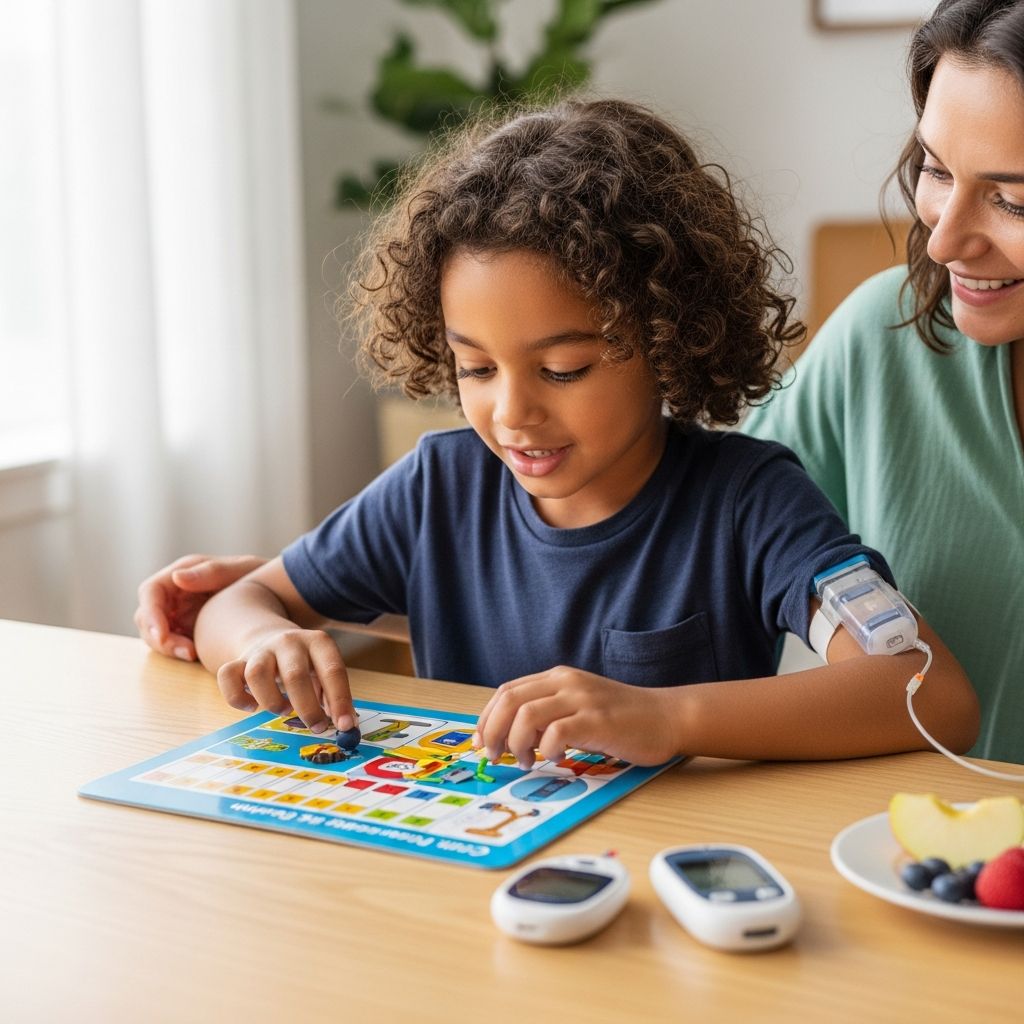
Insulin pumps deliver basal insulin continuously via a catheter, with bolus doses at the push of a button. This reduces injections and allows precise adjustments. For some kids, automated systems combine pumps with continuous glucose monitors (CGMs) for hybrid closed-loop delivery.
Daily Blood Glucose Monitoring Essentials
Regular checks prevent highs and lows. Fingerstick glucometers offer spot checks, while CGMs provide real-time data every 5 minutes, alerting to trends.
| Method | Pros | Cons |
|---|---|---|
| Fingerstick Glucometer | Accurate, affordable, no sensors needed | Requires blood draws multiple times daily |
| Continuous Glucose Monitor (CGM) | Trend arrows, alarms for lows/highs, less poking | Sensor insertion every 7-14 days, cost |
| Automated Insulin Delivery | Auto-adjusts basal based on CGM | Requires calibration, tech learning curve |
Kids should test before meals, bedtime, and with symptoms. Targets help avoid complications like eye or kidney issues over time.
Carbohydrate Counting and Meal Planning
Matching insulin to carbs is key. Families learn **insulin-to-carb ratios** (e.g., 1 unit per 15g carbs) via education.
- Track carbs in foods using apps or labels.
- Balance plates: half veggies/fruits, quarter protein, quarter grains.
- Avoid sugary drinks; opt for water or low-carb options.
Consistent meals aid control, but flexibility allows treats with extra insulin. Dietitians tailor plans, emphasizing whole foods for growth.
Physical Activity: Staying Active Safely
Exercise lowers glucose but risks lows. Kids need 60 minutes daily of fun activities like biking or soccer.
- Check glucose before, during (every 30 min), after.
- Snack with 15g carbs if under 100 mg/dL pre-activity.
- Reduce bolus insulin for high-carb meals before play.
Pumps can be disconnected briefly for contact sports, with site checks post-activity.
Handling Low Blood Sugar (Hypoglycemia)
Lows (under 70 mg/dL) cause shakiness, sweatiness, confusion. Act fast with the **15-15 rule**: 15g fast carbs (glucose tabs, juice), wait 15 min, recheck.
- Mild: Juice (4 oz), glucose gel.
- Severe (unconscious): Glucagon injection or nasal spray.
Train family/school on recognition and glucagon use. CGM alarms help prevent severe episodes.
Dealing with High Blood Sugar (Hyperglycemia)
Highs over 250 mg/dL cause thirst, peeing a lot, fatigue. Check ketones if over 240 mg/dL + illness.
- Extra correction bolus.
- Hydrate with water.
- Sick day rules: Frequent checks, adjusted insulin.
Persistent highs need doctor input to avoid diabetic ketoacidosis (DKA).
Technology Making Life Easier
CGMs, pumps, and apps simplify management. Disease-modifying drugs like Tzield delay onset in at-risk kids. Adjuncts like pramlintide slow post-meal spikes for some.
Building Healthy Habits for School and Beyond
Diabetes teams teach self-care: carb logging, pattern review, dose tweaks. School plans ensure safe learning.
- Pack insulin, snacks, meter.
- Share care plan with teachers.
- Annual eye/kidney checks start young.
Cardio meds like ACE inhibitors protect hearts long-term.
Emotional Side of Diabetes Care
Diagnosis can feel overwhelming. Support groups, counseling help kids thrive. Celebrate A1C wins (under 7.5% often for kids).
Frequently Asked Questions
Can kids with type 1 diabetes eat candy?
Yes, in moderation with bolus insulin. Fit into carb count for balance.
How often should a child check blood sugar?
4-10 times daily, more with illness/activity. CGM reduces fingersticks.
What if my child has a low at school?
Follow 15-15 rule; inform staff. Keep glucagon handy.
Are insulin pumps safe for active kids?
Yes, with training. Pause for sports, monitor sites.
Does exercise always lower blood sugar?
Usually, but intense can raise it. Adjust insulin/snacks accordingly.
References
- Type 1 Diabetes Treatment and Therapy — Breakthrough T1D. 2024. https://www.breakthrought1d.org/t1d-basics/treatments/
- Type 1 Diabetes – Diagnosis and Treatment — Mayo Clinic. 2024-10-15. https://www.mayoclinic.org/diseases-conditions/type-1-diabetes/diagnosis-treatment/drc-20353017
- Type 1 Diabetes: Management Strategies — American Academy of Family Physicians (AAFP). 2018-08-01. https://www.aafp.org/pubs/afp/issues/2018/0801/p154.html
- Type 1 Diabetes Treatment Guideline — Kaiser Permanente Washington. 2024-02. https://wa.kaiserpermanente.org/static/pdf/public/guidelines/diabetes1.pdf
- Type 1 Diabetes in Adults: Diagnosis and Management — National Center for Biotechnology Information (NCBI), NIH. 2024. https://www.ncbi.nlm.nih.gov/books/NBK553316/