Building Blocks of Communication: The Two-Year-Old Language Journey
As toddlers approach their second birthday, one of the most exciting developments parents witness is the blossoming of their child’s communication abilities. The transformation from single words to simple phrases represents a crucial chapter in early childhood development. Understanding what to expect during this period helps parents recognize progress and identify any areas that might benefit from additional support or intervention. The second year of life brings dramatic shifts in how children express themselves and comprehend the world around them.
The Foundation: Building Vocabulary Around Age Two
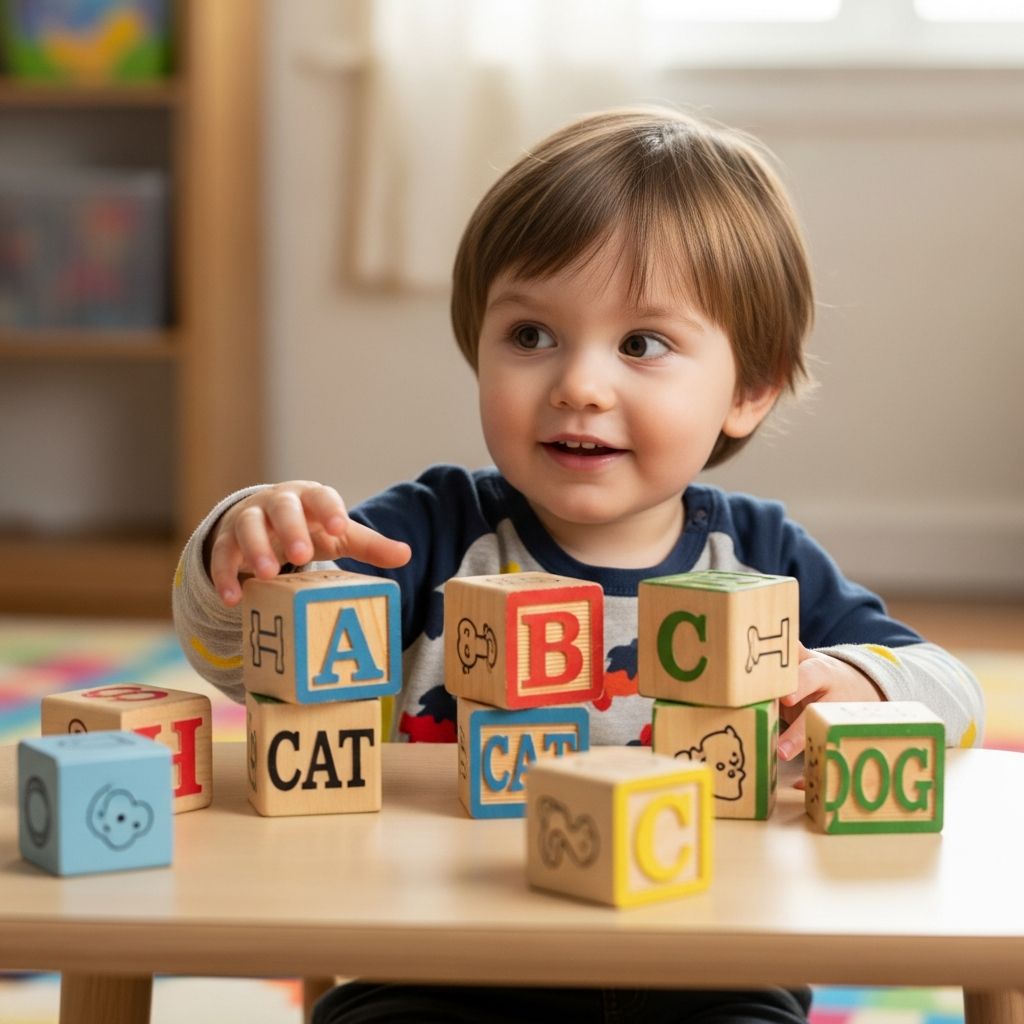
The vocabulary expansion that occurs during the second year of life is nothing short of remarkable. At this developmental stage, children typically possess a vocabulary ranging from approximately 50 to 100 words, though some children may have fewer or more depending on their individual developmental pace and environmental factors. These words represent diverse linguistic categories including nouns (objects and people), verbs (action words), adjectives (descriptive terms), and pronouns (words referring to self and others).
The composition of a two-year-old’s vocabulary often reflects their immediate experiences and environment. Common words frequently include labels for family members, everyday objects, animals, and actions. A toddler might say “mama,” “dog,” “eat,” or “ball” as part of their regular communication repertoire. The actual pronunciation of these words matters less than the child’s ability to use them meaningfully during interactions.
It is important to recognize that vocabulary growth is not uniform across all children. Some two-year-olds may be more verbal and expressive, while others communicate through a combination of words and gestures. Both approaches are developmentally appropriate, and children typically catch up to peer expectations within a reasonable timeframe unless there are underlying concerns.
Beyond Single Words: The Emergence of Two-Word Phrases
One of the hallmark achievements of the second year is the transition from isolated words to simple word combinations. By age two, most children can produce two-word phrases that convey meaning and intent. Common examples include “more milk,” “daddy go,” “all done,” or “my toy.” These phrases, though simple, demonstrate that children are beginning to understand basic grammar and how words relate to one another.
These two-word combinations serve important communicative functions. A child might say “more juice” to request additional juice at snack time or “mommy up” when wanting to be picked up. Through these phrases, toddlers begin to express desires, observations, and simple narratives about their experiences. As children progress through the age two to three range, some may extend these combinations to three or four-word sentences, such as “I want more milk” or “daddy go work.”
Parents often notice that their child’s two-word phrases increase in frequency and sophistication over the course of the second year. What begins as occasional combinations typically becomes a more consistent pattern of speech as the child approaches age three.
Receptive Language: Understanding Comes Before Speaking
While expressive language—what children say—captures much attention, receptive language—what children understand—develops alongside and often precedes spoken language. Two-year-olds demonstrate growing comprehension of language through their ability to follow simple instructions and respond to questions.
At this stage, children typically follow one-step directions consistently, such as “Get your shoes” or “Bring me the ball.” As they progress toward age three, many children can execute two-step related directions, such as “Get your shoes and come to the door.” This advancement reflects developing ability to hold multiple pieces of information in mind and execute sequential actions.
Comprehension of simple questions also emerges during this period. Children respond to inquiries like “Where is the bear?” by pointing to the correct object in a book. They understand basic “where” and “what” questions and may respond through words, gestures, or by retrieving items when asked. This receptive understanding provides the foundation upon which expressive language skills continue to develop.
The Clarity Challenge: Speech Intelligibility at Age Two
A common concern for parents involves whether their child’s speech is clear enough. It is essential to understand that speech clarity naturally develops gradually throughout early childhood. At age two, typical speech development includes an intelligibility rate of approximately 50 percent to familiar listeners such as parents and caregivers. This means that family members understand roughly half of what the child says, which is developmentally normal and expected.
During this stage, children frequently make predictable speech sound errors. Common patterns include substitutions, such as saying “wuv” instead of “love,” dropping ending consonants (saying “ca” instead of “cat”), or mixing up letter sounds (saying “sirt” instead of “shirt”). These errors are part of normal development and typically resolve naturally as the child matures and gains more practice with speech production.
It is important to note that unfamiliar listeners may understand much less of a two-year-old’s speech than family members who regularly hear the child and have learned their particular speech patterns. The gradual improvement in speech clarity continues throughout the third year and into the early preschool years.
Gesture Development and Non-Verbal Communication
Communication encompasses far more than words alone. Two-year-olds continue to expand their use of gestures beyond basic waving and pointing. Children at this age may blow kisses, nod to indicate “yes,” shake their head for “no,” and use various other intentional gestures to convey meaning. These gestures work in concert with spoken words to create a rich communicative system.
The development of gesture use demonstrates that children understand that communication involves both verbal and non-verbal elements. A child might say “up” while simultaneously reaching toward a parent with arms extended, combining word and gesture for maximum communicative impact. This integration of gesture and speech continues to develop throughout the toddler and preschool years.
Cognitive Skills Supporting Language Development
Language development does not occur in isolation but rather develops alongside other cognitive abilities. Two-year-olds typically demonstrate understanding of spatial concepts such as “in” and “on.” They can identify basic shapes and colors and understand the concept of object permanence (that objects continue to exist even when out of sight).
Children at this age can identify basic body parts when asked to point to them, such as “Show me your nose” or “Where are your toes?” They can name specific objects within their environment and find familiar items when requested. These cognitive achievements provide essential scaffolding for continued language growth.
The beginning use of pronouns such as “I,” “me,” “you,” “my,” and “mine” represents growing self-awareness and understanding of perspectives beyond one’s own. This development continues to expand as children approach age three, with increasing understanding and use of pronouns in speech.
Social and Interactive Communication Skills
Beyond words and sentences, two-year-olds develop important social communication abilities. They begin to engage in verbal turn-taking conversations with familiar adults, though the number of turns may be limited. A parent might say, “What’s that?” and the child responds, “Doggy,” creating a simple conversational exchange.
Children at this age show emerging awareness of others’ emotional states. They may pause or display sadness when witnessing another child crying, demonstrating developing empathy and social awareness. They participate in simple back-and-forth interactions during play and increasingly engage with peers, though interactions remain relatively brief and may revolve around parallel play (playing alongside rather than collaboratively with other children).
The beginning of topic control appears as children initiate simple conversations with familiar people and demonstrate excitement when interacting with peers. While these social communication abilities are still developing, they form the foundation for increasingly complex peer interactions and collaborative play in the coming years.
Variation in Development: Understanding Individual Differences
It is important to recognize that children develop at different rates, and variation within normal development is substantial. Some two-year-olds are more verbal and produce more words earlier than peers, while others rely more heavily on gestures and non-verbal communication. Some children in bilingual environments may have words distributed across two languages rather than concentrated in a single language, which is a normal pattern in multilingual development.
Factors influencing language development include temperament, amount of language exposure, quality of interactive experiences with caregivers, and individual developmental trajectory. A child who is naturally more introverted may produce fewer words than an outgoing peer while still demonstrating age-appropriate comprehension and language understanding. Environmental factors such as the amount of conversational interaction, reading experiences, and exposure to varied vocabulary contribute to language growth.
Strategies for Supporting Language Growth at Home
Parents play a crucial role in supporting language development during the second year of life. Several evidence-based strategies can enhance communication skills:
- Engage in shared reading: Looking at picture books together provides opportunities to name objects, ask questions, and engage in interactive dialogue about what appears on the page.
- Expand on child utterances: When a child says “more milk,” parents might expand to “Yes, you want more milk” or “Here is more milk,” modeling more complex language while validating the child’s communication.
- Use musical activities: Singing songs, listening to music, and engaging in action rhymes support rhythm awareness and language development.
- Narrate daily activities: Describing what is happening during routines such as meals, bath time, or dressing provides rich language input and helps children connect words to experiences.
- Play simple games: Games such as rhyming activities, sorting by color or category, and puzzles support various aspects of language and cognitive development.
- Encourage turn-taking: Conversations with predictable back-and-forth patterns, such as simple peek-a-boo or ball rolling, build conversational foundations.
When to Seek Professional Guidance
While variation in development is normal, certain patterns may warrant consultation with a speech-language professional. Parents might consider seeking guidance if their two-year-old does not respond to their name, follows no simple instructions, uses no words or gestures meaningfully, or shows a significant regression in previously acquired skills. Additionally, if speech is not at least 50 percent intelligible to family members by age two, or if parents have concerns about their child’s hearing, consultation with a healthcare provider is appropriate.
Early identification of any developmental concerns enables access to early intervention services, which can be tremendously beneficial. Most concerns identified during the second year can be effectively addressed with appropriate support and guidance.
Frequently Asked Questions About Two-Year-Old Language Development
Is it normal for a two-year-old to say fewer than 50 words?
While 50 words is a common milestone by age two, individual variation exists. Some children have fewer words at this age but catch up by age three. However, if your child has very limited words and shows few gestures or no response to their name, consultation with a healthcare provider is recommended.
How much does bilingualism affect language development at age two?
In bilingual environments, children may distribute their vocabulary across two languages rather than concentrating it in one. Total vocabulary across both languages may still meet developmental expectations even if words in any single language appear limited. Children are capable of learning multiple languages simultaneously during early childhood.
Should I correct my two-year-old’s pronunciation?
Direct correction is generally not necessary or helpful. Instead, model correct pronunciation by repeating what your child says with the correct sounds, such as when they say “wuv,” you respond with “Yes, you love your puppy.” This expansion and modeling approach supports natural language development.
How much screen time is appropriate for a two-year-old learning language?
Interactive, language-rich activities with caregivers provide the most benefit for language development. Screen time should be minimal and, when included, should be high-quality programming co-viewed with an adult who can engage in discussion about content.
Is it normal for two-year-olds to repeat words or phrases frequently?
Yes, repetition of words and short phrases is a normal part of language development. Children often repeat newly learned words or favorite phrases as they practice language skills and solidify learning.
References
- Speech and Language Developmental Milestones for 2-Year-Olds — TherapyWorks. 2024. https://therapyworks.com/blog/developmental-milestones/speech-and-language-developmental-milestones-two-year-olds/
- Milestones by 2 Years | Learn the Signs. Act Early. — Centers for Disease Control and Prevention (CDC). 2024. https://www.cdc.gov/act-early/milestones/2-years.html
- Age-Appropriate Speech and Language Milestones — Children’s Hospital of Philadelphia (CHOP). 2024. https://www.chop.edu/health-resources/age-appropriate-speech-and-language-milestones
- Communication Milestones: 2 to 3 Years — American Speech-Language-Hearing Association (ASHA). 2024. https://www.asha.org/public/developmental-milestones/communication-milestones-2-to-3-years/
- Toddler Language Milestones And 20 Activities For Expression — Klas Schools. 2024. https://www.klaschools.com/insights/toddler-language-milestones
- Speech and Language Development (from 12 to 24 months) — Great Ormond Street Hospital for Children (GOSH) NHS Trust. 2024. https://www.gosh.nhs.uk/conditions-and-treatments/procedures-and-treatments/speech-and-language-development-12-24-months/