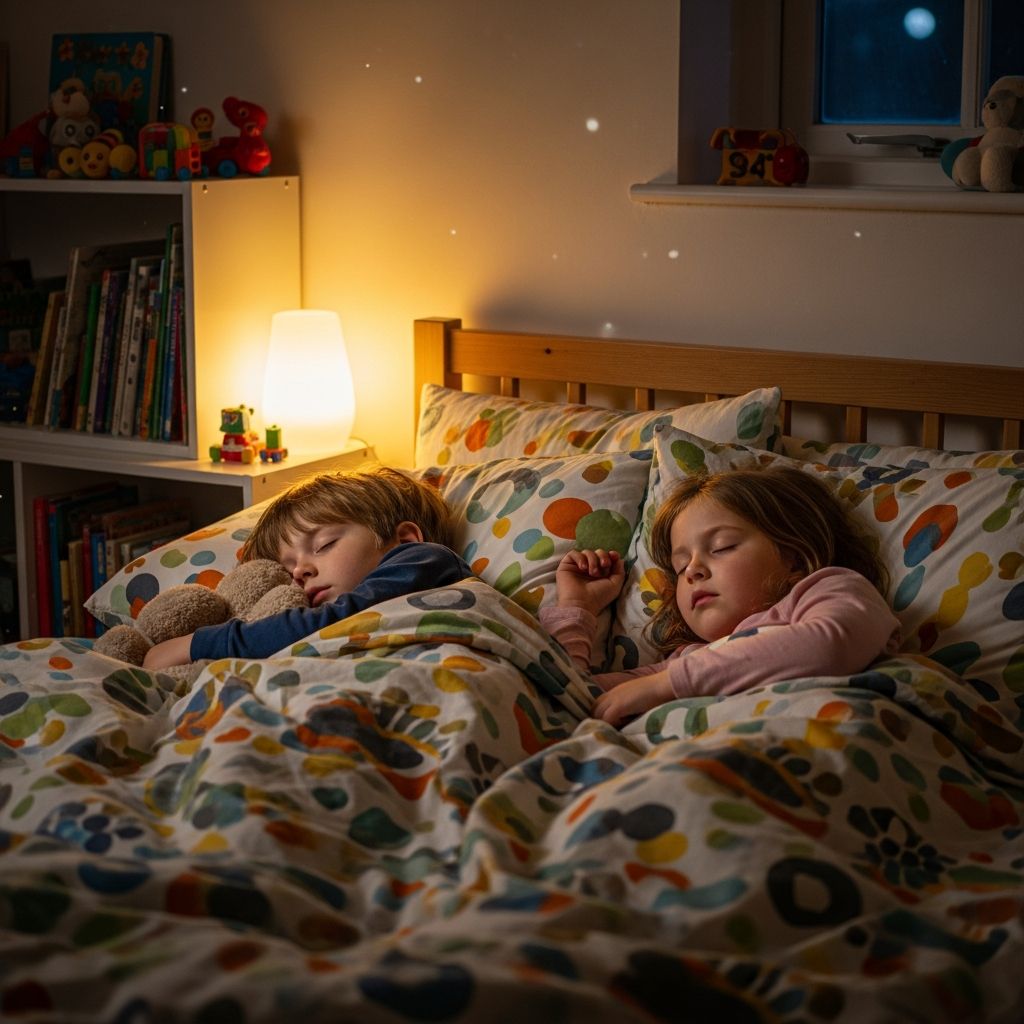
Families move, budgets shift, grandparents visit, and nurseries turn into home offices. In all of this, many parents suddenly find themselves with a very concrete problem: two kids, one bed, for now. This article offers a practical, safety-conscious roadmap for getting through that season with as little stress (and as much sleep) as possible.
When Two Kids, One Bed Actually Makes Sense
There are seasons when sharing a bed or sleep space is not a parenting failure but a realistic solution to space, budget, or timing limits. The key is recognizing that you are designing a temporary setup that meets your family’s needs now, not forever.
Thinking of bed sharing as a short-term strategy rather than a permanent lifestyle choice can reduce guilt and pressure. It also makes it easier to communicate clear expectations to your children about what will happen next.
- Small or temporary housing: Apartments, shared housing, or in-between homes can make separate bedrooms impossible.
- New sibling transitions: A new baby may need proximity, while an older sibling wants reassurance that they are not being pushed aside.
- Renovations or moves: Short-term chaos at home often leads to improvised sleeping arrangements.
- Budget realities: One bed and one mattress may be what the finances allow for a time.
Safety First: Non-Negotiable Guidelines for Shared Sleep
Before worrying about who sleeps on which side or who gets which pillow, start with basic safety. Especially when one child is a baby or toddler, adult-style flexible rules do not apply. Safety standards for infant sleep remain important even in tight quarters.
Always check current pediatric and sleep-safety guidance in your country, and err on the side of giving the youngest child the safest, most protected sleep space possible. If a recommended safety setup is not possible, adjust the plan until it is.
Age and Readiness Considerations
- Infants: Babies are safest on a firm, flat surface designed for them (crib, bassinet) without pillows, blankets, or older siblings close enough to roll onto them.
- Toddlers: Children who can climb out of cribs may benefit from a floor bed or mattress on the ground with guard rails.
- Preschoolers and older: Can more safely share a mattress, provided there is enough space and clear rules about staying away from edges.
Practical Safety Tips
- Use a firm mattress and avoid deep, soft bedding that can entangle smaller children.
- Place the mattress low to the ground or on the floor to reduce fall risk.
- Use guard rails or a wall on at least one side, and keep hard furniture away from edges.
- Assign clear sleeping positions (for example, older child near the wall, younger on the inner side with a rail, or vice versa depending on safety needs).
- Keep stuffed animals, big pillows, and heavy blankets away from the youngest sleeper.
Designing the Shared Sleep Setup
Once safety boxes are checked, the next step is designing a layout that works for your actual room. A thoughtful setup can reduce arguments, nighttime wake-ups, and general chaos.
The goal is to give each child a clearly defined place, even if that place is only half a mattress. When both kids know where they belong, bedtime feels more predictable and less negotiable.
Common Two-Kid Sleep Setups
| Setup Type | Best For | Pros | Cons |
|---|---|---|---|
| Shared full or queen mattress | Two preschoolers or older, similar bedtimes | Simple, one set of bedding, easy to cuddle or comfort | More rolling, more chances for kicking and crowding |
| Mattress + toddler floor bed | Baby or toddler with older sibling | Separates bodies while keeping kids close together | Takes more floor space; kids may want to swap beds |
| Single bed with attached sidecar crib | Infant and older sibling | Baby has safe space; older child feels nearby | More complex to set up; less flexible long-term |
| Two mattresses pushed together | Two active sleepers who roll a lot | Extra width; easier to separate sides | Gap issues if not tightly secured; more bedding |
Marking Personal Space
- Use different colored sheets or blankets on each child’s “side” of the bed.
- Place a small, soft bolster or pillow line down the middle as a visual divider (not for infants).
- Let each child pick a special pillowcase or small comfort item that clearly belongs to them.
- Consider a wall decal or small name tag above the side of the bed where each child sleeps.
Building a Calm, Shared Bedtime Routine
Two children sharing a bed amplifies whatever bedtime energy they bring into the room. A calm, predictable routine is not just helpful; it is the only way this arrangement works for most families.
The trick is to create one shared structure with minor variations, rather than trying to maintain two completely different routines in one tiny space.
Sample Shared Bedtime Flow
- Wind-down time: 20–30 minutes of quieter play or books in the living room, not the bedroom.
- Bathroom and pajamas: Teeth, toilet, diapers, and pajamas for both at the same time when possible.
- Snacks and water check: Offer a final drink or small snack earlier enough that they do not stall in bed.
- Move to bed together: Lights dim, night light on, white noise machine or fan if you use one.
- Shared story or song: One or two stories that both kids can listen to, or a short song routine.
- Individual tuck-in: Brief, predictable phrase or ritual for each child (a particular hug, a phrase, a kiss on the forehead).
- Clear closing line: A simple, consistent sentence that signals “bedtime is starting now”.
Keeping the Energy Low-Key
- Switch from active toys to quiet options (books, blocks, drawing) at least 30 minutes before bed.
- Lower lights gradually instead of switching from bright to dark all at once.
- Use calm, slow speech and avoid long negotiations after the routine has ended.
- Plan for one last bathroom trip for the older child before the final tuck-in to reduce later disruptions.
Handling Big Feelings: Jealousy, Regression, and Clinginess
Two kids, one bed is rarely just a furniture issue. It often stirs up feelings about fairness, attention, and belonging, especially if a new baby or younger sibling has recently arrived. These emotions can show up at bedtime in loud, inconvenient ways.
Addressing those feelings directly, instead of only managing the logistics, makes the entire arrangement smoother and more sustainable.
Common Emotional Reactions
- Jealousy: Older child may feel the baby is “taking over” their space or parents.
- Regression: Potty-trained children may have accidents, or previously independent kids may suddenly need help again.
- Clinginess: One or both children might demand that a parent stay in the room until they fall asleep.
Ways to Support Each Child
- Schedule one-on-one time with each child earlier in the day, even 10–15 minutes of full attention.
- Use simple, reassuring language about the temporary nature of the arrangement (“This is how we sleep while we’re in this apartment”).
- Let older siblings help in small, age-appropriate ways (picking a bedtime story, placing the baby’s sleep sack nearby).
- Validate feelings without turning bedtime into an hour-long debrief; more complex talks can happen at calmer times.
Middle-of-the-Night Challenges (and What to Try)
Even with the best routine, sharing a bed can mean more wake-ups, more kicks, and more whispered arguments about who is on whose side of the mattress. Plan ahead for the most common patterns rather than improvising at 2 a.m.
Creating a small set of “night rules” and responses can dramatically reduce the amount of thinking you have to do when half awake.
Typical Problems and Simple Responses
- One child wakes, the other follows: Gently settle the awake child with minimal talking and stimulation. If the other child woke up only from noise, use a brief phrase to reassure and encourage back to sleep.
- Bedtime play-fights: If chatting and giggles continue beyond a reasonable time, calmly separate for a short “reset” (for example, one child moves to a pallet on the floor for 10 minutes, then returns).
- Kicking and crowding: Add a soft physical divider, like a long body pillow, for older children. Reinforce the idea of staying on “your side” of the bed.
- Nighttime visits to parents’ bed: Create a predictable response—brief comfort, walk back, tuck-in, leave again—with the same phrase every time.
Protecting Individuality in a Shared Sleep Space
Sharing a bed does not mean sharing a personality. Even when the room is small and the mattress is shared, each child can and should still have signs of their own preferences and identity.
Small touches of individuality help kids feel seen and reduce competition, especially when they already feel like they are sharing almost everything.
Simple Ways to Give Each Child “Theirs”
- Use different pillowcases or small throw pillows that reflect each child’s favorite color or character.
- Designate a personal shelf, basket, or crate for nighttime books and comfort items.
- Let each child choose a small wall decoration or picture above their side of the bed.
- Offer each child one protected item (a stuffed animal or small blanket) that is not for sharing.
Planning for the Transition Out of One Bed
Even if the arrangement is working, it is wise to think in advance about the next step. At some point, one child may need more privacy, a different bedtime, or their own space for developmental reasons.
Framing the eventual transition as growth, not separation, can help children welcome the change when it comes.
Signs It May Be Time to Separate
- Bedtime battles are increasingly about personal space rather than general resistance to sleep.
- One child is noticeably losing sleep due to the other’s schedule or movements.
- An older child begins to ask for privacy when dressing or doing quiet activities.
- Arguments about shared space are spilling into daytime routines.
Gentle Ways to Shift to New Beds
- Involve children in picking out new bedding or decor for the upcoming bed or room.
- Start with nap times or “quiet time” in the new bed before switching overnight sleep.
- Create a positive story around the change (“big kid reading corner,” “special quiet space”).
- Keep some elements of the old routine—same bedtime song, same stuffed animal, same goodnight phrase.
Frequently Asked Questions About Two Kids, One Bed
Is it okay for siblings to share a bed?
For many families, siblings sharing a bed is a practical short-term solution to space or budget limitations. The key considerations are age-appropriate safety, enough room for both children to lie comfortably, and a plan for when their developmental needs change. If those pieces are in place and current safety guidelines are followed, shared sleep can be a workable season.
At what age should kids stop sharing a bed?
There is no single age when all siblings should stop sharing a bed. Many parents reconsider the arrangement when children start school, approach pre-teen years, or begin asking for privacy. Pay attention to your children’s comfort levels, sleep quality, and emotional needs, and use those signals to guide when to introduce separate beds or spaces.
What if my older child keeps waking the younger one?
If disruptions are frequent, experiment with small tweaks before abandoning the arrangement. Earlier wind-down for the older child, a firm rule about staying in bed, and a reward chart for “quiet nights” can all help. If the younger child’s sleep is consistently poor despite these efforts, consider a partial separation such as a floor mattress or crib in the same room.
How do I answer judgment from other adults?
People will always have opinions about how other families handle sleep, but they do not live with your floor plan, your lease, or your paycheck. A simple, confident response such as, “This is what works for our family right now,” is often enough. It can also help to remind yourself that your priority is safety, connection, and rest, not meeting someone else’s standard of the “perfect” home.
Will sharing a bed make my kids too dependent on each other?
Most children can enjoy the comfort of sharing a sleep space and still grow into independent sleepers when the environment and routines change. Independence is more strongly shaped by consistent boundaries, secure attachment, and opportunities to do age-appropriate tasks on their own than by whether they shared a bed for a season. When it is time to transition, a gradual, supportive approach helps them adapt.
Key Takeaways for Tired Parents
Two kids sharing one bed is often less about ideal parenting philosophy and more about making the best of present realities. When safety comes first, expectations are clear, and feelings are given some space, the arrangement can be both workable and surprisingly bonding for siblings.
Allow yourself to treat this period as a chapter, not a verdict on your parenting. Most children remember not the exact bed setup they had, but whether they felt loved, safe, and heard when the lights went out.