Parenting twins often feels like living in fast-forward: milestones arrive in pairs, memories layer on top of one another, and birthdays come with a special mix of gratitude, nostalgia, and logistics. A twin birthday is not simply a bigger version of a single-child party; it is a chance to honor two distinct people who happen to share a date and a deep bond.
This guide walks through practical, emotionally aware ways to design a birthday celebration that makes both twins feel seen, valued, and genuinely excited about their special day.
Understanding What Makes Twin Birthdays Unique
Twins share a birthday, but they do not share the same inner world. One might crave a big crowd and loud games, while the other prefers a low-key gathering and a quiet corner with a book or close friend. Planning for both personalities is the core challenge—and the main opportunity—of twin birthdays.
Instead of thinking about fairness as strict sameness, treat fairness as equal respect for each child’s preferences. That shift alone can transform your planning from stressful compromise into meaningful collaboration.
Key Decisions Before You Start Planning
Before you dive into themes and decorations, answer a few foundational questions. These choices will influence everything else, from your guest list to your budget.
- One party or two? Decide whether a shared celebration works emotionally and logistically, or whether separate events better honor your twins’ needs.
- Home or venue? Home parties can feel cozy and budget-friendly, while outside venues may simplify setup and cleanup.
- Big group or small gathering? Consider your twins’ social energy levels, not just your own vision of the day.
- Joint or individual themes? Some twins love matching everything; others want clearly different experiences under the same roof.
Shared Party vs. Separate Celebrations
There is no universal right answer to whether twin birthdays should be celebrated together or apart. The best choice varies by age, temperament, family schedule, and your capacity as a caregiver.
| Approach | Benefits | Potential Challenges |
|---|---|---|
| One shared party |
|
|
| Two separate parties |
|
|
A helpful middle ground is to host one main party and then carve out separate mini-traditions, such as a one-on-one breakfast date with each twin or an individual outing later in the week.
Crafting Themes That Celebrate Both Twins
You do not have to lock into a single uniform theme. Twin birthday themes work best when they leave space for overlap and difference. Think of the basic style as a shared canvas where each child has a clear section all their own.
Below are some flexible theme strategies you can adapt to any age or budget.
Single Theme, Personalized Details
With this approach, you choose one broad concept and then differentiate the details for each child.
- Use one main color palette, but assign each twin a special accent color for their place setting and cake.
- Keep decorations consistent, while customizing banners or signs with each twin’s name and favorite icons.
- Plan a shared activity, such as a craft or game, but let each twin have their own station or variation.
Two Themes, One Space
If your twins have very different interests, you can split the space into two mini-worlds that still feel cohesive.
- Designate one side of the room for each child, using contrasting colors and decor.
- Connect the two zones with a playful banner, arch, or shared snack table.
- Encourage guests to explore both areas, so each twin feels equally visited and appreciated.
Interest-Based, Not Gender-Based
When planning for boy/girl or non-binary twins, avoid assuming what each child should like. Ask directly what feels fun to them instead of leaning on stereotypes.
- Offer a simple list of theme ideas and let each child veto options that do not feel like them.
- Stay open to unexpected combinations; unusual pairings often become the most memorable parties.
Practical Tips for Budget-Friendly Twin Parties
It is easy to feel that twin birthdays must be twice as expensive. In reality, carefully chosen details can give each child special attention without doubling your costs.
- Reuse decor creatively: Choose neutral basics (banners, tablecloths, string lights) that can serve many birthdays, then add low-cost personal touches like photographs or custom labels.
- Limit the menu: Offer a small number of crowd-pleasing snacks, and consider one shared dessert table that includes a signature treat for each twin.
- DIY where it matters most: Handmade signs, photo collages, or memory boards can be more meaningful than elaborate rented decorations.
- Scale gifts thoughtfully: Encourage relatives to give one thoughtful gift to each twin rather than multiple smaller items.
Making Each Twin Feel Individually Seen
Even at a shared party, there are many gentle ways to signal to each child that this is their day. These gestures matter just as much as the cake and decorations.
- Separate birthday songs: Sing once for each child, or alternate whose name is said first.
- Individual candles: Provide each twin with their own set of candles and a dedicated moment to make a wish.
- Personalized seating: Set up two special chairs or places at the table with their names and chosen colors.
- One-on-one micro-moments: Plan a quiet five-minute check-in with each child before guests arrive.
Managing Emotions: Parents and Children Alike
Twin birthdays are emotionally layered. Parents may relive birth memories, medical challenges, or early sleepless years, while children navigate excitement, comparison, and sometimes jealousy.
Give everyone permission to have mixed feelings. Pride, exhaustion, joy, and bittersweet nostalgia can all co-exist on the same afternoon.
Helping Twins Navigate Comparison
- Avoid direct comparisons about gifts, height, academic skills, or popularity.
- Emphasize that guests choose gifts based on what they think each child likes, not as a measure of love.
- Model language that recognizes difference without ranking, such as “You both are creative in such different ways.”
Giving Yourself Grace as a Caregiver
- Accept that not every plan will go perfectly; children remember the feelings more than the schedule.
- Delegate tasks like photography, music, or food setup to a trusted friend or relative.
- Build in a quiet moment after the party to reflect, write a few lines in a journal, or simply breathe.
Sample Twin Birthday Timeline
This example schedule assumes a two-hour shared party at home. You can adjust times and activities based on age and venue.
| Time | Activity | Notes |
|---|---|---|
| 0:00–0:15 | Arrival and free play | Background music, simple toys, light snacks. |
| 0:15–0:35 | Group icebreaker game | Choose something that suits both twins’ energy levels. |
| 0:35–0:55 | Themed activity or craft | Offer two variations, one tailored to each twin. |
| 0:55–1:10 | Cake moment for Twin A | Sing, blow candles, quick photos. |
| 1:10–1:25 | Cake moment for Twin B | Repeat with equal enthusiasm. |
| 1:25–1:45 | Open gifts or final game | Alternative: Open gifts privately after the party. |
| 1:45–2:00 | Goodbyes and favors | Hand out one favor that represents both twins. |
Ideas for Meaningful Traditions Year After Year
A single party may blur together over time, but recurring traditions create a rhythm your twins can count on. These rituals do not need to be elaborate; consistency is what gives them emotional weight.
- Birthday interviews: Ask each child the same set of questions every year and record their answers.
- Height or handprint markers: Track growth on a shared chart where each child has their own color.
- Memory letter: Write a brief note to each twin highlighting what you love about who they are right now.
- Annual photo ritual: Take a picture of the twins together and one individually in the same spot each year.
FAQs About Twin Birthday Celebrations
Should twins always share one cake?
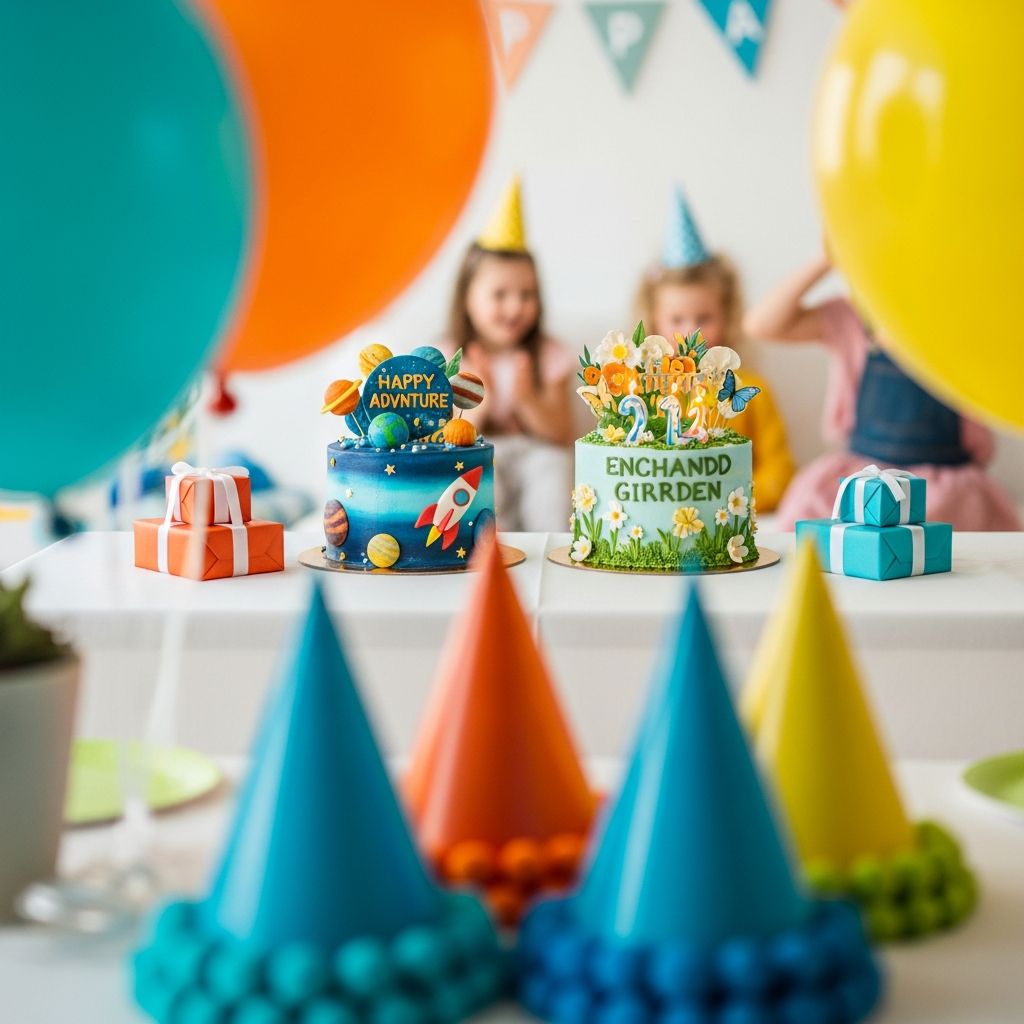
They do not have to. Many families choose to offer two smaller cakes or cupcakes so each child has something to call their own, even if the desserts share a common design or flavor family. The most important factor is asking your twins what feels special to them.
Is it unfair if one twin gets a more expensive gift?
Price does not always reflect emotional value. If there is a noticeable difference, you can balance things over time or discuss how certain items, like electronics or sports gear, naturally cost more. Keeping communication transparent and age-appropriate helps reduce misunderstandings.
What if one twin loves parties and the other does not?
Consider a compromise where the main event is shorter, quieter, or structured with clear expectations. You can also add an alternate activity, such as a calm craft corner or cozy reading space, so the more introverted twin has a retreat while still participating.
How do we handle guest lists when friendships diverge?
As twins grow, they will likely form more independent social circles. You can set a guest limit for each child and invite any overlapping friends to the shared portion of the celebration. If tensions arise, remind both children that friendships evolve and that their experiences do not have to match.
Is it okay to celebrate on different days?
Absolutely. Celebrating on separate days can reduce overwhelm and make each twin feel deeply noticed. You might hold a joint family dinner on their actual birthday and then plan distinct friend-focused events on different weekends.
Final Thoughts on Honoring Two Lives at Once
At its heart, a twin birthday is about gratitude—for survival, for growth, and for the rare experience of raising two same-age children who are becoming more themselves every year. Your party does not need to be picture-perfect; what matters most is that each twin walks away feeling cherished.
When you design the day around their individuality, your own capacity, and a few simple traditions, you transform a complex logistical puzzle into a celebration of double joy and double love.