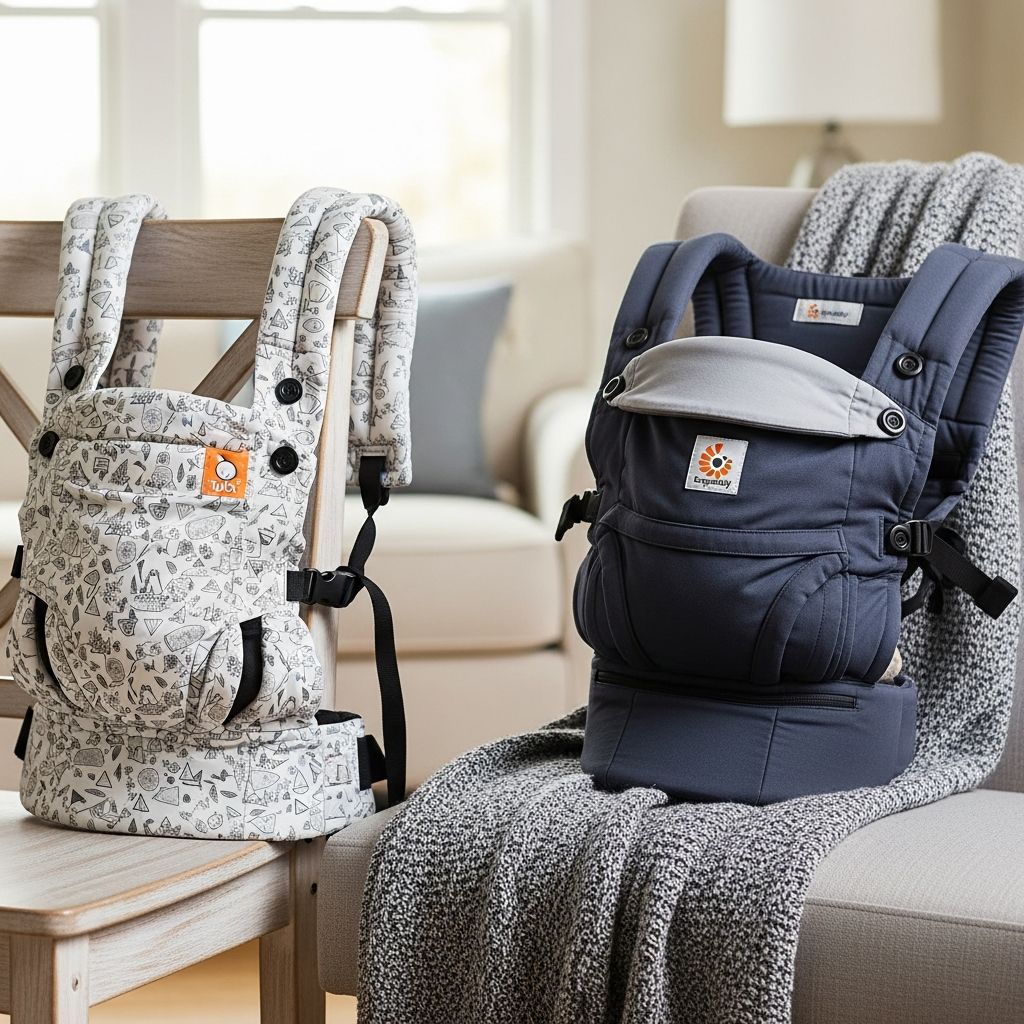
When parents start exploring babywearing, two names come up again and again: Tula and Ergobaby. Both brands are trusted, high-quality options, but they are not identical, and the differences can matter a lot in everyday life.
This guide walks through how Tula and Ergobaby compare in comfort, safety, fit, features, and lifestyle use, so you can feel confident choosing the carrier that will actually work for your body and your baby.
Why Tula and Ergobaby Are So Popular
Before diving into the details, it helps to understand why these two brands stand out in a crowded market. Both are soft-structured carriers (SSCs), which means they offer cushioned straps, buckles, and a structured panel to support your baby’s body while keeping your hands free.
- They are designed to support a safe, ergonomic “M” position for your baby’s hips and legs when used correctly.
- They offer long-term use from early babyhood into toddler years, often with overlapping weight ranges.
- They are widely available, have strong resale value, and are known for consistent quality and customer support.
Core Differences at a Glance
If you are torn between the two, this high-level snapshot can help narrow your options quickly. Individual models vary, but there are some general trends across the brands.
| Feature | Tula (typical models) | Ergobaby (typical models) |
|---|---|---|
| Overall feel | Simpler, streamlined body panel and a clean look; often feels less bulky. | Feature-rich designs with more adjustment points and add-ons. |
| Style and prints | Known for playful, bold, and limited-edition prints. | Leans toward neutral, classic colors with some seasonal designs. |
| Lumbar support | Some models require a separate lumbar support accessory if desired. | Many popular models include built-in lumbar support for the wearer. |
| Carry positions | Most popular models offer inward front and back carry; some lines also support forward-facing. | Many models offer inward, outward, hip, and back carry in one carrier. |
| Learning curve | Often simple to adjust once set up; fewer buckles and adjustments. | More options can mean a slightly steeper learning curve, especially for new parents. |
Comfort for the Wearer
A baby carrier only works if it is comfortable enough that you actually use it. Comfort is affected by padding, strap shape, lumbar support, and how weight is distributed across your body.
- Shoulder straps: Tula carriers often have thick, cushioned straps with a straightforward design that many parents find plush and cozy. Ergobaby straps are also padded but may offer additional configurations, such as criss-crossing in the back on certain models for a more custom fit.
- Lumbar support: Many Ergobaby models include an integrated lumbar pad on the waistband that helps distribute weight more evenly, especially for longer walks or heavier toddlers. Tula models may feel more minimal on the waist, which some parents find less bulky but others find less supportive without an add-on.
- Fit range for different body types: Both brands provide adjustable waistbands and straps that can work for a spectrum of parent sizes, but trying on or checking exact measurement ranges is important if you or your partner are at either end of the size spectrum.
Comfort and Positioning for Baby
Baby comfort is about more than softness; it includes proper hip support, head and neck support, and a panel that fits the baby’s size and stage. Most modern Tula and Ergobaby carriers are designed with hip-healthy positions in mind, when adjusted correctly.
- Newborn fit: Some models are designed to support newborns from a low minimum weight without a separate insert, using adjustable panel widths and heights. Older or simpler models may require an infant insert for smaller babies.
- Leg and hip position: Look for an “M” shape in the legs, where knees are higher than the bottom and hips are supported from knee to knee. Both brands aim to create this seat shape, but the way you adjust the panel (via snaps, buttons, sliders, or Velcro) varies by model.
- Head support: Carriers typically include a padded upper edge or an integrated hood to help support a sleeping baby’s head. Practice tightening the panel and using the hood before you need it on a walk.
Fabric, Breathability, and Climate
Fabric choice can make the difference between a carrier you reach for daily and one that feels too hot or stiff. Tula and Ergobaby both offer cotton and mesh variations, but the feel and overall construction differ.
- Cotton carriers: These models often feel cozy and substantial, with a bit of structure. They may be ideal for cooler climates or indoor use where airflow is less of a concern.
- Mesh or “cool” versions: Ventilated carriers feature mesh panels designed to increase air movement around baby’s back and your chest. These are useful in warm climates or during summer walks but can feel slightly less plush to the touch.
- Cleaning and durability: Most Tula and Ergobaby carriers are machine washable. Darker prints or patterns can help camouflage minor stains, which may influence your choice if you expect heavy daily use.
Adjustability and Ease of Use
Every parent wants a carrier that is safe, but it also needs to be practical. Adjustability affects how easily two caregivers can share one carrier and how quickly you can get in and out with a squirmy baby.
- Waistband adjustments: Both brands use a buckle waistband that can be tightened and loosened. Some Ergobaby models include structured lumbar padding, while many Tula carriers rely on a straighter band that hugs the waist more simply.
- Seat width settings: Tula often uses snaps or buttons on the waistband to narrow or widen the seat as your baby grows. Ergobaby may use Velcro tabs or other sliding mechanisms. Once you learn the system, changing settings becomes quick and intuitive.
- Strap configurations: Certain Ergobaby models allow you to wear the shoulder straps in a criss-cross pattern on your back, which some caregivers prefer for added chest or shoulder comfort. Tula tends to keep a straightforward backpack-style strap arrangement that feels simple to set and forget.
Carry Positions and Age Ranges
Thinking about how long you want to use your carrier and which positions matter to you can help you select the right model from either brand. Not every carrier offers every position.
Typical Carry Options
- Inward-facing front carry: This is the most commonly used position for infants and young babies. Both Tula and Ergobaby support it across their soft-structured carrier ranges.
- Back carry: Back carrying often becomes more comfortable once babies are heavier and have strong head and trunk control. Many models from both brands support this position after your baby reaches the recommended developmental milestones.
- Forward-facing (outward) front carry: Some Tula and Ergobaby designs allow babies to face outward for short stretches once they have good neck control. This position is usually recommended for limited durations to avoid overstimulation and to preserve a supportive seat.
- Hip carry: Ergobaby includes a hip-carry option on many of its multi-position carriers. Tula tends to focus more on front- and back-carrying in its widely used structured models, though it has other carrier styles for hip-carry fans.
Design Details and Everyday Features
Small design elements can be surprisingly important once you are using your carrier daily. Think about where you live, how you plan to use the carrier, and what tiny frustrations you want to avoid.
- Hood design: Both brands offer hoods for sun, wind, or privacy while feeding. Tula often features a detachable hood that can be removed when not needed, while many Ergobaby models have hoods that are built in. Detachable hoods add flexibility; sewn-in hoods mean one less thing to misplace.
- Pockets and storage: Some Tula carriers have a small front pocket, while certain Ergobaby carriers include larger zippered pockets or detachable storage pouches. Ask yourself if you want room for keys and a phone or if you usually carry a separate diaper bag.
- Bulk and packability: Tula carriers often feel slightly less bulky, which can make them easier to stuff in a bag or under a stroller. Ergobaby carriers, with extra padding or lumbar panels, may feel larger but can be more comfortable for long outings.
Choosing Based on Lifestyle
Instead of asking which brand is “better,” it helps to ask which one fits your daily routine. Consider your typical day, climate, and preferences around style and simplicity.
- Urban parents and frequent walkers: If you expect long walks, errands on foot, and frequent use instead of a stroller, extra lumbar support and multiple carry positions may be worth prioritizing.
- Parents who value aesthetics: Tula’s lively prints and seasonal designs often appeal to those who want their carrier to feel like part of their personal style. Ergobaby’s more neutral palette may blend better with minimalist wardrobes.
- Multiple caregivers: If more than one adult will use the carrier daily, think about the learning curve. Some families prefer a feature-rich carrier with maximum flexibility, while others are happier with a simple setup that does not need frequent re-adjusting.
Price, Value, and Resale
Both Tula and Ergobaby sit in the mid-to-premium price range for baby carriers. New carriers cost enough that most parents want to feel certain before committing.
- Upfront cost: Depending on the exact model and features (mesh panels, special prints, or limited editions), prices can vary widely even within the same brand. Generally, models with more positions and breathable fabrics cost more.
- Longevity: A carrier that works from early infancy through toddlerhood can offset a higher initial price. Both brands are designed with long-term wear in mind when used according to weight and age guidelines.
- Resale and secondhand market: Because these brands are popular and well-known, gently used carriers often resell easily, especially sought-after prints or high-demand models. If budget is a concern, buying secondhand from a trusted source is worth considering.
Safety Basics for Any Carrier
Regardless of whether you choose Tula or Ergobaby, safe babywearing habits matter more than brand. Always read the manual and make a habit of doing a quick safety check each time you put your baby in the carrier.
- Ensure baby’s airway is clear: Keep baby’s chin off the chest, and make sure the face is visible and unobstructed at all times.
- Practice the recommended positioning for your baby’s age and stage; do not improvise new carry methods that are not shown in the manual.
- Check buckles, straps, and stitching regularly for signs of wear, especially if your carrier is secondhand or heavily used.
- When in doubt, consult a local babywearing educator or group for a fit check; many communities offer free help with adjusting carriers.
Quick Decision Guide
If you have already done some research but still feel stuck, use these simplified guidelines as a starting point. There is no wrong choice between two safe, well-made carriers; it is about which one you are more likely to use comfortably and confidently.
- You may lean toward Tula if:
- You prefer a streamlined, less bulky feel.
- You love having fun prints and patterns.
- You want something simple that you can adjust once and use daily with minimal fiddling.
- You may lean toward Ergobaby if:
- You want built-in lumbar support for your lower back.
- You value multiple carry positions, including hip carry in some models.
- You do not mind a slightly more complex setup in exchange for extra features.
Frequently Asked Questions
Is Tula or Ergobaby better for newborns?
Both brands have models designed for newborn use, sometimes without a separate infant insert. The key is to pick a version with an adjustable seat and panel height that specifically states it is suitable from your baby’s birth weight, then follow the instructions closely to create a snug, high, and well-supported fit.
Which carrier is easier to put on alone?
Parents often find that carriers with fewer buckles and straightforward shoulder straps feel simpler to use solo. That said, any carrier will be easier once you have practiced in front of a mirror several times and learned little tricks like loosening the straps first and then tightening from the right direction once baby is in.
Can I use either carrier for a toddler?
Many Tula and Ergobaby models are rated up to toddler weights, and some Tula carriers are specifically sized for larger children. Always check the maximum weight and age guidelines for your particular model and pay attention to your own comfort, especially with back support, once your child becomes heavier.
Are forward-facing positions safe?
Forward-facing positions can be safe when used according to the carrier’s instructions and for limited periods. Your baby should have good head and neck control, and you should monitor for signs of overstimulation or discomfort. When your baby seems tired or overwhelmed, switching back to an inward-facing position is usually best.
Should I choose cotton or mesh?
Cotton carriers often feel cozy and are great for cooler rooms or moderate climates, while mesh designs offer extra ventilation that is helpful in warmer environments or during outdoor activities. Think about your local weather and whether your body tends to run warm or cold, then choose the fabric that fits your reality rather than the one that simply looks best online.
Final Thoughts
Choosing between Tula and Ergobaby is less about finding a universally superior carrier and more about finding the one that fits your body, your baby, and your lifestyle. If possible, trying on different models, borrowing from a friend, or visiting a local babywearing group can be invaluable.
With either brand, once you have practiced a few times and dialed in your adjustments, your carrier can become one of the most useful pieces of baby gear you own—freeing your hands, soothing your baby, and making daily life a little more manageable.