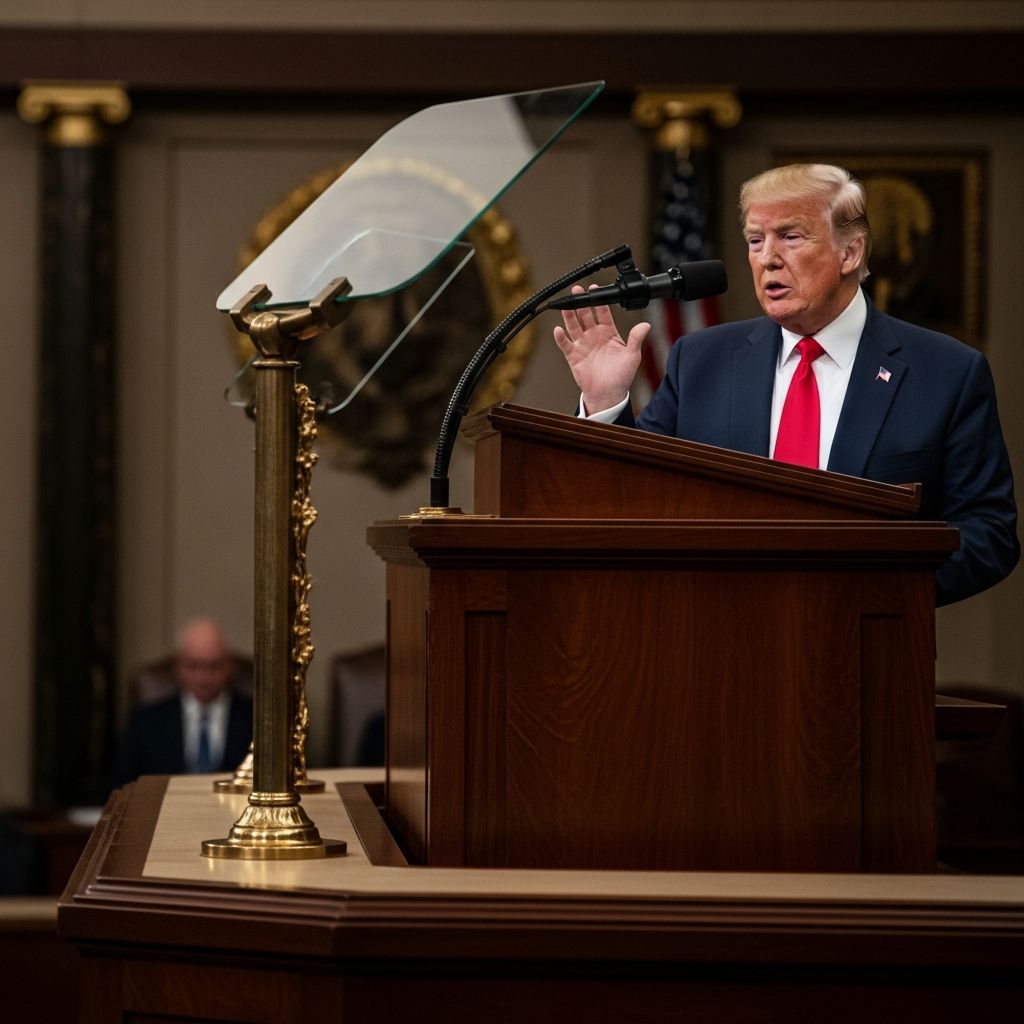
President Donald Trump’s State of the Union address marked a significant moment for family policy discussions, as he pledged to incorporate a nationwide paid family leave program into the federal budget. This initiative seeks to ensure that every new parent can take time to bond with their newborn, addressing a gap in current U.S. labor protections.
The Need for Paid Leave in Modern America
With more women entering the workforce than ever before, balancing career demands and family responsibilities has become a pressing challenge for millions of American families. Federal law currently provides unpaid leave under the Family and Medical Leave Act (FMLA), offering up to 12 weeks for eligible employees, but it lacks compensation, leaving many parents unable to afford time away from work.
Trump’s proposal builds on this foundation by introducing paid benefits, potentially transforming how families navigate childbirth and adoption. Proponents argue that such policies not only support individual families but also yield broader economic benefits, including improved child development outcomes and higher workforce participation rates among parents.
State-Level Pioneers: Lessons from Early Adopters
While the federal government has lagged, several states have led the way in implementing paid family leave programs. California, New Jersey, Rhode Island, and New York stand out as the primary examples, operating insurance-like systems where workers contribute through payroll deductions and can access benefits during leave.
- California: Offers up to 8 weeks of partial wage replacement, funded via state disability insurance premiums.
- New Jersey: Provides 12 weeks at 85% wage replacement for bonding or family care.
- Rhode Island: Delivers 4 weeks specifically for family leave, integrated with temporary disability.
- New York: Recently expanded to 12 weeks by 2021, with job protection guarantees.
These programs demonstrate feasibility without mandating employer coverage, exempting small businesses and relying on public funds. However, variations exist: some states like Rhode Island and New York mandate job return rights, while others do not.
Trump’s Proposal: Details and Evolution
In his address, Trump described himself as the first president to budget for nationwide paid leave, echoing a six-week plan from his prior year’s proposal. This would cover biological parents recovering from childbirth and adoptive parents bonding with new children.
The idea has roots in Trump’s campaign promises and was reiterated in his first address to Congress in 2017. Ivanka Trump, a key White House advisor, has championed the cause, emphasizing its role in empowering working parents to build strong families.
| Aspect | Trump’s Federal Plan | State Examples |
|---|---|---|
| Duration | 6 weeks (proposed) | 4-12 weeks |
| Funding | Budget inclusion (details pending) | Payroll contributions |
| Eligibility | New parents (bio/adoptive) | Broad family/medical |
| Job Protection | Not specified | Varies by state |
This table highlights key comparisons, showing how federal ambitions could standardize benefits while learning from state innovations.
Funding Challenges and Innovative Ideas
A major hurdle remains funding. Trump has suggested cracking down on unemployment fraud, while Ivanka Trump supports allowing parents to borrow from future Social Security benefits. Bipartisan legislation, endorsed by the administration, explores these options to minimize new taxes.
Recently, a deal provided 12 weeks of paid leave to federal employees, setting a precedent for public sector implementation. This move, achieved amid congressional negotiations, signals momentum toward broader adoption.
Economic Impacts: Jobs, Wages, and Workforce Trends
Trump tied paid leave to his economic narrative, noting record-low unemployment, especially among women who filled 58% of new jobs. He claimed wages are rising fastest in decades, particularly for blue-collar workers, though real wage growth accounting for inflation has been modest.
Advocates argue paid leave reduces turnover, boosts productivity, and supports gender equity in the workplace. Studies from state programs show minimal business disruptions and positive long-term effects on family stability.
Political Landscape and Bipartisan Potential
Despite a divided Congress, paid leave enjoys cross-party appeal. Trump highlighted bipartisan bills introduced shortly after his summit on child care and leave. However, a Democratic House may demand expansions, linking it to school choice or other priorities.
Opposition concerns costs and mandates, but the federal employee deal demonstrates compromise is possible. States continue filling gaps with progressive labor laws amid federal inaction.
Global Context: How the U.S. Compares
The U.S. remains an outlier among developed nations, lacking mandated paid maternity leave federally. Countries like those in the OECD average over 15 weeks with full pay. Trump’s plan, if realized, would align America closer to international norms while preserving market-driven flexibility.
Implications for Families and Employers
For parents, paid leave means financial security during critical early months, fostering better health and attachment. Employers benefit from retained talent and reduced absenteeism post-leave. Small businesses, often exempted in state models, would likely see limited burdens.
Adoptive and foster parents gain inclusion, broadening support beyond biological families. This holistic approach could redefine work-life balance in America.
Frequently Asked Questions
What is Trump’s proposed duration for paid family leave?
The plan calls for at least six weeks, covering new parents including those adopting.
Which states already have paid family leave?
California, New Jersey, Rhode Island, and New York lead with varying durations and benefits.
How would the federal program be funded?
Options include Social Security advances or unemployment fraud reductions, avoiding broad employer mandates.
Does the proposal include job protection?
Details are pending, but state models vary, with some requiring return-to-work guarantees.
Has Congress shown support?
Yes, bipartisan bills and a federal employee deal indicate growing momentum.
Looking Ahead: Path to Implementation
As budget negotiations unfold, Trump’s commitment tests political will. Success could inspire further family-friendly reforms, from child care expansions to flexible work laws. Families await action that matches rhetoric with reality, potentially reshaping American parenthood.
References
- Trump wants paid family leave in federal budget — Fox Business. 2019-02-06. https://www.foxbusiness.com/politics/at-sotu-trump-says-federal-budget-will-include-paid-family-leave
- Trump in State of the Union Speech: ‘Pass School Choice,’ Fund Family Leave — Education Week. 2019-02-06. https://www.edweek.org/policy-politics/trump-in-state-of-the-union-speech-pass-school-choice-fund-family-leave/2019/02
- Remarks by President Trump at the White House Summit on Child Care and Paid Family Leave — Trump White House Archives. 2019-00-00. https://trumpwhitehouse.archives.gov/briefings-statements/remarks-president-trump-white-house-summit-child-care-paid-leave/
- Trump touts deregulation, calls for national paid leave in State of the Union — HR Dive. 2019-02-06. https://www.hrdive.com/news/trump-touts-deregulation-calls-for-national-paid-leave-in-state-of-the-uni/547737/