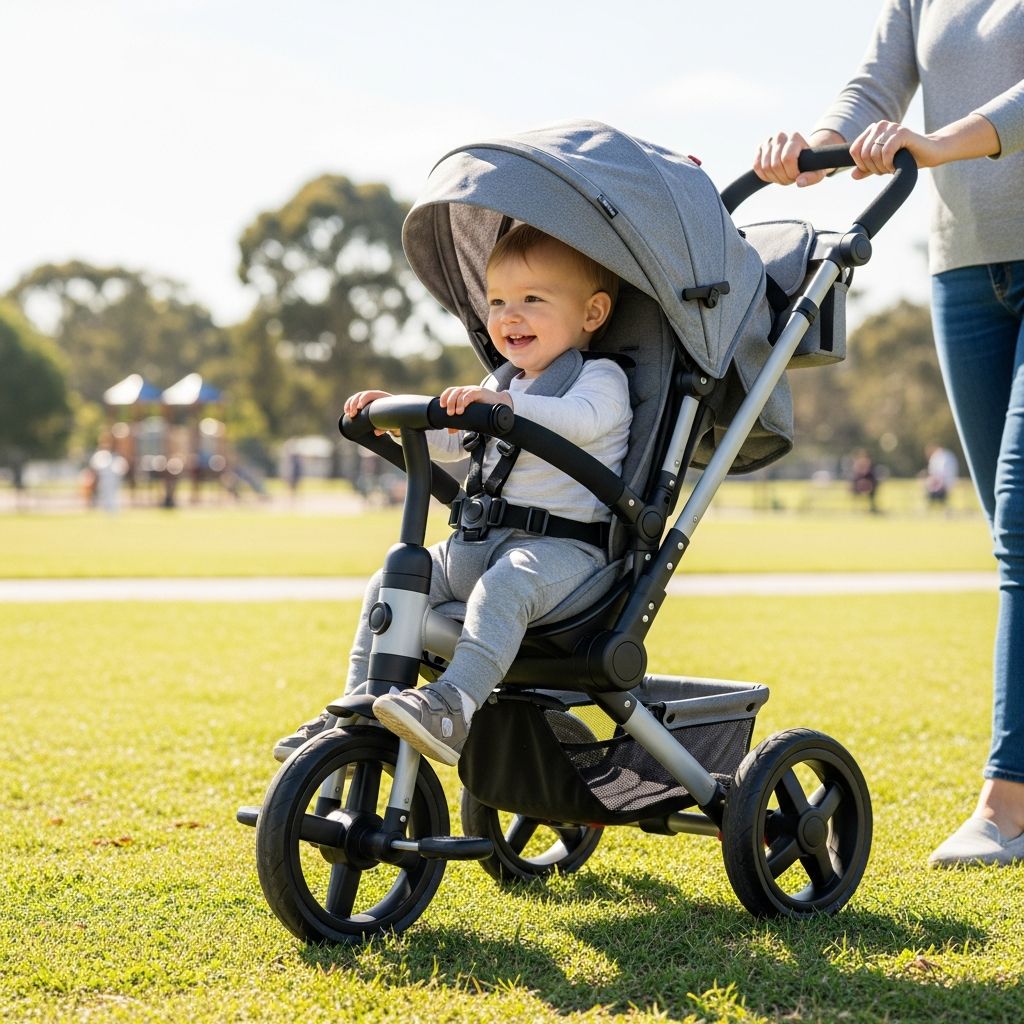
Tricycle strollers blend the control of a stroller with the fun and independence of a tricycle, making them a smart investment for families who want a ride that can grow with their child.
Why Tricycle Strollers Are Worth Considering
Tricycle strollers are hybrid ride-ons that function like a push stroller in the early years and gradually convert into a pedal-powered trike as your child grows. They typically include a parent handle, safety harness, and canopy in the early stages, then shed these components as your toddler gains confidence and coordination.
For many families, this means replacing multiple products (stroller, push car, first trike) with one adjustable system that lasts several years and adapts to different ages and abilities.
- They give toddlers a fun way to move while still allowing parents to steer and control speed.
- They often offer multiple modes, from fully parent-controlled to fully child-powered.
- They encourage outdoor time and physical activity from an early age.
Developmental Benefits for Toddlers
Beyond being a cute mode of transport, a tricycle stroller can quietly support several aspects of your child’s development. As your toddler learns to pedal, steer, and eventually ride independently, they work on both body and brain skills in an engaging way.
These benefits build over time as your child transitions from being pushed to taking more control of the ride:
- Gross motor skills: Pedaling strengthens leg muscles, while steering and balancing train core, shoulders, and arms.
- Coordination and balance: Managing the pedals, handlebars, and body position together improves overall coordination.
- Spatial awareness: Navigating around people, pets, and obstacles teaches kids to judge distance and direction.
- Confidence and independence: Moving under their own power, even a short distance, can boost self-esteem and willingness to try new challenges.
- Attention and problem-solving: Figuring out turns, corners, and uneven surfaces helps build focus and basic decision-making skills.
Ideal Age Range and Readiness Signs
Most tricycle strollers are marketed for children starting around 9–12 months and extending to about 4–5 years, depending on the model and weight limits. However, your child’s developmental readiness is more important than the stated age on the box.
Common Use Stages
- Stage 1: Infant ride (around 9–18 months): Your child sits in a secure seat with a harness and safety bar while you push and steer. Footrests and a canopy are often in use, and pedals may be locked or absent.
- Stage 2: Toddler assist (about 18–30 months): Your toddler may begin to reach the pedals, but you still control steering and most of the speed via the push handle.
- Stage 3: Training trike (around 2.5–3.5 years): You gradually let your child do more of the pedaling and some steering while keeping the handle attached for backup.
- Stage 4: Independent trike (about 3–5 years): In this final stage, the trike often converts to a classic three-wheeler with no parent handle, allowing independent riding.
Readiness Signs to Watch For
Instead of focusing solely on age, look for these milestones to decide if your child is ready to move to the next mode:
- Can sit upright without slumping or needing constant support.
- Shows curiosity about pedals and tries to push them on their own.
- Understands basic instructions like “stop,” “slow down,” and “wait.”
- Can hold onto the handlebars for short periods without letting go.
Main Types of Tricycle Strollers
Although all tricycle strollers combine similar elements, they vary widely in how they look, fold, and convert between stages. Understanding these categories can help narrow your search before diving into specific brands.
| Type | Best For | Key Characteristics |
|---|---|---|
| Classic 3-in-1 / 4-in-1 | Families wanting one product from baby to preschooler | Multiple modes, detachable push handle, removable harness and canopy, adjustable seat and pedals |
| Compact foldable trike | Urban families, frequent car or airplane travel | Quick folding mechanism, smaller footprint, lighter frame, often higher price |
| Off-road or all-terrain trike | Outdoor adventures, uneven sidewalks, park trails | Larger wheels, improved suspension, robust frame, higher weight capacity |
| Budget-friendly trike | Occasional use or secondary ride | Fewer adjustment points, simpler materials, basic canopy or storage features |
Parents who walk frequently on city sidewalks and travel often may gravitate toward compact folding designs, while families in suburban areas with large yards may prioritize durability and bigger wheels over portability.
Safety Features That Actually Matter
Safety should sit at the top of your priority list when comparing tricycle strollers. It is worth spending a bit more time (and potentially budget) to secure features that prevent falls, tip-overs, or runaway rides.
- Harness system: A 3-point or 5-point harness helps keep younger riders secure, especially when they are still wobbly or likely to lean forward or sideways.
- Protective safety bar: A padded bar can add an extra layer of security and give your child something to hold onto in the early stages.
- Stable wheelbase: A wide, low center of gravity reduces the chance of tipping, especially during sharp turns or when older siblings “help” push.
- Reliable brakes: Rear-wheel brakes or a foot-operated lock on the parent handle help park the trike securely on slopes or during snack breaks.
- Freewheel or pedal lock mode: This prevents pedals from spinning too quickly while you push, protecting little legs from unexpected hits.
- Non-slip handlebars and pedals: Textured surfaces offer better grip, especially when kids’ hands or shoes are sweaty or slightly wet.
Always check the manufacturer’s weight and height limits, and inspect the trike periodically for loose screws, worn straps, or cracks in plastic components.
Comfort and Convenience for Parents
A tricycle stroller is only truly useful if it is comfortable for the child and practical for the person pushing it. Small tweaks in design can significantly change how enjoyable it is to use on everyday outings.
Features That Keep Kids Comfortable
- Padded seat and backrest: Prevents fidgeting and discomfort on longer walks.
- Adjustable recline: Helpful for younger toddlers who may still nap while riding.
- Removable or adjustable canopy: Protects against sun and light rain while allowing you to adjust coverage based on direction.
- Footrests: Essential for younger riders whose legs do not yet reach the pedals.
Features That Make Life Easier for Adults
- Height-adjustable parent handle: Prevents back strain and allows different caregivers to push comfortably.
- Easy folding or disassembly: Important if you frequently drive, use public transport, or have limited storage at home.
- Storage options: Baskets, cup holders, and small pouches are handy for snacks, diapers, keys, and phones.
- Tool-free adjustments: Quick-release buttons and simple levers make it more likely you will actually use all the available modes.
Key Buying Checklist
Before pressing the “buy” button, pause to align your choice with your daily routines, living space, and long-term expectations. The best tricycle stroller is the one that fits your family’s actual lifestyle, not just the flashiest model online.
Questions to Ask Yourself
- Where will you use it most often (city sidewalks, malls, parks, dirt paths)?
- How long do you hope to use it (one season, a few years, across multiple kids)?
- How much storage space do you have in your home or car?
- Do you need it to fit through narrow doorways or small elevators?
- What is your realistic budget, including accessories like helmets and bells?
Essential Features at a Glance
| Feature | Priority Level | Why It Matters |
|---|---|---|
| Harness and safety bar | High | Protects younger toddlers from sliding or falling out. |
| Adjustable parent handle | High | Makes pushing more ergonomic for different caregivers. |
| Freewheel/pedal lock | Medium–High | Prevents pedals from moving while you push, improving safety. |
| Folding mechanism | Medium | Crucial for small homes or frequent car use. |
| All-terrain wheels | Medium | Useful if your routes include gravel, grass, or uneven sidewalks. |
| Storage basket and cup holders | Low–Medium | Adds convenience but not essential for every family. |
Practical Safety and Usage Tips
Even the safest tricycle stroller needs responsible use. A few consistent habits can go a long way toward preventing accidents and keeping rides enjoyable for everyone.
- Always use the harness and secure safety bar for young riders, even on short trips.
- Stick to smooth surfaces when your child first learns to pedal and steer.
- Teach clear cues like “stop,” “slow,” and “turn” early on and use them consistently.
- Engage the brake or wheel lock every time you stop on a slope or busy walkway.
- Consider a lightweight helmet for older toddlers who pedal more independently.
- Regularly check screws, bolts, and quick-release points to ensure nothing has loosened over time.
Maintenance and Care for Long-Term Use
With basic maintenance, a quality tricycle stroller can last through multiple stages, siblings, or even be resold once your family outgrows it. Simple, regular care saves money and keeps rides smooth.
- Wipe down the frame and seat after messy outings, and let fabrics dry fully to avoid mold or mildew.
- Check moving parts (wheels, pedals, steering) for dirt build-up and gently clean if they start to feel stiff.
- Store indoors or under cover when possible to protect from intense sun and rain that can weaken plastic and fade fabric.
- Follow manufacturer guidelines if any parts need occasional lubrication or replacement.
Budget, Value, and When to Spend More
Prices for tricycle strollers can range from very affordable to premium. While a higher price does not always guarantee a better product, it often reflects upgraded materials, more adjustment points, and a longer usable lifespan.
When a Higher Price Can Make Sense
- You plan to use the trike several times a week over multiple years.
- You have more than one child who might share or inherit it.
- You need compact folding for frequent travel or apartment living.
- You want advanced safety features and smoother rides on mixed terrain.
How to Save Money
- Look for models that include key accessories (canopy, storage basket) instead of buying them separately.
- Consider gently used options if the trike passes a thorough safety and condition check.
- Prioritize essential safety and comfort features over cosmetic extras like themed designs.
Frequently Asked Questions About Tricycle Strollers
1. Do I still need a regular stroller if I buy a tricycle stroller?
That depends on your lifestyle and your child’s age. Some families use a traditional stroller for naps, long outings, or newborn stages, and then transition to a tricycle stroller once their child can sit confidently and enjoys a more upright, interactive ride.
2. How early can a baby use a tricycle stroller?
Most manufacturers list a minimum age (often around 9–12 months), but your baby should have strong, independent sitting skills and good head control before using one, even in the most supportive mode.
3. Is a tricycle stroller safe for everyday walks?
When used correctly with the harness, brakes, and parent handle engaged, a tricycle stroller can be a safe option for daily walks. Always follow the recommended weight limits and stick to surfaces that match the wheel design of your chosen model.
4. What accessories are really useful?
Many parents appreciate a canopy for sun protection, a small basket for essentials, and a cup holder for drinks. For older toddlers, a bell or handlebar toy can make rides more engaging without affecting safety when used thoughtfully.
5. How do I know when to remove the parent handle?
Signs that your child is ready include consistent pedaling, basic steering control, and an ability to follow safety instructions. Start by practicing in a safe, open area and keep supervision close even after removing the handle.
Final Thoughts for Parents Choosing a Trike
Choosing a tricycle stroller is less about chasing the trendiest model and more about matching a product to your child’s stage, your walking habits, and your storage realities. When you prioritize safety, adjustability, and comfort, you gain a flexible ride-on that can move seamlessly from guided strolls to confident solo adventures.
With the right choice, each walk, park visit, or neighborhood loop becomes more than just transportation—it becomes an opportunity for your toddler to grow stronger, braver, and more independent with every turn of the wheels.